What Is Metastatic Prostate Cancer? A Plain-Language Guide to Stage 4 Prostate Cancer

Updated: 3 days ago
Medically reviewed by Dr. Baraa Alnahhal, MD · Last reviewed: October 2026
Quick Answer
Metastatic prostate cancer, also called advanced or stage 4 prostate cancer, is prostate cancer that has spread beyond the prostate, most often to the bones, lymph nodes, liver and lungs. Diagnosis uses a PSA blood test, imaging and biopsy. Treatment usually starts with hormone therapy, with other therapies added; it slows the cancer but often cannot cure it. [1] [2]
What the research says
Triplet therapy helps mainly men with high-volume disease. A network meta-analysis of 23 trials (18,689 men) found that no triplet regimen significantly improved overall survival over a newer hormone medicine plus ADT in all-comers, but adding docetaxel chemotherapy to both significantly improved survival in men with high-volume disease (HR 0.76, 95% CI 0.61-0.95). (Miyajima et al., J Urol, 2026)
PSMA PET finds bone spread more accurately than a bone scan. In men whose prostate cancer had returned, a meta-analysis of 67 studies (7,637 patients) found PSMA PET detected bone metastases with an accuracy of 0.95, compared with 0.80 for a bone scan (P<0.05). (Zhang et al., Acad Radiol, 2025)
Lutetium Lu-177 PSMA-617 delayed bone complications. In the PSMAfore trial (468 patients with PSMA-positive metastatic castration-resistant prostate cancer who had not had chemotherapy), median time to first symptomatic skeletal event was not reached with Lu-PSMA-617 versus 17.97 months with a switch to another hormone medicine (HR 0.41, 95% CI 0.26-0.63), and time to worsening quality of life was longer (7.46 vs 4.27 months). (Fizazi et al., Lancet Oncol, 2025)
What does “metastatic prostate cancer” mean?
Metastatic prostate cancer is cancer that starts in the prostate and spreads to other parts of the body. Other terms for this condition include advanced prostate cancer and stage 4 prostate cancer. [1]
The prostate is a small gland that helps make the fluid part of semen. It sits just below the bladder and is part of the male reproductive system. [1]
Most prostate cancers are found when the cancer is only in the prostate. It is less common to have metastatic prostate cancer at the time of a first prostate cancer diagnosis. It happens most often in people who had treatment for prostate cancer in the past. [1]
Prostate cancer overall is common: about 13.2% of men in the United States will be diagnosed with it at some point in their lifetime, based on 2021-2023 data [3], and the American Cancer Society's 2025 prostate cancer statistics put the lifetime risk at about one in eight men (12.8%) [5]. The American Cancer Society projects about 333,830 new prostate cancer cases and 36,320 prostate cancer deaths in the United States in 2026. [4]
There are many treatments. They are not likely to cure the cancer, but they can slow its growth. [1]

What are the symptoms of metastatic prostate cancer?
Metastatic prostate cancer does not always cause symptoms. As the cancer grows and becomes more advanced, symptoms might happen.
Signs and symptoms can include: [1]
Feeling very tired
Having to urinate more often or feeling pain when urinating
Losing weight without trying
Nausea and vomiting
Pain in the back, hips, pelvic area, or in a bone. The pain tends to get worse over time.
When should you see a doctor?
Make an appointment with a doctor or other healthcare professional if you have any symptoms that worry you. If you have been treated for prostate cancer in the past, tell your healthcare professional. [1]
What causes metastatic prostate cancer?
Metastatic prostate cancer has no clear cause, but it develops when prostate cancer cells spread, most often to the bones, lymph nodes, liver and lungs. This advanced form happens when cancer cells break away from where they started in the prostate. The cells can travel through the lymphatic system (the network of lymph vessels and nodes that carry fluid and immune cells) or the blood to other areas of the body. [1]
Metastatic prostate cancer most often spreads to the bones, lymph nodes, liver, and lungs. Rare places it spreads include the adrenal glands, brain, and pancreas. [1]
Who is at higher risk for metastatic prostate cancer?
The risk factors that raise the risk of metastatic prostate cancer are the same as the risk factors for prostate cancer in general. [1]
Risk factor | How it affects risk |
Older age | Risk goes up with age. It is most common after age 50. |
Race and ethnicity | In the United States, Black people have a greater risk than people of other races and ethnicities. In Black people, prostate cancer also is more likely to grow quickly or be advanced when detected. |
Family history of prostate cancer | Risk may be increased if a parent, sibling, grandparent, or parent's sibling has had prostate cancer. |
Family history of certain DNA changes | The DNA changes called BRCA1 and BRCA2 can cause a higher risk of prostate cancer. They are best known for increasing the risk of breast cancer and ovarian cancer. |
Obesity | People with obesity may have a higher risk. In people with obesity, prostate cancer is more likely to grow quickly and come back after treatment. |
Smoking tobacco | Some research shows a link between smoking and prostate cancer. People with prostate cancer who smoke may have a higher risk of the cancer coming back and spreading beyond the prostate. |
How is metastatic prostate cancer diagnosed?
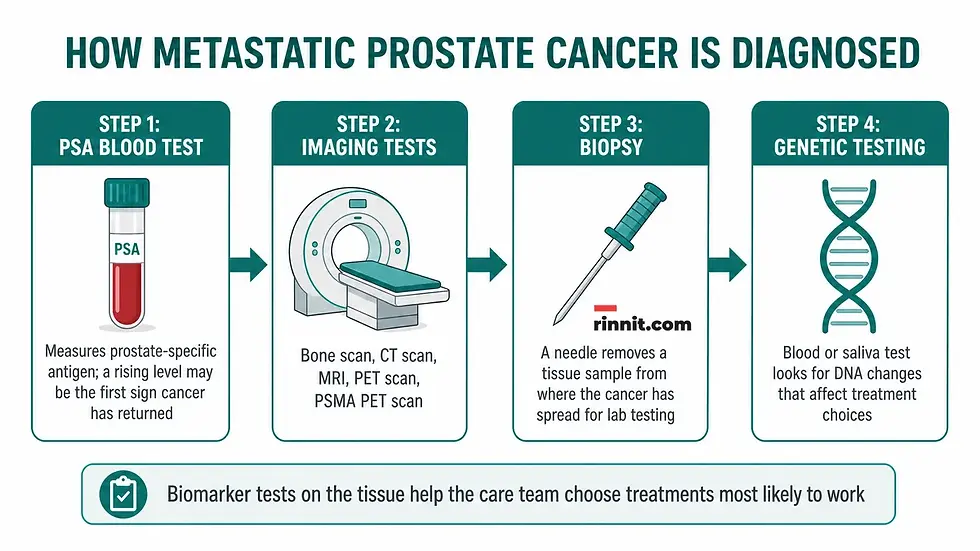
Diagnosis often involves blood tests and imaging tests. [2]
What is the PSA test?
A prostate-specific antigen (PSA) test measures the amount of PSA in the blood. PSA is a substance that prostate cells make, and some of it circulates in the blood. A high level of PSA in the blood can be a sign of prostate cancer. [2]
Many people have regular PSA tests after prostate cancer treatment. A rising PSA level may be the first sign that the cancer has come back. If your PSA level has been going up, your healthcare team might recommend imaging tests to look for signs of metastatic prostate cancer. [2]
What imaging tests are used?
Imaging tests make pictures of the body and can show the places where the cancer has spread. [2]
Imaging test | How it works | What it can find |
Bone scan | Nuclear imaging that uses small amounts of radioactive substances called tracers and a special camera | Areas of cancer within the bones |
CT scan (computerized tomography) | X-ray techniques that create detailed cross-sectional “slices” of the body | Spread to lymph nodes, organs, or other places |
MRI (magnetic resonance imaging) | Magnetic field and radio waves create pictures inside the body | Cancer in the prostate and spread to lymph nodes or other places |
PET scan (positron emission tomography) | Radioactive tracer is injected into a vein and sticks to the cells being looked for | Can look at the whole body |
PSMA PET scan | Tracer attaches to a protein called prostate-specific membrane antigen found on the surface of prostate cancer cells | Spread anywhere in the body |
Choline C-11 PET scan | Prostate cancer cells take up more of this tracer than most other cells | Used when other imaging tests have not found the cancer |
How is a biopsy used?
A biopsy is a procedure to remove a sample of tissue for testing in a lab. For metastatic prostate cancer, the kind of biopsy depends on where the cancer has spread. Often a healthcare professional puts a needle through the skin and into the cancer to get some cells. [2]
Lab tests can show whether the growth is made up of prostate cancer cells. Tests called biomarker tests can help the healthcare team decide which treatments are most likely to work. [2]
What role does genetic testing play?
Genetic testing uses a sample of blood or saliva to look for variations in the DNA. Some treatments work better in people who are born with or who develop certain DNA variations. Genetic tests sometimes provide information about cancer risk that can be helpful for blood relatives. [2]
How is metastatic prostate cancer treated?
Treatment often starts with hormone therapy. This treatment blocks the effects of hormones that prostate cancer cells use to help them grow. If the cancer starts growing again, other treatments may be used. [2]
Eventually most metastatic prostate cancers find ways to grow without hormones. These advanced cancers are called castration-resistant prostate cancers. Hormone therapy usually continues, but other medicines might be added, such as chemotherapy, targeted therapy, immunotherapy, and radiopharmaceutical treatments. [2]
If one treatment stops working, there often are other options. Treatments may slow the cancer and extend life, but the cancer often cannot be cured. [2]

What is hormone therapy?
Hormone therapy stops the hormone testosterone either from being made or from reaching prostate cancer cells. Prostate cancer cells rely on testosterone to help them grow. Cutting off the supply of testosterone may cause cancer cells to die or to grow more slowly. [2]
Hormone therapy type | How it works | Examples |
Medicines that stop testosterone production | Block the signals that tell cells to make testosterone (LHRH agonists and antagonists) | Degarelix (Firmagon), leuprolide (Camcevi, Eligard, Lupron Depot) |
Antiandrogens | Stop testosterone from acting on cancer cells; often used with LHRH agonists | Bicalutamide (Casodex) |
Newer hormone medicines | Androgen receptor pathway or signaling inhibitors that stop testosterone from acting on cancer cells | Apalutamide (Erleada), darolutamide (Nubeqa), enzalutamide (Xtandi) |
Other hormone blockers | Block other sources of testosterone in the body | Abiraterone (Yonsa, Zytiga) |
Surgery (orchiectomy) | Removing both testicles lowers testosterone levels quickly | A surgical option |
For metastatic prostate cancer, hormone therapy often involves two kinds of hormone treatments. If the cancer has spread to many places, treatment also might involve chemotherapy. [2]
Side effects include hot flashes, body hair loss, loss of muscle, increase in body fat, loss of sex drive, and more difficulty getting an erection. There is also an increased chance of diabetes and heart disease. [2]
What is chemotherapy?
Chemotherapy treats cancer with strong medicines. It is sometimes used with hormone therapy medicines and also helps treat the cancer when hormone therapy is not working. [2]
Commonly used medicines include docetaxel (Beizray, Docivyx, Taxotere) and cabazitaxel (Jevtana), given through a vein about once every three weeks. [2]
Side effects include feeling very tired, easy bruising, and more-frequent infections. The medicines can also damage nerves in the fingers and toes, a condition called peripheral neuropathy, which can cause numbness, tingling, or pain. [2]
What is targeted therapy?
Targeted therapy uses medicines that attack cancer cells in a specific way that causes the cells to die. These medicines might be used when hormone therapy is no longer working. [2]
Examples include niraparib (Zejula), olaparib (Lynparza), rucaparib (Rubraca), and talazoparib (Talzenna). They come as pills or capsules and block enzymes in cancer cells that help repair breaks in the DNA. They work best in people with certain DNA changes, so your team may test a sample of your blood, saliva, or cancer cells. [2]
Side effects include feeling very tired, nausea, loss of appetite, diarrhea, cough, easy bruising, and more-frequent infections. [2]
What is immunotherapy?
Immunotherapy uses medicine that helps the body's immune system kill cancer cells. For metastatic prostate cancer, treatment most often involves medicines called immune checkpoint inhibitors. [2]
Some cells send signals called immune checkpoints that tell the immune system not to attack. Some cancer cells also send these signals. The inhibitor medicines stop the cancer cells from sending the “do not attack” signal. [2]
These medicines only work in people whose cancer cells have certain DNA changes. Most prostate cancers do not respond to this treatment. One example is pembrolizumab (Keytruda). Side effects can include fatigue, itchy skin, diarrhea, loss of appetite, and rash. Sometimes the treatment causes the immune system to attack the organs, leading to serious complications. [2]
What are radiopharmaceutical treatments?
Radiopharmaceutical treatments are medicines that contain a radioactive substance and deliver radiation to cancer cells. [2]
Type | Example | How it works | Common side effects |
Targets PSMA protein | Lutetium Lu-177 vipivotide tetraxetan (Pluvicto) | A molecule sticks to the PSMA on prostate cancer cells and releases radiation directly into the cells; given through a vein; can treat cancer anywhere in the body | Dry mouth, dry eyes, nausea, fatigue |
Targets the bones | Radium Ra-223 (Xofigo) | Radioactive substance is attracted to bones and releases radiation there; used when cancer spreads to the bones but not other parts | Diarrhea, fatigue |
What role does radiation therapy play?
Radiation therapy treats cancer with powerful energy beams, such as X-rays or protons. You lie on a table while a machine directs radiation to precise points on your body. [2]
It might be an option if your initial treatment did not involve removing your prostate and you have only a few areas of metastatic cancer. Radiation to an affected bone can also help with pain and lower the chance that the bone might break. [2]
What about clinical trials and other options?
Clinical trials are studies of new treatments that provide a chance to try the latest treatments, though the risk of side effects might not be known. Ask your healthcare team if you might be able to take part. [2]
No alternative medicine treatments have been proved to cure metastatic prostate cancer. But complementary approaches may help you cope with symptoms such as pain. These include acupuncture, acupressure, hypnosis, massage, and relaxation techniques. [2]
Palliative care is a special type of healthcare that helps you feel better when you have a serious illness. A team of doctors, nurses, and other trained professionals works with you and your family to relieve pain and other symptoms. You can have palliative care at the same time as cancer treatment. When palliative care is used with all of the other appropriate treatments, people with cancer may feel better and live longer. [2]
Can thinning bones be a complication of treatment?
Some treatments for metastatic prostate cancer can cause thinning bones, which can cause bones to break more easily. To help reduce the risk of thinning bones, your healthcare team might recommend that you: [1]
Step to protect your bones | Details |
Limit alcohol | Drink less alcohol |
Stop smoking | Quitting lowers bone risk |
Exercise most days | 30 minutes of weight-bearing exercise (activities where your legs carry your weight) most days: strength training, lifting weights, walking, running, basketball, pickleball |
Eat calcium-rich foods | Dairy such as cheese, milk, and yogurt; vegetables such as bok choy, broccoli, and kale |
Take vitamin supplements | Only after talking with your healthcare team about which vitamins and how much |
You might have bone density testing when you start treatment, and the test might repeat every year or two. Sometimes medicines can help build up bones that start to thin. [1]
What is the outlook for metastatic prostate cancer?
Metastatic prostate cancer typically can't be cured. But treatments can slow the growth of the cancer and extend your life. [2]
For an advanced cancer that can't be cured, the prognosis refers to how long you can expect to live with your cancer. Things that can affect your personal prognosis include your age, overall health, whether this is your first diagnosis or a recurrence, PSA test results, whether the cancer is causing symptoms, where the cancer has spread, how many places it has spread to, whether the cells are sensitive to hormone therapy, and the genetic makeup of your cancer. [2]
How can you cope with this diagnosis?
People diagnosed with a serious illness often feel stressed. Some of the following suggestions may help you cope: [2]
Learn about your cancer. Learn enough about your cancer to help you make decisions about your care. Ask your healthcare team about the details of your cancer and your treatment options.
Find a good listener. Finding someone willing to listen as you talk about your hopes and fears can be helpful. This could be a friend or family member, a counselor, a medical social worker, or a clergy member. You can also look for support groups in your area or through cancer organizations.
Look for a connection to something beyond yourself. Having a strong faith or a sense of something greater than oneself helps many people cope with advanced cancer.
How should you prepare for appointments?
Make an appointment with a doctor or other healthcare professional if you have ongoing symptoms that worry you. If you've had prostate cancer in the past, tell your healthcare professional. You might be referred to an oncologist, a doctor who specializes in treating cancer. [2]
When you call to make the appointment, ask if there is anything you need to do beforehand, such as restricting your diet. Ask a family member or friend to go with you to help you remember the information you receive.
What to list before your appointment | Why it helps |
Your symptoms and when they began | Includes symptoms that don't seem related to the reason for the visit |
All medicines, vitamins, and supplements | Include doses |
Questions to ask your healthcare team | Keeps the appointment focused and complete |
Useful questions to ask include: What is likely causing my symptoms? What other tests do I need? What is the best course of action? How can I manage my other health conditions together? Should I see a specialist?
Your healthcare professional is likely to ask about your symptoms too: whether they are ongoing or come and go, whether they get in the way of everyday activities, and what seems to make them better or worse. [2]
Conclusion and next steps
Metastatic prostate cancer is cancer that starts in the prostate and spreads to other parts of the body, most often the bones, lymph nodes, liver, or lungs. While it often cannot be cured, there are many treatment options. Care usually starts with hormone therapy and may include chemotherapy, targeted therapy, immunotherapy, radiopharmaceutical treatments, and radiation as needed. These treatments can slow the cancer, control symptoms, and extend life. Paying attention to new or worsening symptoms, especially bone, back, hip, or pelvic pain, and staying in close contact with your healthcare team can help you get treatment at the right time and live as well as possible.
Talk with a healthcare professional.
If you have symptoms that worry you, or if you were treated for prostate cancer in the past and develop new symptoms, make an appointment with a doctor or other healthcare professional. Tell them about your previous diagnosis and treatment.
Learn more. For more plain-language guides to prostate cancer and advanced cancer topics, visit Rinnit.com.
Frequently Asked Questions
What does “metastatic” mean?
The term “metastatic” means the cancer has spread from where it started to other parts of the body. In prostate cancer, cells break away from the prostate and travel through the lymphatic system or the blood.
What is stage 4 prostate cancer?
Stage 4 prostate cancer is another name for metastatic (advanced) prostate cancer. It means the cancer has spread beyond the prostate to other areas of the body.
Where does prostate cancer usually spread?
Most often it spreads to the bones, lymph nodes, liver, and lungs. Rare spread sites include the adrenal glands, brain, and pancreas.
What symptoms should you watch for?
Watch for feeling very tired, needing to urinate more often or pain when urinating, unexplained weight loss, nausea and vomiting, and pain in the back, hips, pelvic area, or a bone that tends to get worse over time.
Can metastatic prostate cancer be cured?
Metastatic prostate cancer is not likely to be cured, and it typically can't be cured. But treatments can slow the growth of the cancer and extend your life, and if one treatment stops working, there often are other options.
How is it diagnosed?
Diagnosis often involves a PSA blood test, imaging tests (bone scan, CT scan, MRI, PET scan, PSMA PET scan, or choline C-11 PET scan), a biopsy of the area where the cancer has spread, and sometimes genetic testing to check for DNA variations that affect treatment choices.
How is it treated?
Treatment usually starts with hormone therapy, which blocks the testosterone the cancer cells use to grow. Chemotherapy, targeted therapy, immunotherapy, radiopharmaceutical treatments, and radiation therapy may also be used. Palliative care can be added to relieve pain and symptoms.
What is castration-resistant prostate cancer?
Castration-resistant prostate cancer is the name given when metastatic prostate cancer finds ways to grow even without hormones. Hormone therapy usually continues, and other medicines such as chemotherapy or targeted therapy may be added.
How long can you live with metastatic prostate cancer?
It varies a lot from person to person. Many people live for years with treatment, and newer treatments keep improving the outlook. Your care team can explain what to expect based on your cancer and overall health.
What are the side effects of hormone therapy for prostate cancer?
Common side effects include hot flashes, lower sex drive, erection problems, tiredness, weight gain and loss of muscle. Over time it can thin the bones, so your provider may check bone health and suggest exercise, calcium, vitamin D or bone-strengthening medicine.
Related Reading
PSMA-Targeted Therapy (Pluvicto): How It Works and What to Expect explains PSMA-targeted therapy for advanced prostate cancer.
BRCA Testing: Who Should Get It, How It Works and What Results Mean explains who should consider genetic testing for inherited BRCA changes linked to this cancer.
Prostate Exam: What It Is, Why It's Done, What to Expect and Results explains what happens during a prostate exam, including the digital rectal exam and the PSA blood test.
Gleason Score: How Prostate Cancer Is Graded and What Your Score Means explains how prostate cancer is graded from biopsy samples.
Prostate Ultrasound and Biopsy: Why It's Done, How to Prepare, What to Expect and Recovery explains the ultrasound-guided biopsy used to check for prostate cancer, how to prepare and what recovery is like.
PSMA PET Scan for Prostate Cancer: How It Works, How to Prepare and How Accurate It Is explains the prostate cancer imaging scan used for staging and recurrence.
References
Mayo Clinic Staff. Metastatic (stage 4) prostate cancer - Symptoms and causes. Mayo Clinic. July 18, 2025. https://www.mayoclinic.org/diseases-conditions/metastatic-prostate-cancer/symptoms-causes/syc-20377966
Mayo Clinic Staff. Metastatic (stage 4) prostate cancer - Diagnosis and treatment. Mayo Clinic. Accessed October 15, 2026. https://www.mayoclinic.org/diseases-conditions/metastatic-prostate-cancer/diagnosis-treatment/drc-20377972
National Cancer Institute. Cancer Stat Facts: Prostate Cancer. Surveillance, Epidemiology, and End Results (SEER) Program. Accessed October 15, 2026. https://seer.cancer.gov/statfacts/html/prost.html
Siegel RL, et al. Cancer statistics, 2026. CA Cancer J Clin. 2026;76(1):e70043. PMID 41528114. https://doi.org/10.3322/caac.70043
Kratzer TB, et al. Prostate cancer statistics, 2025. CA Cancer J Clin. 2025;75(6):485-497. PMID 40892160. https://doi.org/10.3322/caac.70028
Miyajima K, et al. First-line systemic treatments of metastatic hormone-sensitive prostate cancer: updated systematic review and network meta-analysis. J Urol. 2026;216(3):336-351. PMID 42171515. https://doi.org/10.1097/JU.0000000000005131
Zhang H, et al. Comparison of prostate-specific membrane antigen positron emission tomography and conventional imaging modalities in the detection of biochemical recurrence of prostate cancer and assessment of the role of artificial intelligence: a systematic review and meta-analysis. Acad Radiol. 2025;32(12):7260-7280. PMID 40976756. https://doi.org/10.1016/j.acra.2025.09.004
Fizazi K, et al. Health-related quality of life, pain, and symptomatic skeletal events with [177Lu]Lu-PSMA-617 in patients with progressive metastatic castration-resistant prostate cancer (PSMAfore): an open-label, randomised, phase 3 trial. Lancet Oncol. 2025;26(7):948-959. PMID 40441170. https://doi.org/10.1016/S1470-2045(25)00189-5
Medical disclaimer
This guide is for informational purposes only and is not medical advice. Individual diagnosis and treatment decisions should always be made with a qualified healthcare professional.



Comments