Sitz Bath: How to Take One, Benefits and Uses

Updated: 2 days ago
Written and medically reviewed by Dr. Baraa Alnahhal, MD · Last reviewed: November 2026 · How we review
Quick Answer
A sitz bath is a warm, shallow bath you sit in to ease pain, burning or itching in the perineum, the area between the anus and the genitals. It's used for hemorrhoids, anal fissures and soreness after childbirth. Soak in 3 to 4 inches of water for 15 to 20 minutes, up to three or four times a day.
What the research says
An early sitz bath eased pain after hemorrhoid surgery: in 64 people who had a hemorrhoidectomy, starting a warm sitz bath 6 hours after surgery instead of the next day lowered wound pain scores, though it didn't reduce trouble urinating (Liao WC et al., Int J Nurs Stud, 2024) [2]
Sitz baths help many anal fissures heal: a review of 11 studies found sitz baths eased fissure pain with healing rates around 80% and no reported side effects, although surgery healed more fissures (Alnasser AR et al., Cureus, 2022) [3]
Key takeaways
A sitz bath is a warm, shallow soak for the area between the anus and genitals.
It eases pain and itching from hemorrhoids, fissures, childbirth and surgery.
Use about 3 to 4 inches of warm water, around 104°F (40°C).
Soak 15 to 20 minutes, up to three or four times a day.
Call your provider if pain hasn't improved after two or three baths.
What is a sitz bath?
The name comes from the German word for "sit." A sitz bath covers only your hips and buttocks, so warm water reaches the perineum without a full bath. It's noninvasive, done at home and needs no medicine. Sitz baths have been used in the United States since at least the 1850s. Sources: [1]
Why it's used

Warm water relaxes the anal muscles and improves blood flow.
Hemorrhoids, including after hemorrhoid removal surgery.
Soreness and swelling after a vaginal delivery, an episiotomy or a C-section.
Anal fissures, where warm water relaxes muscle spasms.
Bartholin cysts, where it may help the cyst drain.
Perianal abscesses and anal fistulas.
Recovery after anal, vaginal or vulvar surgery.
Keeping the area clean and easing discomfort during bowel movements. Sources: [1]
How a sitz bath works
Warm water relaxes the anal sphincter, the ring of muscle around the anus. This reduces painful spasms and improves blood flow to the tissue, which helps it heal and lowers pain. Sources: [1, 3]
Types of sitz baths
Setup | How it works | Good to know |
Your bathtub | Fill the tub with a few inches of warm water and sit in it | Clean the tub well before and after |
Toilet sitz bath kit | A shallow plastic basin fits under the toilet seat; a bag with tubing adds warm water | Easy to use several times a day; sold at most pharmacies |
Sources: [1]
How to take a sitz bath
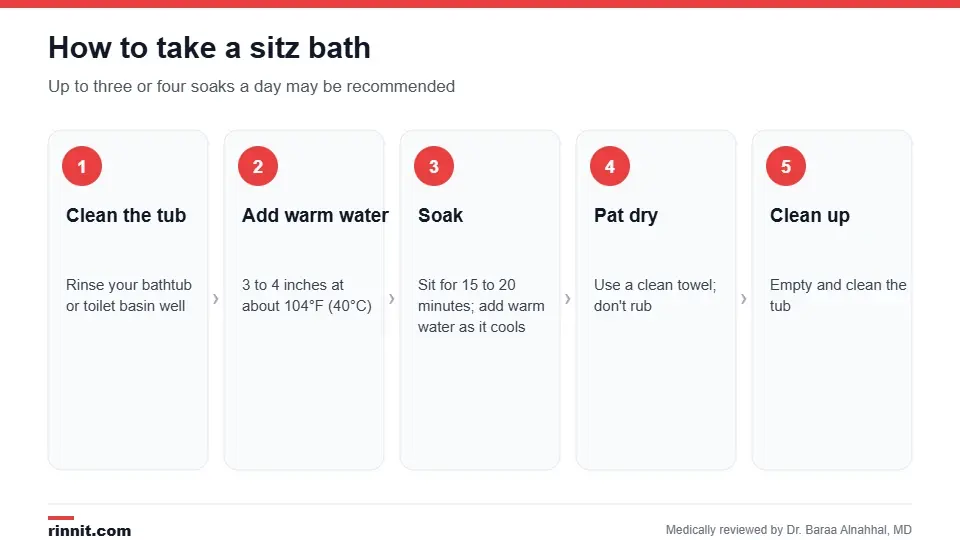
Up to three or four sitz baths a day may be recommended.
Clean and rinse the tub or basin well. Place a plastic basin on the toilet bowl, under the seat.
Fill it with enough warm water to cover the perineum, about 3 to 4 inches, at about 104°F (40°C). Water that's too hot can burn.
Sit in the water for 15 to 20 minutes. Add warm water from the bag or tap as it cools.
Stand up and gently pat the area dry with a clean towel. Don't rub or scrub.
Empty the water and clean the tub or basin. Sources: [1]
You don't need Epsom salt. Add salts, oils or other products only if your provider recommends them, because they can irritate the skin. Your provider may suggest three or four sitz baths a day. Sources: [1]
Risks
Sitz baths carry very little risk. Rarely, the area can become infected, especially if the tub wasn't cleaned well, is shared or you've just had surgery there. Stop right away if pain gets worse or the area turns red and swollen. If you're pregnant or recently gave birth, ask your provider before you start. Sources: [1]
What to expect

Most people notice relief soon after soaking.
Situation | What to do |
Pain eases after soaking | Keep using sitz baths as your provider advised |
No improvement after two or three baths | Call your provider; there may be an infection or another cause |
Pain worsens, or redness and swelling appear | Stop and call your provider |
Sources: [1]
Conclusion
A sitz bath is a simple, low-cost way to ease pain and itching in the perineum and support healing after hemorrhoids, fissures, childbirth or surgery. Keep the water warm, not hot, and keep the tub clean.
Keep learning: read about hemorrhoid banding and postpartum lochia.
Frequently asked questions
What is a sitz bath?
A warm, shallow bath that soaks only the area between the anus and genitals.
What is a sitz bath used for?
Hemorrhoids, anal fissures, soreness after childbirth and recovery after surgery.
How warm should the water be?
About 104°F (40°C). Water that's too hot can burn.
How long should I soak?
15 to 20 minutes.
How often can I take a sitz bath?
Your provider may suggest three or four times a day.
Do I need Epsom salt?
No. Plain warm water works. Add products only if your provider advises it.
Can I use my bathtub?
Yes. Use a few inches of warm water and clean the tub well.
Is a sitz bath safe after giving birth?
Usually, but ask your provider before you start.
What are the risks?
Very few. Rarely, infection can occur if the tub isn't clean.
When should I call my provider?
If pain hasn't improved after two or three baths, or gets worse.
Related Reading
Hemorrhoidectomy: Purpose, Procedure, Recovery and Risks surgery to remove hemorrhoids.
Hemorrhoid Banding: Procedure, Recovery, and Success Rates an office treatment for hemorrhoids.
Lateral Internal Sphincterotomy: A Definitive Guide to Healing Chronic Fissures surgery for long-lasting anal fissures.
Episiotomy: Why It's Done, Types, Risks, and Recovery a cut during childbirth that may need sitz baths.
Understanding Lochia: Your Guide to Postpartum Recovery what to expect after giving birth.
References
Cleveland Clinic. Sitz Bath: Definition & Benefits. Cleveland Clinic. Last updated September 11, 2022. https://my.clevelandclinic.org/health/treatments/24137-sitz-bath
Liao WC, Cheng YY, Hsu CK, et al. Effects of early warm water sitz bath on urinary retention and pain after haemorrhoidectomy: a randomized controlled trial. Int J Nurs Stud. 2024;154:104765. PMID 38642473. https://doi.org/10.1016/j.ijnurstu.2024.104765
Alnasser AR, Akram A, Kar S, et al. The efficacy of sitz baths as compared to lateral internal sphincterotomy in patients with anal fissures: a systematic review. Cureus. 2022;14(10):e30847. PMID 36337820. https://doi.org/10.7759/cureus.30847
Medical disclaimer
This article is for general education only and does not replace advice from a qualified healthcare professional. Talk to your doctor about your own diagnosis and treatment, and seek emergency care right away for severe or sudden symptoms.



Comments