Hemorrhoids During Pregnancy: Relief and Management Strategies

Updated: 2 days ago
Medically reviewed by Dr. Baraa Alnahhal, MD · Last reviewed: October 2026
Quick Answer: What are pregnancy hemorrhoids?
Pregnancy hemorrhoids are enlarged, swollen veins in the lower rectum or anal area that develop because of pregnancy changes, affecting approximately 30% to 40% of pregnant women. Symptoms include painful bowel movements, itching and bright red blood. Most cases are easily treated with high-fiber diets, hydration and topical soothing agents, and they generally disappear within weeks after childbirth.

What the research says
Hemorrhoids are very common, and pregnancy is a recognized risk factor. A meta-analysis of 150 studies covering 8,960,338 people estimated a global pooled prevalence of haemorrhoidal disease of 25.92% (95% CI 22.62 to 29.22), higher in women (27.33%, 95% CI 21.84 to 32.82) than in men. In unadjusted analyses, pregnancy and constipation were among the factors associated with haemorrhoids (Esmaeilnia Shirvani et al., Annals of Medicine, 2026). [2]
Fibre supplements help stool frequency in pregnancy, but the evidence is thin. A Cochrane review found only four eligible studies, with two (180 women) contributing data. In one study of 40 women, fibre supplementation increased stool frequency by 2.24 times per week (95% CI 0.96 to 3.52; moderate-quality evidence). In another study of 140 women, stimulant laxatives improved constipation more than bulk-forming laxatives (risk ratio 1.59, 95% CI 1.21 to 2.09) but caused more abdominal discomfort (risk ratio 2.33, 95% CI 1.15 to 4.73) (Rungsiprakarn et al., Cochrane Database of Systematic Reviews, 2015). [3]
After delivery, evidence for laxatives is limited, so talk to your provider first. A Cochrane review of five trials (1,208 postpartum women) found insufficient evidence on the effectiveness and safety of laxatives for preventing postpartum constipation. In one trial of 471 women, senna increased the chance of a first bowel movement within 24 hours (risk ratio 2.90, 95% CI 2.24 to 3.75) but also increased abdominal cramps (risk ratio 4.23, 95% CI 1.75 to 10.19) (Turawa et al., Cochrane Database of Systematic Reviews, 2020). [4]
Key Takeaways
Feature | Pregnancy Hemorrhoids Details |
Prevalence | Affects 30% to 40% of pregnant women, mostly in the 3rd trimester. |
Primary Causes | Pelvic pressure, increased blood volume, and constipation. |
Common Symptoms | Itching, pain during pooping, and minor rectal bleeding. |
At-Home Relief | Sitz baths, witch hazel, aloe vera, and coconut oil. |
Prevention | High-fiber diet (25-30g/day), hydration, and Kegel exercises. |
Post-Pregnancy | Typically resolve within a few weeks after delivery. |
Why Hemorrhoids Occur During Pregnancy
The development of hemorrhoids during pregnancy is a direct result of the significant physical changes the body undergoes to support a growing fetus. As the pregnancy progresses, the increasing weight of the uterus puts direct pressure on the pelvic veins and the inferior vena cava, the large vein that carries blood from the lower limbs. This pressure can slow the return of blood from the lower half of the body, causing the veins in the rectal and anal area to stretch and swell.
Additionally, the total volume of blood in a pregnant woman's body increases significantly to nourish the fetus, which places extra strain on all blood vessels. Hormonal shifts, specifically an increase in progesterone, relax the walls of the veins and slow down the digestive process. This slowed digestion often leads to constipation, which is a major contributing factor to hemorrhoids as straining during bowel movements further increases vascular pressure in the rectal area.
Identifying Symptoms and Seeking Care
While some women may have hemorrhoids without any noticeable signs, many experience significant discomfort. The most frequent symptoms include itching or irritation in the anal region, pain or aching during bowel movements, and the presence of small amounts of bright red blood on toilet paper or in the toilet bowl. In some cases, a hemorrhoid may bulge outside the anus (prolapse), which can cause additional pain and sensitivity.

It is important for expectant mothers to discuss any rectal bleeding with their healthcare provider to rule out other conditions, although hemorrhoids are the most common and harmless cause during pregnancy. A diagnosis is typically made through a simple physical examination or a digital rectal exam. In rare instances, a provider might use an anoscopy or sigmoidoscopy to get a clearer view of the internal rectal lining.
Management and At-Home Remedies
The primary goal of managing pregnancy hemorrhoids is to relieve symptoms and reduce the pressure that causes them to swell. Improving bowel habits is the first line of defense. This includes consuming 25 to 30 grams of fiber daily, drinking eight to 12 cups of water, and using a footstool while on the toilet to relax the pelvic floor muscles. [1]
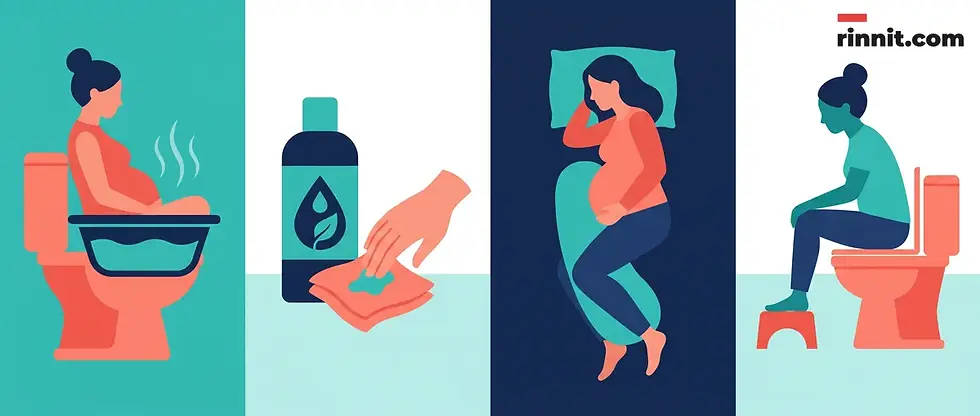
Expectant mothers can also find relief through several at-home remedies:
Soothing Agents: Applying pure aloe vera, coconut oil, or witch hazel to the affected area can reduce itching and pain. [1]
Warm Soaks: Sitting in a sitz bath—a shallow basin of warm water—for 10 to 15 minutes several times a day can improve blood flow and relax the anal muscles.
Lifestyle Adjustments: Avoiding long periods of standing or sitting, sleeping on one's side to reduce pelvic pressure, and using a donut pillow when sitting can significantly decrease discomfort. [1]
Outlook and Prevention
The prognosis for pregnancy hemorrhoids is excellent. While they may be worsened temporarily by the straining involved in labor and delivery, they almost always improve dramatically or disappear entirely within a few weeks of childbirth. Occasionally, they may leave behind a small, harmless skin tag at the anal opening, which can be evaluated by a healthcare professional if it causes irritation. [1]
Prevention focuses on maintaining a healthy digestive system. Staying physically active helps stimulate bowel function, while a diet rich in fruits, vegetables, and whole grains ensures consistent, soft stools that do not require straining. Additionally, performing regular Kegel exercises can improve circulation in the rectal area and strengthen the pelvic floor, reducing the likelihood of vascular swelling.
Conclusion
Hemorrhoids are a common, albeit uncomfortable, part of the pregnancy journey for many women. By understanding the underlying causes and implementing simple lifestyle changes, expectant mothers can effectively manage their symptoms and focus on their health and the arrival of their baby. Most importantly, these symptoms are temporary and do not pose any risk to the developing fetus.
For those looking to create clear, engaging health educational materials or infographics, Rinnit offers professional design tools to help you communicate effectively. Explore Rinnit's infographic templates to simplify complex medical information today.
Frequently Asked Questions
Are hemorrhoids dangerous for my baby?
No, hemorrhoids do not affect the health or development of the fetus in any way.
Why do hemorrhoids get worse in the third trimester?
The increased weight of the baby and uterus puts the most pressure on the pelvic veins during the final months of pregnancy.
Can I use over-the-counter hemorrhoid creams while pregnant?
You should always consult your healthcare provider before using any medications, including topical creams, during pregnancy.
Will hemorrhoids go away after I give birth?
Yes, most pregnancy-related hemorrhoids resolve on their own within a few weeks after delivery.
Does constipation cause hemorrhoids?
Yes, constipation leads to straining during bowel movements, which increases pressure on the veins in the rectum.
How much water should I drink to help with hemorrhoids?
Expectant mothers should aim for eight to 12 cups of water daily to maintain soft stools and prevent constipation.
What is a sitz bath?
A sitz bath is a shallow basin of warm water that you sit in to soothe the anal area and improve circulation.
Can Kegel exercises help with hemorrhoids?
Yes, they improve circulation in the rectal area and strengthen the pelvic floor muscles.
Is rectal bleeding always a sign of hemorrhoids?
While hemorrhoids are the most common cause during pregnancy, you should always report any bleeding to your doctor.
What is a prolapsed hemorrhoid?
It is a hemorrhoid that has bulged or pushed through the anal opening, which can be more painful than internal ones.
How much fiber do I need daily?
Aim for 25 to 30 grams of fiber per day from sources like fruits, vegetables, and whole grains.
Can standing for too long make hemorrhoids worse?
Yes, prolonged standing or sitting increases pressure on the pelvic veins.
Why does sleeping on my side help?
Sleeping on your side takes the weight of the uterus off the major veins, improving blood flow from the lower body.
What is a donut pillow?
It is a ring-shaped cushion that helps reduce direct pressure on the anal area when sitting.
Can labor make hemorrhoids worse?
The intense pushing during labor can temporarily aggravate existing hemorrhoids or cause new ones to form.
Are hemorrhoids hereditary?
While pregnancy is the primary trigger here, some people may have a genetic predisposition to weaker vein walls.
What is an anoscopy?
It is a medical procedure where a small tube is used to look inside the anus and rectum.
Can I use witch hazel for relief?
Yes, witch hazel is a common at-home remedy used to reduce itching and pain associated with hemorrhoids.
What are the signs of a skin tag after hemorrhoids?
A skin tag is a small, painless piece of skin left behind after a hemorrhoid has shrunk and healed.
Is it normal to feel embarrassed about hemorrhoids?
It is common to feel that way, but remember that 30% to 40% of pregnant women experience them.
Can exercise prevent hemorrhoids?
Regular physical activity promotes healthy digestion and reduces the risk of constipation.
What should I do if at-home treatments don't work?
Contact your healthcare provider; they may recommend safe stool softeners or other medical interventions.
Can I use baking soda for itching?
Yes, applying wet or dry baking soda to the area can help relieve anal itching.
Does increased blood volume cause hemorrhoids?
Yes, the extra blood puts more pressure on all veins, making them more likely to swell.
Is it safe to use a stool softener?
Many are safe, but you must get approval from your doctor before taking any during pregnancy.
What is the "Squatty Potty" method?
Using a footstool to elevate your knees while pooping helps align the rectum and reduces straining.
Can hemorrhoids cause permanent damage?
In most pregnancy cases, they are temporary and do not cause long-term health issues.
Does progesterone affect hemorrhoids?
Yes, this hormone relaxes vein walls and slows digestion, both of which contribute to hemorrhoid formation.
Should I avoid lifting heavy objects?
Yes, lifting can increase abdominal pressure and worsen hemorrhoid symptoms.
Can I use coconut oil on hemorrhoids?
Yes, pure coconut oil can be applied topically to soothe minor discomfort.
What is a digital rectal exam?
A procedure where a doctor uses a lubricated, gloved finger to check for abnormalities in the rectum.
How soon after birth do they go away?
Most women see significant improvement within a few weeks of delivery.
Can hemorrhoids cause severe pain?
While usually just uncomfortable, a thrombosed or prolapsed hemorrhoid can be quite painful.
Is it okay to sit on the toilet for a long time?
No, lingering on the toilet increases pressure on the rectal veins; only sit as long as necessary.
Can a high-fiber diet reverse hemorrhoids?
It won't reverse existing swelling immediately, but it prevents the straining that makes them worse.
Are internal hemorrhoids different from external ones?
Internal ones are inside the rectum and usually painless (but bleed), while external ones are under the skin around the anus.
What is a sigmoidoscopy?
A test used to look at the lower part of the large intestine (colon).
Can I use aloe vera for relief?
Yes, pure aloe vera has anti-inflammatory properties that can soothe the area.
Does weight gain contribute to hemorrhoids?
Yes, the total weight gained during pregnancy increases pressure on the pelvic floor.
What is the inferior vena cava?
It is the large vein that carries blood from the lower body to the heart; pressure on it contributes to hemorrhoids.
Can I use a warm compress instead of a sitz bath?
Yes, a warm, damp cloth can provide similar soothing effects if a sitz bath isn't available.
Should I tell my OB/GYN about my symptoms?
Yes, your prenatal care team is used to these symptoms and can offer the best advice.
Can hemorrhoids cause an infection?
It is very rare, but keeping the area clean is important for preventing irritation.
Are there surgical options for pregnancy hemorrhoids?
Surgery is rarely necessary during pregnancy and is usually reserved for severe, non-resolving cases after delivery.
Does iron in prenatal vitamins cause hemorrhoids?
Iron can cause constipation, which in turn can lead to or worsen hemorrhoids.
Can I use moist wipes instead of toilet paper?
Yes, unscented, alcohol-free wipes are often gentler on irritated hemorrhoids than dry paper.
What is a "thrombosed" hemorrhoid?
It is a hemorrhoid where a small blood clot has formed, often causing sudden, severe pain.
Can stress make hemorrhoids worse?
Stress can affect digestion and lead to constipation, indirectly impacting hemorrhoid symptoms.
Is it safe to exercise with hemorrhoids?
Moderate exercise like walking is encouraged, but avoid activities that involve heavy straining.
How do I know if my hemorrhoids are healing?
You will notice a decrease in pain, itching, and the size of any external bulges.
Related Reading
Learn more in our guide to Stapled Hemorrhoidopexy.
References
Cleveland Clinic. Hemorrhoids During Pregnancy. Cleveland Clinic Health Library. Last updated February 3, 2026. https://my.clevelandclinic.org/health/diseases/23498-pregnancy-hemorrhoids
Esmaeilnia Shirvani A, Pakdaman K, Maleki Z, et al. Worldwide prevalence of haemorrhoids: a systematic review and meta-analysis. Ann Med. 2026;58(1):2606433. PMID 41450176. https://doi.org/10.1080/07853890.2025.2606433
Rungsiprakarn P, Laopaiboon M, Sangkomkamhang US, et al. Interventions for treating constipation in pregnancy. Cochrane Database Syst Rev. 2015;(9):CD011448. PMID 26342714. https://doi.org/10.1002/14651858.CD011448.pub2
Turawa EB, Musekiwa A, Rohwer AC. Interventions for preventing postpartum constipation. Cochrane Database Syst Rev. 2020;(8):CD011625. PMID 32761813. https://doi.org/10.1002/14651858.CD011625.pub3
Disclaimer
The information provided in this article is for educational purposes only and should not be considered medical advice. Always consult your healthcare provider before starting any new treatment during pregnancy.



Comments