Hemorrhoid Banding: Procedure, Recovery, and Success Rates

Updated: 1 hour ago
Medically reviewed by Dr. Baraa Alnahhal, MD · Last reviewed: September 2026
TL;DR
Hemorrhoid banding, or rubber band ligation, is a minimally invasive procedure used to treat symptomatic internal hemorrhoids. By placing a small rubber band at the base of the hemorrhoid, blood flow is restricted, causing the tissue to shrink and fall off within a week. This office-based treatment offers a high success rate and a significantly faster recovery time compared to traditional surgical options.
Quick Answer
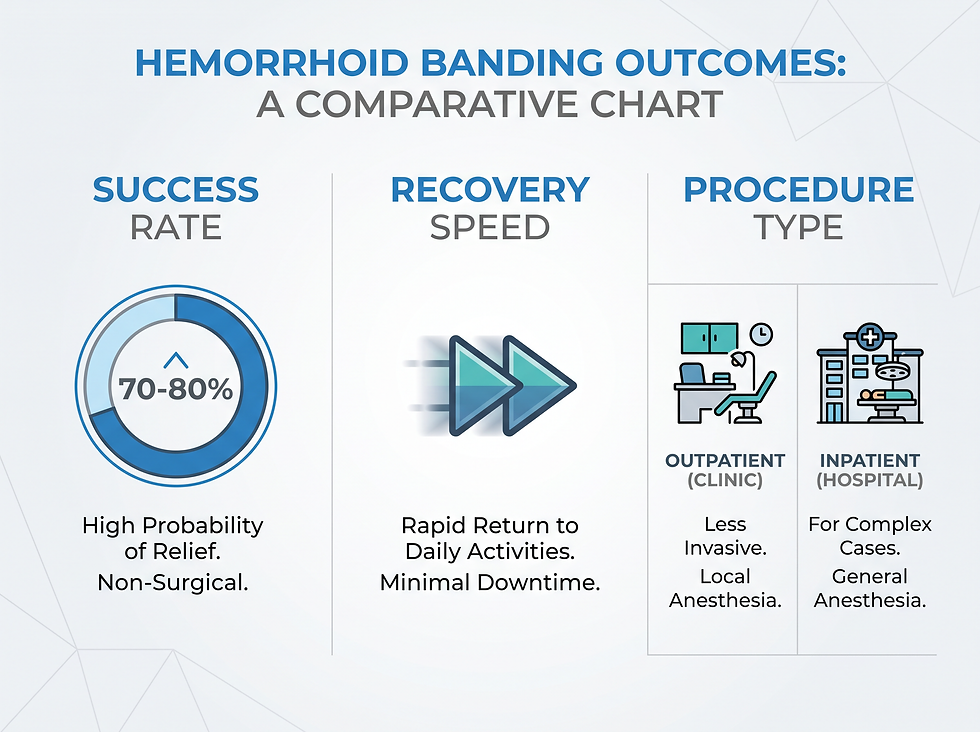
Hemorrhoid banding is a clinical procedure designed to eliminate internal hemorrhoids by cutting off their blood supply with specialized rubber bands. Performed in a healthcare provider's office, the process typically takes less than five minutes and has a success rate of 70% to 80%. Most patients return to normal activities immediately, with the treated tissue naturally detaching within seven days, providing long-term relief from pain, itching, and bleeding.
Overview of Hemorrhoid Banding
Hemorrhoid banding is a widely used treatment for internal hemorrhoids that have not responded to conservative at-home care, such as increased fiber intake or over-the-counter medications. Unlike external hemorrhoids, which occur under the skin around the anus, internal hemorrhoids develop inside the rectum. When these swollen veins cause persistent discomfort, bleeding, or itching, clinical intervention becomes necessary to restore quality of life.
The procedure is specifically indicated for internal hemorrhoids that are symptomatic but not excessively large. It is valued for providing surgical-level results through a non-surgical, office-based approach. By addressing the root cause, the blood supply to the swollen vein, the procedure ensures the tissue eventually detaches and leaves a small scar that helps prevent future occurrences in the same area.

The Clinical Procedure
Rubber band ligation is efficient and structured to minimize patient discomfort. It begins with the insertion of an anoscope, a thin, lighted tube that allows the provider to see the inside of the rectum. Once the target hemorrhoid is identified, a specialized tool called a ligator is used to grasp the tissue.
Procedure Steps
Insertion: The anoscope is placed into the anus to give visual access to the rectum.
Grasping: The ligator tool holds the hemorrhoid to stabilize the tissue for banding.
Ligation: A rubber band is pushed onto the base of the hemorrhoid, cutting off its blood supply.
Removal: The tools are withdrawn, completing the procedure.
The entire application typically lasts less than five minutes. If a patient has multiple symptomatic hemorrhoids, the provider may choose to treat only one or two at a time to manage post-procedure comfort, which requires follow-up appointments for complete resolution.
Recovery and Aftercare
Recovery from hemorrhoid banding is generally rapid, and most people resume their usual daily routines almost immediately. It is common to feel rectal fullness or a mild urge to have a bowel movement shortly after the procedure. Some patients may also notice minor bleeding when the hemorrhoid eventually falls off, which is a normal part of the healing process.
Recovery Timeline
Immediate (0 to 48 hours): Avoid heavy lifting and use stool softeners if needed.
Tissue detachment (5 to 7 days): Watch for minor bleeding as the tissue falls off.
Full healing (2 weeks): Resume all physical activities, including heavy lifting.
To get the best outcome, maintain a high-fiber diet and stay well hydrated to prevent constipation and straining. It is also recommended to avoid sitting on the toilet for long periods and to respond promptly to the urge to have a bowel movement.

Benefits and Clinical Considerations
Hemorrhoid banding is recognized for its high efficacy and low risk profile. With a success rate between 70% and 80%, it remains a primary choice for managing internal hemorrhoids. Avoiding general anesthesia and a hospital stay makes it a cost-effective and convenient option for most patients.
Despite its success, the procedure is not a universal cure for all types of hemorrhoids. It is not effective for external hemorrhoids or for internal ones that have reached an advanced size. Potential, though rare, complications include infection, significant bleeding, or difficulty urinating. Contact your healthcare provider if you have a high fever, chills, or severe pain after treatment.
Conclusion
Hemorrhoid banding is a highly effective, minimally invasive solution for people suffering from the discomfort of internal hemorrhoids. By using a simple mechanical approach to restrict blood flow, the procedure provides significant relief with minimal downtime. Combined with long-term lifestyle adjustments like improved fiber intake, it offers a sustainable path to rectal health.
What you can do now: If you have persistent rectal discomfort, itching, or bleeding that has not improved with at-home care, consult a healthcare professional to discuss your options. Hemorrhoid banding may be the right solution to help you regain comfort and return to your daily activities without interruption.
Frequently Asked Questions (FAQ)
1. What is hemorrhoid banding?
It is a non-surgical procedure where a rubber band is placed at the base of an internal hemorrhoid to cut off its blood supply.
2. How long does the procedure take?
The clinical application typically lasts less than five minutes.
3. Is the procedure painful?
Most patients feel a sensation of pressure or fullness rather than sharp pain, as the bands are placed in an area with few pain-sensing nerves.
4. When will the hemorrhoid fall off?
The treated tissue usually shrivels and detaches within one week of the procedure.
5. Can I return to work immediately?
Yes, most people return to their usual activities right after the treatment, though some may prefer to rest for a day.
6. What is the success rate?
Clinical studies indicate a success rate between 70% and 80% for internal hemorrhoids.
7. Are there any activity restrictions?
You should avoid heavy lifting for at least two weeks to prevent putting excess pressure on the rectum.
8. Will I see blood after the procedure?
It is normal to notice a small amount of bleeding when the hemorrhoid falls off about a week later.
9. Can multiple hemorrhoids be treated at once?
Providers usually treat only one or two at a time to ensure patient comfort during recovery.
10. What happens if the banding doesn't work?
If the procedure is unsuccessful, your provider may recommend alternative treatments or surgical removal.
11. How can I prevent hemorrhoids from returning?
Maintaining a high-fiber diet, drinking plenty of water, and avoiding straining during bowel movements are key preventive measures.
12. Are there risks involved?
While rare, risks include infection, significant bleeding, or temporary difficulty with urination.
13. Do I need anesthesia?
No, the procedure is typically performed in an office setting without the need for general anesthesia.
14. Can banding treat external hemorrhoids?
No, this specific procedure is only used for internal hemorrhoids.
15. When should I call a doctor after the procedure?
Contact your provider if you experience a high fever, chills, severe pain, or unusual rectal discharge.
References
Medical disclaimer: This content is for informational purposes only and is not a substitute for professional medical advice, diagnosis, or treatment. Always seek the advice of your physician or other qualified health provider with any questions you may have regarding a medical condition. Based on information dated May 13, 2025.
Comments