Penis: Anatomy, Function, Normal Variation, Conditions and Care

Updated: 2 days ago
Medically reviewed by *Dr. Baraa Alnahhal, MD* · Last reviewed: October 2026
Quick Answer
The penis is an external sex organ that belongs to the male urinary and reproductive systems. It allows urine to leave the body, transports semen, contributes to sexual pleasure and can contribute to reproduction. Its tissues include blood vessels and spongy chambers that can fill with blood during an erection. [1]
Core idea | Plain-language meaning |
Urinary role | Urine travels through the urethra and exits at the meatus. |
Reproductive role | The urethra also transports semen, which contains sperm. |
Sexual role | Sensitive nerve endings, especially in the glans, contribute to sexual pleasure. |
Main tissue | Blood vessels and spongy tissue make up much of the organ. |
Normal variation | Size, shape, color and visible veins vary among people. |
What the research says
Penis size varies, and averages are only averages. A systematic review and meta-analysis of 75 studies (55,761 men) found pooled mean lengths of 8.70 cm (95% CI 8.16–9.23) flaccid and 13.93 cm (95% CI 13.20–14.65) erect, with measurements varying by geographic region (Belladelli et al., World J Mens Health, 2023). [2]
Erectile dysfunction often travels with other health conditions. A systematic review describes erectile dysfunction as a chronic condition linked with aging, diabetes, hypertension, obesity, prostatic hypertrophy and prostate cancer, and notes that recognizing these risk factors may help clinicians identify and treat it (Saavedra-Belaunde et al., Asian J Androl, 2020). [3]
What does the penis do?
The penis has three main functions: carrying urine out of the body, transporting semen during reproduction and providing sexual pleasure. [1]
Urination
Urine exits through the urethra. The urethra connects to the urinary bladder, runs through the prostate gland and continues down the length of the penis. Urine leaves through an opening at the tip called the meatus. [1]
Reproduction
The urethra also transports semen out of the body. Semen contains sperm. It leaves the erect penis during ejaculation, usually after orgasm. See our overview of the male reproductive system for more. [1]
Sexual pleasure
The penis has many sensitive nerve endings, especially in the glans. Touching or rubbing these nerve endings can feel pleasurable and may cause orgasm and ejaculation. Sexual pleasure can occur during masturbation or sexual intercourse with a partner. [1]
Function | What happens |
Peeing | Urine travels through the urethra and exits through the meatus. |
Reproduction | Semen containing sperm travels through the urethra and exits during ejaculation. |
Sexual pleasure | Sensitive nerve endings, especially in the glans, respond to stimulation. |
Where is the penis located?
In most males, the penis hangs between the legs, above the scrotum and below the pubic bone. The scrotum is a pouch of skin that typically holds the testicles. [1]
What are the parts of the penis?
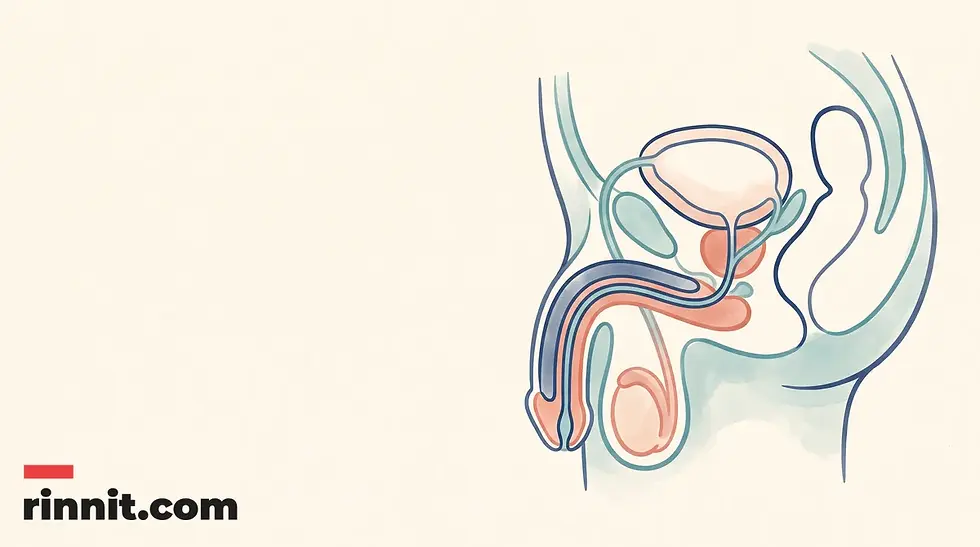
The parts of the penis include the corpus cavernosa, corpus spongiosum, foreskin, glans, meatus, shaft and urethra. [1]
Corpus cavernosa
The corpus cavernosa are two long chambers positioned side by side along the top of the penis. They contain elastic or spongy tissue that fills with blood and expands to make the penis hard. Each chamber has a very small artery that brings blood into the penis. [1]
Corpus spongiosum
The corpus spongiosum is a long chamber running along the bottom of the shaft. It contains the urethra and additional spongy tissue that fills with blood during an erection. It connects with the glans. [1]
Foreskin
The foreskin is a layer of skin extending from the shaft and covering the glans. Circumcision removes the foreskin and may occur shortly after birth or during adulthood. [1]
Glans or head
The glans is the tip of the penis at the end of the shaft. It fills with blood when stimulated. [1]
Meatus
The meatus is the opening at the end of the urethra, usually at the tip of the glans. Urine and semen leave the body through this opening. [1]
Shaft
The shaft is the longest part of the penis. It extends from the pelvis to the head. [1]
Urethra
The urethra is the tube that carries urine and semen out of the body.

Part | Description |
Corpus cavernosa | Paired upper chambers with spongy tissue that fills with blood during an erection. |
Corpus spongiosum | Lower chamber containing the urethra and connecting with the glans. |
Foreskin | Skin that covers the glans when present. |
Glans | The head or tip of the penis. |
Meatus | Opening where urine and semen leave the body. |
Shaft | Longest part, extending from the pelvis to the glans. |
Urethra | Tube carrying urine and semen out of the body. |
What does a normal penis look like?
A normal penis can vary widely in size, shape, color and curve, and all of these variations are considered normal. Penis size and shape vary from person to person and are all normal. A penis may be a different color from nearby skin, straight or curved, change size during erection or remain about the same size, have a larger head or shaft, or have visible blood vessels. [1]
Approximate average measurements are about 3.5 inches (8–9 centimeters) when soft and about 5 to 5.5 inches (13–14 centimeters) when erect. These are averages, not a definition of normality. [1]
What conditions can affect the penis?
Medical conditions can affect the skin, meatus and internal chambers. They may make it difficult to urinate, feel pleasure, get an erection or contribute to reproduction.
Condition or category | Description |
The penis does not become hard or cannot stay hard enough for sexual intercourse. | |
Skin conditions and infections | Herpes, syphilis, psoriasis and eczema may cause rashes, ulcers, discoloration or itchiness. |
Paraphimosis | A tight foreskin becomes stuck around the head and can cut off blood flow; this is a medical emergency. |
Penile cancer | Cancer can form anywhere in the penis but most commonly starts on the foreskin or head. |
Penile fracture | Sudden bending of an erect penis can tear tissue that holds blood; this is a medical emergency. |
Scar tissue in the shaft can cause pain and a bend during erection. | |
Phimosis | The foreskin is stiff and tight and cannot be pulled back from the head. |
Priapism | The penis remains hard for longer than four hours; this is very painful and a medical emergency. |
Trauma | Contact sports, vigorous sex or masturbation can cause pain or loss of sensitivity. |
Sexually transmitted infections are also common penile conditions. These include chlamydia, genital warts, gonorrhea, hepatitis B, hepatitis C, herpes, HIV, syphilis, trichomonas and yeast infection. [1]
How can you notice a change during a self-exam?
Becoming familiar with how your penis normally looks and feels can make it easier to notice a change. A self-exam at least once a month, beginning around puberty, is recommended. [1]
During a self-exam, visually inspect from the tip to the base. Look for blisters, bruising, discoloration, thick white matter around the head, or green or yellow discharge from the tip. Gently feel along the shaft and head for firm or tender areas, and lightly squeeze for lumps. If you have foreskin, pull it back and inspect underneath. A monthly testicular self-exam is also recommended. [1]
A self-exam does not diagnose a condition. It is a way to notice changes and decide when to contact a healthcare professional.
Which symptoms should be discussed with a healthcare professional?
Blood in urine, blood in semen, pain or burning with urination, pain with erection or intercourse, pain with orgasm, difficulty getting or staying hard, and a new curve or bend during erection are signs that something may be affecting the penis or overall health. [1]
Schedule an appointment if you notice a new change during a routine self-exam. A primary-care clinician can review your health and sexual history, ask about symptoms and perform a physical exam. They may check the penis and testicles and may recommend checking the anus, rectum and prostate with a digital rectal exam.
A primary-care clinician may refer you to a urologist or sex therapist. A urologist specializes in urinary and reproductive-system conditions. A sex therapist can help with mental or emotional problems affecting sex life. [1]
When is penile care urgent?
Three situations need immediate medical attention: an erection that will not go down after more than a couple of hours, a foreskin stuck around the head of the penis, or sudden pain or a snapping sound in the penis during sex. Call a healthcare provider as soon as possible or go to an emergency room. [1]

How can you keep the penis healthy?
Care includes avoiding tobacco, alcohol, opiates and cocaine because these substances can negatively affect sexual function. Managing medical conditions such as high blood pressure, diabetes and heart disease also matters because they can affect how the penis works. [1]
For sexual health, limit sexual partners, use a condom every time you have sex and get an STI test before sex with a new partner. [1]
For physical protection, contact sports such as baseball, hockey, soccer and football can damage the penis, so protective equipment such as a cup can help protect it. [1]
For hygiene, wash the penis daily with mild soap and water, rinse thoroughly to remove soap and gently pat dry. If you have foreskin, clean underneath it as well. [1]
Care area | Approach |
Substances | Avoid tobacco, alcohol, opiates and cocaine. |
Sexual health | Limit sexual partners, use a condom every time and get an STI test before sex with a new partner. |
Medical conditions | Manage high blood pressure, diabetes and heart disease with professional guidance. |
Self-awareness | Perform monthly penis and testicular self-exams. |
Injury prevention | Use a protective cup during contact sports. |
Hygiene | Wash daily with mild soap and water; rinse, dry gently and clean beneath the foreskin when present. |
Can lifestyle support blood flow and erections?
Eating healthy foods, exercising regularly, managing stress, prioritizing sleep, cutting back on alcohol, quitting smoking and performing Kegel exercises may help increase blood flow or support erections. [1]
Discuss medications, a vacuum constriction device or supplements with a healthcare provider rather than starting them independently.
Fruits, vegetables, whole grains, nuts, seeds and legumes are examples of healthy foods. Spinach, kale, berries, broccoli, tomatoes, walnuts, flax seeds, watermelon, beets and pumpkin seeds are listed as examples of foods for penis health. [1]
What changes can happen with puberty and age?
Penis size typically increases during puberty, when the testicles make more testosterone. Puberty for boys usually starts between ages 9 and 14. [1]
The penis can appear smaller with poor circulation from high blood pressure or diabetes. Smoking, weight gain, low testosterone and Peyronie’s disease can also make the penis look smaller. [1]
Conclusion: penile health is part of whole-body health
The penis supports urinary and reproductive functions and contributes to sexual well-being. Understanding its normal variation, main parts and common symptoms can make it easier to notice changes and talk with a healthcare professional.
A monthly self-exam, safer sexual practices, daily hygiene, injury prevention and attention to related medical conditions are all part of the care picture. Sudden pain or a snapping sound during sex, a stuck foreskin or a persistent erection needs immediate medical attention.
Use this guide to prepare questions for a qualified healthcare professional. Clear information is a starting point for better care—not a diagnosis.
Frequently Asked Questions
What is the penis?
The penis is an external sex organ in the male urinary and reproductive systems. It contributes to urination, reproduction and sexual pleasure.
What is the urethra?
The urethra is the tube that carries urine and semen out of the body.
What is the glans?
The glans, or head, is the tip of the penis. It fills with blood when stimulated.
What is the meatus?
The meatus is the opening at the end of the urethra, usually at the tip of the glans. Urine and semen leave through it.
What are the corpus cavernosa?
The corpus cavernosa are two long upper chambers containing spongy tissue that fills with blood and expands during an erection.
Is it normal for a penis to curve?
Penis shape varies and may be straight or curve up, down, left or right. A new or painful curve during erection should be discussed with a healthcare professional.
How often should a penis self-exam be done?
A self-exam at least once a month, beginning around puberty, is recommended.
What should someone look for during a self-exam?
Look for blisters, bruising, discoloration, thick white matter around the head, green or yellow discharge, firm or tender areas and lumps. If foreskin is present, inspect beneath it.
What conditions can affect the penis?
Examples include erectile dysfunction, skin conditions, STIs, paraphimosis, penile cancer, penile fracture, Peyronie’s disease, phimosis, priapism and trauma.
When is a penis problem an emergency?
A persistent erection, a foreskin stuck around the head, or sudden pain or a snapping sound during sex requires immediate medical attention.
Who should evaluate a penis problem?
Start with a primary-care physician. Depending on the concern, they may refer you to a urologist or sex therapist.
Can health conditions elsewhere affect penile function?
Yes. High blood pressure, diabetes and heart disease can affect how the penis works, and some medicines for these and other conditions can also affect function.
How can someone support penile health?
Steps include safer sex practices, daily washing, monthly self-exams, managing medical conditions, avoiding tobacco and other risky substances, and protecting the penis during contact sports.
Related Reading
Erectile Dysfunction: Symptoms, Causes, and Treatment explains the causes of erection problems and treatment options.
Peyronie's Disease: Symptoms, Causes & Treatment covers scar tissue that causes a curved or painful erection.
What Is Balanitis? Symptoms, Causes, and Treatment explains inflammation of the head of the penis and how it is treated.
Priapism: Symptoms, Causes & Emergency Treatment describes a prolonged erection that needs emergency care.
References
Cleveland Clinic. Penis: Anatomy, Shape, Types, Function, Conditions & Care. Cleveland Clinic. Updated June 11, 2025. https://my.clevelandclinic.org/health/body/penis
Belladelli F, Del Giudice F, Glover F, et al. Worldwide Temporal Trends in Penile Length: A Systematic Review and Meta-Analysis. World J Mens Health. 2023;41(4):848-860. PMID 36792094. https://doi.org/10.5534/wjmh.220203
Saavedra-Belaunde JA, Clavell-Hernandez J, Wang R. Epidemiology regarding penile prosthetic surgery. Asian J Androl. 2020;22(1):2-7. PMID 31793443. https://doi.org/10.4103/aja.aja_124_19
Disclaimer
This article is for general educational purposes and is not a substitute for professional medical advice, diagnosis or treatment. Always seek the advice of a qualified healthcare professional with any questions about a medical condition or treatment.



Comments