Understanding the Male Reproductive System: Anatomy and Function

Updated: 2 days ago
Medically reviewed by Dr. Baraa Alnahhal, MD · Last reviewed: October 2026
The male reproductive system consists of internal and external organs designed to produce, maintain, and transport sperm and semen [1]. It is also responsible for discharging sperm and secreting essential male sex hormones like testosterone [1]. Key components include the penis, scrotum, and testicles on the outside, and the prostate and vas deferens on the inside [1]. Together, these organs support reproductive health, sexual function, and urination [1].
Quick Answer
The male reproductive system is a network of internal and external organs involved in reproduction and urination [1]. The penis and scrotum protect and house the testicles, which produce sperm and testosterone, while the prostate and seminal vesicles add fluids to create semen. Hormones such as FSH and LH regulate sperm maturity and transport.
What the research says
Sperm counts have fallen over recent decades. A meta-regression of 223 studies (288 estimates; samples collected 1973-2018) found that mean sperm concentration among unselected men from all continents declined by 51.6%, and the annual rate of decline rose from 1.16% per year after 1972 to 2.64% per year after 2000 (Levine et al., Human Reproduction Update, 2023) [2].
Erection problems are common and rise with age. In the Massachusetts Male Aging Study, a community survey of men aged 40 to 70 conducted in 1987-1989, the combined prevalence of minimal, moderate, and complete impotence was 52%, and complete impotence tripled from 5% to 15% between ages 40 and 70; heart disease, hypertension, and diabetes were linked to a higher probability after adjusting for age (Feldman et al., The Journal of Urology, 1994) [3].
Male factors contribute to about half of infertility cases. Infertility affects an estimated 15% of couples worldwide (48.5 million couples); the male partner is solely responsible in 20-30% of cases and contributes to about 50% overall (Agarwal et al., Reproductive Biology and Endocrinology, 2015) [4].
What is the Male Reproductive System?
The male reproductive system is a group of organs that serve two primary purposes: biological reproduction and waste removal via the urinary system [1]. Unlike the female reproductive system, many of its primary organs are located outside the abdominal cavity. These organs work in coordination to produce male reproductive cells (sperm), nourish them with protective fluid (semen), and facilitate their transport out of the body during sexual activity [1].
External Anatomy and Functions
Most of the male reproductive system is visible externally. These genitals are responsible for the physical aspects of sexual intercourse and the initial stages of sperm development.
The Penis
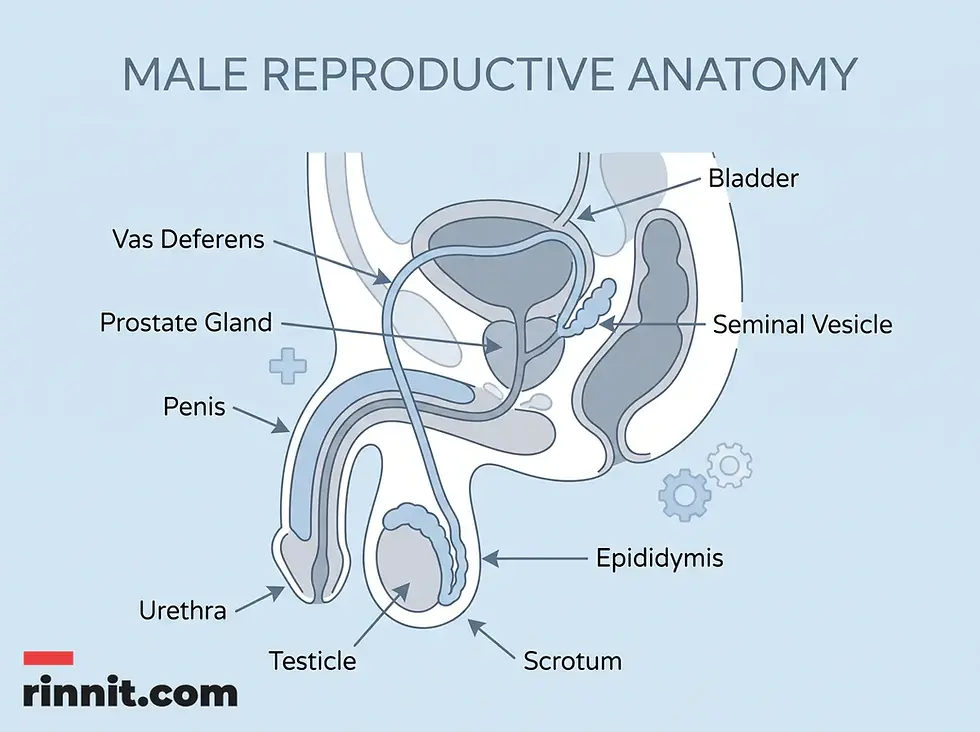
The penis is the primary organ for sexual intercourse and urination. It consists of three main parts: the root (attached to the abdomen), the body or shaft (containing erectile tissue), and the glans (the sensitive tip) [1]. During sexual arousal, special sponge-like chambers called the corpora cavernosa fill with blood, creating an erection [1]. This rigidity allows for penetrative activity, while the urethra within the penis serves as a passage for both urine and semen [1].
The Scrotum and Testicles
The scrotum is a pouch of skin hanging behind the penis that acts as a climate-control system for the testicles. For healthy sperm development, the testicles must remain slightly cooler than the rest of the body, so special muscles in the scrotal wall contract to draw them closer to the body for warmth and relax to let them cool [1]. The testicles themselves are oval organs that produce testosterone and sperm cells through a process called spermatogenesis [1].
Internal Organs and Accessory Glands
The internal parts of the system are responsible for maturing, storing, and transporting sperm while adding the necessary fluids to create semen.
Epididymis: A coiled tube resting on each testicle where sperm cells mature and are stored until they are ready for transport [1].
Vas Deferens: A muscular tube that carries mature sperm from the epididymis to the urethra in preparation for ejaculation [1].
Seminal Vesicles: Sac-like pouches that produce up to 80% of the fluid in semen, including fructose, which provides energy for sperm motility [1].
Prostate Gland: A walnut-sized gland that adds nourishing fluid to the semen as it passes through the urethra [1].
Bulbourethral (Cowper) Glands: These glands produce a clear, lubricating fluid that neutralizes any acidity in the urethra before ejaculation [1].
Hormonal Regulation
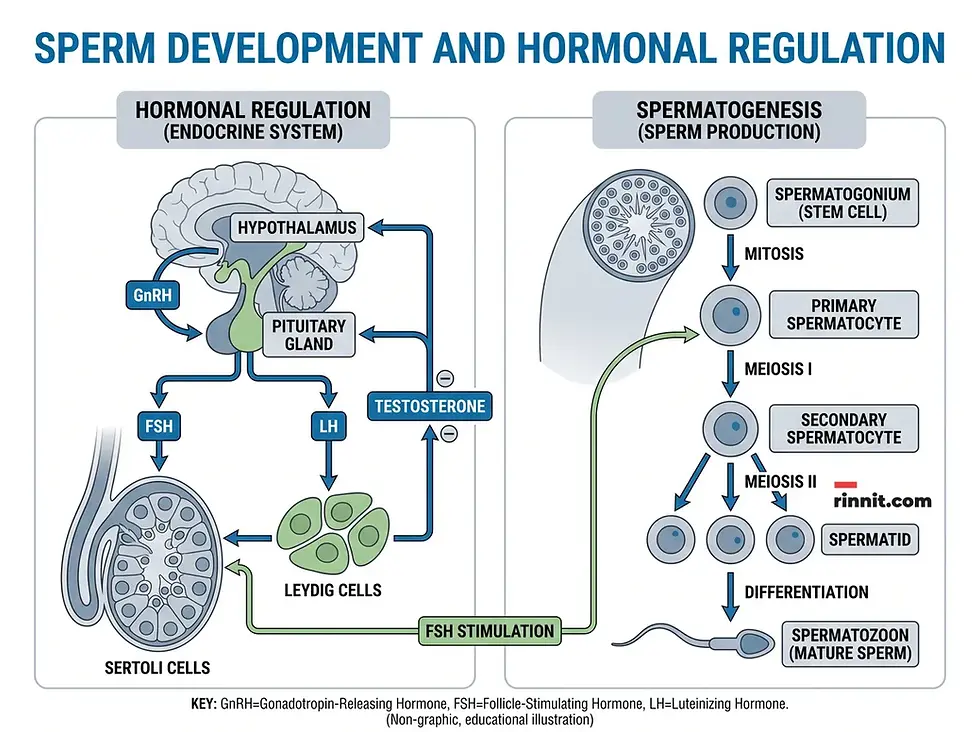
The entire system is regulated by a delicate balance of hormones produced by the pituitary gland and the testicles. Follicle-stimulating hormone (FSH) and luteinizing hormone (LH) are essential for initiating and maintaining sperm production [1]. Testosterone, the primary male sex hormone, is responsible for developing male physical characteristics, such as muscle mass, bone strength, and sex drive.
Common Conditions and Symptoms
Various health issues can affect the male reproductive system, ranging from infections to chronic diseases. Early detection is often key to effective treatment.
Common conditions include:
Warning signs that require medical attention include unusual lumps or sores, persistent pain or swelling in the groin, and the presence of blood in the urine or semen [1]. Painful urination or ejaculation should also be evaluated by a healthcare professional. Sudden, severe pain or swelling in a testicle is an emergency (it can be testicular torsion), so go to the emergency room right away.
Maintaining Reproductive Health
Taking proactive steps can help preserve the function of the reproductive system and prevent long-term complications.
Practice Safe Habits: Use protection during sexual activity to prevent the spread of STIs [1].
Regular Self-Exams: Check the testicles regularly for any new lumps or changes in size [1].
Maintain a Healthy Lifestyle: A balanced diet and regular exercise support hormone production and blood flow.
Schedule Check-ups: Routine screenings, especially for prostate health as you age, are vital for early intervention [1].

Conclusion
The male reproductive system is a sophisticated network that integrates reproductive and urinary functions. By understanding the anatomy of both internal and external organs, individuals can better recognize the signs of health issues and take steps toward prevention. Maintaining a healthy lifestyle and seeking medical advice for unusual symptoms are essential for long-term reproductive wellness.
Next step: If you are experiencing unusual symptoms or have questions about your reproductive health, consult a healthcare professional for a comprehensive evaluation and personalized care plan.
Frequently Asked Questions
What are the main functions of the male reproductive system?
The male reproductive system's primary roles are to produce and transport sperm and semen, discharge sperm for reproduction, and secrete male sex hormones like testosterone.
Why are the testicles located outside the body?
The testicles are housed in the scrotum to maintain a temperature slightly cooler than the rest of the body, which is necessary for healthy sperm production.
What is the difference between sperm and semen?
Sperm are the microscopic reproductive cells, while semen is the protective, nutrient-rich fluid that carries and nourishes the sperm.
How does the prostate gland contribute to reproduction?
The prostate adds a specialized fluid to the semen that helps nourish and protect sperm as they travel through the reproductive tract.
What hormones regulate the male reproductive system?
The primary regulators are follicle-stimulating hormone (FSH), luteinizing hormone (LH), and testosterone.
What is the role of the epididymis?
The epididymis is a coiled tube where sperm cells mature and are stored after being produced in the testicles.
Can the male reproductive system affect urination?
Yes, the urethra is a shared passage for both urine and semen, and conditions like an enlarged prostate can impact urinary flow.
What are common signs of a reproductive health issue?
Symptoms include lumps or sores, swelling, persistent pain in the groin, and blood in the urine or semen.
How often should I perform a testicular self-exam?
Healthcare providers often recommend monthly self-exams to check for any unusual changes or lumps.
Is erectile dysfunction a normal part of aging?
While it becomes more common with age, it is often a treatable condition and may be linked to other underlying health issues.
Related Reading
Testicles: Anatomy, Essential Functions, and Care explains how the testicles make sperm and testosterone.
Prostate: Location, Function, Conditions and Health Checks describes the prostate, its common conditions and screening checks.
Erectile Dysfunction: Symptoms, Causes, and Treatment explains common causes of erectile dysfunction and treatment options.
Male Infertility: Causes, Symptoms, Tests, and Treatments Explained covers causes of male infertility, testing and treatment.
References
Cleveland Clinic. Male Reproductive System. Cleveland Clinic. Last updated May 8, 2023. https://my.clevelandclinic.org/health/body/9117-male-reproductive-system
Levine H, Jørgensen N, Martino-Andrade A, et al. Temporal trends in sperm count: a systematic review and meta-regression analysis of samples collected globally in the 20th and 21st centuries. Human Reproduction Update. 2023;29(2):157-176. PMID 36377604. https://doi.org/10.1093/humupd/dmac035
Feldman HA, Goldstein I, Hatzichristou DG, et al. Impotence and its medical and psychosocial correlates: results of the Massachusetts Male Aging Study. The Journal of Urology. 1994;151(1):54-61. PMID 8254833. https://doi.org/10.1016/s0022-5347(17)34871-1
Agarwal A, Mulgund A, Hamada A, Chyatte MR. A unique view on male infertility around the globe. Reproductive Biology and Endocrinology. 2015;13:37. PMID 25928197. https://doi.org/10.1186/s12958-015-0032-1
Medical disclaimer
The information provided in this article is for educational purposes only and should not be used as a substitute for professional medical advice, diagnosis, or treatment. Always seek the advice of your physician or other qualified health provider with any questions you may have regarding a medical condition.



Comments