What Is Balanitis? Symptoms, Causes, and Treatment

Updated: 3 days ago
Medically reviewed by Dr. Baraa Alnahhal, MD · Last reviewed: October 2026
Quick Answer
Balanitis is inflammation, with pain, swelling and redness, of the head of the penis. [1] It most often affects uncircumcised males, and the most common cause is not cleaning the area regularly; yeast, STIs and skin conditions can also cause it. [1] It is not contagious. [1] Treatment targets the cause, and most people feel better within a few days to a week. [1]
Key takeaways
Balanitis is pain, swelling, and inflammation of the head (glans) of the penis — common and usually not serious. [1]
It most often affects uncircumcised males; the main cause is not regularly cleaning under the foreskin. [1]
Symptoms include redness, discoloration, itching, swelling, a bad smell, smegma buildup, and burning when peeing. [1]
Balanitis is not an infection itself and cannot be spread to others. [1]
Treatment depends on the cause: hygiene, antifungal cream, antibiotics, or managing diabetes. [1]
Most people feel better within a few days to a week of starting treatment — but without treatment, symptoms can worsen. [1]
Untreated balanitis can lead to scarring, foreskin tightening (phimosis), or hardened skin affecting urination. [1]
What the research says
Diabetes is a strong risk factor for yeast-related balanitis. In a cross-sectional study of 478 men attending a sexually transmitted diseases clinic in Portugal, Candida colonization was found in 26.2% and Candida balanitis in 18%. Diabetes was an independent risk factor for Candida balanitis (odds ratio 19.4, 95% CI 7.8–48.3), and being older than 40 years also raised the odds (odds ratio 2.27). (Lisboa et al., J Eur Acad Dermatol Venereol, 2010) [2]
Some diabetes medicines raise the risk of balanitis and related problems. In US insurance-claims data covering matched cohorts of 156,074 men with type 2 diabetes, starting an SGLT2 inhibitor was linked to a hazard ratio of 2.68 (95% CI 2.31–3.11) for a combined outcome of genital candidal infection, balanitis, balanoposthitis, phimosis, or paraphimosis, compared with DPP-4 inhibitors — about 11.9 extra cases per 1,000 person-years. The risk was evident in the first month of treatment. (Dave et al., Diabetes Obes Metab, 2019) [3]
Balanitis that doesn't clear with infection treatment may be something else. A systematic review screened 978 records on non-sexually-transmitted infective balanitis and balanoposthitis and found 15 studies with usable clinical photographs (19 images). All 19 images showed features consistent with male genital lichen sclerosus despite being attributed to Candida or bacterial infection, and many cases reported incomplete resolution after antimicrobial treatment. (Barry et al., Int J STD AIDS, 2026) [4]
What Is Balanitis?

Balanitis (pronounced “BAL-uhn-AHY-tis”) is pain, swelling, and inflammation of the head (glans) of the penis. [1] The head of your penis can look discolored — red, purple, gray, or white — or have discolored patches. [1] You may also have shiny, swollen areas of skin. [1]
Sometimes, the inflammation affects both the head of your penis and the foreskin. When that happens, it's called balanoposthitis. [1]
Balanitis is a common condition that most often affects males who haven't been circumcised. [1] It's normal to have concerns whenever something affects the sensitive areas of your body, but in most cases, balanitis isn't serious. [1] Infections are often the cause, because the moist, warm area under the foreskin makes it easy for bacteria and yeast to grow. [1] Importantly, balanitis isn't an infection itself, and you can't spread it to others. [1]
Who Gets Balanitis?
Balanitis most commonly affects uncircumcised males. If you have foreskin, the most common cause is not regularly cleaning your penis and under your foreskin. [1] Anyone with a foreskin can develop it, and it can affect children and adults [5] — which is why teaching children proper bathing techniques matters.
What Are the Symptoms of Balanitis?

Symptoms may appear suddenly or develop over time. [1] The most common include:
Symptom | Description |
Pain and irritation | Discomfort on the head of your penis |
Discoloration | The head may look red, purple, gray, or white, or have discolored patches |
Itching | Itching under your foreskin |
Swelling | The area can swell noticeably |
Shiny skin | Areas of white or shiny skin on your penis |
Smegma | White, cheesy-looking discharge under your foreskin |
Bad smell | An unpleasant odor from the affected area |
Burning when peeing | A burning feeling or pain during urination (dysuria) |
What Causes Balanitis?
The most common cause — if you have foreskin — is not regularly cleaning your penis and under your foreskin. [1] The warm, moist space under the foreskin is an easy environment for bacteria and yeast to grow. Beyond hygiene, several other causes can trigger balanitis:
Cause | How it leads to balanitis |
Genital yeast infection (candidiasis) | Yeast overgrowth inflames the penile head |
Sexually transmitted infections (STIs) | Including gonorrhea and chlamydia |
Scabies | Mite infestation can irritate the area |
Soap or chemical sensitivity | Allergy or irritation from soaps, lotions, or laundry detergents |
Skin conditions | Psoriasis and eczema can cause itchy, dry, scaly skin on the penis |
Diabetes | Raises the risk of genital yeast infections and poor healing |
Can cause a type of balanitis called circinate balanitis |
What are the noninfectious types?
Infections are the most common cause, but there are several noninfectious types:
Type | Description |
Zoon's balanitis | A chronic, long-lasting type; more common if you're uncircumcised and between about 40 and 60 |
Circinate balanitis | Results from reactive arthritis; causes small sores (lesions) on the head of your penis |
PKMB (pseudoepitheliomatous keratotic and micaceous balanitis) | A rare type that causes scaly warts or bumps on the head of your penis |
Fixed drug eruption | Sores appear on the head of your penis due to certain medications or chemicals |
Lichen planus | A rash develops on one or more body parts, including the head of your penis |
Is Balanitis Contagious?
No. Balanitis isn't an infection itself, and you can't spread it to others. It is also not a sexually transmitted disease. [1] However, some underlying causes — like certain STIs or yeast infections — may need attention, which is why seeing a healthcare provider matters.
Can Balanitis Cause Complications?
Untreated balanitis can cause long-term inflammation. [1] Lasting inflammation on the head of your penis can lead to other health issues:
Complication | What it means |
Hardened skin tissue (lichen sclerosus) | Can make it difficult or impossible for pee and semen to flow through your urethra |
Foreskin scarring (phimosis) | Scarring can cause your foreskin to become so tight that you can't pull it back |
Similar-looking serious conditions (rare) | Some balanitis types are rarely linked to basal cell carcinoma, squamous cell carcinoma, Kaposi sarcoma, extramammary Paget's disease (EMPD), or penile cancer — another reason to get persistent cases checked |
How Is Balanitis Diagnosed?
A healthcare provider will review your medical history, ask about your symptoms, and perform a physical exam of your penis. [1] They may recommend tests to help determine the cause:
Diagnostic step | What happens |
Swab test | Swabbing the opening of your urethra or the head of your penis to check for infections |
Blood or urine test | To check for diabetes or other infections |
Biopsy | Removing a small sample of skin tissue if your provider suspects another condition that looks like balanitis |
How Is Balanitis Treated?
Treatment depends on the cause. Your healthcare provider may recommend:
Treatment | When it's used |
Gentle daily hygiene | Regularly washing your penis and foreskin, then thoroughly drying them — treats many cases on its own |
Antifungal cream (e.g., clotrimazole) | To treat a yeast infection causing the inflammation |
Antibiotics | To treat certain STIs |
Managing diabetes | Controlling blood sugar reduces the risk of repeat episodes |
If you get balanitis frequently, your provider may recommend removing your foreskin (circumcision). [1] If you don't want a full circumcision, they may perform a dorsal slit — it won't remove your foreskin, but it will open the tight ring up so you can see the head of your penis. [1]
Will it go away by itself?
Most cases of balanitis need some kind of treatment. If you don't get treatment, your symptoms may get worse, and you may develop more symptoms. [1]
How long does recovery take?
In most cases, you should start to feel better within a few days or a week after starting treatment. [1] Contact your healthcare provider if your symptoms get worse or you develop new symptoms. [1]
How can I feel better at home?
Over-the-counter nonsteroidal anti-inflammatory drugs (NSAIDs) or acetaminophen can help quickly relieve swelling and pain — check with your provider first, since not everyone can take these medications. [1] You can also ice the area for up to 10 minutes several times a day to help reduce swelling. [1]
Can I Have Sex With Balanitis?
You should avoid having sexual intercourse while you have balanitis, especially if you don't know its cause. Sexual activity, including masturbation, can cause further irritation. [1] If you do have sex, wearing a condom may help protect your skin and reduce discomfort. [1]
Even though balanitis isn't an STI and you can't spread it to your partner(s), it's a good idea to talk to them about it. [1] If they have any questions, encourage them to talk to a healthcare provider.
Can Balanitis Come Back?
Yes. With proper diagnosis and treatment, the outlook for balanitis is good — but if you have foreskin, it's common for balanitis to return after treatment. [1] Your risk increases if you don't clean your foreskin regularly. [1]
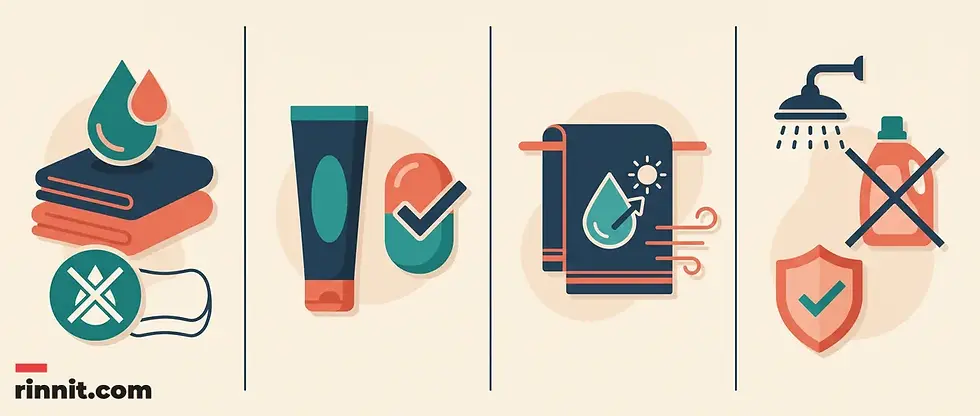
How Can I Prevent Balanitis?
Prevention step | How it helps |
Bathe often | Wash every day; pull your foreskin back so you can clean the area underneath |
Avoid harsh soaps | Strong soaps, lotions, or laundry detergents can irritate your skin |
Stay dry | Thoroughly dry your penis after bathing; also dry the area under your foreskin after peeing |
Teach proper bathing techniques | Teach your child how to properly clean their penis, especially if they have foreskin |
When Should I See My Healthcare Provider?
Schedule a visit if you have balanitis symptoms. A provider can prescribe the best treatment for you and recommend ways to prevent it from coming back. Pain, inflammation, or swelling is your body's way of telling you that something is wrong.
If it lasts longer than a few days or you get it often, see a healthcare provider — they can figure out the exact cause and get you the best treatment. During your appointment, you may want to ask:
Question | Why it helps |
What's the cause? | Targets treatment to the right fix |
If I don't have balanitis, what other condition might I have? | Rules out similar-looking conditions |
What treatment do you recommend? | Gets you on a clear plan |
What tests do you recommend to confirm balanitis? | Ensures an accurate diagnosis |
What are the best ways to keep my genital area clean? | Builds a prevention routine |
Do I need to see a specialist? | Helps if the case is complex or recurring |
Conclusion
Balanitis — pain, swelling, and inflammation of the head of the penis — is a common and usually not serious condition that most often affects uncircumcised males. [1] Its most common cause is simple: not cleaning under the foreskin regularly enough. [1] Yeast infections, STIs, skin conditions, chemical sensitivities, diabetes, and reactive arthritis can all play a role too, and several noninfectious types exist, from chronic Zoon's balanitis to the reactive-arthritis-linked circinate balanitis. [1]
The good news is that balanitis can't be spread to others and usually responds quickly to cause-based treatment — gentle daily washing and drying, antifungal cream, antibiotics, or diabetes management — with most people feeling better within a few days to a week. [1] The riskier path is ignoring it: untreated balanitis can scar, tighten the foreskin (phimosis), and harden skin enough to affect urination. [1] A provider's exam — sometimes with swabs, blood or urine tests, or a biopsy — sorts out the cause, and daily hygiene, gentle products, and staying dry keep it from coming back. [1]
Take the next step in understanding your health. If you create men's health education materials, Rinnit's infographic templates can help you turn topics like balanitis, phimosis, and penile health into clear, visual guides for your audience.
Frequently Asked Questions
What is balanitis?
Balanitis is pain, swelling, and inflammation of the head (glans) of the penis. [1] The head can look discolored (red, purple, gray, or white) or have discolored patches, and you may have shiny, swollen skin. [1] If inflammation affects both the head and the foreskin, it's called balanoposthitis. [1]
Who gets balanitis?
Balanitis most commonly affects uncircumcised males. [1] If you have foreskin, the most common cause is not regularly cleaning your penis and under your foreskin. [1]
What are the symptoms?
Common symptoms include pain and irritation on the head of the penis, discoloration or patches, itching under the foreskin, swelling, shiny skin areas, white cheesy discharge (smegma), a bad smell, and burning when you pee. [1] Symptoms can appear suddenly or develop over time. [1]
What causes balanitis?
The most common cause is not regularly cleaning under the foreskin. [1] Other causes include genital yeast infections (candidiasis), STIs like gonorrhea and chlamydia, scabies, soap or chemical allergies, skin conditions like psoriasis and eczema, diabetes, and reactive arthritis. [1]
Is balanitis an infection?
No. Balanitis isn't an infection itself — it's inflammation. [1] Infections (yeast or bacteria) are often the cause, but the inflammation itself is not contagious. [1]
Can I spread balanitis to my partner?
No. You can't spread balanitis to others. [1] However, it's a good idea to talk to your partner about it and encourage them to see a provider if they have questions. [1]
How is balanitis diagnosed?
A healthcare provider reviews your medical history, asks about symptoms, and performs a physical exam. [1] They may swab the urethra opening or penile head, run blood or urine tests for diabetes or infections, or take a biopsy if another condition looks similar. [1]
How is balanitis treated?
Treatment depends on the cause: regularly washing and thoroughly drying the penis and foreskin, antifungal cream (like clotrimazole) for yeast infections, antibiotics for certain STIs, and managing diabetes. [1] Frequent recurrences may prompt a circumcision or dorsal slit. [1]
Will balanitis go away on its own?
Most cases need some kind of treatment. [1] Without it, symptoms may get worse and new symptoms may develop. [1]
How long does recovery take?
Most people start feeling better within a few days or a week after starting treatment. [1] Contact your provider if symptoms worsen or new ones appear. [1]
What are the complications if left untreated?
Untreated balanitis can cause long-term inflammation leading to hardened skin tissue (which can block urine and semen flow), scarring that makes the foreskin too tight to pull back (phimosis), and — rarely — is linked to conditions that look similar, including some skin cancers. [1]
Can I have sex with balanitis?
It's best to avoid intercourse while you have balanitis, since sexual activity can cause further irritation. [1] If you do have sex, a condom may protect your skin. [1]
Can balanitis come back?
Yes. If you have foreskin, recurrence after treatment is common, especially if you don't clean under your foreskin regularly. [1]
How do I prevent it?
Wash daily and pull your foreskin back to clean underneath, avoid harsh soaps, lotions, and detergents, dry your penis thoroughly after bathing (and dry under the foreskin after peeing), and teach children proper bathing techniques. [1]
What can I do for pain at home?
Over-the-counter NSAIDs or acetaminophen can relieve swelling and pain (check with your provider first), and icing the area for up to 10 minutes several times a day can reduce swelling. [1]
Related Reading
Circumcision: Procedure, Methods, Recovery and Risks explains the procedure, the Gomco, Mogen and Plastibell methods, aftercare and recovery.
References
Cleveland Clinic. Balanitis. Cleveland Clinic Health Library. Last updated April 20, 2026. Accessed October 15, 2026. https://my.clevelandclinic.org/health/diseases/21186-balanitis
Lisboa C, Santos A, Dias C, et al. Candida balanitis: risk factors. J Eur Acad Dermatol Venereol. 2010;24(7):820-826. PMID: 20002652. https://doi.org/10.1111/j.1468-3083.2009.03533.x
Dave CV, Schneeweiss S, Patorno E. Comparative risk of genital infections associated with sodium-glucose co-transporter-2 inhibitors. Diabetes Obes Metab. 2019;21(2):434-438. PMID: 30207042. https://doi.org/10.1111/dom.13531
Barry R, Kravvas G, Bunker CB, et al. Male genital lichen sclerosus misreported as candidal or other infective balanitides: a systematic review of the literature. Int J STD AIDS. 2026;37(2):176-184. PMID: 41026603. https://doi.org/10.1177/09564624251383956
Wray AA, Velasquez J, Leslie SW. Balanitis. In: StatPearls [Internet]. Treasure Island (FL): StatPearls Publishing. Bookshelf ID: NBK537143. Last updated August 31, 2024. Accessed November 5, 2026. https://www.ncbi.nlm.nih.gov/books/NBK537143/
Medical disclaimer
The information provided in this article is for educational purposes only and is not intended as medical advice. Always seek the advice of your physician or other qualified health provider with any questions you may have regarding a medical condition. If symptoms last longer than a few days, get worse, or keep coming back, see a healthcare provider.



Comments