Hypertrophic Osteoarthropathy (HOA): Causes, Symptoms, and Treatments

Updated: 2 days ago
Medically reviewed by Dr. Baraa Alnahhal, MD · Last reviewed: October 2026
Quick Answer
Hypertrophic osteoarthropathy is a syndrome of digital clubbing, periostosis of tubular bones, and synovial effusions (joint swelling). [1] In the primary form, the skin also thickens (pachydermia). Most cases are secondary and act as a clue to an underlying condition, most often a lung disease, especially non-small cell lung cancer. Because of this link, it was formerly called hypertrophic pulmonary osteoarthropathy. [1]
What the research says
HOA is a recognized paraneoplastic clue, but the full picture is uncommon. In 1,226 patients admitted with lung cancer, 55 (4.5%) had bone scan findings suggesting HOA, and only 10 (0.8%) had both finger clubbing and joint pain and were confirmed as having HOA. Patients rarely showed the complete triad of signs (Izumi et al., Respirology, 2010) [2].
Secondary HOA has many causes beyond the lungs. A radiology review describes a high association between secondary HOA and malignancy, especially non-small cell lung cancer, and notes links with pleural, mediastinal, and cardiovascular conditions, gastrointestinal tumors and infections, cirrhosis, and inflammatory bowel disease (Yap et al., Radiographics, 2017) [1].
Primary HOA can mimic acromegaly, and genes involved in prostaglandin handling are responsible. In a case of a 20-year-old man with enlarged hands and feet, coarse facial features, and clubbing, hormone tests (growth hormone and IGF-1) were normal, and genetic testing found a novel SLCO2A1 variant. Fewer than 50 SLCO2A1 mutations had been described at the time, and treatment focuses on joint pain, usually with NSAIDs (Mangupli et al., Endocrinology, Diabetes & Metabolism Case Reports, 2017) [3].
Key Takeaways
Feature | Primary HOA (PHO) | Secondary HOA (SHO) |
Origin | Inherited gene changes (HPGD or SLCO2A1) [3] | An underlying chronic illness |
How Common | Rare, a small minority of cases | Most cases |
Typical Onset | Infancy or around puberty | Usually adulthood, when the underlying disease develops |
Common Causes | Family history; no other cause found | Lung cancer, other lung disease, heart disease, liver cirrhosis, bowel disease [1] |
Course | Often stabilizes after adolescence | Often improves when the root cause is treated |
Understanding Hypertrophic Osteoarthropathy
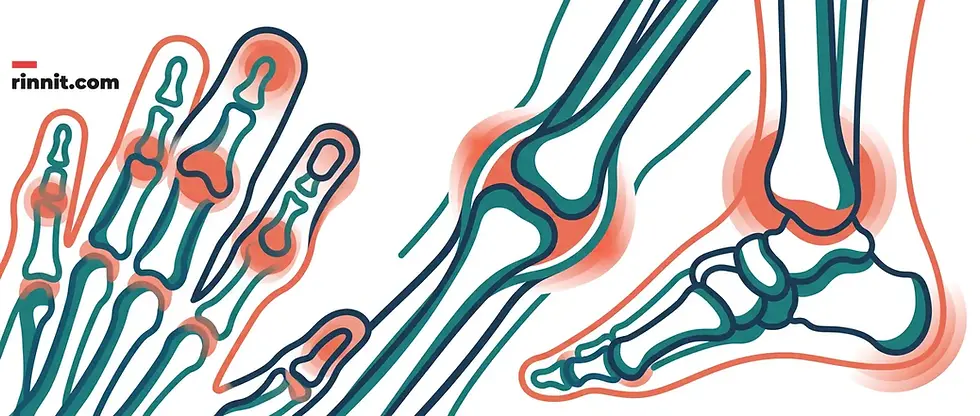
HOA is more than a cosmetic change in the hands and feet. The most visible sign is digital clubbing, in which the nails curve downward and the fingertips swell, like the head of a drumstick. Beneath the skin, the membrane covering long bones, such as those near the wrists and ankles, can become inflamed and thickened (periostosis), which can cause pain, joint swelling, and reduced movement.
The Two Types of HOA
Primary Hypertrophic Osteoarthropathy (PHO)
Also called pachydermoperiostosis, this inherited form is linked to changes in the HPGD and SLCO2A1 genes, which are involved in the handling of prostaglandin E2. [3] It usually appears in early childhood or around puberty and is more common in males. In many people it slows or stops progressing in adulthood. It can look like acromegaly, but hormone tests are normal. [3]
Secondary Hypertrophic Osteoarthropathy (SHO)
This is the far more common form. It develops as a result of another serious health problem, most often a lung disease, which is why it was formerly called hypertrophic pulmonary osteoarthropathy (HPOA). [1] Recognizing it matters because it can lead to the diagnosis of an underlying condition.
Common Causes of Secondary HOA
Category | Associated Conditions |
Lung | Non-small cell lung cancer (the most important cause), cystic fibrosis and other chronic lung infections |
Heart | Cyanotic congenital heart disease and infective endocarditis |
Liver and Digestive | Cirrhosis, inflammatory bowel disease, and gastrointestinal tumors and infections [1] |
Read more about lung cancer, cystic fibrosis, endocarditis, cirrhosis, Crohn's disease, and ulcerative colitis.
Identifying the Symptoms
Symptoms range from subtle nail changes to severe joint pain and often progress gradually.
Digital clubbing: Rounded, bulging fingertips and nails that curve sharply downward, in both fingers and toes.
Skin thickening (pachydermia): Mostly in primary HOA, especially on the face and scalp, with deep folds and a coarse texture.
Joint swelling: Swelling and tenderness in the ankles, wrists, and knees from fluid in the joints.
Bone pain: Deep, aching pain in the limbs from inflammation of the bone lining.
Excess sweating and oily skin: Hyperhidrosis and seborrhea can occur, mostly in primary HOA.

How HOA Is Diagnosed
Diagnosis begins with a physical examination of the hands and feet. Clubbing is usually symmetrical. Common bedside checks include:
Lovibond profile sign: An angle greater than 180 degrees between the nail plate and the skin fold indicates clubbing.
Schamroth sign: When the nails of two fingers are placed together, the absence of a small diamond-shaped window of light suggests clubbing.
Phalangeal depth ratio: Compares the thickness of the fingertip with the joint behind it.
If secondary HOA is suspected, doctors look for the underlying cause with tests such as chest X-rays and CT scans. Skeletal changes are most often seen on X-ray, and bone scans, CT, and MRI can also show them. [1] In primary HOA, doctors first rule out secondary causes, and genetic testing for HPGD and SLCO2A1 can confirm the diagnosis. Other conditions that can look similar include acromegaly and thyroid acropachy (see Graves disease). [1] [3]
Treatment and Management
Managing Primary HOA
There is no treatment that corrects the genetic cause, so care focuses on symptoms.
Pain relief: NSAIDs are the usual treatment for joint pain. [3]
Other options: COX-2 inhibitors, bisphosphonates, and octreotide have been used in some patients, mostly based on case reports, under specialist guidance.
Treating Secondary HOA
The priority is treating the root cause. When the underlying disease is controlled, clubbing and joint symptoms often improve.
Surgery: For example, removing a lung tumor.
Treating infection or inflammation: Such as antimicrobial treatment or therapy for bowel disease.
Symptom relief: NSAIDs or other pain medicines while the cause is treated.

Outlook and Prognosis
Primary HOA is chronic but often stabilizes after puberty. The outlook for secondary HOA depends on how treatable the underlying illness is. HOA itself is not life-threatening, but conditions such as lung cancer can be. If left untreated for a long time, joint changes can lead to arthritis-like damage.
When to See a Healthcare Provider
See your primary care provider if you notice finger clubbing, swollen joints, or unexplained bone pain. They may refer you to a pulmonologist, cardiologist, or rheumatologist.
Conclusion
Hypertrophic osteoarthropathy is a visible sign of what may be happening inside the body. Prompt evaluation of clubbing and joint symptoms helps find and treat the underlying cause in secondary HOA and guides symptom care in primary HOA.
Frequently Asked Questions
What is the most common cause of finger clubbing with HOA?
Lung cancer, especially non-small cell lung cancer, is the most important cause of secondary HOA. Other lung, heart, liver, and bowel diseases can also cause it. [1]
Can finger clubbing be reversed?
Often it improves when the underlying cause is successfully treated, though recovery varies.
Is HOA painful?
It can be. Inflammation of the bone lining and joint swelling can cause deep, aching pain. Clubbing on its own is usually painless.
Is HOA the same as arthritis?
No, but the joint swelling and pain can look like arthritis, and long-standing joint inflammation can damage joints.
How common is primary HOA?
It is rare and accounts for only a small minority of cases. Most cases are secondary to another illness.
What is pachydermia?
Thickening of the skin, often on the face and scalp, with deep folds. It is a feature of primary HOA.
Does HOA affect children?
Primary HOA usually begins in early childhood or around puberty. Secondary HOA can occur in children with chronic conditions such as cystic fibrosis.
What is the Schamroth window test?
You place the nails of two fingers together and look for a diamond-shaped gap of light between them. Its absence suggests clubbing.
Can smoking cause HOA?
Not directly, but smoking is a major risk factor for lung cancer, the most important cause of secondary HOA.
What is periostosis?
Inflammation and thickening of the periosteum, the membrane that covers the outer surface of bones.
Is HOA contagious?
No. It is either inherited (primary) or caused by another illness (secondary).
What is HPOA?
Hypertrophic pulmonary osteoarthropathy, the older term used when HOA is caused by lung disease.
Can heart disease cause finger clubbing?
Yes, particularly cyanotic congenital heart disease and infective endocarditis.
Does HOA affect the toes?
Yes. Clubbing can affect both fingers and toes, usually on both sides.
Is there a blood test for HOA?
There is no single blood test. Tests are used to look for the underlying cause, and genetic testing can help confirm primary HOA.
What is Lovibond's angle?
The angle between the nail plate and the skin fold at the nail base. An angle greater than 180 degrees indicates clubbing.
Can liver disease cause HOA?
Yes. Cirrhosis is a recognized cause of secondary HOA. [1]
Is HOA life-threatening?
HOA itself is not, but the conditions that cause it, such as lung cancer, can be serious.
Can inflammatory bowel disease cause HOA?
Yes. Inflammatory bowel disease is a recognized cause of secondary HOA. [1]
Does HOA cause excessive sweating?
It can. Hyperhidrosis is a feature of the primary form of the condition.
Is HOA the same as hypertrophic cardiomyopathy?
No. They are unrelated. HOA affects bones, joints, and skin, while hypertrophic cardiomyopathy affects the heart muscle.
What is thyroid acropachy?
A rare complication of autoimmune thyroid disease that can cause clubbing and bone changes similar to HOA. Doctors treat it as a separate condition that has to be told apart from HOA.
How is a bone scan used in HOA?
A bone scan can show increased tracer uptake along the shafts of long bones, which suggests periostosis.
Which genes cause primary HOA?
Changes in the HPGD and SLCO2A1 genes, which are involved in prostaglandin E2 handling, have been identified. [3]
Can HOA affect only one side of the body?
It is usually symmetrical. One-sided clubbing is rare and is usually linked to a local problem such as a vascular abnormality.
Why can HOA be mistaken for acromegaly?
Both can cause enlarged hands and feet and coarse features. Hormone tests (growth hormone and IGF-1) are normal in primary HOA, and clubbing is not a usual feature of acromegaly. [3]
Does HOA limit movement?
It can. Joint swelling and bone thickening can make it harder to move the wrists, ankles, and knees.
Is a biopsy needed?
Usually not for HOA itself, but a biopsy may be needed to diagnose the underlying cause, such as a lung mass.
Is HOA related to low oxygen levels?
Many conditions that cause secondary HOA involve chronic low blood oxygen, although the exact mechanism is still being studied.
Who should I see if I notice finger clubbing?
Start with your primary care provider, who may refer you to a pulmonologist, cardiologist, or rheumatologist.
Related Reading
Non-Small Cell Lung Cancer: Understanding Symptoms, Types, and Treatments explains the lung cancer type most often linked to HOA.
Bone Scan: What It Shows, How It's Done, Results and Risks describes the imaging test that shows bone changes from HOA.
Cystic Fibrosis: Symptoms, Causes, Diagnosis, and Treatment (2026 Guide) covers cystic fibrosis, a chronic lung condition linked to HOA.
Bronchiectasis: The Widened Airways Condition That Makes Mucus Hard to Clear — Explained explains widened airways, another lung cause of finger clubbing.
References
Yap FY, Skalski MR, Patel DB, et al. Hypertrophic osteoarthropathy: clinical and imaging features. Radiographics. 2017;37(1):157-195. PMID 27935768. https://doi.org/10.1148/rg.2017160052
Izumi M, Takayama K, Yabuuchi H, et al. Incidence of hypertrophic pulmonary osteoarthropathy associated with primary lung cancer. Respirology. 2010;15(5):809-812. PMID 20497387. https://doi.org/10.1111/j.1440-1843.2010.01769.x
Mangupli R, Daly AF, Cuauro E, et al. Primary hypertrophic osteoarthropathy due to a novel mutation masquerading as acromegaly. Endocrinology, Diabetes & Metabolism Case Reports. 2017;2017:17-0013. PMID 28469926. https://doi.org/10.1530/EDM-17-0013
Disclaimer
This article is for informational purposes only and does not constitute medical advice. Always seek the advice of your physician or other qualified health provider with any questions you may have regarding a medical condition.



Comments