Graves' Disease: How an Overactive Immune System Drives an Overactive Thyroid, and What Treatment Can — and Can't — Do

Updated: 3 days ago
Medically reviewed by Dr. Baraa Alnahhal, MD · Last reviewed: October 30, 2026
Quick Answer
Graves' disease is an immune system disorder that makes the thyroid produce too much hormone, causing hyperthyroidism. Symptoms include a racing heartbeat, weight loss, tremor, heat intolerance, goiter and, in about 25% of cases, bulging eyes. Blood tests diagnose it. Treatment includes anti-thyroid medicines, radioactive iodine, beta blockers and surgery, often followed by lifelong hormone replacement.
What the research says
About half of people with Graves' disease relapse after stopping antithyroid medicine. A meta-analysis of 54 trials with 7,595 patients found relapse in 48.7%, and thyroid eye disease, smoking and a larger goiter were linked to a higher chance of relapse (Struja et al., Eur J Endocrinol, 2017) [4].
Younger age and a larger thyroid also predict relapse. A meta-analysis of 20 studies with 3,242 patients treated with antithyroid drugs reported a relapse rate of 51.9%, with younger age and larger thyroid volume linked to more relapses (Shi et al., Clin Ther, 2020) [5].
What Is Graves' Disease?
Graves' disease is an immune system condition that affects the thyroid gland. The thyroid sits at the base of the neck, just below the Adam's apple, and it produces hormones that influence how nearly every organ in the body works.
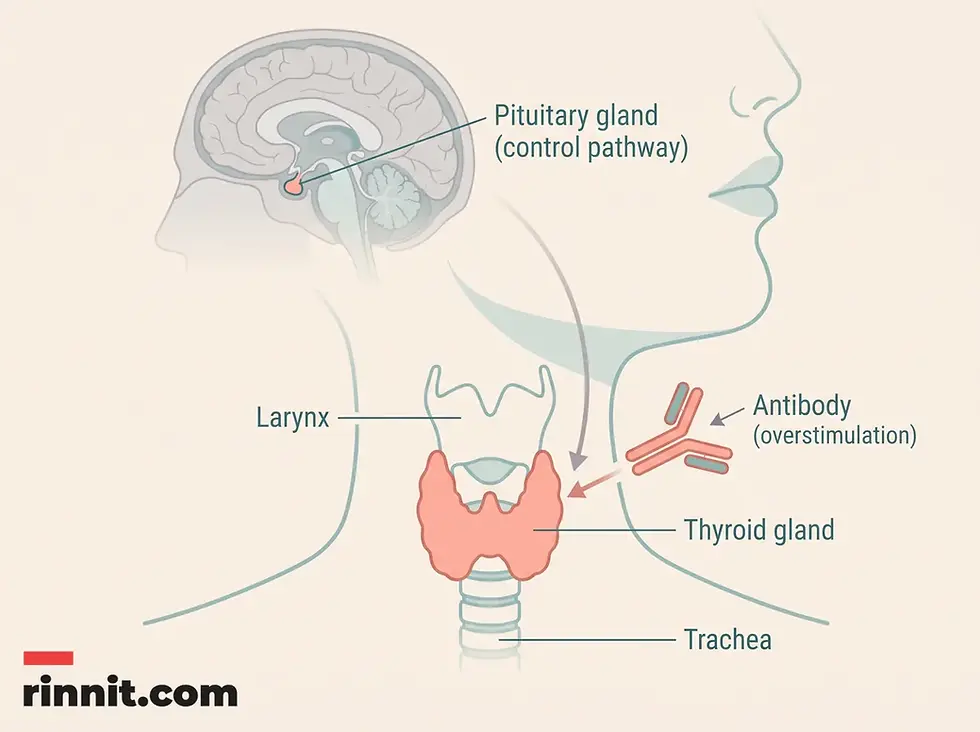
In Graves' disease, the immune system goes off course. It produces an antibody called thyrotropin receptor antibody (TRAb) that targets cells in the thyroid. This antibody takes over the job normally performed by a pituitary hormone, tricking the thyroid into producing more hormone than the body needs. The result is hyperthyroidism — too much thyroid hormone circulating in the body [1].
Anyone can get Graves' disease. It is more common in women and in people older than 30 [2], and it most often appears between the ages of 30 and 60. Treatment does not cure the immune problem itself, but it helps lower the amount of thyroid hormone the body makes and eases symptoms.
Symptoms of Graves' Disease
Because thyroid hormones affect many organs, Graves' disease symptoms can show up across the body — not just in the thyroid. The most common symptoms are listed below.
Symptom | What You May Notice |
Emotional and nervous system | Feeling nervous, irritable, or not sleeping well [2] |
Hands | A slight tremor of the hands or fingers [2] |
Temperature and skin | Heat sensitivity, increased sweating, warm moist skin |
Weight | Losing weight despite wanting to eat more [2] |
Thyroid gland | An enlarged thyroid (goiter) that can cause a visible bulge in the neck |
Heart | Fast or irregular heartbeat (palpitations) [2] |
Digestion | Frequent bowel movements [2] |
Hormones and sexual health | Changes in menstrual cycles; erectile dysfunction or reduced sex drive |
Energy | Feeling tired [2] |
Eyes | |
Skin | Thick, discolored skin, mostly on the shins or tops of the feet (Graves' dermopathy) |
Thyroid Eye Disease (Graves' Ophthalmopathy)
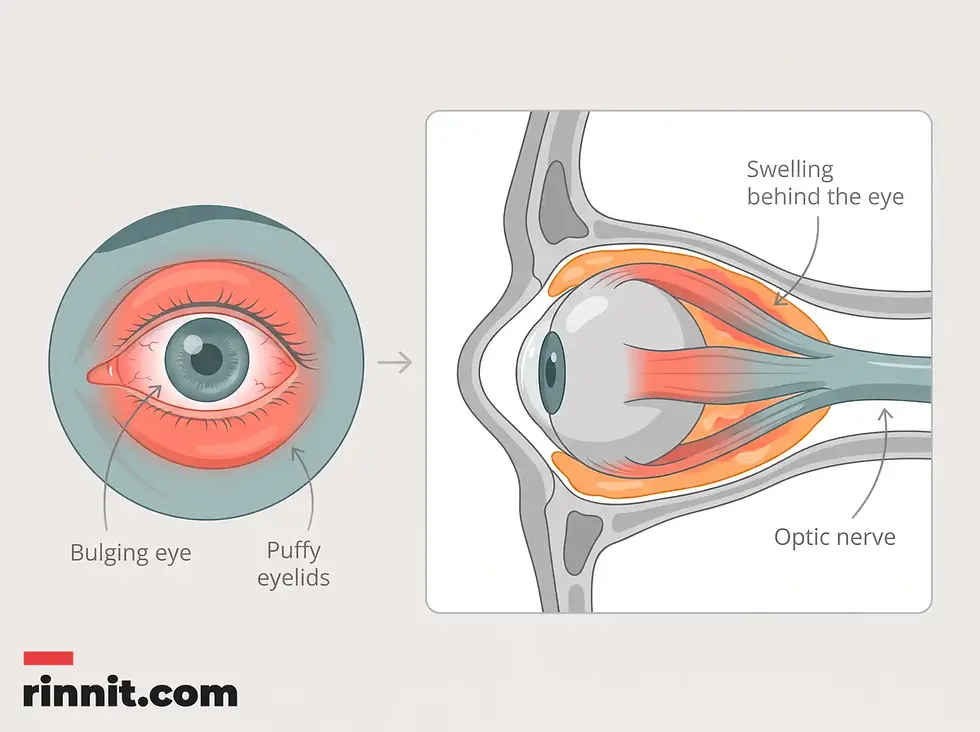
About 25% of people with Graves' disease develop eye symptoms. Thyroid eye disease affects the muscles and other tissues around the eyes, and its symptoms include bulging eyes, a gritty feeling, pressure or pain in the eyes, puffy eyelids, eyelids that do not cover the eyeball all the way (retracted eyelids), red or inflamed eyes, light sensitivity, blurred or double vision, and in some cases vision loss.
Thyroid eye disease can appear at the same time as hyperthyroidism, several months later, or even years before or after hyperthyroidism begins. It is also possible to have thyroid eye disease without hyperthyroidism [2].
Graves' Dermopathy
Rarely, Graves' disease also affects the skin [2]. Darkening and thickening of the skin — often with an orange-peel texture — comes from a buildup of protein in the skin. It most often appears on the shins and the tops of the feet, and it is usually mild and painless.
What Causes Graves' Disease?
Graves' disease is caused by the body's disease-fighting immune system not working correctly, and experts do not know why this happens.
Normally, the immune system makes antibodies that target viruses, bacteria, and other foreign substances. In Graves' disease, the immune system instead makes an antibody against one part of the cells in the thyroid gland. A tiny gland at the base of the brain called the pituitary gland normally makes a hormone that controls the thyroid. The Graves'-linked antibody (TRAb) takes over that control, and the thyroid ends up producing more hormone than the body needs — hyperthyroidism [1].
The cause of thyroid eye disease is not fully understood either. It comes from a buildup of certain carbohydrates in the muscles and tissues behind the eyes, and it may involve the same antibody that disrupts the thyroid.
Risk Factors
Several factors increase the odds of developing Graves' disease.
Risk Factor | How It Raises Risk |
Family history | |
Sex | Women are much more likely to get Graves' disease than men [1] |
Age | It most often occurs between ages 30 and 60 |
Other autoimmune conditions | |
Smoking |
Complications to Take Seriously
Left untreated or undertreated, Graves' disease can lead to serious complications affecting pregnancy, the heart, and the bones.
Pregnancy health concerns. Graves' disease during pregnancy can cause miscarriage, early birth, fetal thyroid problems, and poor fetal growth. It can also cause preeclampsia (high blood pressure and other serious symptoms) and heart failure in the pregnant person.
Heart conditions. Untreated Graves' disease can lead to irregular heart rhythms and changes in the heart and how it works. In severe cases, the heart may not be able to pump enough blood to the body — a condition called heart failure [2].
Thyroid storm. This rare but deadly complication — also called accelerated hyperthyroidism or thyrotoxic crisis — is more likely when severe hyperthyroidism is not treated or not treated well enough. A sudden, drastic rise in thyroid hormones can cause fever, sweating, confusion, delirium, severe weakness, tremors, irregular heartbeat, severe low blood pressure, and coma. A thyroid storm needs medical attention right away.
Brittle bones. Untreated hyperthyroidism can lead to weak, brittle bones — a condition called osteoporosis [2]. Bone strength depends in part on how much calcium and other minerals the bones hold, and too much thyroid hormone makes it hard for the body to move calcium into the bones.
When to See a Doctor
Other medical conditions can cause symptoms that look like Graves' disease, so it is important to get a prompt diagnosis from a healthcare professional if you notice any of the symptoms above.
Seek medical care right away if you have heart-related symptoms, such as a fast or irregular heartbeat, or if you have vision loss.
How Graves' Disease Is Diagnosed
To diagnose Graves' disease, a healthcare professional typically starts with a physical exam and questions about your medical and family history. Diagnosis then relies on a small set of tests.
Diagnostic Test | What It Measures | What Results Usually Show in Graves' Disease |
Blood tests (TSH and thyroid hormones) | Thyroid-stimulating hormone (TSH), the pituitary hormone that spurs the thyroid, plus circulating thyroid hormone levels | Lower-than-usual TSH and higher-than-usual thyroid hormone levels |
Antibody blood test | Levels of the antibody known to cause Graves' disease (TRAb) [1] | Elevated antibody levels; if no antibodies are found, another cause of hyperthyroidism may be responsible |
Radioactive iodine uptake | How much of a small dose of radioactive iodine the thyroid absorbs over time | A fast uptake pattern that helps distinguish Graves' disease from other causes of hyperthyroidism; often combined with a radioactive iodine scan to show a picture of the uptake pattern |
Treatment Options
The goal of treatment is twofold: stop the thyroid from making excess hormones, and block the effect those hormones have on the body. There are four main approaches, each with different trade-offs.
Treatment | How It Works | Key Benefits | Key Cautions and Trade-offs |
Radioactive iodine therapy | Radioiodine taken by mouth enters thyroid cells and gradually destroys the hormone-making cells, shrinking the gland | Symptoms ease little by little over several weeks to several months | May raise or worsen thyroid eye disease risk (usually mild and short-lived); not used in pregnancy or breastfeeding; may cause a tender neck and brief rise in thyroid hormones |
Anti-thyroid medicines | Prescription drugs (methimazole, propylthiouracil) block the thyroid from using iodine to make hormones | Avoids radiation and surgery; can be used before or after radioiodine therapy | Hyperthyroidism may return if used alone; works better when taken longer than a year; possible rash, joint pain, liver failure, and lowered white blood cells |
Beta blockers | Block the effect of thyroid hormones on the body rather than reducing hormone production [2] | Works quickly on irregular heartbeats, tremor, anxiety, irritability, heat intolerance, sweating, diarrhea, and muscle weakness | Does not treat the underlying cause; generally avoided in asthma; may complicate diabetes management |
Surgery (thyroidectomy) | Surgical removal of the thyroid gland | Treats Graves' disease directly | Requires lifelong thyroid hormone medicine afterward; risks include damage to the vocal cord nerve and the parathyroid glands |
Anti-Thyroid Medicine Details
Methimazole is most often the first choice because the risk of liver failure is more common with propylthiouracil. However, methimazole carries a slight risk of birth defects, so propylthiouracil may be prescribed during the first trimester of pregnancy, with a switch back to methimazole afterward. When either medicine is used without other treatments, hyperthyroidism may come back [2].
Beta Blocker Options
Beta blockers include propranolol, atenolol, metoprolol, and nadolol. Because they can trigger an asthma attack, they are not often given to people with asthma, and they may make diabetes harder to manage.
What Happens After Treatment
Radioactive iodine therapy destroys the cells that make thyroid hormone, so you will likely need to take daily thyroid hormone medicine for the rest of your life afterward [1] [2]. The same is true after thyroidectomy [1]. Lifelong hormone replacement is a normal, manageable part of treatment — not a sign that treatment failed.
Treating Thyroid Eye Disease
Thyroid eye disease does not always improve with treatment of Graves' disease itself. Symptoms may even worsen for 3 to 6 months, stay about the same for a year or so, and then begin to get better, often on their own.
Mild symptoms may be helped with over-the-counter artificial tears during the day and lubricating gels at night. For more significant symptoms, treatment may include corticosteroids given through a vein to ease swelling behind the eyeballs (with possible side effects such as fluid buildup, weight gain, high blood sugar, high blood pressure, and mood swings); a medicine called teprotumumab given eight times by IV every three weeks (possible hearing loss, nausea, diarrhea, muscle spasms, and high blood sugar); prisms in glasses to correct double vision when it occurs; orbital decompression surgery to remove bone between the eye socket and the sinuses and give the eyes room to move back, mainly used when pressure on the optic nerve might cause vision loss; or orbital radiotherapy, which uses X-rays over several days to destroy some tissue behind the eyes when corticosteroids fail or cause too many side effects.

Home Care, Lifestyle, and Symptom Relief
Beyond formal treatment, day-to-day habits matter. Eating well and exercising can ease some symptoms during treatment and improve how you feel overall. Because the thyroid controls how you burn calories, you may gain weight when the hyperthyroidism is corrected. Weight-bearing exercises can help keep bones strong, since brittle bones can occur with Graves' disease. Stress can trigger Graves' disease or make it worse, so relaxing activities such as listening to music, taking a warm bath, or walking may help.
Symptom Area | Self-Care Steps |
Thyroid eye disease (mild) | Over-the-counter artificial tears by day; lubricating gel at night |
Eye comfort | Cool, damp cloths on the eyes; wrap-around sunglasses to block UV and wind |
Overnight eye pressure | Raise the head of the bed to lessen fluid buildup; tape eyelids shut or wear a sleep mask if eyelids do not close fully |
Skin (Graves' dermopathy) | Over-the-counter hydrocortisone creams or ointments to ease swelling; compression wraps on the legs may help |
Smoking | |
General health | Balanced diet, weight-bearing exercise, and daily stress-reducing activities |
Conclusion: Graves' Disease Is Highly Manageable
Graves' disease turns the immune system into an unwanted accelerator for the thyroid, but it is a well-understood condition with effective treatments. Diagnosis is straightforward — a few blood tests plus a radioactive iodine uptake test — and treatment options range from daily medicines to radioactive iodine to surgery, depending on your situation, age, pregnancy status, and eye involvement.
The key is not to wait. Untreated Graves' disease can strain the heart, weaken the bones, and — in the rare but serious case of thyroid storm — become life-threatening. If you are experiencing an unexplained racing heart, weight loss, tremor, heat intolerance, or bulging eyes, consult a healthcare professional for a prompt diagnosis and a personalized treatment plan.
For related reading, explore our guide on heart palpitations.
Frequently Asked Questions
What is Graves' disease?
Graves' disease is an immune system condition that causes the thyroid gland, located at the base of the neck, to produce too much thyroid hormone — a state called hyperthyroidism. It most often affects women and people between ages 30 and 60. Treatment lowers hormone production and eases symptoms.
What are the most common symptoms of Graves' disease?
Common symptoms include feeling nervous and irritable, a slight hand tremor, heat sensitivity with increased sweating, weight loss despite a bigger appetite, an enlarged thyroid (goiter), frequent bowel movements, fast or irregular heartbeat, tiredness, and poor sleep. About 25% of people also develop bulging eyes or other eye symptoms.
Why does Graves' disease cause bulging eyes?
About 25% of people with Graves' disease develop thyroid eye disease (Graves' ophthalmopathy), caused by a buildup of certain carbohydrates in the muscles and tissues behind the eyes. It may involve the same antibody that drives the overactive thyroid, and it can appear before, during, or years after hyperthyroidism begins.
What causes Graves' disease?
Graves' disease is caused by an immune system malfunction. The body produces an antibody called TRAb that targets the thyroid and takes over the pituitary hormone's job of controlling it, forcing the thyroid to make more hormone than the body needs. Experts do not know why the immune system does this.
Is Graves' disease dangerous if left untreated?
Untreated Graves' disease can cause irregular heart rhythms, heart failure, brittle bones (osteoporosis), and serious pregnancy complications including miscarriage and preeclampsia. In rare cases, severe untreated hyperthyroidism can trigger a thyroid storm — a life-threatening emergency requiring immediate medical care.
How is Graves' disease diagnosed?
Diagnosis typically involves a physical exam, blood tests showing low TSH and high thyroid hormone levels, an antibody test for TRAb, and often a radioactive iodine uptake test that shows how quickly the thyroid absorbs iodine. The uptake pattern helps confirm whether Graves' disease — rather than another condition — is causing the hyperthyroidism.
What are the main treatment options for Graves' disease?
The four main treatments are radioactive iodine therapy (which gradually destroys hormone-making thyroid cells), anti-thyroid medicines (methimazole or propylthiouracil), beta blockers (which block hormone effects rather than production), and thyroidectomy (surgical removal of the thyroid). After radioactive iodine or surgery, most people take daily thyroid hormone medicine for life.
Can Graves' disease be cured?
Treatment effectively controls hyperthyroidism, but approaches differ. Anti-thyroid medicines may allow remission when taken for more than a year, though the condition can return. Radioactive iodine and surgery resolve hyperthyroidism by removing the thyroid's ability to overproduce hormones, which usually requires lifelong thyroid hormone replacement instead.
Does smoking make Graves' disease worse?
Yes. Smoking raises the risk of developing Graves' disease, and people with Graves' disease who smoke are at higher risk of developing thyroid eye disease. Quitting smoking is an important part of managing the condition, especially for eye health.
What home steps help manage Graves' disease symptoms?
Helpful self-care steps include eating well, exercising (including weight-bearing exercise to protect bones), easing stress, avoiding smoking, and for eye symptoms: using artificial tears by day and lubricating gels at night, wearing wrap-around sunglasses, applying cool damp cloths, raising the head of the bed, and taping the eyelids shut at night if they do not close fully. For skin involvement, over-the-counter hydrocortisone cream may ease swelling.
Further Reading and Credible Sources
For readers who want authoritative reference material on Graves' disease and related conditions, the following organizations publish reliable, regularly updated patient information:
American Thyroid Association. Graves' Disease. American Thyroid Association. Accessed October 30, 2026. https://www.thyroid.org/graves-disease/
National Institute of Diabetes and Digestive and Kidney Diseases. Graves' Disease. National Institute of Diabetes and Digestive and Kidney Diseases. November 2021. https://www.niddk.nih.gov/health-information/endocrine-diseases/graves-disease
American Academy of Ophthalmology. What Is Thyroid Eye Disease (TED) or Graves' eye disease? American Academy of Ophthalmology. September 8, 2026. https://www.aao.org/eye-health/diseases/what-is-graves-disease
Struja T, Fehlberg H, Kutz A, et al. Can we predict relapse in Graves' disease? Results from a systematic review and meta-analysis. Eur J Endocrinol. 2017;176(1):87-97. PMID 27780830. https://doi.org/10.1530/EJE-16-0725
Shi H, Sheng R, Hu Y, et al. Risk Factors for the Relapse of Graves' Disease Treated With Antithyroid Drugs: A Systematic Review and Meta-analysis. Clin Ther. 2020;42(4):662-675.e4. PMID 32139177. https://doi.org/10.1016/j.clinthera.2020.01.022
Related Reading
T4 (Thyroxine) Test: Free T4 Normal Range and What Results Mean explains the thyroxine blood test and how it's read with TSH.
Thyroid Antibodies Test: TPO, Tg, TSI and TRAb Levels Explained explains the blood test that shows whether autoimmune thyroid antibodies are present.
Thyroid Panel Blood Test: TSH, T3, T4 and Antibodies Explained explains the thyroid blood tests used to diagnose and monitor this condition.
Thyroid Tests: Blood Tests, Imaging Scans and What Your Results Mean explains the blood tests and scans used to check your thyroid.
Thyroid Uptake and Scan (RAIU): How It Works, How to Prepare and What Results Mean explains the nuclear medicine test used to find the cause of an overactive thyroid.



Comments