Floppy Eyelid Syndrome: Symptoms, Causes, Diagnosis, Treatment and Outlook — What You Need to Know

Updated: 2 days ago
Medically reviewed by Dr. Baraa Alnahhal, MD · Last reviewed: September 2026
TL;DR
Floppy eyelid syndrome (FES) is a medical condition characterized by a significant loss of elasticity in the eyelids, causing them to become loose, rubbery, and prone to turning inside out. This eyelid laxity often occurs during sleep, leading to chronic eye irritation, dryness, and potential corneal damage. While the exact cause is not fully understood, FES is strongly associated with obstructive sleep apnea (OSA) and obesity, affecting between 2% and 4% of the global population. Early diagnosis is critical, as the syndrome can be a clinical indicator of underlying sleep disorders and can lead to permanent vision loss if left untreated. Management ranges from conservative measures like eye shields and artificial tears to surgical interventions to tighten the eyelids.
Quick Answer: What is Floppy Eyelid Syndrome?
Floppy eyelid syndrome is a condition where the skin and supporting tissues of the eyelids lose their natural tension and stretchiness. This results in "floppy" lids that sag and can easily flip over, especially when rubbing against a pillow during sleep. The condition disrupts the eye's natural lubrication system because the eyelids no longer form an airtight seal or allow the meibomian glands to distribute essential oils across the eye's surface. FES is most common in middle-aged males and is frequently linked to obstructive sleep apnea, with approximately 50% of OSA patients developing the syndrome. Symptoms often include severe eye irritation, redness, and mucus discharge, typically worsening upon waking.
What Is Floppy Eyelid Syndrome?
Floppy eyelid syndrome is a disorder of eyelid elasticity that compromises the eye's protective barrier. The eyelids are the thinnest skin on the human body and require a precise balance of tension and flexibility to function correctly. In a healthy eye, the lids lay flat against the eyeball, sealing in moisture and protecting the cornea from environmental damage. When FES occurs, the elastin fibers in the eyelid tissue break down, causing the lids to become excessively loose.
This laxity prevents the eyelids from maintaining their proper position. Instead of sealing shut, they may shift or turn inside out with minimal effort. This mechanical failure leads to chronic exposure of the conjunctiva and cornea, resulting in inflammation and a variety of secondary eye conditions. Because FES is often misdiagnosed as simple dry eye or chronic conjunctivitis, understanding its unique mechanical nature is essential for effective treatment.
Key Characteristic | Description |
Primary Feature | Excessive eyelid stretchiness and laxity |
Common Complication | Obstructive Sleep Apnea (OSA) |
Demographic Trend | Primarily affects males (approx. two-thirds of cases) |
Clinical Sign | Eyelids easily turn inside out (eversion) |
Global Prevalence | Estimated at 2% to 4% of the population |

How Common is Floppy Eyelid Syndrome?
Research indicates that floppy eyelid syndrome affects roughly 2% to 4% of people worldwide. However, many medical experts believe these figures significantly underrepresent the true prevalence of the condition. Because the symptoms of FES—such as redness and irritation—overlap with many common eye ailments, healthcare providers frequently treat the symptoms without identifying the underlying syndrome. FES is most prevalent in adults, with a strong correlation to individuals who have a high body mass index (BMI).
Symptoms of Floppy Eyelid Syndrome
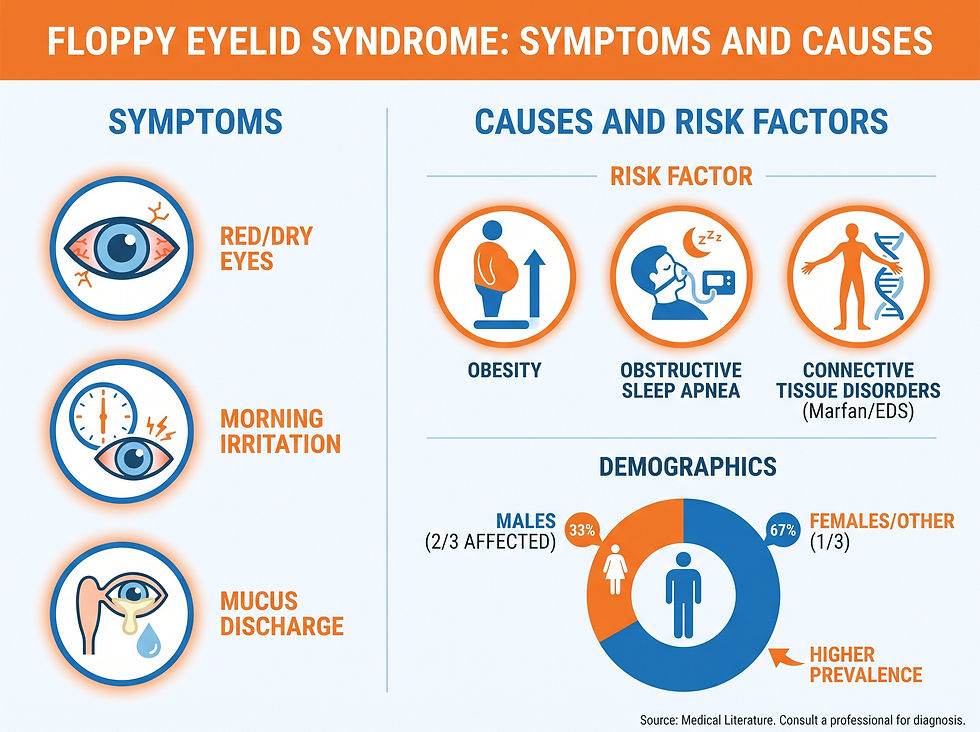
The symptoms of floppy eyelid syndrome are often most severe immediately after waking up, as the eyelids are frequently displaced or turned inside out during sleep. Chronic irritation from this exposure leads to a cycle of discomfort and potential eye damage.
Category | Specific Symptoms |
Physical Eyelid Signs | Loose/stretchy lids, lids that flip easily, swelling (blepharitis) |
Eye Discomfort | Burning sensation, eye pain, feeling of a foreign object in the eye |
Moisture Issues | Severe dry eyes, watery eyes (overcompensation), mucus discharge |
Visual Sensitivity | Light sensitivity (photophobia), blurred vision |
Timing | Symptoms are typically at their worst in the morning |
Causes and Risk Factors
The underlying cause of floppy eyelid syndrome is the loss of elastin in the eyelid tissue. While the exact trigger for this breakdown remains a subject of ongoing research, several medical conditions and biological factors have been identified as major contributors, including obstructive sleep apnea and obesity.
Contributing Factor | Why It Increases Risk |
Obstructive Sleep Apnea | Lack of oxygen during sleep may trigger enzymes that break down elastin. |
Obesity | Closely linked to OSA and systemic inflammation that affects tissue elasticity. |
Connective Tissue Disorders | Conditions like Marfan or Ehlers-Danlos affect how the body uses elastin. |
Genetics | Inherited DNA mutations can impact the structural integrity of eyelid skin. |
Bulging Eyes | Conditions like Hashimoto’s disease can put extra mechanical strain on the lids. |
Demographic Risk Factors
Sex: Approximately two-thirds of FES cases affect males.
Age: The condition is much more common in adults than in children.
Race: People of Asian descent with an epicanthic fold may have a lower risk due to eyelid structure.
Potential Complications
When the eyelids fail to protect and lubricate the eye, the surface of the eyeball becomes vulnerable to significant injury. If left untreated, the chronic irritation caused by floppy eyelid syndrome can lead to permanent changes in vision.
Dry Eye Disease: Chronic lack of proper lubrication leads to persistent discomfort.
Keratitis: Inflammation of the cornea that can cause pain and blurred vision.
Corneal Erosion: Recurrent wearing away of the cornea's outermost layer.
Ulcers and Scarring: Severe cases can lead to open sores on the cornea and permanent scar tissue.
Vision Loss: In the most advanced untreated cases, the damage can lead to partial or total blindness.
Diagnosis of Floppy Eyelid Syndrome
Diagnosing FES requires a specialized examination by an eye care professional, as there are no specific laboratory tests for the condition. The diagnosis is primarily based on a physical assessment of the eyelid's mechanical properties.
Physical Examination
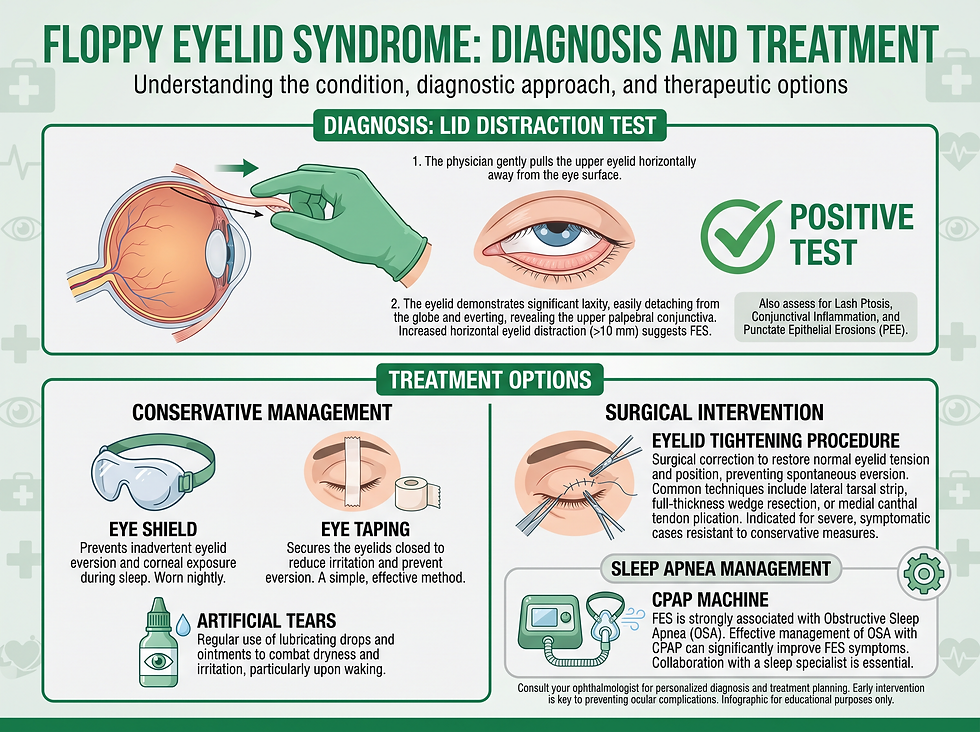
During the exam, a specialist will gently touch the eyelid to determine how far it can stretch or move. They will also look for signs of "easy eversion," where the lid turns inside out with minimal pressure.
Severity Grading Systems
Providers use two main scales to determine the severity of the syndrome:
Measurement System: A scale from 0 to 4 based on how many millimeters the lid can be pulled away from the eye.
Conjunctiva Visibility System: A scale from 0 to 3 based on how much of the white area (conjunctiva) is visible when the lid is held upward.
Grade | Measurement (mm) | Visibility Grade | Meaning |
Grade 0 | < 6 mm | No conjunctiva visible | No FES |
Grade 1 | 6 - 8 mm | < 1/3 visible | Mild FES |
Grade 2 | 9 - 11 mm | 1/3 to 1/2 visible | Moderate FES |
Grade 3 | 12 - 15 mm | > 1/2 visible | Severe FES |
Grade 4 | > 15 mm | N/A | Severe FES |
Treatment and Management
Treatment for floppy eyelid syndrome follows a two-tiered approach: conservative management to protect the eye and surgical intervention to correct the underlying structural laxity.
Conservative Management
The goal of conservative treatment is to prevent the eyelids from flipping over during sleep and to maintain eye moisture.
Eye Shields and Taping: Wearing a hard shield or gently taping the lids shut during sleep.
Lubrication: Using artificial tears during the day and thick ointments at bedtime.
Sleep Apnea Treatment: Using a CPAP machine if OSA is present, which often improves eyelid symptoms.
Surgical Intervention
If conservative methods fail or the syndrome is severe, surgery may be necessary. The most common procedure is a "lateral tarsal strip," where a surgeon removes a small piece of the eyelid to tighten it and secure it back in its proper position against the eyeball.
Treatment Type | Methods |
Conservative | Artificial tears, eye ointments, eye shields, lid taping. |
Systemic | CPAP therapy for sleep apnea, weight management. |
Surgical | Eyelid tightening (lateral tarsal strip), reconstructive surgery. |
Outlook and Prognosis
The outlook for individuals with floppy eyelid syndrome is generally excellent, provided the condition is identified and managed correctly. Most patients experience significant relief from symptoms once they begin using eye protection at night or undergo corrective surgery. Because FES is so closely linked to obstructive sleep apnea, a diagnosis of floppy eyelids often leads to the discovery and treatment of a sleep disorder, which significantly improves the patient's overall health and long-term prognosis.
Prevention and Lifestyle
While you cannot always prevent the loss of elastin, managing the underlying conditions associated with FES can reduce your risk or prevent the syndrome from worsening.
Manage Sleep Apnea: If you snore or feel tired during the day, undergo a sleep study and follow CPAP guidelines.
Weight Management: Maintaining a healthy weight can reduce the risk of both OSA and FES.
Avoid Eye Rubbing: Excessive rubbing can further stretch already lax eyelid tissue.
Regular Eye Exams: Annual check-ups can help catch eyelid changes before they lead to corneal damage.
When to See a Healthcare Provider
You should schedule an appointment with an eye care specialist if you notice persistent eye redness or irritation, especially if these symptoms are most noticeable in the morning.
Contact a Provider If: | Why It Matters |
Your eyes are red or painful when you wake up. | Early sign of eyelid displacement during sleep. |
You feel like something is always in your eye. | Indicates potential corneal irritation or dryness. |
Your eyelids feel unusually loose or stretchy. | Hallmark sign of floppy eyelid syndrome. |
You have been diagnosed with sleep apnea. | FES occurs in 50% of people with OSA. |
You experience sudden light sensitivity. | May indicate inflammation or damage to the cornea. |
A Note from the Care Team
"Floppy eyelid syndrome is a condition that affects your eyelids’ elasticity. That means your eyelids sag and don’t pull back into place against your eyeballs like they should. It can signal a more serious condition — obstructive sleep apnea. It’s important not to ignore floppy eyelid syndrome symptoms, as they can lead to eye damage and vision loss."
Frequently Asked Questions
Is floppy eyelid syndrome dangerous?
While not directly life-threatening, it is dangerous to your vision. If left untreated, it can cause permanent scarring of the cornea and vision loss. It is also a significant warning sign for obstructive sleep apnea, which can have serious systemic health consequences.
Why are my eye symptoms worse in the morning?
FES symptoms are worse in the morning because the loose eyelids are more likely to flip over or rub against your pillow while you sleep, leaving the surface of the eye exposed to air and friction for hours.
Can floppy eyelid syndrome go away on its own?
Generally, no. Because it involves the physical breakdown of elastin in the eyelid tissue, it usually requires active management (like eye shields) or surgery to correct the structural issue.
How is FES related to sleep apnea?
About half of all people with obstructive sleep apnea have FES. Experts believe the lack of oxygen during sleep apnea episodes triggers chemical reactions that break down the elastin in the eyelids.
Does everyone with floppy eyelid syndrome need surgery?
No. Many people can manage mild to moderate cases by using artificial tears, ointments, and wearing eye shields at night to keep the lids in place.
What is a "lateral tarsal strip"?
This is the most common surgical procedure for FES. The surgeon tightens the eyelid by removing a small section and re-anchoring the lid to the side of the eye socket.
Can rubbing my eyes cause floppy eyelid syndrome?
Chronic, vigorous eye rubbing can contribute to the stretching of the eyelid tissue and may worsen existing eyelid laxity.
Is floppy eyelid syndrome the same as a droopy eyelid (ptosis)?
No. Ptosis is when the eyelid hangs too low over the eye. FES is a condition where the eyelid is too loose and stretchy, allowing it to easily flip inside out.
Who is most likely to get FES?
It is most common in middle-aged men, particularly those who are overweight or have been diagnosed with obstructive sleep apnea.
Can children get floppy eyelid syndrome?
It is extremely rare in children. When it does occur in younger people, it is often associated with specific connective tissue disorders.
What are "artificial tears"?
These are over-the-counter eye drops designed to mimic natural tear fluid, helping to lubricate the eye and reduce the irritation caused by FES.
How do eye shields help?
Eye shields are hard covers worn over the eyes during sleep. They provide a physical barrier that prevents the eyelids from rubbing against the pillow and flipping over.
Can FES affect both eyes?
Yes, it frequently affects both upper eyelids at the same time, though one side may be more severe than the other depending on which side you sleep on.
What should I do if I suspect I have FES?
Schedule an exam with an ophthalmologist or optometrist. They can perform a simple "lid distraction test" to confirm the diagnosis and assess the severity.
Is the surgery for FES permanent?
While surgery is highly effective at tightening the lids, the underlying tendency for tissue laxity can remain, so continued monitoring is important.
Related Reading
References
Medical Disclaimer: The information provided in this article is for educational purposes only and should not be considered medical advice. If you have concerns about your eyelid health or vision, consult a qualified eye care specialist for diagnosis and treatment.
Comments