Corneal Disease: Symptoms, Causes, Diagnosis, Treatment and Prevention — What You Need to Know

Updated: 2 days ago
Medically reviewed by Dr. Baraa Alnahhal, MD · Last reviewed: September 2026
Quick Answer
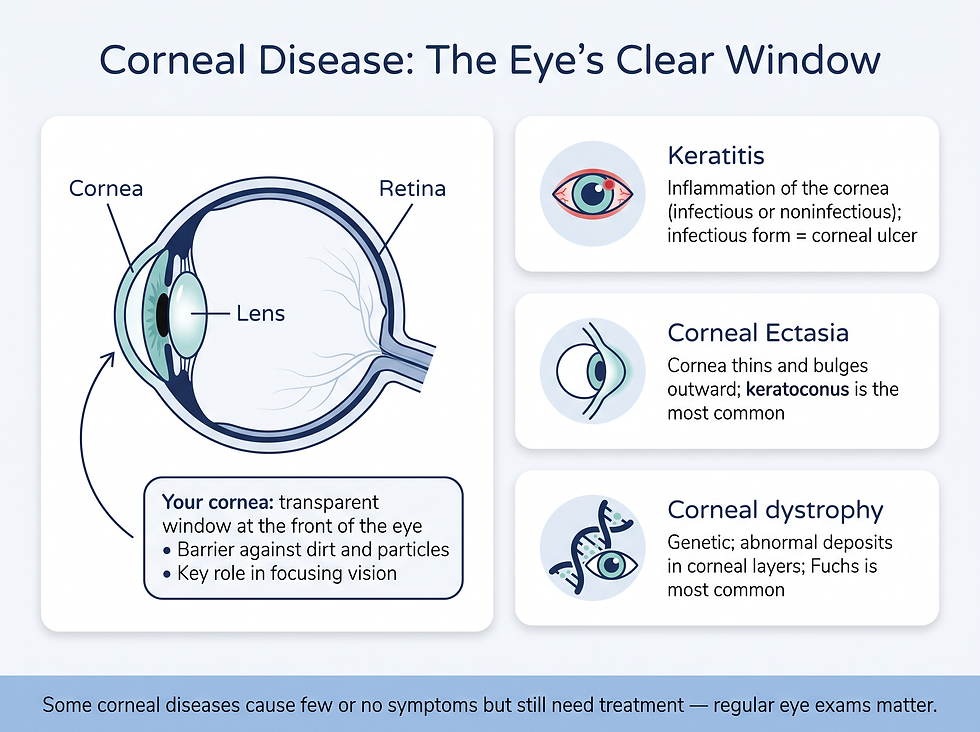
Corneal disease is an umbrella term for a range of conditions that affect the cornea — the clear, transparent window at the front of the eye that protects against dirt and particles and plays a key role in vision. The three most common categories are keratitis (corneal inflammation, often from infection), corneal ectasia (conditions like keratoconus that thin and bulge the cornea), and corneal dystrophy (genetic disorders with abnormal deposits in corneal layers, such as Fuchs dystrophy). Symptoms vary by condition and may include eye pain, light sensitivity, blurry vision, red eyes, or discharge — but some corneal diseases cause few or no symptoms early on. A wide range of treatments exists, from eye drops to laser procedures and corneal transplant.
TL;DR
Corneal disease covers many conditions of the eye's clear front layer: keratitis (often an infection called a corneal ulcer), corneal ectasia (the cornea thins and bulges, most commonly as keratoconus), and corneal dystrophies (genetic conditions like Fuchs dystrophy). Warning signs include eye pain, sensitivity to light, the feeling that something is in your eye, blurry or worsening vision, red or watery eyes, and discharge — though some conditions are silent early on. Treatment ranges from medications and lenses to laser procedures, corneal transplant, or an artificial cornea. Without treatment, some corneal diseases can lead to severe vision loss, so prompt specialist care matters.
Content limitation statement: The source does not provide prevalence, incidence, or treatment-success statistics for corneal disease as a whole or its subtypes. This article uses no invented statistics — only the qualitative source facts below (e.g., bacteria cause most infectious keratitis; Fuchs dystrophy is the most common dystrophy).
Source-derived facts: Bacteria cause most instances of infectious keratitis. Keratoconus is the most common condition in the corneal ectasia group. Fuchs dystrophy is the most common type of corneal dystrophy. Most adults need an eye exam every one to two years.
When Should You Seek Emergency Care?
Corneal problems can threaten vision, and the source is direct about when to act immediately.
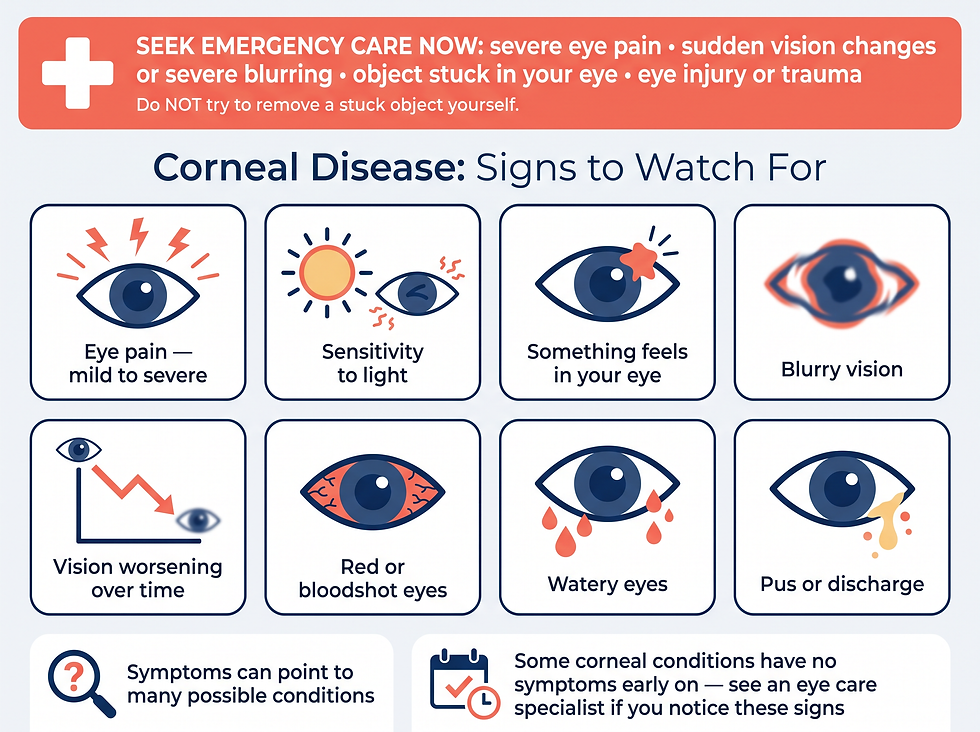
Seek medical care immediately if you have severe eye pain, sudden changes in vision or severe blurred vision, an object stuck in your eye, or any eye injury or trauma.
If you experience | Action |
|---|---|
Severe eye pain | Emergency care immediately |
Sudden changes in vision or severe blurred vision | Emergency care immediately |
An object stuck in your eye | Emergency care immediately (do not remove it yourself) |
Eye injury or trauma | Emergency care immediately |
Eye pain, light sensitivity, or blurry vision (no emergency trigger) | See an eye care specialist right away |
For anything stuck in the eye, the source is explicit: see a healthcare provider rather than trying to remove it yourself.
What Exactly Is the Cornea?
The eye is made up of several parts that work together to help you see. At the very front sits the cornea — the transparent window on the front of your eye.
The cornea does two important jobs. It serves as a barrier against dirt and particles, and it plays a key role in your vision by helping focus light entering the eye.
What Is Corneal Disease?
The term "corneal disease" refers to a variety of conditions that affect your cornea. Corneal diseases can interfere with the cornea's protective and visual functions and may cause pain or other symptoms in your daily life.
Importantly, some corneal diseases cause few or no symptoms but still need treatment. That's why regular eye exams matter even when your eyes seem fine.
Is corneal disease one condition or many?
Corneal disease is an umbrella term — many different conditions fall under it. They share one feature: they affect the cornea, the clear front layer of the eye. The conditions differ in cause, behavior, and treatment.
What Are the Three Main Categories of Corneal Disease?
Many corneal diseases fall into three main categories.
Category | What it is | Key facts from the source |
|---|---|---|
Keratitis | Inflammation of the cornea; can be infectious (microbial) or noninfectious | Infectious keratitis is called a corneal ulcer; bacteria cause most instances; viruses, fungi, and parasites may also cause it; noninfectious causes include eye injuries and conditions that dry out the eye's surface |
Corneal ectasia | Conditions that change the cornea's shape, causing it to thin and bulge outward | Keratoconus is the most common condition in this group; can occur as a complication of certain surgeries, including LASIK and corneal transplant; may be silent at first, then gradually affect vision; can lead to serious complications like corneal hydrops |
Corneal dystrophy | Genetic disorders with abnormal deposits of proteins, fluid, or other materials in one or more corneal layers | Some are progressive (get worse over time); some affect vision; Fuchs dystrophy is the most common type; others include epithelial basement membrane dystrophy (formerly map-dot-fingerprint dystrophy), lattice dystrophy, and granular dystrophy |
What is a corneal ulcer?
A corneal ulcer is the name given to infectious keratitis — inflammation of the cornea caused by infection. Bacteria cause most instances of infectious keratitis, though viruses, fungi, and parasites may also be responsible.
What is keratoconus?
Keratoconus is the most common condition within the corneal ectasia group — the group in which the cornea thins and bulges outward, changing its shape. It can occur as a complication of certain eye surgeries, including LASIK and corneal transplant. It may not cause symptoms at first but then gradually affects vision, and it may lead to serious complications such as corneal hydrops.
What is Fuchs dystrophy?
Fuchs dystrophy is the most common type of corneal dystrophy. Corneal dystrophies are genetic disorders in which abnormal deposits of proteins, fluid, or other materials build up in one or more layers of the cornea. Some dystrophies are progressive, and some forms affect vision.
What Other Conditions Can Affect the Cornea?
Beyond the three main categories, several other conditions may cause symptoms or damage your cornea.
Condition | What it is |
|---|---|
Bullous keratopathy | Swelling and blisters on the cornea's surface; may develop after eye surgery or because of corneal dystrophy; symptoms usually worse in the morning and include blurry vision and light sensitivity |
Corneal abrasion | An open wound on the surface of the cornea; causes blurred vision, eye pain, and watering; most commonly occurs after trauma such as a fingernail scratch, or with severe dry eye disease |
Herpetic eye disease | A painful condition that happens when a herpes virus affects your eye |
Iridocorneal endothelial syndrome (ICE) | A rare condition that causes corneal swelling and increased pressure in the eye |
Keratoconjunctivitis | Inflammation of both the cornea and the conjunctiva (the thin tissue covering the white of the eye and lining the inner eyelids) |
Pterygium | A growth on the white of the eye that can extend to the cornea and, rarely, cause scarring |
What Are the Signs and Symptoms of Corneal Disease?
Symptoms vary based on the specific condition. They may include:
Symptom | Notes |
|---|---|
Eye pain | Can range from mild to severe |
Sensitivity to light | Often accompanies other symptoms |
The sensation that something is in your eye | A foreign-body feeling |
Blurry vision | May come on suddenly or gradually |
Vision that gets worse over time | Progressive worsening is a key warning sign |
Red or bloodshot eyes | Visible sign of irritation or inflammation |
Watery eyes | Excess tearing |
Pus or discharge from your eyes | Suggests possible infection |
Two cautions come directly with this symptom list. First, these symptoms can point to many possible conditions — they aren't exclusive to corneal disease. Second, some corneal conditions have no symptoms, especially early on. That's why it's important to see an eye care specialist if you experience these issues rather than waiting.
What Causes Corneal Disease?
Several things may cause corneal diseases, including:
Cause | Examples |
|---|---|
Infection | Bacteria (most common for infectious keratitis), viruses, fungi, parasites |
Injury or trauma to your eye | Including fingernail scratches (corneal abrasions) |
Genetic mutations | The basis of corneal dystrophies |
Other eye conditions | Such as severe dry eye disease, which can lead to corneal abrasions |
Certain medical conditions | Such as connective tissue diseases and weakened immune systems (risk factors) |
What Increases Your Risk of Corneal Disease?
You may face a higher risk of certain corneal diseases if you:
Risk factor | Why it matters |
|---|---|
Have a connective tissue disease | A medical condition that raises risk |
Have a weakened immune system | Makes infection-related corneal disease more likely |
Rub your eyes | The urge to rub may be stronger with hay fever or eczema |
Undergo eye surgery | Ectasia can occur as a complication of LASIK or corneal transplant |
Wear contact lenses | Especially if worn longer than intended or not cleaned properly |
Contact lens habits deserve emphasis: the source specifically flags lenses worn longer than intended or not cleaned properly as a risk.
How Is Corneal Disease Diagnosed?
Eye care specialists diagnose corneal diseases through a comprehensive eye exam. They perform many standard tests, including a slit lamp exam, to check the health of your cornea and other parts of your eye.
Your provider may also perform a fluorescein eye stain test. This involves putting a small amount of harmless dye into your eye and then shining a light on it. The dye makes any scratches or damage to your cornea visible to your provider.
Your provider will tell you if they notice any problems and discuss next steps, including referrals for treatment.

How Is Corneal Disease Treated?
Treatment options vary widely based on your condition and can include:
Treatment type | Details |
|---|---|
Medications | Eye drops, ointments, or other medications |
Corrective lenses | Prescription eyeglasses or contact lenses |
Laser procedures | Such as phototherapeutic keratectomy, which removes tissue from the cornea to modify its shape |
Corneal transplant surgery | Replacing damaged corneal tissue with donor tissue |
Artificial cornea | Surgery to replace the cornea with an artificial one (keratoprosthesis) |
Your eye care specialist will explain which treatment options are appropriate for you and tailor a treatment plan to fit your needs.
What Is the Outlook?
Early diagnosis and treatment can help you manage your condition. Without treatment, some corneal diseases can lead to severe vision loss. That's why regular checkups matter — and why you should tell your eye care specialist about any new or changing symptoms. They'll tell you what to expect in your individual situation.
Can corneal disease be prevented?
It's not always possible to prevent corneal disease — especially since some types are genetic. But you can lower your risk of certain corneal diseases.
Prevention step | Details |
|---|---|
Wear safety goggles | When using equipment or chemicals that can damage your eyes — this includes yard work and any kind of hammer, drill, or saw |
Use protective eyewear | When appropriate for certain sports |
Follow contact lens guidance | Proper cleaning and storage, per your provider's instructions |
Don't sleep in contact lenses | Even if the contact lens package recommends it |
Don't share eye products | Eye makeup or contact lens solution |
Don't remove objects yourself | See a provider if something is stuck in your eye |
Share family history | Tell your provider if anyone in your biological family has corneal disease — this helps them screen for and monitor certain conditions |
How Often Should You Have Eye Exams?
Regular eye exams are vital for your eye health. An eye care specialist can tell you how often you should have one. Most adults need an eye exam every one to two years, and you may need more frequent exams if you have certain conditions or risk factors.
An eye care specialist can tell you how often you should have exams based on your age, medical history, and other factors.
What Should You Ask Your Eye Care Specialist?
You can learn more about corneal disease and its potential impact on you by asking:
Question | Why it helps |
|---|---|
Am I at risk for corneal disease? | Establishes your personal risk profile |
Do I have any corneal diseases? Which types, and how severe? | Gets specifics on your diagnosis |
Will I need treatment? What will it involve? | Clarifies the plan |
How can I manage symptoms at home? | Practical daily management |
What symptoms should prompt me to call you or seek emergency care? | Clear safety thresholds |
What's my outlook? | Individual prognosis |
Do you recommend genetic testing for me or anyone in my family? | Relevant because some corneal diseases are genetic |
What Experts Say to Reassure You
Corneal disease is an umbrella term that describes a range of conditions affecting your cornea. While some conditions can sound scary, it's important to remember that a wide range of treatments are available to help protect your vision and restore your eye health. Talk to an eye care specialist about what you can expect going forward.
This note matters because corneal disease sounds intimidating on paper. In reality, treatment options run the full range from simple eye drops to advanced surgery — and a specialist will match the right option to your specific condition.
Conclusion: What You Should Remember
Corneal disease is a family of conditions affecting the eye's clear front window. Its warning signs — eye pain, light sensitivity, the feeling that something is in your eye, blurry or worsening vision, red or watery eyes, and discharge — deserve a prompt specialist visit, and some conditions are silent until an exam finds them.
The risk-lowering habits are simple and proven in concept: protect your eyes during work and sports, treat contact lenses with discipline (never sleep in them, clean them properly, don't share solutions), and get eye exams every one to two years.
Next step: If you have any of the emergency triggers — severe eye pain, sudden vision changes, something stuck in your eye, or eye trauma — seek medical care immediately. Otherwise, book an eye exam and tell your specialist exactly what you've been noticing.
References
Corneal Disease — Symptoms, Causes, Diagnosis, Treatment and Prevention (medically reviewed; last updated May 9, 2023)
External References
Frequently Asked Questions
Q: What is corneal disease? A: Corneal disease is an umbrella term for a variety of conditions that affect the cornea — the clear, transparent window on the front of the eye that protects against dirt and particles and plays a key role in vision.
Q: Is corneal disease one condition or many? A: Many. It's an umbrella term covering multiple conditions with different causes, behaviors, and treatments — all sharing the feature that they affect the cornea.
Q: What are the three main categories of corneal disease? A: Keratitis (corneal inflammation), corneal ectasia (the cornea thins and bulges), and corneal dystrophy (genetic conditions with abnormal deposits in corneal layers).
Q: What is keratitis? A: Inflammation of the cornea that can be infectious (microbial) or noninfectious. Infectious keratitis is called a corneal ulcer.
Q: What is a corneal ulcer? A: A corneal ulcer is the name for infectious keratitis — inflammation caused by infection. Bacteria cause most instances, though viruses, fungi, and parasites may also be responsible.
Q: What causes noninfectious keratitis? A: Many things, including eye injuries and a range of conditions that dry out the surface of the eye.
Q: What is corneal ectasia? A: A group of conditions that change the shape of the cornea, causing it to thin and bulge outward. It sometimes occurs as a complication of certain surgeries, including LASIK and corneal transplant.
Q: What is keratoconus? A: The most common condition within the corneal ectasia group. It may not cause symptoms at first but then gradually affects vision, and it may lead to serious complications like corneal hydrops.
Q: What is corneal dystrophy? A: A group of genetic disorders involving abnormal deposits of proteins, fluid, or other materials in one or more layers of the cornea. Some are progressive, and some forms affect vision.
Q: What is the most common corneal dystrophy? A: Fuchs dystrophy. Other types include epithelial basement membrane dystrophy (formerly map-dot-fingerprint dystrophy), lattice corneal dystrophy, and granular corneal dystrophy.
Q: What is bullous keratopathy? A: Swelling and blisters on the cornea's surface. You may develop it after eye surgery or because of corneal dystrophy. Symptoms are usually worse in the morning and include blurry vision and light sensitivity.
Q: What is a corneal abrasion? A: An open wound on the surface of the cornea. It tends to cause blurred vision, eye pain, and watering. It most commonly occurs after trauma such as a fingernail scratch, or with severe dry eye disease.
Q: What is herpetic eye disease? A: A painful condition that happens when a herpes virus affects your eye.
Q: What is iridocorneal endothelial syndrome (ICE)? A: A rare condition that causes corneal swelling and increased pressure in your eye.
Q: What is keratoconjunctivitis? A: Inflammation of both your cornea and your conjunctiva — the thin tissue covering the white of the eye and lining the inner eyelids.
Q: What is pterygium? A: A growth on the white of your eye that can extend to your cornea and, rarely, cause scarring.
Q: What are the symptoms of corneal disease? A: Eye pain (mild to severe), sensitivity to light, the sensation that something is in your eye, blurry vision, vision that gets worse over time, red or bloodshot eyes, watery eyes, and pus or discharge.
Q: Can corneal disease have no symptoms? A: Yes — some corneal diseases cause few or no symptoms, especially early on, but still need treatment. That's why regular eye exams matter.
Q: What causes corneal disease? A: Several things may cause it, including infection, eye injury or trauma, genetic mutations, other eye conditions, and certain medical conditions.
Q: Do contact lenses increase corneal disease risk? A: Yes — wearing contact lenses increases risk, especially if you wear them longer than intended or don't clean them properly.
Q: Can eye rubbing cause corneal problems? A: Eye rubbing is listed as a risk factor for certain corneal diseases. The urge to rub may be stronger if you have hay fever or eczema.
Q: Can eye surgery cause corneal disease? A: Corneal ectasia can occur as a complication of certain surgeries, including LASIK and corneal transplant.
Q: How is corneal disease diagnosed? A: Through a comprehensive eye exam, including standard tests like a slit lamp exam. Providers may also use a fluorescein eye stain test — a harmless dye that makes scratches or damage visible under light.
Q: What are the treatments for corneal disease? A: Treatment varies widely: eye drops, ointments, or other medications; prescription eyeglasses or contact lenses; laser procedures such as phototherapeutic keratectomy; corneal transplant surgery; or surgery to replace the cornea with an artificial one (keratoprosthesis).
Q: What is phototherapeutic keratectomy? A: A laser procedure that removes tissue from your cornea to modify its shape.
Q: What happens without treatment? A: Without treatment, some corneal diseases can lead to severe vision loss. Early diagnosis and treatment can help you manage your condition.
Q: Can I prevent corneal disease? A: Not always — some types are genetic. But you can lower your risk: wear safety goggles during yard work and when using tools, use protective eyewear for certain sports, follow contact lens cleaning and storage guidance, never sleep in contact lenses, don't share eye makeup or lens solution, and see a provider rather than removing objects from your eye yourself.
Q: How often should I have an eye exam? A: Most adults need an eye exam every one to two years. You may need more frequent exams if you have certain conditions or risk factors.
Q: When should I go to the emergency room for an eye problem? A: Seek medical care immediately if you have severe eye pain, sudden changes in vision or severe blurred vision, an object stuck in your eye, or an eye injury or trauma.
Q: Can corneal disease run in families? A: Some corneal diseases are genetic (the dystrophies). Telling your provider if anyone in your biological family has corneal disease helps them screen for and monitor certain conditions, and they can advise whether genetic testing makes sense.
Disclaimer: This article is for general information only and is not a substitute for professional medical advice, diagnosis, or treatment. Always seek the advice of a qualified healthcare provider with any questions about a medical condition. Never delay seeking medical care because of something you read here. In an emergency, call your local emergency number immediately.
Comments