Eyelids: Anatomy, Function and Protective Care

Updated: 14 minutes ago
Medically reviewed by Dr. Baraa Alnahhal, MD · Last reviewed: September 2026
Quick Answer
The eyelids are thin, muscular layers of skin that protect the eyes from light, dust, and injury while maintaining essential lubrication. As the thinnest skin in the human body, they lack subcutaneous fat and house vital structures like meibomian glands and eyelashes. Their primary roles include shielding the eye surface, distributing tear fluid to prevent dryness, and acting as a barrier against airborne germs to preserve long-term ocular health.
TL;DR
Eyelids are the thinnest layer of skin in the body, serving as critical protective shields for the eyes. They maintain moisture, block hazards, and facilitate oxygen absorption. Understanding their complex anatomy—including lashes and glands—is essential for preventing common conditions like styes, inflammation, and structural disorders.
The Essential Role of Eyelids
The eyelids serve as the body's primary external defense for the eyes, functioning much like a combination of windshield wipers and retractable window shades. By gliding smoothly across the ocular surface, they ensure that the corneas remain lubricated and protected from environmental hazards. This thin, muscular area of skin is unique because it contains no under-the-skin fat, making it the most delicate external layer on the human body.
Beyond simple protection, eyelids are integral to the physiological maintenance of the eye. They help retain moisture from tear fluid, which is necessary for the corneas to absorb oxygen from the air. When closed, they create a seal that prevents the eye surface from drying out, while their blinking reflex—triggered by sensitive eyelashes—provides an immediate response to potential dangers.
Detailed Anatomy of the Eyelid
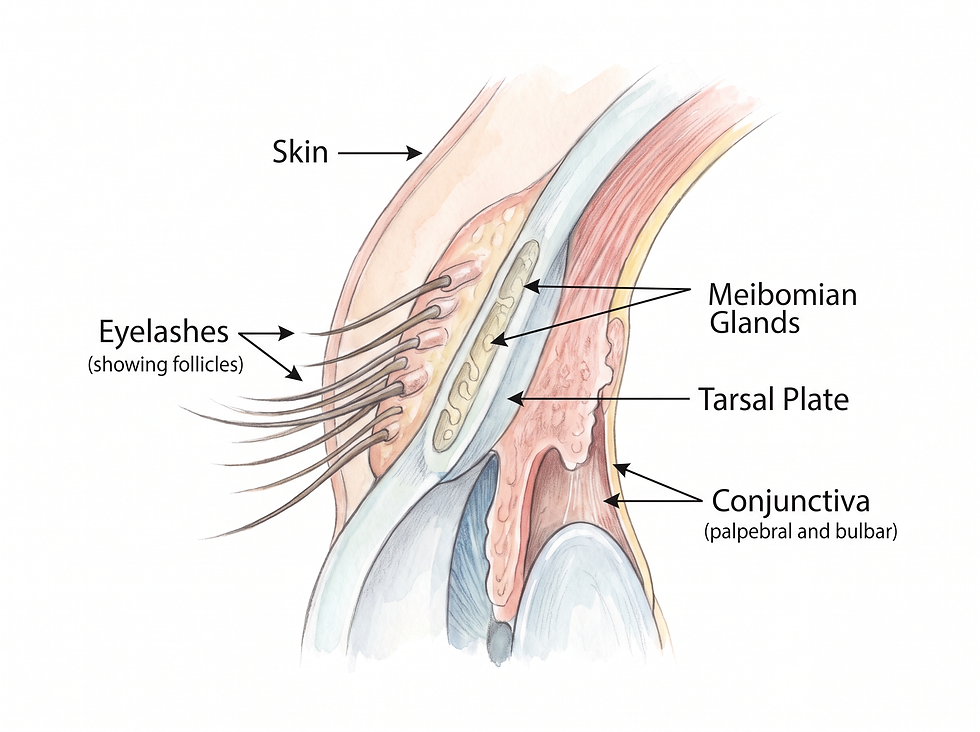
The structure of the eyelid involves several functional and cosmetic components that work in harmony to support vision. On the interior, the conjunctiva membrane allows for smooth movement across the sclera, while the tarsal plates—strands of connective tissue—ensure the lids fit snugly against the eye surface. These structures are supported by a network of muscles that control both protective blinking and facial expressions.
Conjunctiva: facilitates smooth movement; a thin membrane covering the inner lid and sclera
Tarsal plates: maintain structural snugness; tightly packed strands of connective tissue
Muscles: control opening and closing; enable facial expressions and blinking reflexes
Meibomian glands: produce protective oils; secrete meibum to enhance tear fluid lubrication
Eyelashes represent another specialized anatomical feature, acting as sensors that trigger the blinking reflex when touched. They also capture dust and particulates before they can reach the eye. The meibomian glands, located just behind the lashes, produce an oil called meibum that mixes with tears to form a protective coating, preventing rapid evaporation and irritation.
Common Eyelid Conditions and Disorders
A wide variety of issues can affect the eyelids, ranging from minor irritations to serious neurological symptoms. Nerve and muscle conditions, such as Bell’s palsy or ptosis (drooping), can impact the ability to open or close the lids properly. Skin-specific issues like dermatitis and psoriasis are also common due to the thinness and sensitivity of the eyelid tissue.
Nerve and muscle: Bell’s palsy, ptosis, strokes — causing drooping, paralysis, uncontrolled twitching
Inflammatory: blepharitis, styes, chalazions — causing swelling, redness, bumps, itching
Structural: entropion, ectropion, trichiasis — causing inward/outward turning and lash irritation
Infectious: orbital cellulitis, conjunctivitis — causing pain, discharge, severe swelling
Infections and inflammatory conditions often manifest as bumps or cysts, such as styes (near follicles) or chalazions (blocked glands). Structural abnormalities, including eyelids that turn inward (entropion) or outward (ectropion), can lead to chronic irritation and watery eyes. One-sided weakness or paralysis is a critical symptom that requires immediate medical attention, as it may indicate a stroke or other neurological emergency.

Maintaining Eyelid Health and Care
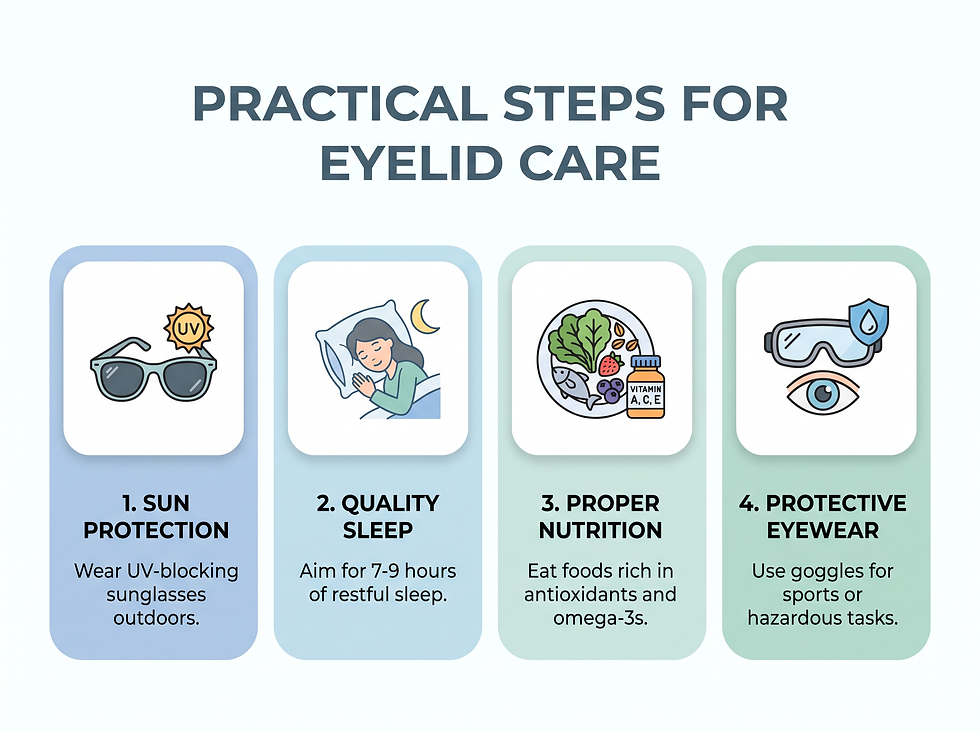
Protecting the eyelids is a fundamental part of overall eye care. Because the skin is so thin, it is highly susceptible to sun damage and nutritional deficiencies. Proper sun protection, including the use of sunglasses and sunscreen, helps prevent burns and long-term tissue degradation. Additionally, quality sleep is vital for preventing sagging and dark circles, while also reducing the risk of conditions linked to sleep apnea.
Daily hygiene and protective measures can significantly reduce the risk of eyelid disorders. Using safety goggles in hazardous environments protects the lids from physical trauma, while warm compresses are often effective for managing minor gland blockages like styes. A diet rich in essential vitamins and minerals further supports the skin's elasticity and resilience against environmental stressors.
Conclusion
The eyelids are complex, multi-functional structures that do far more than simply cover the eyes. From their role in lubrication and oxygen absorption to their status as the body's thinnest protective barrier, they are essential for maintaining long-term vision and comfort. Regular eye exams and proactive care are the best ways to ensure these delicate shields continue to function effectively throughout life.
If you experience persistent eyelid swelling, drooping, or irritation, consult an eye care specialist for a comprehensive evaluation. Early detection of eyelid conditions can prevent complications and preserve your ocular health.
Frequently Asked Questions
What is the medical name for the eyelids? The medical term for the eyelids is "palpebra," which originates from a Latin root meaning "to touch gently."
Why are the eyelids so thin? Eyelids are the thinnest skin on the body because they lack a layer of subcutaneous fat, allowing them to move quickly and smoothly over the eye.
What do the meibomian glands do? These glands produce meibum, an oil that mixes with tear fluid to lubricate the eye and prevent moisture from evaporating too quickly.
How many eyelashes does a person typically have? An average person has 100 to 150 lashes on the upper lid and 50 to 75 on the lower lid.
What is the palpebral fissure? This is the technical term for the opening or separation between the upper and lower eyelids.
What causes a droopy eyelid? A droopy eyelid, known as ptosis, can be caused by muscle weakness, nerve issues, aging, or certain underlying medical conditions.
Is an eye twitch dangerous? Most eye twitches (blepharospasm) are harmless and related to stress or fatigue, but persistent twitching should be evaluated by a professional.
What is the difference between a stye and a chalazion? A stye is typically an infection of an eyelash follicle, while a chalazion is a bump caused by a blocked meibomian gland.
Can you live without eyelids? Yes, it is possible to live without them, but it requires lifelong medical care and specialized treatments to prevent infections and permanent eye damage.
How do eyelids help the eyes breathe? They distribute tear fluid across the cornea, which allows the eye surface to absorb oxygen directly from the air.
What are hooded eyes? Hooded eyes occur when an extra layer of skin from the eyelid or brow area hangs over the eye's natural crease.
What are monolid eyes? Monolid eyes feature a single eyelid fold rather than a double fold, a trait common in individuals of Eastern Asian descent.
Why do eyelids get dark circles? Dark circles can be caused by lack of sleep, genetics, thinning skin, or lifestyle factors that affect blood flow in the delicate eyelid area.
When is eyelid drooping an emergency? One-sided drooping combined with muscle weakness or paralysis can be a sign of a stroke and requires immediate emergency medical attention.
How does sleep apnea affect the eyelids? Conditions like floppy eyelid syndrome are frequently associated with sleep apnea and other sleep-related disorders.
References
Medical disclaimer: The information provided in this article is for educational purposes only and is not intended as medical advice. Always seek the counsel of a qualified healthcare provider regarding any eyelid or vision concerns.
Comments