Electrocauterization: Uses, Procedure, Risks, and Recovery

Updated: 6 days ago
Written and medically reviewed by Dr. Baraa Alnahhal, MD · Last reviewed: October 2026 · How we review
Quick Answer: What is electrocauterization?
Electrocauterization is a form of electrosurgery that uses an electric current to heat a pen-like probe, allowing a healthcare provider to cut tissue, seal small bleeding vessels, or create targeted scar tissue. It treats skin growths, warts, chronic nosebleeds and some eye problems, is usually painless with numbing, and needs prompt review if bleeding, lasting pain or infection develops. [1]
What the research says
Cutting skin with electrocautery is as safe as using a scalpel. A meta-analysis of 6 randomized trials (1,234 patients: 606 electrocautery, 628 scalpel) found no difference in wound infection or scar appearance, while electrocautery shortened incision time and reduced pain after surgery. (Aird et al., Am J Surg, 2012) [2]
Lower-temperature electrocautery reduced complications during heart-device procedures. In 5,641 people having a pacemaker or defibrillator revised, upgraded or replaced, low-temperature electrocautery was linked to 23% fewer procedure- or lead-related adverse events over 3 years than standard electrocautery (HR 0.77), and a 32% lower risk of lead-related events after adjustment. (Mittal et al., Heart Rhythm, 2021) [3]
Bipolar electrocautery controlled recurrent childhood nosebleeds better than chemical cautery. In a randomized trial of children with recurrent nosebleeds (106 analyzed), bipolar electrocautery stopped bleeding in 85.9% versus 73.4% with silver nitrate, and 12-month rebleeding was 5.1% versus 70.3%; septal perforation occurred in 5.1% of the bipolar group. (Lou et al., Am J Rhinol Allergy, 2026) [4]
Key takeaways
Electrocautery applies an electric current directly to tissue to heat it. [1]
It can cut tissue, stop bleeding from small vessels and remove abnormal growths. [1]
Two methods exist: monopolar (one electrode) and bipolar (a tweezer-like probe). [1]
Most skin procedures take only a few minutes and usually need one treatment. [1]
Healing takes a few weeks; temporary skin color change is common. [1]
What is electrocautery?
Electrocautery is a technique that uses an electrical current to apply heat to tissue. [1]
It has two main purposes:
Cutting tissue without searing it.
Creating small, targeted areas of scar tissue.
Electrocautery may be done as part of a larger surgery or as a stand-alone procedure, often on the skin. [1]
How is electrocautery different from electrosurgery?
Electrocautery is one type of electrosurgery, which is any procedure that uses an electrosurgical unit (ESU) to cut or manipulate tissue. [1]
An ESU is a device that generates electricity. Different electrosurgery methods use it in different ways:
Method | How the energy reaches tissue | Main effect |
Electrocautery | Current heats a probe applied directly to tissue | Cuts tissue or creates targeted scars |
Fulguration | A spark generates heat | Destroys targeted cells |
Other electrosurgery methods | Current passes through the body | Varies by procedure |
How does electrocauterization work?
Electrocauterization works through a handheld, pen-like probe whose tip is heated by an electric current. [1]
Your healthcare provider adjusts the settings to control temperature and energy level. The right settings depend on the goal of the procedure. [1]
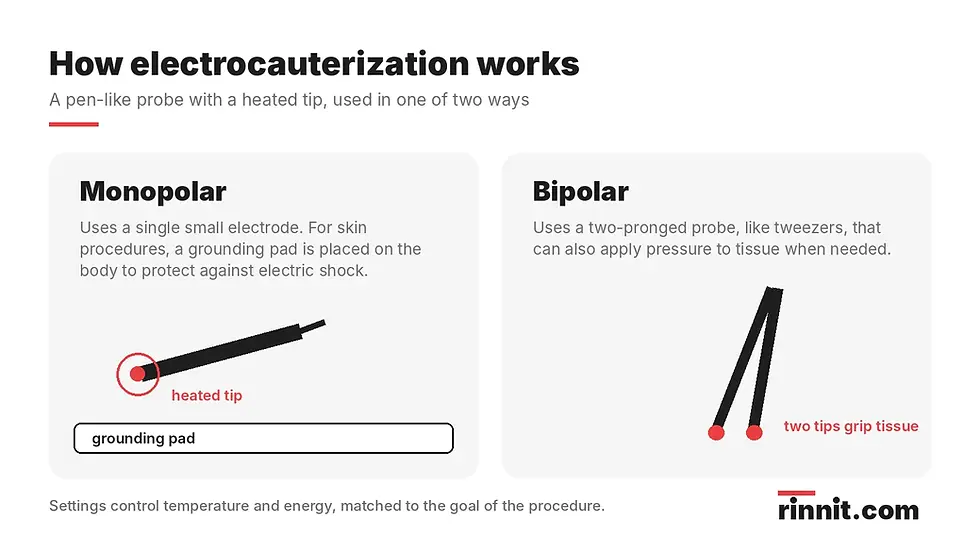
There are two ways to perform it:
Type | Probe design | Practical point |
Monopolar | A single small electrode | Used with a grounding pad on the body |
Bipolar | A two-pronged probe, like tweezers | Can apply pressure to tissue when needed |
What is electrocautery used for?
Electrocautery is used to control bleeding from small blood vessels, remove diseased tissue, destroy abnormal tissue and remove small skin growths. [1]
It also helps prevent repeated bleeding from problems such as chronic nosebleeds. [1]

Area | Conditions treated |
Skin growths | Actinic keratosis, moles, molluscum contagiosum, seborrheic keratosis, angiomas and syringomas |
Cosmetic concerns | |
Eyes | Dry eyes, trichiasis (lashes growing toward the eye), distichiasis (an extra row of lashes) |
Bleeding | Chronic nosebleeds, abnormal uterine bleeding, small vessels during surgery |
Other | Genital warts, airway blockages from papillomas or lipomas, tumors in hard-to-reach or delicate tissue such as the brain, and freeing pacemaker or ICD wires tangled in tissue |
For heavy periods specifically, see our guide to heavy menstrual bleeding.
What happens during electrocauterization?
What happens during electrocauterization depends on whether it is part of surgery or a stand-alone skin procedure. [1]
Step | During surgery | Skin (nonsurgical) procedure |
1 | Medicine puts you to sleep or makes you relaxed | An anesthetic numbs the treatment area |
2 | The surgeon begins the main procedure | Gel may be applied to help prevent burns |
3 | The cautery pen is applied where needed | A grounding pad is placed on your body to protect against electric shock |
4 | The rest of the surgery is completed | The provider performs the procedure with the device |
Is electrocautery painful?
Electrocautery is typically not painful when a healthcare provider performs it, because you receive medicine to numb the area or put you to sleep first. [1]
Some soreness afterward is normal and usually eases with over-the-counter pain relief. [1]
What are the benefits and risks of electrocautery?
Electrocautery offers precision, speed and less blood loss, but it carries risks of infection, burns, heart-device problems and incomplete results. [1]
Benefits | Risks |
Precision: more control than other cautery methods | Infection: damaged tissue makes it easier for bacteria to grow |
Speed: takes only a few minutes | Heart complications: the current can disrupt the heart's electrical activity, a concern for people with a pacemaker or ICD |
Effectiveness: high success rate, usually one treatment | Poor outcomes: some growths, such as moles, can come back |
Less blood loss during surgery | Burns: if the probe is too hot or the intensity too high |
If you have a pacemaker or implantable cardioverter-defibrillator (ICD), make sure your healthcare provider knows before the procedure. [1]
What is recovery from electrocauterization like?
Recovery from stand-alone skin electrocauterization usually takes a few weeks, while recovery after surgery follows your provider's specific instructions. [1]

Time after treatment | What to expect |
First few days | Soreness, itching or swelling; pain may occur but over-the-counter medicine can help |
A few weeks | The area heals; avoid picking or scratching it |
A few months | Skin may look lighter or darker and be sensitive to sun; this is usually temporary |
When should you call a doctor after electrocautery?
You should call your healthcare provider after electrocautery if you have abnormal bleeding, pain that does not ease after a few days, or signs of infection. [1]
Signs of infection include:
Fever.
Skin that feels warm to the touch.
Skin that oozes pus.
Can you use an at-home electrocautery device?
At-home electrocautery devices are available, but treatment from a healthcare provider is safer and more effective. [1]
Providers have the experience to treat the right spot and use research-based techniques to protect you from complications. [1] If you are worried about a skin spot, learn the ABCDE warning signs of moles before trying to remove anything yourself.
Conclusion
Electrocauterization is a precise, quick way to use heat from an electric current to cut tissue, stop bleeding and remove abnormal growths. [1] Treated areas are usually small and heal over a few weeks with simple aftercare. [1]
Research supports its safety for skin incisions [2] and shows that technique choices, such as lower temperatures or bipolar probes, can improve results in specific settings. [3][4]
Considering electrocautery for a skin growth, nosebleed or other problem? Talk with your healthcare provider about whether it fits your situation, and keep exploring our plain-language guides, like nosebleeds in kids and skin tags, so you walk into your appointment ready with the right questions.
FAQ
What is electrocauterization?
Electrocauterization is a form of electrosurgery that uses an electric current to heat a probe and apply that heat to tissue. It is used to cut tissue, stop bleeding and create small, targeted scars.
Is electrocautery the same as electrosurgery?
Electrocautery is one type of electrosurgery. Electrosurgery covers any procedure that uses an electrosurgical unit, including fulguration and methods that pass current through the body.
What is electrocautery used for?
Electrocautery is used to control bleeding from small blood vessels and remove abnormal tissue, including skin tags, warts, moles and actinic keratosis. It also treats chronic nosebleeds, some eye conditions and abnormal uterine bleeding.
Is electrocautery painful?
Electrocautery is typically not painful because the area is numbed or you are put to sleep first. Mild soreness afterward usually responds to over-the-counter pain relief.
How long does it take to heal after electrocautery?
Healing after skin electrocautery usually takes a few weeks. Skin may stay lighter or darker and sensitive to sun for a few months, which is usually temporary.
What are the risks of electrocautery?
The main risks of electrocautery are infection, burns, incomplete results such as a mole returning, and heart rhythm problems in people with a pacemaker or ICD. Telling your provider about any implanted heart device lowers this risk.
Can I use an at-home electrocautery device?
At-home electrocautery devices exist, but a healthcare provider can perform the procedure more safely and effectively. Providers know how to target the right spot and prevent complications.
When should I call my doctor after electrocautery?
Call your doctor if you have abnormal bleeding, pain that lasts more than a few days, fever, or skin that is warm to the touch or oozes pus. These can signal bleeding problems or infection.
Will electrocautery leave a scar?
It can leave a small scar or a patch of lighter or darker skin, depending on the size and location of the treated area. Ask your provider what to expect for your procedure.
How do I care for my skin after electrocautery?
Keep the area clean, wash it gently and follow your provider's advice about ointment and bandages. Don't pick at any scab, and call your provider if you notice bleeding, lasting pain or signs of infection.
Related Reading
Electrosurgery: Types, Uses and Risks explains electrosurgery.
References
Cleveland Clinic. Electrocauterization Surgery: What It Is & Procedure Details. Cleveland Clinic. Last updated August 15, 2022. https://my.clevelandclinic.org/health/treatments/24032-electrocauterization
Aird LN, Brown CJ. Systematic review and meta-analysis of electrocautery versus scalpel for surgical skin incisions. Am J Surg. 2012;204(2):216-221. PMID: 22537473. https://doi.org/10.1016/j.amjsurg.2011.09.032
Mittal S, Wilkoff BL, Poole JE, et al. Low-temperature electrocautery reduces adverse effects from secondary cardiac implantable electronic device procedures: insights from the WRAP-IT trial. Heart Rhythm. 2021;18(7):1142-1150. PMID: 33781980. https://doi.org/10.1016/j.hrthm.2021.03.033
Lou Z, Yang H, Zhao C, et al. Efficacy and safety of simultaneous bilateral nasal cauterization in pediatric recurrent anterior epistaxis: a prospective randomized controlled trial. Am J Rhinol Allergy. 2026;40(5):394-401. PMID: 41940820. https://doi.org/10.1177/19458924261437216
Medical disclaimer
This article is for general education and does not replace advice from a qualified healthcare professional. Always talk with your doctor about your own symptoms, diagnosis and treatment options, and seek urgent care for heavy bleeding or signs of serious infection.



Comments