What Is Nasopharyngeal Cancer? Symptoms, Causes, and Treatment

Updated: 3 days ago
Medically reviewed by Dr. Baraa Alnahhal, MD · Last reviewed: October 2026
Quick Answer: What Is Nasopharyngeal Cancer?
Nasopharyngeal cancer is a type of head and neck cancer affecting the tissue at the base of the skull, just above the roof of the mouth. [1] It is linked to the Epstein-Barr virus, heavy tobacco use and diets high in salt-cured foods. [1] Because the area is hard to reach surgically, it is mainly treated with radiation and chemotherapy. [1]

What the research says
Survival has improved even though the cancer is still hard to detect early. A Lancet review reports that incidence is gradually declining, even in endemic regions, while mortality has fallen substantially. It credits lifestyle changes, population screening with better imaging, advances in radiotherapy (especially intensity-modulated radiotherapy), and effective systemic treatments. Circulating EBV DNA is increasingly used for screening, prognosis, and surveillance (Chua et al., Lancet, 2016 [2]).
Adding immunotherapy to chemoradiation helped some high-risk patients in a large trial. In 390 patients with high-risk nasopharyngeal carcinoma, adding camrelizumab (a PD-1 inhibitor) to standard chemoradiotherapy raised 36-month progression-free survival to 83.4% versus 71.3% (hazard ratio 0.51). Serious (grade 3 or 4) acute side effects were similar, at 50.5% versus 48.7%, and serious immune-related side effects occurred in 10.2% of those given camrelizumab (You et al., BMJ, 2026 [3]).
Tracking EBV DNA in the blood may help monitor treatment. In a post hoc analysis of a phase II study of 123 people with recurrent or metastatic disease treated with a PD-L1 inhibitor, those whose plasma EBV DNA stayed detectable had a much higher risk of death than those whose levels stayed undetectable (hazard ratio 12.59). This was a secondary analysis in a small group, so it points to a promising monitoring tool rather than a proven one (Pan et al., Head Neck, 2026 [4]).
Key Takeaways: Nasopharyngeal Cancer Facts
Feature | Details |
Common Name | Nasopharyngeal Carcinoma (NPC) [1] |
Primary Location | Nasopharynx (back of the nose and throat) [1] |
Early Warning Sign | Painless lump on the back of the neck [1] |
Risk Factors | EBV infection, tobacco, alcohol, salt-cured foods [1] |
Main Treatments | Radiation therapy, chemotherapy, targeted therapy [1] |
Prevalence | Rare in the U.S.; more common in Southeast Asia, southern China, North Africa, and the Middle East |
What is nasopharyngeal cancer?
Nasopharyngeal cancer develops when abnormal cells in the nasopharynx multiply uncontrollably and form a tumor. This region is part of the passageway air travels through from the nose to the lungs. If left untreated, the cancer can invade nearby structures or spread through the lymphatic system to distant organs such as the liver, lungs, and bones. [1]
The World Health Organization (WHO) classifies this cancer into three types based on how the cells look under a microscope. Keratinizing squamous cell carcinoma (Type 1) involves cells covered in keratin, a protein found in hair and nails. [1] Nonkeratinizing squamous cell carcinoma (Type 2) lacks this protein coating. [1] The third type, undifferentiated or poorly differentiated carcinoma (Type 3), grows and spreads quickly. [1]
What are the symptoms of nasopharyngeal cancer, and how is it identified?
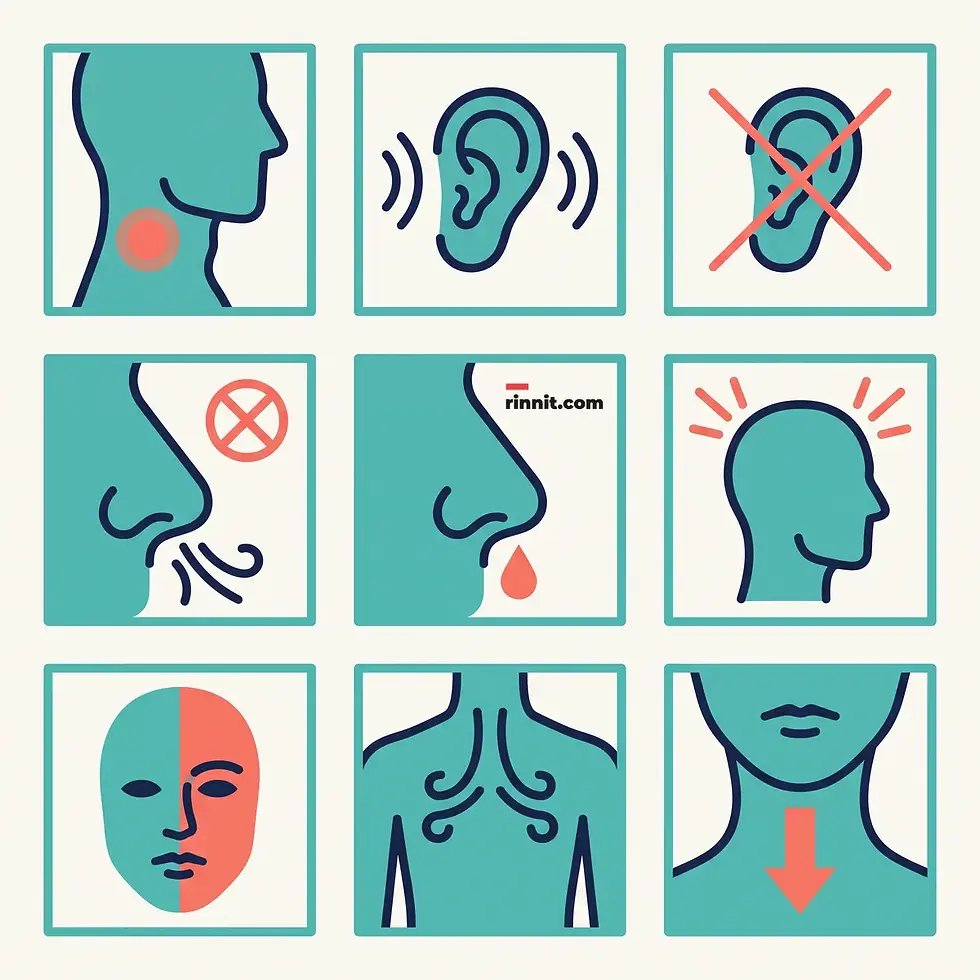
Many people first notice nasopharyngeal cancer as a painless lump on the back of the neck. [1] This occurs when the cancer spreads to the lymph nodes and causes them to swell. [1] Because the nasopharynx is close to the ears and nasal passages, several other symptoms may appear.
Many of these symptoms are common to less serious conditions, [1] and having one does not mean you have cancer. However, if symptoms last more than two weeks or keep coming back, a medical evaluation is needed. [1]
What causes nasopharyngeal cancer, and who is at risk?
Experts are not sure exactly what causes nasopharyngeal cancer, but several factors raise the risk. [1] One of the main links is the Epstein-Barr virus (EBV), the same virus that causes mononucleosis. [1] EBV is common in people diagnosed with this cancer, although not everyone who has had EBV develops it.
Lifestyle and environmental factors also play a role. Heavy tobacco use and frequent heavy alcohol consumption increase risk. [1] Regularly eating salt-cured meat and fish raises the chance of developing the cancer, and being exposed to lots of dust and smoke may also increase risk. [1] Family history matters, too. [1] The cancer is more common among people living in Southeast Asia, southern China, and northern Africa, and people who have immigrated to the U.S. from Asia have a higher risk than American-born Asians. [1] Men are about three times more likely than women to develop it. [1]
How is nasopharyngeal cancer diagnosed and staged?
Diagnosis begins with a full physical exam and questions about your family history. Providers examine the nasopharynx, head, neck, mouth, throat, nose, and lymph nodes, and may use a specialized scope to look inside the nasal passages and throat. [5] A hearing test may also be done. [1] If a tumor is suspected, a biopsy is taken for laboratory analysis, and a blood test measures the amount of EBV in the blood. [1]
Imaging, including CT, MRI, and PET scans, shows the size of the tumor and whether it has spread. [1] The results are used to stage the cancer from 0 to 4:
Stage 0: Cancer affects only the top layer of cells inside the nasopharynx. [1]
Stage 1: The tumor has grown into nearby structures, such as the back of the throat or the nasal cavity. [1]
Stage 2: Cancer has spread to one or more lymph nodes on one side of the neck. [1]
Stage 3: Cancer has spread to lymph nodes on both sides of the neck. [1]
Stage 4: The tumor has spread to the skull, eye, cranial nerves, salivary glands, or lower part of the throat, and may have reached distant organs such as the lungs or liver. [1]
What are the management and treatment options for nasopharyngeal cancer?
The main treatments for nasopharyngeal cancer are radiation therapy and chemotherapy, often combined (chemoradiation). [1] Because the nasopharynx sits at the base of the skull, surgery is difficult and is usually not the main treatment. [1] It is sometimes used to remove lymph nodes in the neck that have not responded to other treatments. [1]
Targeted therapy, which uses drugs to attack specific features of cancer cells while limiting damage to healthy tissue, is another option, [1] and immunotherapy is an area of active research. [2] [3] Side effects vary, and palliative care can be added during treatment to help manage them and maintain quality of life. [1] Regular follow-up visits are essential to watch for recurrence and manage long-term health. [5]

What is the outlook and survival rate for nasopharyngeal cancer?
Nasopharyngeal cancer can be cured if it is diagnosed before it spreads. [1] Cleveland Clinic reports American Cancer Society data showing that 63% of people with the cancer in the U.S. were alive five years after diagnosis. [1] The five-year figure was an estimated 82% for local disease, 72% for regional disease, and 49% for cancer that had spread to distant organs. [1] These numbers are estimates based on the experience of other people with this cancer, and your own outlook depends on factors such as your age, overall health, and response to treatment. [1]
Conclusion
Nasopharyngeal cancer is a complex condition that calls for early detection and specialized care. By understanding risk factors such as EBV exposure and dietary habits, and by recognizing early symptoms like a neck lump or persistent ear problems, people can seek medical attention sooner. Modern multi-modal treatment continues to improve outcomes for those facing this rare but serious diagnosis.
For more helpful health resources and visual guides, explore our infographic templates.
Frequently Asked Questions
What is the first sign of nasopharyngeal cancer?
The most common first sign is a painless lump on the back of the neck caused by swollen lymph nodes. [1]
Is nasopharyngeal cancer curable?
Yes, it can be cured if it is diagnosed before it spreads. [1] Outcomes depend on the stage and the person's overall health.
How is the Epstein-Barr virus linked to this cancer?
EBV is common in people diagnosed with nasopharyngeal cancer, and it is considered a significant risk factor. [1] Not everyone who has had EBV develops the cancer.
Can a diet change reduce the risk?
Eating fewer salt-cured meats and fish may help lower risk, particularly in regions where the cancer is more common. [5]
Does smoking cause nasopharyngeal cancer?
Heavy tobacco use is a risk factor for this and other head and neck cancers. [1]
What is the nasopharynx?
It is the upper part of the throat, behind the nose and above the roof of the mouth, at the base of the skull. [1]
Is surgery the main treatment?
No. Radiation and chemotherapy are the main treatments because the nasopharynx is difficult to operate on. [1]
Can children get nasopharyngeal cancer?
It is rare, but in the United States it most often affects people aged 15 to 24 and 65 to 79. [1]
What does the WHO Type 3 classification mean?
It refers to undifferentiated or poorly differentiated cells that grow and spread quickly. [1]
How does it affect hearing?
A tumor can block the Eustachian tube, which can cause a feeling of fullness, ear infections, or hearing loss.
Is it contagious?
No, cancer itself is not contagious. The Epstein-Barr virus linked to it can spread through saliva, [6] but most people who catch it never develop this cancer.
What is tinnitus?
Tinnitus is a ringing or buzzing sound in the ears, which can be a symptom of nasopharyngeal cancer. [1]
How long does radiation treatment last?
A course of radiation usually lasts several weeks, with daily sessions. [5] Your care team will give you a schedule.
What are the side effects of chemoradiation?
Common side effects include fatigue, mouth sores, dry mouth, and skin irritation in the treated area. They vary from person to person.
How common is it in the U.S.?
It is rare, affecting about 1 out of every 100,000 people each year. [1]
Does family history matter?
Yes, having a family member with nasopharyngeal cancer makes you more likely to develop it. [1]
What is targeted therapy?
It is a type of treatment that uses drugs to attack specific features of cancer cells while limiting harm to healthy cells.
Can it spread to the brain?
It begins at the base of the skull, and advanced tumors can invade the skull and affect the cranial nerves.
Why are men more at risk?
The reason is not clear, but men are about three times more likely to develop the cancer than women. [1]
What is a biopsy?
A biopsy is the removal of a small piece of tissue to examine it for cancer cells under a microscope.
Does a stuffy nose always mean cancer?
No, most stuffy noses are caused by colds or allergies. However, a stuffy nose that lasts more than two weeks or keeps coming back should be evaluated. [1]
What is the role of lymph nodes?
Lymph nodes filter fluid and can trap cancer cells. Swollen nodes in the neck are often the first visible sign of this cancer. [1]
How is EBV tested?
Blood tests measure the amount of Epstein-Barr virus in the blood, which can help in diagnosis and monitoring. [1] [2] [4]
What is Stage 4 nasopharyngeal cancer?
Stage 4 means the tumor has spread to the skull, eye, cranial nerves, salivary glands, or lower throat, and it may have spread to distant organs such as the lungs or liver. [1]
Can I prevent nasopharyngeal cancer?
It cannot be fully prevented, but avoiding tobacco, limiting alcohol, and eating fewer salt-cured foods may lower risk.
Is there a vaccine for EBV?
There is currently no widely available vaccine for the Epstein-Barr virus. [6]
What is palliative care?
It is specialized care focused on relieving symptoms and stress. People with nasopharyngeal cancer may use it alongside treatment to manage side effects.
How does a PET scan work?
A PET scan uses a radioactive tracer to show how tissues are functioning and to help detect cancer spread.
Can it cause nosebleeds?
Yes, frequent or persistent nosebleeds can be a warning sign. [1]
What is keratin?
Keratin is a structural protein found in hair, skin, and nails. Whether cancer cells are covered in keratin helps classify the cancer type. [1]
How does it affect the cranial nerves?
Advanced tumors can press on these nerves, causing facial numbness or other changes. [5]
Is the treatment painful?
The procedures themselves are not usually painful, but side effects such as mouth sores can cause significant discomfort.
What is the base of the skull?
It is the bony floor that supports the brain and separates it from the structures of the face and neck.
How often should I have follow-ups?
Follow-up schedules vary, but visits are usually more frequent in the first years after treatment. Your care team will set the schedule.
Can it cause difficulty opening the mouth?
Yes, it can be one of the symptoms, along with facial pain or numbness. [1]
What is WHO Type 1?
It is keratinizing squamous cell carcinoma, in which the cancer cells are covered with keratin. [1]
What is WHO Type 2?
It is nonkeratinizing squamous cell carcinoma, in which the cancer cells are not covered with keratin. [1]
Does air pollution increase risk?
Exposure to large amounts of dust and smoke may increase risk. [1]
What is the Eustachian tube?
It is the tube that connects the middle ear to the nasopharynx and helps equalize pressure.
Can it cause facial numbness?
Yes, if the tumor affects the nerves that provide sensation to the face. [5]
Is there a link to alcohol?
Yes, frequent and heavy alcohol consumption is a known risk factor. [1]
What is a head and neck oncologist?
A doctor who specializes in treating cancers of the head and neck region.
How is a CT scan different from an MRI?
CT scans use X-rays to create cross-sectional images, while MRIs use strong magnets and radio waves.
Can I work during treatment?
Some people continue to work, but many find that fatigue and side effects require time off.
What is the "feeling of fullness" in the ear?
It feels like the ear is clogged or under pressure, similar to what you feel during a flight.
Is nasopharyngeal cancer hereditary?
A family history raises your risk, but most cases are not clearly inherited.
What are salt-cured foods?
These are foods preserved with large amounts of salt, such as salted fish and cured meats.
Can it spread to the bones?
Yes, advanced nasopharyngeal cancer can spread to the bones, lungs, and liver. [1]
Why is it more common in Asia?
It is more common in Southeast Asia, southern China, and northern Africa. [1] Experts are not sure why, but genetics, EBV, and diet are all thought to play a role.
What should I do if I find a lump?
See a healthcare provider promptly for an evaluation, which may include imaging or a biopsy.
Related Reading
Maxillectomy: Types, Reconstruction and Recovery explains maxillectomy surgery.
References
Cleveland Clinic. Nasopharyngeal Cancer: Symptoms, Causes & Treatment. Cleveland Clinic. Last updated September 7, 2023. https://my.clevelandclinic.org/health/diseases/21661-nasopharyngeal-cancer
Chua MLK, Wee JTS, Hui EP, et al. Nasopharyngeal carcinoma. Lancet. 2016;387(10022):1012-1024. PMID 26321262. https://doi.org/10.1016/S0140-6736(15)00055-0
You R, Xu GQ, Ding X, et al. Standard chemoradiotherapy with concurrent and adjuvant camrelizumab in patients with high risk nasopharyngeal carcinoma: multicentre, randomised, open label, phase 3 trial. BMJ. 2026;392:e085863. PMID 41667193. https://doi.org/10.1136/bmj-2025-085863
Pan Z, Pei Y, Diao J, et al. Trajectories of plasma Epstein-Barr virus DNA and clinical outcomes in recurrent or metastatic nasopharyngeal carcinoma treated with PD-L1 inhibitors: a post-hoc analysis of a multicenter, phase II study. Head Neck. 2026 (published online October 11, 2026). PMID 42860770. https://doi.org/10.1002/hed.70473
National Cancer Institute. Nasopharyngeal Cancer Treatment (PDQ®)–Patient Version. NCI. Last updated May 12, 2025. https://www.cancer.gov/types/head-and-neck/patient/adult/nasopharyngeal-treatment-pdq
Centers for Disease Control and Prevention. About Epstein-Barr Virus (EBV). CDC. Last reviewed May 9, 2024. https://www.cdc.gov/epstein-barr/about/index.html
Disclaimer
This information is for educational purposes only and does not constitute medical advice. Always seek the counsel of a qualified healthcare professional regarding any medical condition or emergency. If you are experiencing a life-threatening emergency, call 911 or your local emergency services immediately.



Comments