Understanding the Nasopharynx: The Gateway to the Respiratory System

Updated: 2 days ago
Medically reviewed by Dr. Baraa Alnahhal, MD · Last reviewed: October 2026
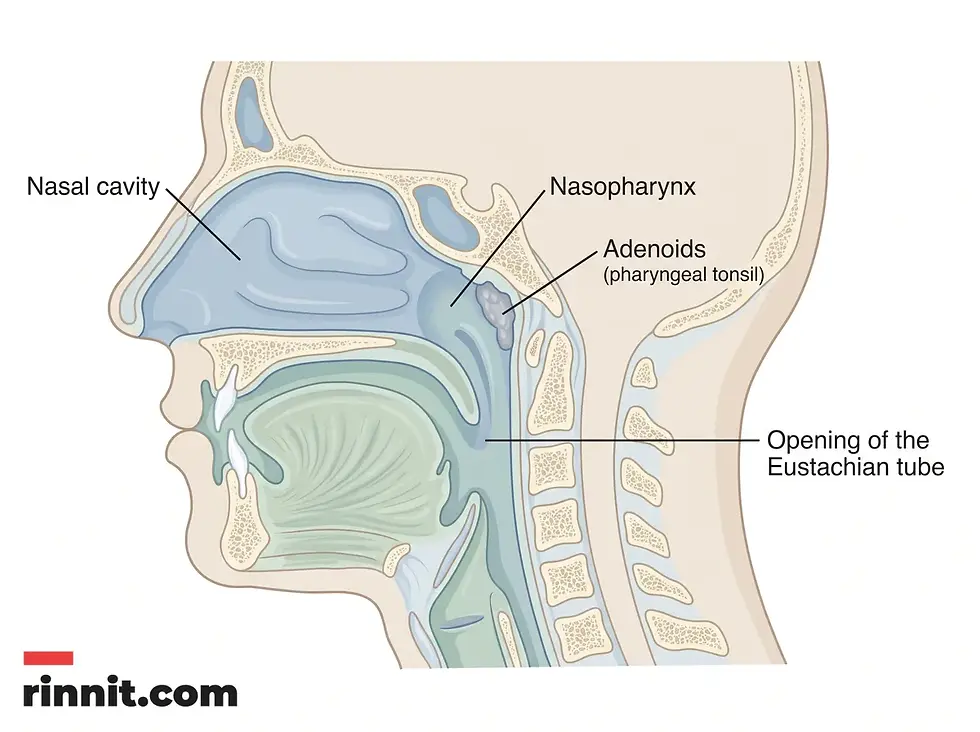
The nasopharynx is the uppermost section of the throat, located directly behind the nasal cavity and above the roof of the mouth [1]. It serves as a vital muscular passageway that connects the nose to the respiratory system, allowing for the filtration and flow of air into the lungs [1]. Beyond breathing, the nasopharynx houses the adenoids for immune defense and the openings of the eustachian tubes, which are essential for equalizing ear pressure [1]. Protecting this area involves maintaining good hygiene and monitoring for symptoms like persistent congestion or ear discomfort.
Quick Answer: What is the nasopharynx?
The nasopharynx is a box-shaped muscular passageway at the top of the throat that connects the nasal cavity to the respiratory system, letting air flow from the nose to the windpipe while filtering dust [1]. It contains the adenoids, which support immunity, and the eustachian tubes, which regulate middle ear pressure [1]. Common problems include colds, enlarged adenoids and rare tumors [1].
What the research says
Intranasal steroids can shrink enlarged adenoids in children. A meta-analysis of 30 studies (2,301 children with adenoid hypertrophy) found that children treated with intranasal corticosteroids were less likely to need adenoidectomy than controls (risk ratio 0.30; 95% CI 0.17-0.54), with lower symptom scores and smaller adenoids (Alqutub et al., International Journal of Pediatric Otorhinolaryngology, 2025) [2].
Handwashing modestly lowers the risk of respiratory infections. A Cochrane review of 78 randomized trials found a 14% relative reduction in the number of people with acute respiratory infections in hand hygiene groups compared with controls (risk ratio 0.86; 95% CI 0.81-0.90; 9 trials, 52,105 participants) (Jefferson et al., Cochrane Database of Systematic Reviews, 2023) [3].
Nasopharyngeal carcinoma is geographically concentrated. A Lancet seminar reports that it is particularly prevalent in east and southeast Asia, that its incidence has declined gradually over the past decade while mortality has fallen substantially, and that plasma Epstein-Barr virus (EBV) DNA is now used for screening and surveillance (Chen et al., The Lancet, 2019) [4].
Anatomy and Key Structures
The nasopharynx is located at the base and back of the skull, serving as the starting point of the pharynx [1]. Its unique box-like shape is designed to manage multiple physiological functions simultaneously. Unlike the lower parts of the throat that handle both food and air, the nasopharynx is primarily dedicated to respiratory and auditory processes.
Structure | Location | Primary Function |
Eustachian Tubes | Lateral walls | Equalize middle ear pressure and drain fluid [1]. |
Adenoids | Posterior wall | Immune glands that protect against inhaled germs [1]. |
Pharyngeal Opening | Top of nasopharynx | Connects directly to the nasal cavity for airflow. |
Passageway to Oropharynx | Bottom of nasopharynx | Directs air toward the middle throat and lungs. |
Essential Functions of the Nasopharynx
The nasopharynx acts as a critical hub for the upper respiratory tract. Its primary role is to ensure a clear path for air to move from the nasal passages toward the lungs [1]. During this process, the lining of the nasopharynx helps to filter out environmental pollutants, dust, and debris, providing a first line of defense for the lower respiratory system [1].
In addition to its respiratory duties, the nasopharynx is integral to hearing health. The eustachian tubes, which open into the nasopharynx, allow for the equalization of pressure between the middle ear and the outside environment [1]. This mechanism is essential for proper eardrum function and fluid drainage. The nasopharynx also plays a subtle but important role in shaping the resonance and quality of the human voice [1].

Conditions and Disorders
The most common issue affecting the nasopharynx is nasopharyngitis, frequently referred to as the common cold [1]. This viral infection leads to inflammation and swelling of the nasal passages [1]. In children, the adenoids within the nasopharynx can become enlarged due to repeat infections or allergies, potentially obstructing normal breathing [1].
Recognizing Serious Symptoms
While most nasopharyngeal issues are minor, certain symptoms may indicate serious conditions such as nasopharyngeal carcinoma [1] or rare vascular tumors. A painless lump in the neck, persistent ear ringing (tinnitus), or frequent, unexplained nosebleeds should be evaluated by a healthcare provider [1]. Vision changes and facial numbness are also considered red flags that require prompt medical investigation [1].
Care and Prevention
Maintaining the health of the nasopharynx primarily involves reducing the risk of upper respiratory infections. Consistent hand washing, especially after coughing or sneezing [1], is the most effective way to prevent the spread of viruses. Additionally, keeping frequently touched surfaces clean and avoiding close contact with individuals who are sick can significantly lower the risk of inflammation in the nasopharyngeal area [1].

Conclusion
The nasopharynx is a small but sophisticated component of the human anatomy that bridges the gap between the nasal passages and the lungs. By facilitating breathing, protecting against infection, and supporting hearing, it performs essential tasks that often go unnoticed until an issue arises. Awareness of its anatomy and regular health maintenance are key to ensuring this gateway remains clear and functional.
Take Action for Respiratory Health
Practice Hygiene: Wash your hands frequently with soap and water to prevent the viral infections that commonly affect the throat [1].
Monitor Symptoms: Seek medical advice if cold-like symptoms last longer than 10 days [1] or if you experience unusual lumps or ear pain.
Protect Your Ears: Be mindful of pressure changes during travel, as the nasopharynx is responsible for equalizing middle ear pressure [1].
Frequently Asked Questions
What is the nasopharynx?
The nasopharynx is the uppermost part of the throat that connects the nose to the respiratory system.
Where are the adenoids located?
The adenoids are glands located in the back wall of the nasopharynx.
What do the eustachian tubes do?
The eustachian tubes connect the middle ear to the nasopharynx to equalize pressure and drain fluid.
Is the nasopharynx involved in swallowing?
Unlike the lower throat, the nasopharynx is primarily involved in breathing and hearing, not swallowing food.
What is nasopharyngitis?
Nasopharyngitis is the medical term for the common cold, an inflammation of the nasopharynx.
Can adults have enlarged adenoids?
Adenoids typically shrink and disappear by adulthood, so enlargement is most common in children.
What are the symptoms of nasopharyngeal cancer?
A painless lump in the neck is the most common sign, along with ear pain or nosebleeds.
How do doctors test the nasopharynx?
Tests include nasopharyngeal swabs, nasal endoscopy, and imaging like CT scans.
How long does a cold usually last?
Most viral infections of the nasopharynx resolve within a week to 10 days.
When should I see a doctor for throat issues?
Consult a provider if symptoms are severe, last more than 10 days, or include trouble breathing or hearing.
Related Reading
Nasopharyngeal Swab: Testing for COVID-19, Flu, RSV and More explains the deep nose swab used to test for respiratory infections.
References
Cleveland Clinic. Nasopharynx. Cleveland Clinic. Last updated February 6, 2025. https://my.clevelandclinic.org/health/body/22376-nasopharynx
Alqutub A, Mozahim SF, Mozahim NF, et al. Effectiveness and safety of intranasal corticosteroids for adenoid hypertrophy: a systematic review and meta-analysis. International Journal of Pediatric Otorhinolaryngology. 2025;195:112450. PMID 40609250. https://doi.org/10.1016/j.ijporl.2025.112450
Jefferson T, Dooley L, Ferroni E, et al. Physical interventions to interrupt or reduce the spread of respiratory viruses. Cochrane Database of Systematic Reviews. 2023;1(1):CD006207. PMID 36715243. https://doi.org/10.1002/14651858.CD006207.pub6
Chen YP, Chan ATC, Le QT, et al. Nasopharyngeal carcinoma. The Lancet. 2019;394(10192):64-80. PMID 31178151. https://doi.org/10.1016/S0140-6736(19)30956-0
Medical disclaimer
The information provided in this article is for educational purposes only and should not be used as a substitute for professional medical advice, diagnosis, or treatment. Always seek the advice of your physician or other qualified health provider with any questions you may have regarding a medical condition.



Comments