Epstein-Barr Virus (EBV): Symptoms, How It Spreads, Link to Mono and Cancer, Diagnosis and Treatment — What You Need to Know

Updated: 2 days ago
Medically reviewed by Dr. Baraa Alnahhal, MD · Last reviewed: September 2026
Quick Answer:
Epstein-Barr virus (EBV) is a very common and highly contagious viral infection — part of the herpesvirus family as herpesvirus 4 — that spreads mainly through saliva. Most people never notice it, but cases in adolescents and young adults can cause infectious mononucleosis, and rare cases can lead to certain cancers. There is no cure: once infected, the virus stays in your body in a dormant state for life and can reactivate. Treatment focuses on symptoms — rest, hydration and over-the-counter pain and fever medicine — and most people feel better within two to four weeks.
TL;DR: Epstein-Barr Virus at a Glance
EBV is one of the most widespread human viruses. It rides mainly on saliva, stays in the body for life, and most often causes no symptoms at all. When it does cause illness — especially in teens and young adults — it produces mono-like symptoms (sore throat, fever, fatigue, swollen lymph nodes) that resolve in two to four weeks with rest and fluids. Prevention comes down to not sharing items that touch saliva, practicing good hand hygiene, and staying home while symptomatic.
Limitation statement: All statistics in this article come directly from the source's stated estimates (about 50% of U.S. children up to age 5 and about 95% of adults experience EBV in their lifetime). No additional or external prevalence figures are provided.
Fact | What the source says |
What it is | A very common viral infection; a herpesvirus called herpesvirus 4 |
How it spreads | Mainly saliva; also other body fluids (blood, semen); blood transfusions; organ transplants |
How common (U.S.) | ~50% of children up to age 5; ~95% of adults in their lifetime |
Most cases | Don't cause symptoms |
What it can lead to | Infectious mononucleosis (especially adolescents/young adults); rarely, certain cancers |
Duration of illness | Symptoms typically 2–4 weeks; fatigue can linger weeks to months |
Cure | None — the virus stays in your body for life |
Treatment | Symptom relief: fluids, rest, over-the-counter fever/pain medicine |
What Is Epstein-Barr Virus?

Epstein-Barr virus (EBV) is a very common viral infection that spreads through saliva and body fluids. EBV is a type of herpesvirus called herpesvirus 4. Most cases of EBV don't cause symptoms. Other cases, especially in adolescents and young adults, can lead to infectious mononucleosis.
Once you get EBV, the infection stays within your body for your entire life in a dormant state where it's inactive or sleeping. You can reactivate the virus and experience symptoms again, regardless of when you first acquired the virus.
Who does Epstein-Barr virus affect?
Most cases affect children, teenagers and young adults, but anyone can get the virus.
How common is Epstein-Barr virus?
Epstein-Barr virus is very common. In the U.S., an estimated 50% of all children up to 5 years of age and about 95% of adults experience an EBV infection in their lifetime.
How do you get Epstein-Barr virus?
Epstein-Barr virus is contagious and easily spreads through saliva (spit). You can get EBV by sharing items that make contact with an infected person's saliva. Most people get EBV by drinking from the same glass or kissing someone with the virus.
Is Epstein-Barr Virus Contagious?
Yes, Epstein-Barr virus is contagious. The virus can spread during the incubation period — the time from exposure to symptom onset — which is between four to six weeks.
The virus spreads easily through saliva but can spread through other body fluids. You can get EBV from an infected person by coughing or sneezing, kissing, sexual contact (blood and semen), sharing objects like a toothbrush, utensils or a cup, or touching items a child might have put in their mouth or drooled on.
If you have EBV, you don't have to show symptoms to pass the virus onto someone else.
Transmission route | Details |
Saliva | Main route — drinking from the same glass, kissing, coughing or sneezing |
Shared objects | Toothbrushes, utensils, cups |
Drool-contaminated items | Touching items a child mouthed or drooled on |
Sexual contact | Blood and semen |
Medical procedures | Blood transfusions, organ transplants |
Incubation period | 4–6 weeks from exposure to symptoms |
Spreading without symptoms | Yes — you can transmit EBV even without showing symptoms |
What Causes Epstein-Barr Virus?
Close person-to-person contact causes the highly contagious Epstein-Barr virus. The virus spreads easily through saliva and other body fluids like blood and semen.
How does Epstein-Barr virus affect the body?
The virus attaches to white blood cells (lymphocyte B cells) in your body. White blood cells help fight infection. When the virus attaches to your white blood cells, your cells are unable to fight the infection properly and you experience symptoms.
Can the virus reactivate?
Once you get Epstein-Barr virus, the infection deactivates (latent) or goes to sleep. The infection could wake up (reactivate), especially if you have a weakened immune system. Sometimes the virus does not cause symptoms in the host but it is still contagious to others. Events that trigger EBV reactivation include stress, a weak immune system, and menopause or hormone changes.
What Are the Symptoms of Epstein-Barr Virus?
Symptoms range in severity for each person diagnosed with Epstein-Barr virus. Children diagnosed with EBV either don't show symptoms or their symptoms are similar to short-term illnesses like a cold or the flu. Teenagers or adults who get the virus may show symptoms between two to four weeks, but symptoms could linger for months — especially fatigue.
Symptom | Notes |
With throat inflammation (swelling) | |
Fatigue | Feeling extremely tired; can linger for weeks or months |
Fever | — |
Bean-shaped organs in the neck | |
Skin rashes | — |
Enlarged spleen and liver | Raises ruptured-spleen risk with excessive activity |
Children often show no symptoms or only cold/flu-like symptoms, while adolescents and adults may experience the fuller mono-like picture lasting two to four weeks or more.

How Is Epstein-Barr Virus Diagnosed?
It can be challenging for your healthcare provider to diagnose Epstein-Barr virus because the symptoms are similar to other common illnesses. Your healthcare provider will ask about your symptoms, how long you've had them and whether you've come into contact with anyone who might have the virus.
To confirm the diagnosis, your provider may offer a blood test called the Epstein-Barr virus antibody test, which detects antibodies that cause EBV. Your provider may need to repeat the test between 10 days to two weeks after the first test because antibodies might not show up early in your diagnosis.
Diagnostic step | Purpose |
Symptom history | Providers review symptoms, duration and possible exposure to the virus |
EBV antibody blood test | Confirms diagnosis by detecting EBV antibodies in the blood |
Repeat testing | May be repeated 10 days to 2 weeks later — antibodies might not appear early |
How Is Epstein-Barr Virus Treated?
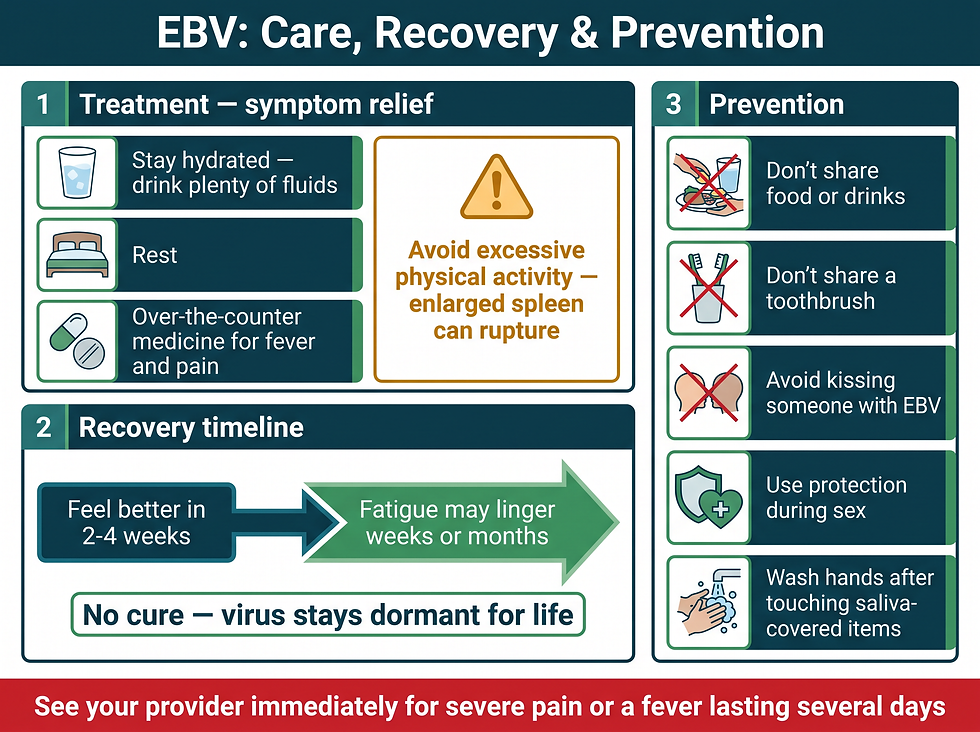
Treatment for Epstein-Barr virus addresses symptoms associated with the infection. It includes staying hydrated and drinking plenty of fluids, resting, and taking over-the-counter medicine for fever and pain.
Getting enough rest is especially important to prevent symptoms from getting worse. It is especially important that you avoid excessive physical activity that could lead to a ruptured spleen if the virus causes your spleen to enlarge.
People infected with EBV who experience symptoms usually feel better after two to four weeks. Others might have lingering symptoms of fatigue where they feel very tired for several weeks or months after their initial infection. There is no cure for Epstein-Barr virus.
Is there a cure for Epstein-Barr virus?
There is no cure. Treatment addresses the symptoms of the virus, and symptoms should go away after two to four weeks. Because the virus lives in your body in a dormant state, it can reactivate and wake up if your body triggers it via stress or a weakened immune system — and you can experience symptoms again.
Can I go to work or school?
If you have symptoms of EBV or have mononucleosis, you should avoid school or work or attending events where you are in close contact with others because the condition is highly contagious. Your healthcare provider will suggest you stay home until you feel better and your symptoms start to fade.
How Can I Prevent Epstein-Barr Virus?
You can take steps to reduce your risk by not sharing food or drinks with someone who has the virus, not kissing someone who has the virus, not sharing a toothbrush, using protection when having sex with someone who has the virus, and washing your hands after touching something with saliva on it — while not putting your hands near your mouth after touching an object that has saliva or drool on it.
When Should I See My Healthcare Provider?
If you experience symptoms of Epstein-Barr virus, contact your healthcare provider. Treatment for the virus includes resting and taking over-the-counter medicine to alleviate pain and discomfort.
Seek care immediately: If you experience severe pain or have a fever for several days, visit your provider immediately.
What questions should I ask my doctor?
Ask about whether you can go back to work or school, how to prevent other household members from getting the virus, what over-the-counter medicine is recommended for your symptoms, and how to prevent the virus from reactivating.
Can Epstein-Barr Virus Cause Cancer?
Although it is rare, Epstein-Barr virus can lead to certain types of cancer, including white blood cell cancer (Burkitt lymphoma) and cancer of the nose and throat (nasopharyngeal cancer). Cancer from EBV is the result of viral genes from the virus that change the growth cycle of infected cells and cause them to become cancerous.
Is Epstein-Barr Virus the Same as Herpes?
Epstein-Barr virus is in the human herpesvirus family and is also known as human herpesvirus 4. Symptoms of EBV are not the same as other viruses in the herpesvirus family like genital herpes. There are several common conditions in the human herpesvirus family, like chickenpox, shingles and mononucleosis. Some cases of EBV lead to mononucleosis.
Is Epstein-Barr Virus a Sexually Transmitted Infection?
Yes, Epstein-Barr virus can be a sexually transmitted infection (STI), but not every case is an STI. The virus can spread through bodily fluids like blood or semen, but most often spreads via saliva. EBV can lead to infectious mononucleosis that is sometimes called "the kissing disease." To avoid transmitting or receiving an STI, use protection when having sex.
Clinical care-team note (verbatim from the source): "Most cases of Epstein-Barr virus don't cause serious health problems but can disrupt your day-to-day activities like attending work or school. Make sure you stay hydrated and get a lot of rest to prevent the infection from taking a greater toll on your body. Prevent the spread of EBV by staying home if you have symptoms."
Conclusion: A Widespread Virus, Manageable Symptoms and Lifelong Dormancy
Epstein-Barr virus touches the vast majority of people — roughly half of young children and 95% of adults in the U.S. — yet most never know it. When it does cause illness, the sore throat, fever and fatigue of mono-like infection run their course in two to four weeks with the basics of rest and hydration, though fatigue can linger for months. The virus never truly leaves: it sleeps in your white blood cells for life and can wake up under stress or immune strain. That makes the practical playbook simple — stay home while sick, protect your household from shared saliva, avoid overexertion if your spleen is enlarged, and see a provider for severe pain or a persistent fever.
Take these three steps:
Rest and hydrate — the core of EBV care; over-the-counter medicine handles fever and pain while your body fights the virus.
Avoid overexertion — an enlarged spleen can rupture with excessive physical activity, so skip strenuous exercise until cleared.
Stop the spread — don't share food, drinks or toothbrushes; wash hands after touching saliva-covered items; stay home until symptoms fade.
This article provides general information and is not a substitute for professional medical advice. Always consult a qualified healthcare provider for diagnosis and treatment.
Frequently Asked Questions
What is Epstein-Barr virus?
Epstein-Barr virus (EBV) is a very common viral infection that spreads through saliva and body fluids. EBV is a type of herpesvirus called herpesvirus 4.
Is Epstein-Barr virus a herpes virus?
Yes — EBV is in the human herpesvirus family and is also known as human herpesvirus 4. Its symptoms are not the same as other herpesviruses like genital herpes.
Is Epstein-Barr virus the same as herpes?
EBV is in the same family, but its symptoms are not the same as other viruses in the herpesvirus family like genital herpes. Other family members include chickenpox, shingles and mononucleosis.
How common is Epstein-Barr virus?
It's very common. In the U.S., an estimated 50% of all children up to 5 years of age and about 95% of adults experience an EBV infection in their lifetime.
Who does Epstein-Barr virus affect?
Most cases affect children, teenagers and young adults, but anyone can get the virus.
Can you get Epstein-Barr virus more than once?
Once you get EBV, the infection stays in your body for life in a dormant (inactive/sleeping) state. You can reactivate the virus and experience symptoms again, regardless of when you first acquired it.
Is Epstein-Barr virus contagious?
Yes. It spreads easily through saliva and can spread during the incubation period, which is between four to six weeks.
Can you spread Epstein-Barr virus without symptoms?
Yes — if you have EBV, you don't have to show symptoms to pass the virus onto someone else.
How do you get Epstein-Barr virus?
You can get EBV by sharing items that make contact with an infected person's saliva. Most people get EBV by drinking from the same glass or kissing someone with the virus.
How does Epstein-Barr virus spread?
Through coughing or sneezing, kissing, sexual contact (blood and semen), sharing objects like a toothbrush, utensils or a cup, and touching items a child might have mouthed or drooled on. It can also spread through blood transfusions or organ transplants.
What causes Epstein-Barr virus?
Close person-to-person contact causes the highly contagious virus, which spreads easily through saliva and other body fluids like blood and semen.
What does Epstein-Barr virus do to your body?
The virus attaches to white blood cells (lymphocyte B cells). When the virus attaches to your white blood cells, your cells are unable to fight the infection properly and you experience symptoms.
What are the symptoms of Epstein-Barr virus?
Sore throat and throat inflammation (swelling), fatigue or feeling extremely tired, fever, swollen lymph nodes, rashes on your skin, and enlarged spleen and liver. Symptoms range in severity from person to person.
Do children show the same EBV symptoms as adults?
No. Children either don't show symptoms or their symptoms are similar to short-term illnesses like a cold or the flu.
How long do EBV symptoms last?
Teenagers or adults may show symptoms between two to four weeks, but symptoms could linger for months — especially fatigue.
Does EBV cause mononucleosis?
Some cases, especially in adolescents and young adults, can lead to infectious mononucleosis.
How is Epstein-Barr virus diagnosed?
It can be challenging to diagnose because symptoms resemble other common illnesses. Providers review symptoms, duration and exposure, and may confirm with an EBV antibody blood test.
What is the Epstein-Barr virus antibody test?
A blood test that detects antibodies that cause EBV to confirm the diagnosis. It may need to be repeated 10 days to two weeks after the first test because antibodies might not show up early.
Is there a cure for Epstein-Barr virus?
No. Treatment addresses the symptoms of the virus, and symptoms should go away after two to four weeks. The virus stays in your body in a dormant state for life.
How is Epstein-Barr virus treated?
By staying hydrated and drinking plenty of fluids, resting, and taking over-the-counter medicine for fever and pain.
Can EBV cause a ruptured spleen?
The virus can enlarge the spleen, so avoiding excessive physical activity is especially important — overexertion could lead to a ruptured spleen.
How soon after treatment will I feel better?
People who experience symptoms usually feel better after two to four weeks, though fatigue may linger for several weeks or months.
Can the virus reactivate later?
Yes. The dormant infection can wake up (reactivate), especially with a weakened immune system, and trigger symptoms again. Events that trigger reactivation include stress, a weak immune system, and menopause or hormone changes.
Can I go to work or school with EBV?
If you have symptoms or mononucleosis, avoid school, work and events with close contact with others — the condition is highly contagious. Stay home until you feel better and symptoms start to fade.
Can you get cancer from Epstein-Barr virus?
Although rare, EBV can lead to certain cancers, including white blood cell cancer (Burkitt lymphoma) and cancer of the nose and throat (nasopharyngeal cancer). Viral genes change the growth cycle of infected cells, causing them to become cancerous.
Is Epstein-Barr virus an STI?
Yes, it can be a sexually transmitted infection (STI), but not every case is an STI. It can spread through blood or semen, but most often spreads via saliva.
Why is mono called "the kissing disease"?
EBV can lead to infectious mononucleosis that is sometimes called "the kissing disease," because the virus most often spreads via saliva.
How can I prevent Epstein-Barr virus?
Don't share food or drinks, kissing, or a toothbrush with someone who has the virus; use protection when having sex; wash your hands after touching something with saliva on it and avoid putting your hands near your mouth afterward.
When should I see my healthcare provider?
Contact your provider if you experience EBV symptoms. Visit your provider immediately if you experience severe pain or have a fever for several days.
What questions should I ask my doctor?
Can I go back to work or school? How do I prevent other household members from getting the virus? What over-the-counter medicine do you recommend? How do I prevent the virus from reactivating?
Additional Resources
For further reading, these authoritative external references support the information above:
Content reviewed and produced following the Rinnit editorial framework. Last updated: September 28, 2026.
Comments