What Is Congenital Hypothyroidism? The Thyroid Hormone Deficiency Babies Are Born With, Explained

Updated: 2 days ago
Medically reviewed by Dr. Baraa Alnahhal, MD · Last reviewed: October 2026
Quick Answer
Congenital hypothyroidism is a thyroid hormone deficiency present at birth, usually caused by a missing, underdeveloped or misplaced thyroid gland [5] [6] [7]. It affects about 1 in 3,000 to 1 in 4,000 babies [7] and is detected through routine newborn screening [5]. Most children need lifelong daily levothyroxine, but early treatment prevents developmental problems and allows a normal life expectancy and lifestyle [5].
Key takeaways
Area | What you need to know |
What it is | |
How common | |
Critical timing | Treatment should start as soon as possible, within the first month of life, to prevent permanent delays [5] |
Detection | |
Main cause | |
Symptoms | |
Primary treatment | |
Monitoring | |
Outlook | Excellent with early treatment; normal life expectancy [5] |
Prevention | Usually not preventable; healthy pregnancy habits help [5] |
What the research says
Early, correctly dosed levothyroxine and close follow-up are the core of care. The 2020-2021 European consensus guidelines (ENDO-ERN, endorsed by the European Society for Pediatric Endocrinology and the European Society for Endocrinology) recommend the immediate start of correctly dosed levothyroxine once congenital hypothyroidism is diagnosed, frequent laboratory follow-up to keep thyroid hormone levels in target range, timely assessment of whether treatment needs to continue, and attention to neurodevelopment and neurosensory functions (van Trotsenburg et al., Thyroid, 2021) [1].
Screening matters because untreated disease causes devastating outcomes. A clinical review describes congenital hypothyroidism as the leading cause of preventable intellectual disability in children. State-mandated newborn screening across the United States has increased detection and allowed early intervention, while delayed or omitted treatment can lead to devastating neurocognitive outcomes (Brady et al., Neonatal Netw, 2021) [2].
Recorded incidence is rising, partly because of screening practice. An analysis of Chinese newborn screening data from 2012 to 2019 estimated that incidence rose from 4.01 to 5.77 per 10,000 births. Each 1 mIU/L decrease in the TSH cutoff was associated with a 2.96% increase in detected incidence, and the proportion of cases in premature infants rose from 6.60% to 9.10%. This is Chinese data, and the authors found that lower TSH cutoffs and more preterm births explained only part of the rise (Yao et al., Eur J Pediatr, 2023) [4].
International guidelines call for worldwide newborn screening and immediate levothyroxine. The European Society for Paediatric Endocrinology consensus guidelines, developed by 32 participants from six scientific societies using the GRADE system, recommend worldwide neonatal screening, assessing the cause and severity, immediate L-T4 supplementation with frequent monitoring and dose adjustment, a trial of treatment when transient disease is suspected, and regular developmental assessments. They note that people with the condition need monitoring throughout life, particularly in early childhood and pregnancy. (Léger et al., Horm Res Paediatr, 2014) [9]
Delayed diagnosis is the main driver of the worst outcome, which is why timing matters. A clinical review reports that thyroid dysgenesis accounts for 85% of cases and dyshormonogenesis for the other 15%, that clinical features are so subtle many newborns go undiagnosed at birth, and that there is an inverse relationship between IQ and age at diagnosis. Initial levothyroxine of 10–15 μg/kg/day aims to normalize T4 within 2 weeks and TSH within one month. (Agrawal et al., Indian J Endocrinol Metab, 2015) [10]
What Is Congenital Hypothyroidism?
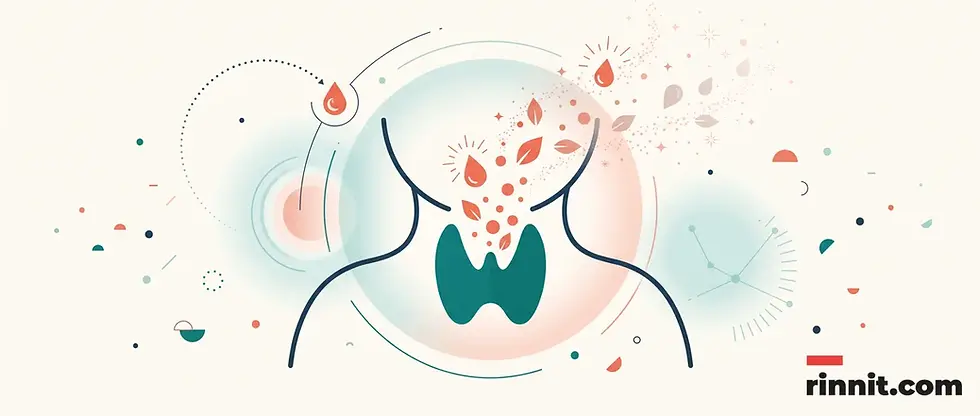
Congenital hypothyroidism is a type of hypothyroidism that is present from birth [5] [7]. The word congenital means "present at birth."
It happens when a newborn's thyroid gland, a small butterfly-shaped gland at the base of the neck, doesn't develop properly or produce enough thyroid hormone. These hormones (T3 and T4) are critical for controlling metabolism, growth and brain development in infants [5] [6] [7].
Because thyroid hormones are so vital, congenital hypothyroidism is regarded as the leading preventable cause of intellectual disability in children [2]. For this reason, healthcare providers in the U.S. and many other countries perform newborn screening shortly after birth to check thyroid function [5] [6] [7].
What are the warning signs of congenital hypothyroidism in newborns?
It is not always obvious when a newborn has congenital hypothyroidism, which is why screening is essential. Many babies look typical at birth, and early warning signs can develop over the first weeks of life [5] [6] [7]:
Symptom | Description |
Jaundice | |
Lethargy | |
Feeding difficulties | |
Constipation | |
Hypotonia | |
Hoarseness | |
Hypothermia |

Persistent yellowing of the skin is covered in more detail in our guide to infant jaundice.
Signs of untreated hypothyroidism over time
If the condition is not detected and treated early, more severe signs may appear as the child grows:
Causes: Why Does It Happen?
The most common cause is a group of conditions known as thyroid dysgenesis [5] [6] [8] [7], where the gland itself is the problem:
Other, less common causes
In some cases the gland is present but doesn't function correctly:
Genetic mutations: inherited or random changes that block hormone production [5] [7].
Iodine deficiency: a lack of iodine in the parent's diet during pregnancy [5] [7].
Medications during pregnancy: drugs such as lithium or antithyroid medications [5].
Cancer treatment: radioactive iodine treatment for thyroid cancer during pregnancy [5].
Central causes: in central congenital hypothyroidism the pituitary gland doesn't stimulate the thyroid enough. It is rarer, estimated at around 1 in 13,000, and in about 60% of cases is part of combined pituitary hormone deficiencies (Lauffer et al., Front Endocrinol, 2021) [3].
How is congenital hypothyroidism diagnosed through newborn screening?
In the U.S., providers perform routine thyroid screening on all newborns [5], typically with a heel-prick blood sample taken 24 to 48 hours after birth [6]. The lab checks two levels:
If results are abnormal, providers may use a thyroid scan or ultrasound to see whether the gland is missing, misplaced or underdeveloped [5] [7]. Screening can miss central congenital hypothyroidism, which is often overlooked clinically in the neonatal period despite feeding problems, low blood sugar and prolonged jaundice (Lauffer et al., 2021) [3]. A baby with symptoms should be assessed even if the newborn screen was normal.
How is congenital hypothyroidism treated with hormone replacement?
The primary treatment is thyroid hormone replacement therapy.
Levothyroxine
The most common medication is levothyroxine, a synthetic version of the T4 hormone [5] [6]. It comes as a tablet. For infants, parents crush the tablet and mix it with a small amount of breast milk, formula or water [5] [6] [7].
Monitoring and timing
Treatment should start as soon as possible, within the first month of life to prevent permanent developmental delays [5]. Because children grow rapidly, their dose needs change frequently, so regular blood tests are required [5] [7]:
Most children need lifelong treatment, but some have a temporary form that resolves on its own [5] [7]. An endocrinologist (hormone specialist) decides if and when medication can be stopped [6].

What are the complications of untreated congenital hypothyroidism?
Untreated congenital hypothyroidism can cause permanent complications, including intellectual disability, developmental delays, hearing loss, heart failure, vision problems and anemia [5].
Intellectual disability: significant impact on cognitive function.
Developmental delays: slowed growth and milestone achievement (see developmental delay).
Hearing loss: permanent damage to auditory function.
Heart failure: from the strain of a very slow metabolism.
Vision problems: problems with eye development and function.
Anemia: low red blood cell counts.
What is the outlook for congenital hypothyroidism, and how do families live with it?
Life expectancy for someone with congenital hypothyroidism is the same as for anyone else, provided treatment starts promptly and continues [5]. Children who take their medication daily grow up to have typical lives, careers and families [5]. The main difference is a daily pill and periodic blood tests.
Tips for parents
Be consistent: give the medication at the same time every day.
Watch for symptoms: if your child becomes unusually sluggish or constipated again, the dose may need adjusting.
Ask questions: work closely with a pediatric endocrinologist to understand the cause and the long-term plan.
Can it be prevented?
Usually not, because most cases arise from gland development or genetics [5]. Healthy iodine intake and attending prenatal care, and reviewing any medicines with your doctor during pregnancy, support a healthy start.
Conclusion
Congenital hypothyroidism is a manageable thyroid hormone deficiency that affects about 1 in 3,000 to 1 in 4,000 newborns [7]. It can cause severe developmental problems if missed, but newborn screening catches most cases within days of birth. With daily hormone replacement started early and regular monitoring, children can reach every developmental milestone and live full, healthy lives [6].
Understanding a new diagnosis can be overwhelming for any parent. If you need to create clear, supportive educational materials for families or patients, Rinnit's infographic templates provide a professional way to visualize health information simply and effectively.
Frequently Asked Questions
What is congenital hypothyroidism?
A thyroid hormone deficiency present from birth.
What does "congenital" mean?
The condition was present when the baby was born.
How common is it?
About 1 in every 3,000 to 4,000 newborns.
Are boys or girls more likely to have it?
Girls are about twice as likely as boys.
What is the most common cause?
Thyroid dysgenesis: the gland is missing, underdeveloped or in the wrong place.
Is it always permanent?
Most cases are permanent, but some babies have a temporary form that resolves in weeks or months.
How is it detected?
Through a newborn screening blood test (heel prick) shortly after birth.
What hormones are checked in the screening?
TSH (thyroid-stimulating hormone) and T4 (thyroxine).
When should treatment start?
As soon as possible, within the first month of life, to prevent permanent developmental harm.
What is the main treatment?
Daily levothyroxine, which replaces the missing T4 hormone.
How do I give a baby the tablet?
Crush it and mix it with a small amount of formula, breast milk or water.
Can I mix the medicine with soy formula?
Some soy formulas interfere with absorption, so check with your endocrinologist first.
What happens if it isn't treated?
It can lead to permanent intellectual disability and developmental delays.
Is it a cause of intellectual disability?
Yes, and it is regarded as the leading preventable one, which is why screening is so important.
What are the early signs?
Prolonged jaundice, lethargy, poor feeding, constipation and a hoarse cry.
What is hypotonia?
Decreased muscle tone, often described as a "floppy" baby.
What is macroglossia?
An enlarged tongue, a sign of untreated hypothyroidism.
What is a goiter?
An enlarged thyroid gland that may appear as a lump in the neck.
Can it be detected before birth?
Not always.
Is it hereditary?
Most cases come from random development problems or mutations, but some forms run in families.
Can I prevent it?
Usually not, but adequate iodine intake during pregnancy helps.
What environmental factors can cause it?
Iodine deficiency or certain drugs, such as lithium, taken during pregnancy.
Does radioactive iodine cause it?
Radioactive iodine treatment for thyroid cancer during pregnancy can interfere with the baby's thyroid development.
How often are blood tests needed for a baby?
Every 1 to 2 months for the first 6 months, then every 2 to 3 months.
Will my child need medication forever?
Most do, but an endocrinologist monitors this and decides.
What is an endocrinologist?
A doctor who specializes in hormones and the glands that produce them.
What is the life expectancy?
The same as for someone without the condition, provided treatment is consistent.
Can my child have a normal job and family?
Yes, they can live a typical life.
What if my child misses a dose?
Ask your doctor for their specific missed-dose instructions.
Are there long-term complications with early treatment?
Typically not, if treatment starts early and is maintained.
Does it affect hearing?
Untreated congenital hypothyroidism can cause permanent hearing loss.
Does it affect vision?
Untreated cases can lead to vision problems.
Can it cause heart problems?
Untreated hypothyroidism can lead to heart failure.
What is TSH?
Thyroid-stimulating hormone, made by the pituitary gland to tell the thyroid to work.
What is T4?
Thyroxine, the main hormone made by the thyroid gland.
Is levothyroxine safe?
Yes. It is a synthetic version of a hormone the body naturally needs.
Will my child have growth delays?
Not if they are treated early and kept on the correct dose.
Does the condition affect metabolism?
Yes, thyroid hormones are the main controllers of metabolism.
Can the thyroid gland be under the tongue?
Yes, this is called an ectopic thyroid.
What is thyroid agenesis?
Being born without a thyroid gland at all.
What is thyroid hypoplasia?
A thyroid gland that is present but too small to work properly.
Why is jaundice a symptom?
Low thyroid hormone can slow the liver's processing of bilirubin.
Can it cause anemia?
Untreated hypothyroidism can lead to low red blood cell counts.
What is bradycardia?
A slow heart rate, which can occur when metabolism is too slow.
Can symptoms come back?
Yes, if the dose becomes too low as the child grows.
Is screening mandatory?
In the U.S., newborn screening is state-mandated, and many other countries screen too.
How is the blood sample taken?
Usually by a quick prick on the baby's heel.
Does the baby feel pain during screening?
It is a brief, minor sting.
Can I breastfeed if my baby has this?
Yes. Breastfeeding is encouraged, and the medication can be mixed with breast milk.
What is central congenital hypothyroidism?
A rarer form in which the pituitary doesn't stimulate the thyroid enough, which standard TSH-based screening can miss.
Related Reading
References
van Trotsenburg P, Stoupa A, Léger J, et al. Congenital hypothyroidism: a 2020-2021 consensus guidelines update, an ENDO-European Reference Network initiative endorsed by the European Society for Pediatric Endocrinology and the European Society for Endocrinology. Thyroid. 2021;31(3):387-419. PMID 33272083. https://doi.org/10.1089/thy.2020.0333
Brady J, Cannupp A, Myers J, et al. Congenital hypothyroidism. Neonatal Netw. 2021;40(6):377-385. PMID 34845088. https://doi.org/10.1891/11-T-699
Lauffer P, Zwaveling-Soonawala N, Naafs JC, et al. Diagnosis and management of central congenital hypothyroidism. Front Endocrinol (Lausanne). 2021;12:686317. PMID 34566885. https://doi.org/10.3389/fendo.2021.686317
Yao Y, Deng K, Zhu J, et al. Increased incidence of congenital hypothyroidism in China: an analysis of 119 million screened newborns. Eur J Pediatr. 2023;182(10):4477-4486. PMID 37491618. https://doi.org/10.1007/s00431-023-05108-8
Cleveland Clinic. Congenital Hypothyroidism. Cleveland Clinic. Medically reviewed; last updated December 23, 2024. https://my.clevelandclinic.org/health/diseases/congenital-hypothyroidism
American Thyroid Association. Congenital Hypothyroidism. American Thyroid Association. Accessed October 30, 2026. https://www.thyroid.org/congenital-hypothyroidism/
Bowden SA, Goldis M. Congenital Hypothyroidism. In: StatPearls [Internet]. Treasure Island (FL): StatPearls Publishing. Updated June 5, 2023. PMID 32644339. https://www.ncbi.nlm.nih.gov/books/NBK558913/
National Library of Medicine (U.S.). Congenital hypothyroidism. MedlinePlus Genetics. Last updated September 1, 2015. https://medlineplus.gov/genetics/condition/congenital-hypothyroidism/
Léger J, Olivieri A, Donaldson M, et al. European Society for Paediatric Endocrinology consensus guidelines on screening, diagnosis, and management of congenital hypothyroidism. Horm Res Paediatr. 2014;81(2):80-103. PMID 24662106. https://doi.org/10.1159/000358198
Agrawal P, Philip R, Saran S, et al. Congenital hypothyroidism. Indian J Endocrinol Metab. 2015;19(2):221-227. PMID 25729683. https://doi.org/10.4103/2230-8210.131748
Medical disclaimer
This article is for informational purposes only and is not a substitute for professional medical advice, diagnosis, or treatment. Always seek the advice of a qualified healthcare provider with any questions about a medical condition. Never disregard professional medical advice or delay seeking care based on content you have read here.



Comments