What Are Birth Defects? Symptoms, Causes, Diagnosis, and Care Explained

Updated: 2 days ago
Medically reviewed by Dr. Baraa Alnahhal, MD · Last reviewed: October 2026
Quick Answer: What are birth defects?
Birth defects are abnormal growth changes that happen during fetal development, detected during pregnancy, after birth or later, with most identified within the first year. Not all are visible: some only change appearance, while others affect thinking, movement and function. [1] Treatment reduces symptoms or repairs structural problems, and good health during pregnancy can reduce risk, though most cannot be prevented.
Key takeaways
Birth defects develop during fetal growth. They are structural changes that happen while the fetus develops, and they can affect any part of the body. [1]
They are common. About 1 in 33 babies in the U.S., roughly 120,000 per year, are born with a birth defect. [1]
Most causes are unknown. Only about 30% of birth defects have an identifiable cause; 50% to 70% occur randomly. [1]
Genetics account for about 20%. Chromosome changes, such as extra, missing, deleted, or relocated chromosomes, underlie many genetic birth defects. [1]
Diagnosis happens in stages. Screening tests during pregnancy can flag risks, and diagnostic tests like fetal echocardiograms, fetal MRI, CVS, and amniocentesis can confirm findings. [1]
There is generally no cure. Care focuses on reducing symptoms and repairing structural problems through surgery, medications, therapy, and assistive devices. [1]
What the research says
Diabetes before pregnancy is linked to more congenital malformations. A systematic review and meta-analysis of 81 observational studies covering more than 137 million pregnancies found that congenital malformations were about 2.4 times as likely in pregnancies with pregestational diabetes as in comparison pregnancies (odds ratio 2.44, 95% CI 1.96–3.04). This is an association found in observational data, not proof of cause (Gazis et al., J Clin Med, 2025). [5]
Maternal diabetes and obesity are linked to congenital heart disease. In a meta-analysis of 170 studies of non-genetic risk factors, pregestational diabetes was associated with congenital heart disease (OR 3.51, 95% CI 2.86–4.3), while being overweight or obese carried a smaller increase (OR 1.26, 95% CI 1.15–1.37) (Khalilipalandi et al., Can J Cardiol, 2024). [6]
Roughly 6 in 100 pregnancies with type 2 diabetes involve a congenital anomaly. A meta-analysis of 68 studies (102,963 pregnancies) estimated a prevalence of 6.1% (95% CI 5.1%–7.3%); cardiac anomalies were the most common type, and higher HbA1c levels were linked to higher risk (Oppermann et al., Int J Gynaecol Obstet, 2026). [7]
What Are Birth Defects?
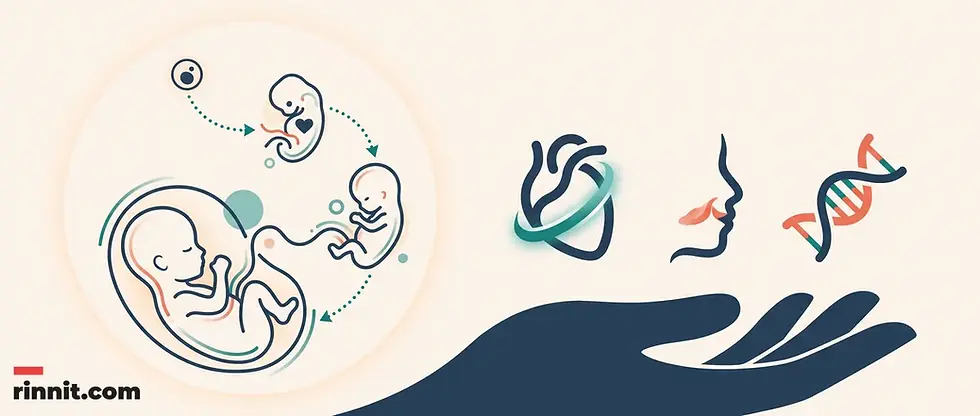
Birth defects are abnormal growth changes in your body that happen during fetal development. These changes can affect any part of your child's body. A healthcare provider can detect birth defects during pregnancy, after your baby is born, or later during your child's life. Most providers identify a birth defect within your child's first year. Not all birth defects are visible. [1]
While some birth defects can be life-threatening, the impact they have on your child's life varies based on their diagnosis. Some birth defects only change your child's appearance, while others can affect the way they think, move, and function. [1]
What Are Examples of Birth Defects?
Example | Type of Change |
Cleft lip and/or cleft palate | Structural difference in the lip or roof of the mouth |
Bone growth abnormalities | Changes that cause short stature, missing limbs, or scoliosis [1] |
Congenital heart conditions | Structural differences in how the heart forms |
Chromosome abnormalities | Conditions such as Down syndrome [1] |
Clubfoot | Structural difference in how the foot develops |
Fetal alcohol syndrome | Effects of alcohol exposure during fetal development |
Sickle cell anemia | Inherited condition affecting red blood cells |
How Common Are Birth Defects?
Birth defects are common. Every four and a half minutes, a baby in the United States is born with a birth defect. This equals 1 out of every 33 babies born, or about 120,000 babies each year. [1]
About the Term "Birth Defect"
"Birth defect" is a medically accurate term to describe structural changes to a person's body that happen during fetal development. It is acceptable to refer to a condition as a birth defect, but it is never acceptable to call people "defective" because they have one. Changes to their bodies do not define who they are. If the term feels uncomfortable, alternatives include congenital (present at birth) abnormalities, congenital conditions, or physical malformations. [1]
Signs and Symptoms of Birth Defects
Symptoms of birth defects range from mild to severe. They can affect almost any part of the body, such as your bones and organs. [1]
Signs During Pregnancy
During pregnancy, a healthcare provider uses screening tests to look for signs of birth defects. Signs detected during pregnancy can include protein levels from a blood test that are higher or lower than expected, extra fluid behind a fetus' neck during an ultrasound, and structural abnormalities of a fetus' internal organs, like the heart, during a fetal echocardiogram. [1]
Signs in Infants and Toddlers
Some birth defects will not be present until a child is born or shortly after birth. Common signs and symptoms among infants and toddlers include an abnormal rhythm of their heart, difficulty breathing on their own, not responding to their name being called or loud noises, eyes that do not follow a person or an object, difficulty feeding, head, face, eyes, ears, or mouth with unique characteristics, missing developmental milestones for their age, and irritability. [1]
This is not a complete list. Contact your child's healthcare provider if something does not seem right or if you notice any of the signs or symptoms listed above.
Setting | Possible Signs |
During pregnancy (screening) | Unexpected blood protein levels; extra fluid behind the fetus' neck; structural organ abnormalities [1] |
After birth | Abnormal heart rhythm; breathing difficulty; not responding to name or loud noises; eyes not tracking; feeding difficulty; unusual facial or head characteristics; missed developmental milestones; irritability [1] |

What Causes Birth Defects?
There are several possible causes of birth defects, including genetic changes, a side effect of a medication, substance or chemical exposure, and pregnancy complications. These causes occur during fetal development. Many are out of your control, and there is nothing you can do to prevent them. [1]
When a fetus is growing in your uterus, it goes through two major stages of development after conception. The embryo stage occurs during the first 10 weeks after conception, when most of the fetus' major body systems and organs form. The second, or fetal stage, is the remainder of the pregnancy. This fetal period is a time of organ growth and the growth of the fetus in general. [1]
A developing fetus is most vulnerable to birth defects during the embryo stage when organs are developing. For example, substance or chemical exposure can cause the greatest damage to a fetus between two and 10 weeks after conception. [1]
Medical science has identified the cause of about 30% of birth defects. That means about 70% remain without a straightforward cause. As many as 50% to 70% of birth defects are random, and their cause remains unknown. [1]
Genetics and Birth Defects
About 20% of birth defects occur as a result of genetic factors. [1]
The average human body cell contains 46 chromosomes, and each chromosome contains thousands of genes. Each gene contains a blueprint that controls the development or function of a particular body part. Among people who have either too many or too few chromosomes, their cells receive a scrambled message on how to develop and function. [1]
Chromosome Change | What Happens | Example Condition |
Too many chromosomes | An extra copy appears during cell division [1] | Down syndrome (extra copy of chromosome 21) [1] |
Not enough chromosomes | Part of or an entire chromosome is missing [1] | Turner syndrome (missing part of or an entire X sex chromosome) [1] |
Deleted chromosomes | Genetic information is missing from the DNA | Prader-Willi syndrome (missing information on chromosome 15) [1] |
Relocated chromosomes | A chromosome moves within the DNA to a different position, called translocation [1] | Rare cases of Smith-Magenis syndrome [1] |
Some birth defects are inherited, meaning the condition runs in your biological family. Other conditions occur randomly (sporadically), and you will not have a history of the condition in your family. [1]
Medications and Birth Defects
Some medications can have an impact on developing fetuses and can cause birth defects. Common medications that can lead to birth defects include isotretinoin, antiepileptic medications such as valproic acid, lithium, and warfarin. [1]
If you are pregnant or plan on becoming pregnant, talk to a healthcare provider about the medications and supplements you currently take and the side effects of medications they prescribe to you. They will let you know if it is safe to continue taking certain medications. Do not stop taking the medication until your provider approves it. [1]
Substance or Chemical Exposure and Birth Defects
Substances and chemicals within a person's environment can affect the development of a fetus and lead to birth defects. Common substances or chemicals include alcohol, addictive substances like caffeine, prescription drugs, and non-medical drugs, and pesticides or herbicides. [1]
Birth defects are common in certain areas of the world where dangerous pesticides and herbicides were used. An example is Agent Orange, an herbicide used during the Vietnam conflict from 1962 to 1971. This herbicide is no longer available on the market due to its harmful and deadly effects. [1]
Pregnancy Complications and Birth Defects
Some complications that happen during pregnancy can lead to birth defects. These complications are usually outside of the parent's control, and it can be a very emotional experience. [1]
Complication | What Happens | Possible Outcome |
Uterine constraint | The amniotic sac that holds the fetus breaks during pregnancy [1] | Amniotic band syndrome and possible limb amputations [1] |
Lack of amniotic fluid | Not enough fluid surrounds the fetus in the uterus [1] | Pressure on the fetus; lung damage (pulmonary hypoplasia) [1] |
Infection | Certain infections affect the developing fetus [1] | Fetal effects from toxoplasmosis or cytomegalovirus [1] |
To help prevent these complications, you can talk with a healthcare provider about ways to keep yourself and the developing fetus healthy during pregnancy.
What Are the Risk Factors for Birth Defects?
Certain factors or health conditions can put you more at risk of having a child with a birth defect. These include but are not limited to diabetes, obesity, being over 35 years old, having a genetic condition that runs in your biological family (genetic predisposition), substance-use disorder, and taking certain medications. [1]
Your healthcare provider can help you manage any underlying conditions. They can also offer testing, such as genetic testing, to assess your risk of having a child with a genetic condition. [1]
How Are Birth Defects Diagnosed?
A healthcare provider can diagnose a birth defect during pregnancy, after your child is born, or later during their life when symptoms become apparent. Testing can confirm a diagnosis. [1]
Prenatal Screening Tests
During pregnancy, you may choose to get screening tests for birth defects and genetic conditions through ultrasounds or blood tests. If a screening test shows something abnormal, your provider will recommend a diagnostic test. First-trimester screenings check for abnormalities with the fetal heart and chromosomal conditions such as Down syndrome. Second-trimester screenings check for problems with the structure of the fetus' anatomy. [1]
Screening Stage | Test | What It Checks |
First trimester | Blood screen | Protein levels or circulating free fetal DNA in the mother's blood; abnormal results indicate increased risk of a fetal chromosomal condition [1] |
First trimester | Ultrasound | Extra fluid behind the fetus' neck, which could signal a heart or chromosomal condition [1] |
Second trimester | Serum screen | Blood tests for chromosomal conditions and/or spina bifida [1] |
Second trimester | Anomaly ultrasound | The size of the fetus and the presence of birth defects [1] |
Prenatal Diagnostic Tests
If a screening test is abnormal, a healthcare provider may offer more tests. Diagnostic tests are also offered to people with higher-risk pregnancies. [1]
Diagnostic Test | How It Works |
Fetal echocardiogram | A focused ultrasound of the fetal heart; cannot detect all heart conditions before birth [1] |
Fetal MRI | An imaging test that examines the fetal brain or nervous system [1] |
Chorionic villus sampling (CVS) | A very small piece of the placenta is collected and examined for chromosomal or genetic conditions [1] |
Amniocentesis | A small amount of amniotic fluid is collected and tested for chromosomal conditions and genetic changes; can also test for infections such as cytomegalovirus [1] |
After Birth
Healthcare providers may diagnose certain birth defects after your baby is born. A provider can diagnose some conditions immediately, like a cleft lip. Other conditions receive a diagnosis later during childhood or adulthood. [1] Keep an eye on your baby's health and report any symptoms to your child's healthcare provider.
How Are Birth Defects Treated?
Treatment depends on the diagnosis. It usually focuses on reducing symptoms or repairing any structural abnormalities and could include surgery, medications, physical therapy, using devices like hearing aids, glasses, a brace, or a wheelchair, and educational support in school (special education). [1]
Is There a Cure for Birth Defects?
In general, there is not a cure for birth defects, especially genetic conditions. Treatment can help lessen your child's symptoms and reduce their risk of life-threatening complications if symptoms are severe. [1]

Can Birth Defects Be Prevented?
You cannot prevent most types of birth defects. There are steps you can take to promote a healthy pregnancy. [1]
Step | Why It Helps |
See your healthcare provider consistently | Ongoing care keeps both parent and fetus monitored throughout pregnancy |
Take a prenatal vitamin with 400 mcg of folic acid | Recommended when trying to conceive or if sexually active and not using contraception [1] |
Contact your provider immediately if you think you are pregnant | Early care starts sooner |
Do not drink alcohol | Avoids alcohol-related fetal effects |
Talk to your provider about medications and supplements | Confirms what is safe to continue |
Avoid non-prescribed drugs | Reduces substance-related risks |
Outlook
What Can You Expect If Your Child Has a Birth Defect?
Birth defects are complicated and can be very emotional. There is not a cure or a way to prevent most birth defects, which can be frustrating and scary. If your child receives a diagnosis, your mind may flood with questions. Healthcare providers, medical specialists, and genetic counselors are available to help you understand more about the birth defect and how you can help your child. [1]
Remember that birth defects are common. Most causes are out of your control and happen randomly. There is no preventive measure to protect your child from every type of birth defect. [1] But you can love, advocate for, and care for your child, which are some of the greatest gifts you can give them.
If you are a parent of a child with a birth defect, schedule appointments with your child's healthcare provider regularly. You and their provider should thoroughly discuss possible causes, testing, treatment, and referrals to specialists and support groups. If you have any questions, reach out to your child's care team for assistance. [1]
When Should You Seek Care?
Visit a healthcare provider if your child shows any signs of birth defects. It is especially important to keep track of your child's developmental milestones, like when they take their first steps, to make sure they are on track for their age. If your child misses any milestones, contact their provider. [1]
Visit the emergency room if your child shows signs of distress like difficulty breathing, a blue, pale, or gray tone to their skin, yellowing of the whites of their eyes or skin, an abnormal heartbeat, difficulty waking up, or not feeding. [1]
Questions to Ask Your Doctor
You may want to ask: What caused my child's birth defect? Do I need to have a cesarean section? What are the treatment options to help my child? Are there side effects of the treatment? Are there symptoms I should look out for? Can you recommend any support groups for families? [1]
One common additional question: are dimples a birth defect? Dimples are not a birth defect. Dimples are indentations in your cheeks that you notice when you smile. While dimples can run in families and are hereditary, they are not considered a growth abnormality. [1]
The very last thing an expectant parent wants to hear is that there is something wrong with the fetus or with their infant. You cannot prevent most birth defects, but you can take steps before and during your pregnancy to reduce the risk of birth defects. Remember, you are not alone. Your healthcare providers understand the challenges of raising a child who has a birth defect. They will share information about screening tests, medications, and other ways to help your child reach their full potential.
Conclusion
Birth defects are abnormal growth changes that happen during fetal development and can affect any part of a child's body. They are remarkably common, affecting about 1 in 33 babies born in the United States each year, yet they remain widely misunderstood. The impact of any individual defect depends on the diagnosis: some only change appearance, while others affect how a child thinks, moves, and functions.
Causes fall into four groups: genetic changes, medication side effects, substance or chemical exposure, and pregnancy complications. Despite decades of medical progress, only about 30% of birth defects have an identifiable cause, and as many as 50% to 70% occur randomly. The fetus is most vulnerable during the embryo stage, the first 10 weeks after conception, when major organs are forming.
Diagnosis can happen during pregnancy through screening tests like blood screens and ultrasounds, followed by diagnostic tests such as fetal echocardiograms, fetal MRI, chorionic villus sampling, and amniocentesis. Some defects are diagnosed immediately after birth, while others surface later in childhood or adulthood.
In general, there is no cure for birth defects, especially genetic ones. Treatment focuses on reducing symptoms and repairing structural abnormalities through surgery, medications, physical therapy, assistive devices, and educational support. Most birth defects cannot be prevented, but consistent prenatal care, folic acid supplementation, avoiding alcohol and non-prescribed drugs, and reviewing medications with a provider all promote a healthy pregnancy. If you are raising a child with a birth defect, remember that you are not alone, and a strong care team is available to help your child reach their full potential.
Turn sensitive health topics into clear, compassionate visuals. If you explain pregnancy and pediatric health topics to patients, teams, or audiences, Rinnit's ready-made infographic templates can help you present complex information simply, with no design experience required.
Frequently Asked Questions
What are birth defects?
Birth defects are abnormal growth changes in your body that happen during fetal development. These changes can affect any part of your child's body and can range from mild changes in appearance to conditions that affect how a child thinks, moves, and functions. [1]
How common are birth defects?
Birth defects are common. Every four and a half minutes, a baby in the United States is born with a birth defect, which equals 1 out of every 33 babies born, or about 120,000 babies each year. [1]
When can birth defects be detected?
A healthcare provider can detect birth defects during pregnancy, after the baby is born, or later during the child's life when symptoms become apparent. Most providers identify a birth defect within a child's first year, but not all birth defects are visible. [1]
Are all birth defects visible?
No. While some birth defects are visible at birth, like a cleft lip, others are internal or only become apparent later in childhood or adulthood as symptoms develop. [1]
What are common examples of birth defects?
Common examples include cleft lip and/or cleft palate, bone growth abnormalities causing short stature, missing limbs, or scoliosis, congenital heart conditions, chromosome abnormalities like Down syndrome, clubfoot, fetal alcohol syndrome, and sickle cell anemia. [1]
What causes birth defects?
Possible causes include genetic changes, a side effect of a medication, substance or chemical exposure, and pregnancy complications. These causes occur during fetal development, and many are out of the parent's control. [1]
When is the fetus most vulnerable to birth defects?
A developing fetus is most vulnerable during the embryo stage, the first 10 weeks after conception, when most major body systems and organs form. Substance or chemical exposure can cause the greatest damage between two and 10 weeks after conception. [1]
Do we know what causes most birth defects?
No. Medical science has identified the cause of about 30% of birth defects. About 70% remain without a straightforward cause, and as many as 50% to 70% occur randomly with an unknown cause. [1]
How do genetics cause birth defects?
About 20% of birth defects result from genetic factors. The average body cell contains 46 chromosomes with thousands of genes, each a blueprint for a body part. Too many or too few chromosomes give cells a scrambled message about how to develop and function. [1]
What are the different types of chromosome changes?
Chromosome changes include too many chromosomes (Down syndrome), not enough chromosomes (Turner syndrome), deleted chromosomes (Prader-Willi syndrome), and relocated chromosomes through translocation (rare cases of Smith-Magenis syndrome). [1]
Can birth defects be inherited?
Yes. Some birth defects are inherited, meaning the condition runs in your biological family. Others occur randomly (sporadically) with no family history of the condition. [1]
Which medications can cause birth defects?
Common medications that can lead to birth defects include isotretinoin, antiepileptic medications like valproic acid, lithium, and warfarin. Always talk to your provider about medications during pregnancy, and do not stop them without approval. [1]
Can chemicals and pesticides cause birth defects?
Yes. Substances and chemicals in the environment can affect fetal development, including alcohol, addictive substances, and pesticides or herbicides. [1] Areas that used dangerous chemicals like Agent Orange saw higher rates of birth defects.
What pregnancy complications can lead to birth defects?
Complications include uterine constraint from a broken amniotic sac, which can cause amniotic band syndrome; lack of amniotic fluid, which can damage the lungs; and infections like toxoplasmosis and cytomegalovirus. These are usually outside the parent's control. [1]
What increases the risk of having a child with a birth defect?
Risk factors include diabetes, obesity, being over 35, a genetic condition in the family history, substance-use disorder, and taking certain medications. Providers can offer genetic testing to assess risk. [1]
How are birth defects screened for during pregnancy?
First-trimester screenings include blood screens that measure protein levels or fetal DNA and ultrasounds that check for extra fluid behind the fetus' neck. Second-trimester screenings include serum screens for chromosomal conditions or spina bifida and anomaly ultrasounds that check the fetus' structure. [1]
What diagnostic tests confirm birth defects before birth?
Diagnostic tests include fetal echocardiograms of the fetal heart, fetal MRI of the brain or nervous system, chorionic villus sampling of the placenta, and amniocentesis of amniotic fluid, which tests cells for chromosomal and genetic changes. [1]
How are birth defects treated?
Treatment depends on the diagnosis and focuses on reducing symptoms or repairing structural abnormalities. It can include surgery, medications, physical therapy, assistive devices like hearing aids, glasses, braces, or wheelchairs, and educational support such as special education. [1]
Is there a cure for birth defects?
In general, there is not a cure for birth defects, especially genetic conditions. Treatment can lessen symptoms and reduce the risk of life-threatening complications when symptoms are severe. [1]
When should I seek emergency care for my baby?
Go to the emergency room if your child shows distress signs like difficulty breathing, a blue, pale, or gray skin tone, yellowing of the eyes or skin, an abnormal heartbeat, difficulty waking up, or not feeding. [1]
Are dimples a birth defect?
No. Dimples are indentations in your cheeks that you notice when you smile. While they can run in families and are hereditary, they are not considered a growth abnormality. [1]
What can parents do to promote a healthy pregnancy?
Steps include seeing your healthcare provider consistently, taking a prenatal vitamin with 400 mcg of folic acid, contacting your provider immediately if you think you are pregnant, avoiding alcohol, reviewing medications and supplements with your provider, and avoiding non-prescribed drugs. [1]
Related Reading
Congenital Heart Disease (CHD): Types, Causes, Symptoms, and Survival Outlook
Down Syndrome: Symptoms, Causes, Types & Life Expectancy — Complete Guide
Fetal Alcohol Syndrome: What Causes It, What to Look For, and How Early Help Changes Outcomes
Developmental Delay in Children: Signs, Types, Causes, and What Early Intervention Can Do
References
Cleveland Clinic. Birth Defects. Cleveland Clinic Health Library. Medically reviewed; last updated March 15, 2023. https://my.clevelandclinic.org/health/diseases/12230-birth-defects
Centers for Disease Control and Prevention. About Birth Defects. CDC. February 25, 2026. https://www.cdc.gov/birth-defects/about/index.html
March of Dimes. Birth defects and your baby. March of Dimes. Last reviewed December 2024. https://www.marchofdimes.org/find-support/topics/planning-baby/birth-defects-and-your-baby
Eunice Kennedy Shriver National Institute of Child Health and Human Development. Congenital Anomalies. NICHD. Last reviewed December 21, 2023. https://www.nichd.nih.gov/health/topics/congenital-anomalies
Gazis D, Tranidou A, Siargkas A, et al. Pregestational diabetes mellitus and adverse perinatal outcomes: a systematic review and meta-analysis. J Clin Med. 2025;14(13):4789. PMID: 40649178. https://doi.org/10.3390/jcm14134789
Khalilipalandi S, Lemieux A, Lauzon-Schnittka J, et al. Systematic review and meta-analysis of prenatal risk factors for congenital heart disease: part 1, maternal chronic diseases and parental exposures. Can J Cardiol. 2024;40(12):2476-2495. PMID: 38996968. https://doi.org/10.1016/j.cjca.2024.07.004
Oppermann MLR, Campos MAA, Guerra GL, et al. Prevalence of congenital anomalies in pregnancies complicated by type 2 diabetes: systematic review and meta-analysis. Int J Gynaecol Obstet. 2026;172(1):196-209. PMID: 40682407. https://doi.org/10.1002/ijgo.70369
Medical disclaimer
This article is for general informational purposes only and is not a substitute for professional medical advice, diagnosis, or treatment. Always seek the advice of a qualified healthcare provider with any questions you may have about a medical condition. Never disregard professional medical advice or delay seeking care because of content you have read here.



Comments