Understanding the Thyroid Gland

Updated: 3 days ago
Medically reviewed by Dr. Baraa Alnahhal, MD · Last reviewed: October 2026
The thyroid is a butterfly-shaped endocrine gland in the neck that controls metabolism. [1] By producing hormones like T3 and T4, it regulates how the body uses energy, affecting heart rate, temperature, and digestion. [1] Common disorders include underactive (hypothyroidism) and overactive (hyperthyroidism) thyroid functions. [1]
Quick Answer: What is the thyroid?
The thyroid is a small, butterfly-shaped gland at the base of the neck, just below the Adam's apple, and a key part of the endocrine system. [1] Its main role is regulating metabolism, how the body converts food into energy. [1] It produces hormones, mainly thyroxine (T4) and triiodothyronine (T3), which influence nearly every organ, including the heart and brain.
What the research says
Thyroid hormone levels are linked to diabetes risk. A meta-analysis of 36 studies found that a one-unit rise in serum TSH was associated with 2.49-fold higher odds of type 2 diabetes (95% CI 1.97-3.0), and that thyroid dysfunction was linked to higher HbA1c and fasting glucose levels (Amirabadizadeh et al., J Diabetes Metab Disord, 2025) [2].
Thyroid hormone balance matters during pregnancy. In an individual participant meta-analysis of 63,548 pregnant participants from 25 cohorts, isolated hypothyroxinaemia was associated with a higher risk of gestational diabetes (absolute risk 6.5% vs 3.5% with normal thyroid function; adjusted odds ratio 1.52, 95% CI 1.17-1.98), while TSH and thyroid antibodies were not associated with it (Osinga et al., Lancet Diabetes Endocrinol, 2025) [3].
Anatomy of the Thyroid Gland
The thyroid gland is situated in the front of the neck, straddling the trachea (windpipe). [1] Its unique butterfly shape consists of two wide lobes connected by a narrow bridge of tissue called the isthmus. [1] In a healthy state, the thyroid is typically about two inches long and is neither visible nor palpable from the outside. [1]
The gland is composed of specialized cells that perform distinct endocrine functions. Follicle cells, or thyrocytes, are responsible for creating and storing the primary thyroid hormones, while C-cells produce calcitonin, a hormone involved in calcium regulation. [1]
Component | Description |
Lobes | The two wide “wings” of the gland that extend around the sides of the throat. |
Isthmus | The central bridge of tissue connecting the two lobes. [1] |
Follicle Cells | Specialized cells that produce and store T3 and T4 hormones. [1] |
C-Cells | Cells that secrete calcitonin to help regulate blood calcium levels. [1] |

Thyroid Hormones and Function
The thyroid acts as the body's metabolic thermostat. To function correctly, it requires iodine, an element found in water and common foods like iodized salt. The gland captures iodine and transforms it into several essential hormones that coordinate various bodily functions.
Thyroxine (T4): The primary hormone produced by the thyroid. While it is the most abundant, it is relatively inactive until converted into T3 in the bloodstream. [1]
Triiodothyronine (T3): The more potent form of thyroid hormone, which has a significant impact on the body's metabolic rate. [1]
Calcitonin: A hormone that helps maintain healthy levels of calcium in the blood. [1]
Reverse T3 (RT3): Produced in very small amounts, this hormone can reverse the effects of T3 when necessary. [1]
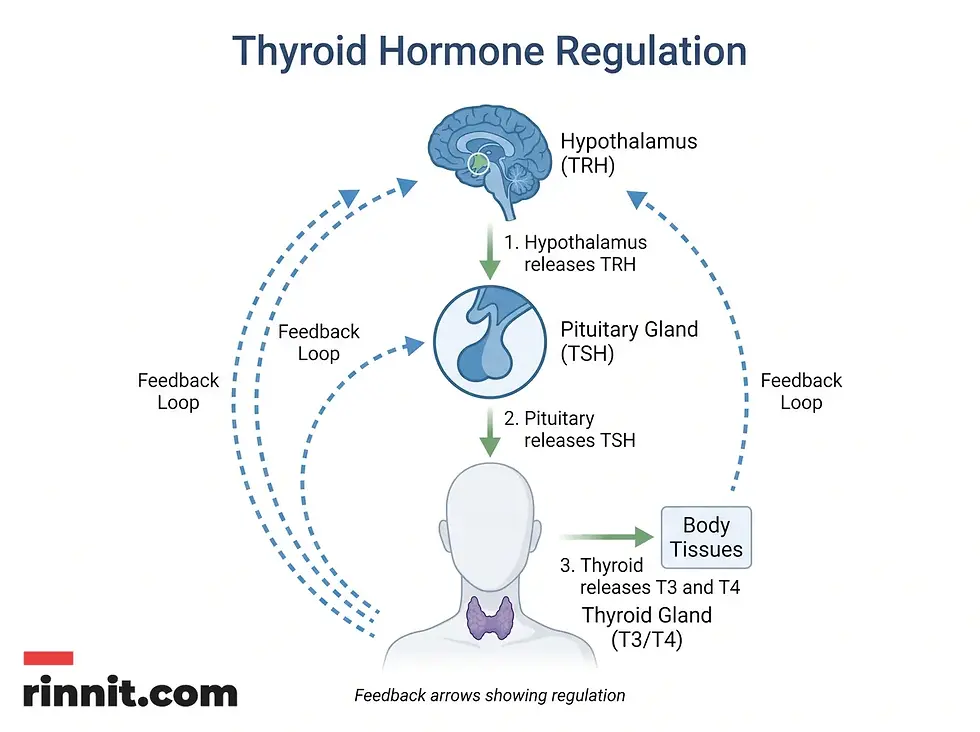
These hormones influence critical functions such as heart rate, breathing, digestion, body temperature, and brain development. [1] The production of these hormones is tightly regulated by the hypothalamus and the pituitary gland through a feedback loop involving thyroid-stimulating hormone (TSH). [1]
Common Thyroid Conditions
Thyroid disorders are prevalent, affecting millions of individuals worldwide. [1] These conditions are generally categorized by whether the gland is producing too much or too little hormone, or if its physical structure has changed.
Hypothyroidism: An underactive thyroid that does not produce enough hormone, leading to a slowed metabolism. Hashimoto's disease, an autoimmune condition, is a frequent cause. [1]
Hyperthyroidism: An overactive thyroid that produces excess hormone, speeding up the body's functions. Graves' disease is a common underlying factor. [1]
Goiter: A physical enlargement of the thyroid gland that can cause swelling in the neck, a feeling of tightness, or changes in the voice. [1]
Thyroid Nodules: Lumps or growths that form within the gland; while most are benign, some may require medical evaluation to rule out cancer.
Caring for Your Thyroid
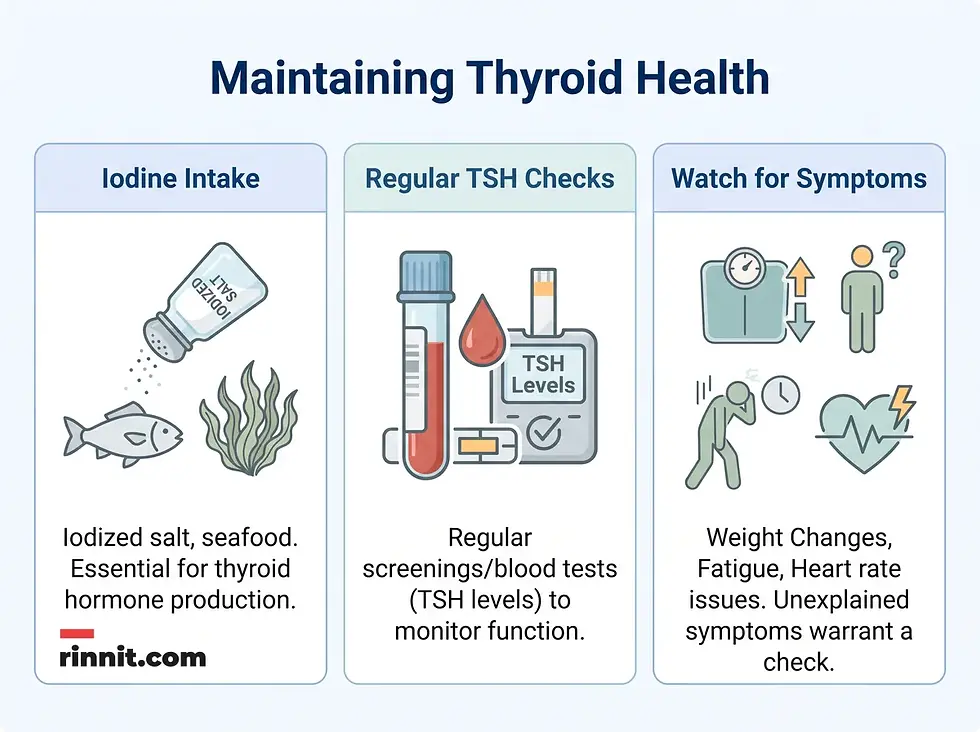
Maintaining thyroid health involves a combination of proper nutrition and regular medical monitoring. Ensuring an adequate intake of iodine is essential for hormone production. [1] However, because thyroid symptoms—such as unexplained weight changes, fatigue, or heart rate fluctuations—can be subtle, regular check-ups are recommended for those at higher risk.
While it is possible to live without a thyroid gland following a thyroidectomy, individuals must commit to lifelong hormone replacement therapy to maintain metabolic balance and overall health. [1]
Conclusion
The thyroid gland plays a monumental role in sustaining life by managing the body's energy use. From regulating heart rate to supporting brain development, its hormones are indispensable. By understanding the anatomy and symptoms of thyroid dysfunction, individuals can take proactive steps toward maintaining their metabolic health. If you experience persistent symptoms related to energy levels or weight, consult a healthcare provider for a thyroid evaluation.
Frequently Asked Questions
What is the thyroid's main function?
The thyroid's primary job is to control metabolism, which is the process of transforming food into energy for the body's cells.
Where is the thyroid located?
The thyroid is a butterfly-shaped gland located at the front of the neck, just below the Adam's apple and in front of the trachea.
What are T3 and T4 hormones?
T3 (triiodothyronine) and T4 (thyroxine) are the main hormones produced by the thyroid to regulate heart rate, temperature, and energy use.
What is hypothyroidism?
Hypothyroidism is a condition where the thyroid gland is underactive and does not produce enough hormones, causing the metabolism to slow down.
What is hyperthyroidism?
Hyperthyroidism occurs when the thyroid gland is overactive and produces too much hormone, leading to an accelerated metabolic rate.
Can you feel a healthy thyroid?
A healthy thyroid gland is usually not visible and cannot be felt when pressing on the front of the neck.
What causes a goiter?
A goiter is an enlargement of the thyroid gland, which can be caused by iodine deficiency, autoimmune diseases, or inflammation.
Is thyroid cancer treatable?
Yes, thyroid cancer is generally very treatable, often involving surgery to remove part or all of the gland.
Can you live without a thyroid?
Yes, you can live without a thyroid, but you will need to take daily hormone replacement medication for the rest of your life.
Why is iodine important for the thyroid?
The thyroid gland requires iodine to manufacture T3 and T4 hormones; a lack of iodine can lead to thyroid dysfunction and goiter.
Related Reading
Potassium Iodide (KI): Uses, Radiation Protection and Side Effects explains how potassium iodide protects the thyroid.
References
Cleveland Clinic. Thyroid. Cleveland Clinic. Last updated June 7, 2022. https://my.clevelandclinic.org/health/body/23188-thyroid
Amirabadizadeh A, Ghorbani A, Azizi F, et al. Exploring the bidirectional association between thyrotropin and thyroid hormones in type 2 diabetes: a systematic review and meta-analysis. J Diabetes Metab Disord. 2025;24(1):98. PMID 40207063. https://doi.org/10.1007/s40200-025-01612-w
Osinga JAJ, Derakhshan A, Karachaliou M, et al. Association of gestational thyroid function and thyroid autoimmunity with gestational diabetes: a systematic review and individual participant meta-analysis. Lancet Diabetes Endocrinol. 2025;13(8):651-661. PMID 40609565. https://doi.org/10.1016/S2213-8587(25)00068-3
Medical disclaimer
The information provided in this article is for educational purposes only and should not be used as a substitute for professional medical advice, diagnosis, or treatment. Always seek the advice of your physician or other qualified health provider with any questions you may have regarding a medical condition.



Comments