What Is Coagulative Necrosis? Symptoms, Causes, Diagnosis and Treatment

Updated: 2 days ago
Medically reviewed by Dr. Baraa Alnahhal, MD · Last reviewed: October 2026
Quick Answer: What is coagulative necrosis?
Coagulative necrosis is a type of cell death caused by ischemia [1], when reduced blood flow deprives cells of oxygen and nutrients, while the dead tissue keeps its structure. It can occur anywhere except the brain [1], and a heart attack is the most familiar example. Treatment centers on restoring blood flow, medications and lifestyle changes [1].
Key takeaways
Coagulative necrosis is a type of cell death triggered by blocked or slowed blood flow (ischemia) [1].
Blood carries oxygen and nutrients; without it, cells stop working and die [1].
Dead cells and tissues keep their structure until the immune system clears them [1].
It can occur anywhere in the body except the brain [1].
A heart attack is the classic example: blocked coronary arteries kill heart muscle, which does not regenerate [1] [3].
The kidneys, spleen, liver and intestines are also common sites [1].
Fast-growing cancers can outgrow their blood supply, and tumor necrosis signals more aggressive disease [1] [2].
Care is organ-focused: it aims to restore blood flow and protect organ function [1].
What the research says
Time to treatment matters when a heart attack is killing heart muscle. In a meta-analysis of 32 observational studies with 299,320 patients who had primary angioplasty for ST-elevation heart attack, a door-to-balloon delay longer than 90 minutes was linked to a higher risk of short-term death (pooled odds ratio 1.52, 95% CI 1.40 to 1.65). The studies were observational, so the link does not prove cause, and it was stronger in people who reached the hospital soon after symptoms began (Foo et al., Heart, 2018 [4]).
Opening the blocked artery with angioplasty beat clot-dissolving drugs. A quantitative review of 23 randomized trials with 7,739 patients eligible for clot-dissolving drugs found that primary angioplasty had lower short-term death (7% vs 9%, p=0.0002), nonfatal reinfarction (3% vs 7%) and stroke (1% vs 2%) than thrombolytic therapy. The trials were published in 2003 or earlier (Keeley et al., Lancet, 2003 [5]).
Tumor necrosis can signal a worse outlook, at least in one cancer type. A meta-analysis of 18 studies with 2,320 patients with gastrointestinal stromal tumors found that tumor necrosis was associated with a poor prognosis (odds ratio 5.54, 95% CI 4.39 to 6.99), including shorter disease-free survival (odds ratio 7.08). It covered tumor necrosis in general rather than the coagulative pattern alone, and the authors called for larger prospective studies (Yi et al., Medicine, 2019 [6]).
What Is Coagulative Necrosis?

Coagulative necrosis is a type of cell death that occurs when blood flow to cells stops or slows [1]. This lack of adequate blood flow is called ischemia. Blood carries oxygen and nutrients to your cells, and when blood flow slows or stops, cells can no longer function [1]. They die.
The word "coagulative" describes what happens after the cells die. In this type of necrosis, cells and tissues maintain their structure even after death [1]. Think of it as the scaffolding of the tissue staying in place while the cells inside it are gone. Eventually, your immune system clears the dead cells away [1].
Coagulative necrosis can occur anywhere in your body except your brain [1]. The brain responds differently to lost blood flow, breaking down into a liquid rather than holding its shape.
This process is not only something to guard against — medicine also puts it to work. Some cancer treatments intentionally induce coagulative necrosis through heat or cold [1]. Minimally invasive therapies such as ablation therapy and high-intensity focused ultrasound (HIFU) apply heat and cold to cancer cells to destroy them [1].
Term | What it means |
Necrosis | Death of cells or tissue in a living body |
Ischemia | Blood flow to cells slows or stops, cutting off oxygen and nutrients |
Coagulative | The dead tissue keeps its structure instead of dissolving |
Infarction | Tissue death caused by a stopped blood supply |
Causes of Coagulative Necrosis
Many conditions can cause coagulative necrosis in different areas of your body. The common thread is always the same: blood flow to a group of cells gets blocked or slowed.
The classic example is a heart attack (myocardial infarction). During a heart attack, one or more coronary arteries that carry blood to your heart become blocked. Without blood flow, heart muscle cells die and the heart may stop pumping [1] [3]. A heart attack can cause permanent heart damage or death if not treated quickly.
Restriction of blood flow to other organs — such as your kidneys, spleen, liver and intestines — can also occur [1]. Several conditions can restrict that flow [1].
Cause | How it restricts blood flow |
Plaque builds up inside arteries, narrowing them over time | |
A clot blocks an artery or vein carrying blood to or from an organ | |
Tissue pushed through a weak muscle opening can become trapped and strangled, cutting off its blood supply | |
Infections | Severe infection can impair blood flow to affected tissues |
Injuries or trauma | Physical damage to blood vessels interrupts circulation |
Cancer can also cause coagulative necrosis. When a tumor grows quickly, it can outgrow its blood supply. The result is areas of dead cancer cells, called coagulative tumor cell necrosis [1]. This finding is a sign of a more aggressive cancer [1] [2].

Symptoms of Coagulative Necrosis
Coagulative necrosis may affect the function of the organ where it occurred. Because it is a cellular-level process rather than a disease with its own symptom list, the symptoms depend on the location and severity of the damage [1].
Heart attack damage shows how this plays out over time. After a heart attack, damaged heart muscle tissue doesn't regenerate and scar tissue forms [1]. That scarring may impact how your heart functions and can lead to other problems [1].
Possible later complication | What it involves |
Abnormal heartbeat | The heart's rhythm is disrupted by scarred tissue |
The heart cannot pump as effectively as it should | |
Reduced heart output can impair kidney function | |
Disrupted circulation raises the risk of brain blood-flow events |
If blood flow to other organs is restricted, symptoms will relate to that organ — for example, flank pain or urinary changes with kidney damage, or abdominal pain with intestinal blood-flow loss. Talk to your provider about symptoms you need to watch out for to catch any recurring or new problems early.
How Is Coagulative Necrosis Diagnosed?
A sample of tissue examined under a microscope — a biopsy — will show areas of coagulative necrosis [1]. Under magnification, pathologists see the telltale pattern of dead cells that have kept their basic outline. However, it is usually more important to assess the function of the affected organ [1].
For your heart, your provider will use heart scans to evaluate how it's working [1].
Diagnostic tool | What it assesses |
Biopsy | A tissue sample under a microscope shows areas of coagulative necrosis |
Cardiac CT | Detailed heart imaging to evaluate structure and blood supply |
Echocardiogram | Ultrasound of the heart showing how well it pumps |
MRI | Detailed imaging of heart tissue, including scarred areas |
Because diagnosis of the underlying cause (heart attack, clot, hernia) is what drives treatment, the diagnostic conversation usually centers on the organ and the condition behind the necrosis rather than on the cell changes themselves.
Treatment and Management
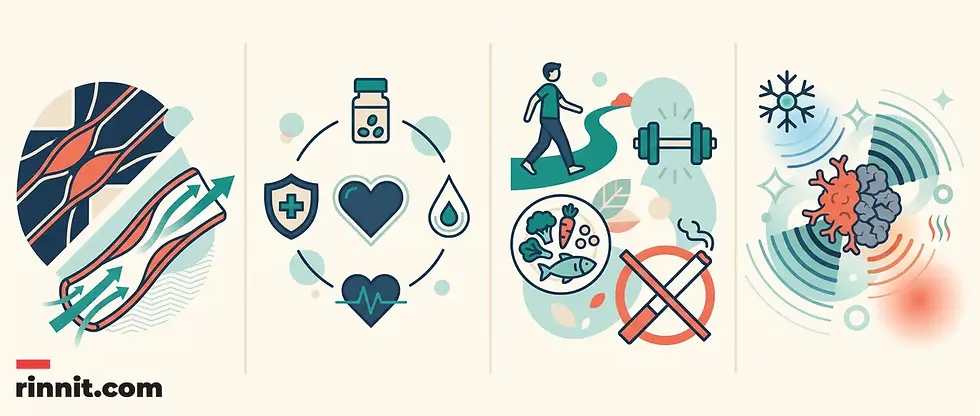
Treatment for coagulative necrosis centers on preventing further damage and supporting organ function [1].
After a heart attack, healthcare providers initially focus on restoring blood flow to your heart, if possible [1]. They also work to reestablish normal heart function [1]. Because dead heart muscle does not regenerate, the long-term goal is protecting what remains and preventing a second event.
Longer term, your provider may prescribe medications with different protective roles:
Your provider will also recommend lifestyle modifications to improve your heart health:
Lifestyle change | How it helps |
Controlling diabetes | Better blood-sugar control protects blood vessels |
Heart-healthy diet | Nutrition supports circulation and lowers plaque buildup |
Lowering stress levels | Reduced stress eases the load on the heart |
Maintaining a healthy weight | Less strain on the heart and blood vessels |
Reducing alcohol intake | Protects heart rhythm and blood pressure |
Quitting smoking | Improves circulation and slows arterial damage |
In the cancer setting, the process is turned to an advantage. Ablation therapy and high-intensity focused ultrasound (HIFU) are minimally invasive therapies that apply heat and cold to cancer cells, deliberately inducing coagulative necrosis to destroy them [1].
Outlook and Prognosis
The prognosis, or outlook, for people with coagulative necrosis depends on how extensive the tissue damage is [1]. A small area of heart muscle affected by a treated heart attack carries a very different outlook than widespread damage affecting heart function, or necrosis driven by an aggressive tumor.
Prevention
You can prevent coagulative necrosis by maintaining good overall health [1]. If you have underlying medical conditions, work with your provider to manage them and reduce your risk of complications.
The preventive steps mirror the treatment lifestyle changes: control blood pressure, cholesterol and diabetes, stay active, eat well, maintain a healthy weight, limit alcohol and do not smoke. Managing a hernia promptly and treating infections early also address specific known causes.
Living With Coagulative Necrosis
If you've experienced a heart attack or another condition that resulted in organ damage, ongoing medical care is essential. Follow your provider's instructions and take your medications as directed to manage your condition and prevent further problems.
When to call 911
A heart attack is an emergency. Its symptoms include pressure, pain or discomfort in your chest, shortness of breath, and pain in the jaw, upper back or down the arms [1] [3].
A note on routine care
Routine visits to your healthcare provider can help you prevent conditions that could lead to coagulative necrosis and maintain your overall health. If you have underlying conditions, close follow-up care is key to managing your health and avoiding future complications.
Conclusion
Coagulative necrosis is cell death caused by ischemia — blood flow that stops or slows and starves cells of oxygen and nutrients. It can occur anywhere in the body except the brain, and its defining feature is that dead cells keep their structural outline until the immune system clears them. A heart attack is the best-known example, but atherosclerosis, blood clots, hernias, infections, trauma and fast-growing tumors can all trigger the process in the heart, kidneys, spleen, liver and intestines. Diagnosis relies on biopsy and, more importantly, on assessing the affected organ's function. Treatment focuses on restoring blood flow, protecting the organ with medications like ACE inhibitors, statins, antithrombotic therapy and beta-blockers, and lasting lifestyle changes. The outlook depends on how extensive the tissue damage is, which makes prevention and prompt emergency care especially important.
Learn more about how visual tools can make health information easier to understand and share. Explore Rinnit infographic templates to turn complex health topics into clear, engaging visuals.
Frequently Asked Questions
What is coagulative necrosis?
Coagulative necrosis is a type of cell death that occurs when blood flow to cells stops or slows (ischemia), depriving them of oxygen and nutrients.
What does coagulative mean in coagulative necrosis?
It refers to the fact that dead cells and tissues maintain their structure after dying, as if they had coagulated, rather than dissolving away.
What is ischemia?
Ischemia is the state in which blood flow to cells slows or stops, cutting off the oxygen and nutrients they need to function.
Why does blood flow matter to cells?
Blood carries oxygen and nutrients to your cells; when blood flow slows or stops, cells can no longer function.
Where does coagulative necrosis occur?
It can occur anywhere in your body except your brain.
Why doesn't coagulative necrosis happen in the brain?
The brain responds differently to lost blood flow and does not hold its structural shape after cell death in the same way other tissues do.
What happens to cells after they die in coagulative necrosis?
Cells and tissues maintain their structure after death, and eventually your immune system clears the dead cells away.
What is the most common example of coagulative necrosis?
A heart attack (myocardial infarction), in which blocked coronary arteries kill heart muscle cells.
What causes coagulative necrosis?
Many conditions can cause it in different areas of the body, including heart attack, atherosclerosis, blood clots, hernias, infections, injuries or trauma, and cancer.
Can a hernia cause coagulative necrosis?
Yes. A trapped or strangulated hernia can restrict blood flow to tissue, leading to cell death.
Can a blood clot cause coagulative necrosis?
Yes. A clot that blocks blood flow to an organ can cause coagulative necrosis in the affected tissue.
Does atherosclerosis cause coagulative necrosis?
Yes. Plaque buildup narrows arteries and can restrict blood flow to organs, potentially causing coagulative necrosis.
Can infections cause coagulative necrosis?
Yes. Severe infections can impair blood flow to affected tissues and trigger this type of cell death.
Can trauma cause coagulative necrosis?
Yes. Injuries or trauma that damage blood vessels can interrupt circulation and cause it.
Can cancer cause coagulative necrosis?
Yes. When a tumor grows quickly, it can outgrow its blood supply, creating areas of dead cancer cells called coagulative tumor cell necrosis.
What does coagulative tumor cell necrosis indicate?
It is a sign of a more aggressive cancer.
Which organs besides the heart are commonly affected?
Restriction of blood flow to the kidneys, spleen, liver and intestines can also occur.
What are the symptoms of coagulative necrosis?
It may affect the function of the organ where it occurred. Symptoms depend on the location and severity of the damage.
Does dead heart muscle grow back?
No. After a heart attack, damaged heart muscle tissue doesn't regenerate and scar tissue forms instead.
What problems can heart scarring cause later?
Scarring may impact heart function and lead to abnormal heartbeat, heart failure, kidney disease or stroke.
How is coagulative necrosis diagnosed?
A biopsy — a tissue sample examined under a microscope — will show areas of coagulative necrosis.
Is biopsy the most important part of diagnosis?
It is usually more important to assess the function of the affected organ, since that drives treatment.
How is heart function assessed after a heart attack?
Providers use heart scans including cardiac CT, echocardiogram and MRI to evaluate how the heart is working.
How is coagulative necrosis treated?
Treatment centers on preventing further damage and supporting organ function.
What is the first priority after a heart attack?
Providers initially focus on restoring blood flow to the heart, if possible, and reestablishing normal heart function.
What medications are used long term after a heart attack?
Providers may prescribe ACE inhibitors for blood pressure, statins for cholesterol, antithrombotic therapy to prevent clots, and beta-blockers to reduce heart stress.
What lifestyle changes help after a heart attack?
Controlling diabetes, eating a heart-healthy diet, lowering stress, maintaining a healthy weight, reducing alcohol and quitting smoking.
Is coagulative necrosis always harmful?
No. Some cancer treatments intentionally induce it through heat or cold to destroy tumor cells.
What cancer treatments use coagulative necrosis?
Ablation therapy and high-intensity focused ultrasound (HIFU) apply heat and cold to cancer cells to destroy them.
Are these cancer treatments invasive?
They are minimally invasive therapies compared with traditional surgery.
What is the prognosis for coagulative necrosis?
The outlook depends on how extensive the tissue damage is.
Can coagulative necrosis be prevented?
You can reduce risk by maintaining good overall health and managing underlying conditions with your provider.
What should I watch for after organ damage?
Talk to your provider about symptoms you need to watch out for to catch any recurring or new problems early.
Is ongoing care necessary after a heart attack?
Yes. If you've experienced a heart attack or other organ damage, ongoing medical care is essential, including taking medications as directed.
When is coagulative necrosis an emergency?
When it is caused by a heart attack, which is always an emergency requiring immediate 911 calls.
What are the signs of a heart attack?
Pressure, pain or discomfort in the chest, shortness of breath, and pain in the jaw, upper back or down the arms.
How fast should I act during a heart attack?
Call 911 immediately. Time is critical; even a few minutes' delay can lead to permanent damage or death.
Does smoking affect my risk?
Yes. Smoking damages circulation, and quitting smoking is a recommended lifestyle modification to protect your heart.
Does alcohol affect heart recovery?
Providers recommend reducing alcohol intake to improve heart health and prevent further damage.
Does diabetes management matter here?
Yes. Controlling diabetes is one of the recommended lifestyle modifications to protect your blood vessels and heart.
Can weight affect my risk?
Yes. Maintaining a healthy weight is one of the recommended changes to improve heart health.
Do stress levels matter?
Yes. Lowering stress levels is a recommended modification to reduce strain on your heart.
Does heart scar tissue show up on scans?
MRI and other heart scans can evaluate how the heart works and reveal scarring from damage.
Can a person have more than one area of coagulative necrosis?
It can occur in many conditions and body areas, so a person with circulation problems may be at risk in multiple organs.
What is the difference between necrosis and apoptosis?
Necrosis is unplanned cell death caused by injury like lost blood flow, while apoptosis is programmed, orderly cell death.
Who decides whether to use ablation therapy for cancer?
Your oncology team weighs factors like tumor location, size and type to determine whether heat- or cold-based treatments fit your case.
What questions should I ask my provider after a heart attack?
Ask which symptoms to watch for, which medications you need and why, and how often follow-up imaging should happen.
Related Reading
Ischemia: Understanding Restricted Blood Flow and Oxygen Deprivation
Arteriosclerosis & Atherosclerosis: Symptoms, Causes, Diagnosis & Treatment — Complete Guide
Blood Clots Explained: Symptoms, Emergency Signs, and Treatment Options
Chronic Kidney Disease: What It Is, Its 5 Stages, Causes, and How It's Treated
Stroke: Symptoms, Causes, Diagnosis, and Treatment — A Complete Guide
Ablation Therapy: A Minimally Invasive Approach to Tissue Destruction
References
Cleveland Clinic. Coagulative Necrosis. Cleveland Clinic health library. Accessed October 15, 2026. https://my.clevelandclinic.org/health/diseases/24191-coagulative-necrosis
Caruso R, Parisi A, Bonanno A, et al. Histologic coagulative tumour necrosis as a prognostic indicator of aggressiveness in renal, lung, thyroid and colorectal carcinomas: a brief review. Oncol Lett. 2012;3(1):16-18. PMID: 22740848. https://doi.org/10.3892/ol.2011.420
Ojha N, Dhamoon AS. Myocardial Infarction. In: StatPearls [Internet]. Treasure Island (FL): StatPearls Publishing; 2026 Jan. PMID: 30725761. https://pubmed.ncbi.nlm.nih.gov/30725761/
Foo CY, Bonsu KO, Nallamothu BK, et al. Coronary intervention door-to-balloon time and outcomes in ST-elevation myocardial infarction: a meta-analysis. Heart. 2018;104(16):1362-1369. PMID: 29437704. https://doi.org/10.1136/heartjnl-2017-312517
Keeley EC, Boura JA, Grines CL. Primary angioplasty versus intravenous thrombolytic therapy for acute myocardial infarction: a quantitative review of 23 randomised trials. Lancet. 2003;361(9351):13-20. PMID: 12517460. https://doi.org/10.1016/S0140-6736(03)12113-7
Yi M, Xia L, Zhou Y, et al. Prognostic value of tumor necrosis in gastrointestinal stromal tumor: a meta-analysis. Medicine (Baltimore). 2019;98(17):e15338. PMID: 31027106. https://doi.org/10.1097/MD.0000000000015338
Medical disclaimer
This article is for general educational purposes only and does not constitute medical advice. Always consult a qualified healthcare professional for diagnosis and treatment of any health condition.



Comments