Blood Clots Explained: Symptoms, Emergency Signs, and Treatment Options

Updated: 2 days ago
Medically reviewed by Dr. Baraa Alnahhal, MD · Last reviewed: September 2026
TL;DR: Blood clots are gel-like masses that serve as the body's main defense against excessive bleeding. They are essential for healing wounds, but they become dangerous when they block blood flow in arteries or veins. Knowing emergency signs such as sharp chest pain or swelling in one limb is critical for preventing life-threatening complications.
Quick Answer: What Is a Blood Clot?
A blood clot is a semisolid clump of blood cells, platelets, and fibrin that forms inside blood vessels to stop bleeding after an injury. Clots are vital for recovering from cuts or surgery, but abnormal clots can lead to serious conditions such as deep vein thrombosis (DVT) or pulmonary embolism (PE). A clot that obstructs blood flow needs immediate medical care to prevent damage throughout the body or death.
The Anatomy and Mechanism of a Blood Clot
Clots form through an interaction of several blood components. In veins, clots often look like reddish, jelly-like masses held together by a fine netting of fibrin, a sticky blood protein. Arterial clots differ slightly because they usually contain more platelets, which are colorless cell fragments made in the bone marrow. Most clots are red because red blood cells become trapped in the fibrin strands as they circulate.
Platelets: colorless cell fragments from the bone marrow that gather at the injury site to form an initial plug.
Fibrin: a sticky, string-like protein that builds a mesh to stabilize the clot.
Red blood cells: oxygen-carrying cells that add bulk and color once trapped in the fibrin mesh.

Essential Functions: The Body's First Line of Defense
A blood clot's main job is to act as a biological seal. When a vessel is damaged, whether by a paper cut or a surgical incision, clots form quickly to prevent excessive blood loss. This keeps circulation stable after physical trauma. Once the injury has healed, the body usually dissolves the clot naturally, although some internal clots need medical help to break down.
Common Disorders and Emergency Signs
Clotting saves lives, but several conditions can upset the balance. Bleeding disorders occur when blood does not clot enough, causing uncontrollable bleeding. Clotting disorders do the opposite: the body makes excessive or abnormal clots that can block vital circulation.
Bleeding disorders: examples include hemophilia, thrombocytopenia, and von Willebrand disease. Insufficient clotting leads to excessive bleeding after injury.
Clotting disorders: examples include deep vein thrombosis (DVT) and pulmonary embolism (PE). Excessive clot formation can block blood flow in the veins or lungs.
Inherited risks: Factor V Leiden and prothrombin gene mutation are genetic predispositions that raise the likelihood of clot formation.
When to Seek Emergency Care
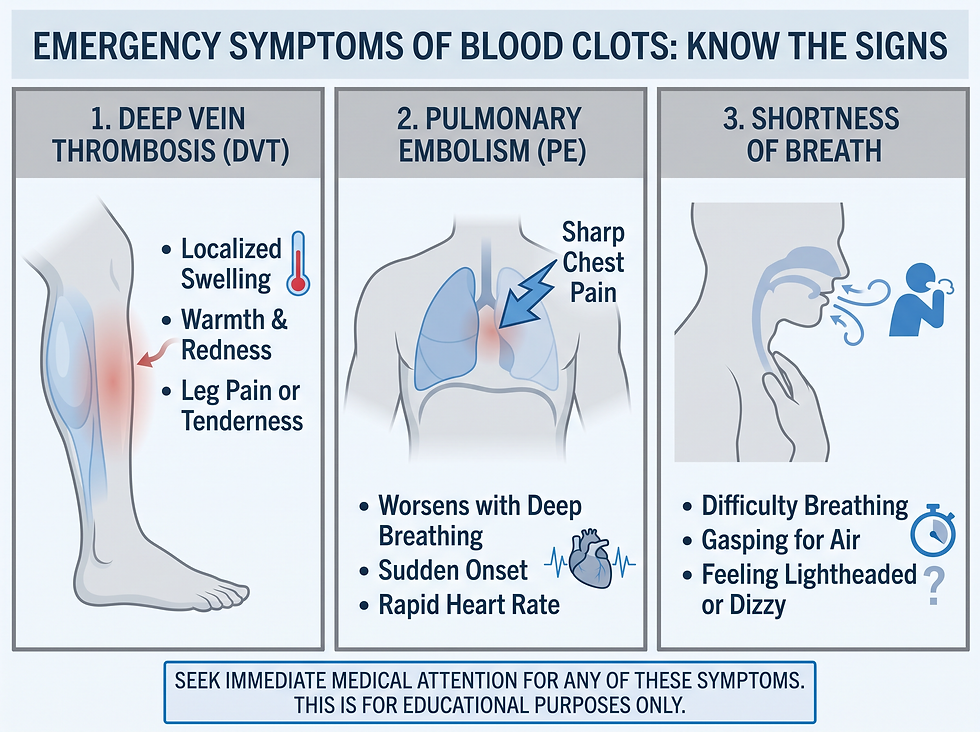
Recognizing the warning signs of a dangerous clot can save a life. Seek immediate medical attention if you have any of the following:
Sudden, sharp chest pain or shortness of breath, which may indicate a pulmonary embolism.
Pain and swelling in one arm or leg, often with redness or warmth, suggesting deep vein thrombosis.
Sudden, severe headache or skin that looks blue or pale.
Uncontrollable bleeding that does not stop with standard pressure.
Treatment and Management Options
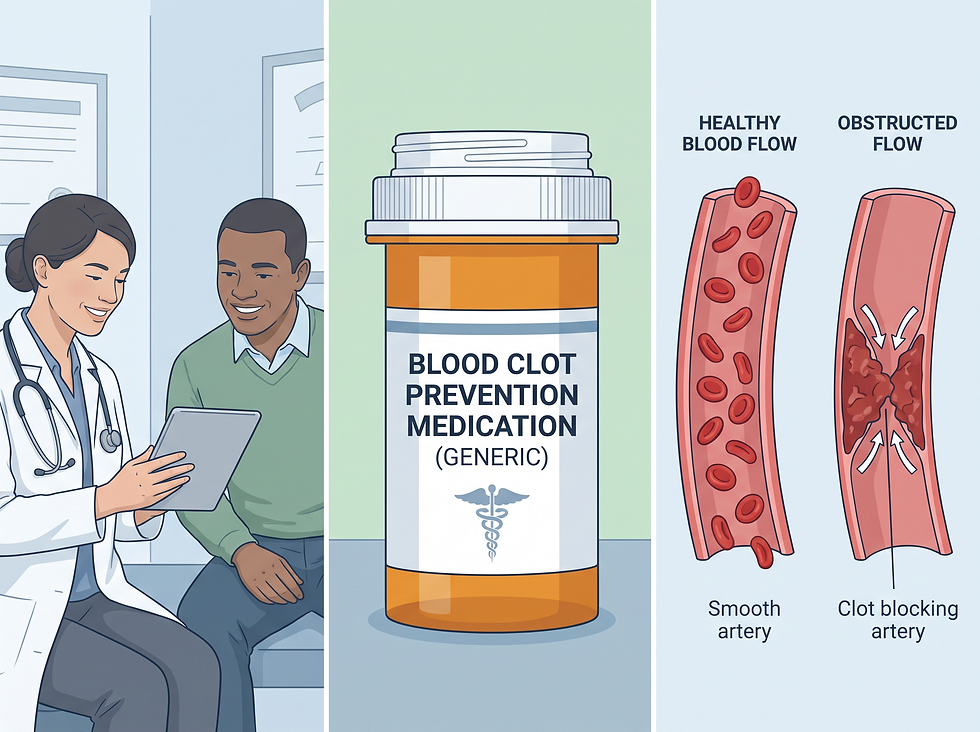
Treatment depends on the underlying condition. For excessive clotting such as DVT, providers often prescribe medications that make it harder for blood to form new clumps. In acute events like heart attacks or strokes, specialized drugs may target platelet aggregation. Treatments for bleeding disorders such as hemophilia instead focus on boosting the body's ability to produce fibrin and stable clots.
Conclusion
Blood clots are a basic part of human health and a vital safeguard against injury. The balance between necessary healing and dangerous obstruction has to be managed carefully. Understanding the symptoms of abnormal clotting and getting prompt care greatly reduces the risk of severe complications.
If you are concerned about your risk of blood clots or have a family history of clotting disorders, consult a healthcare professional for a personalized assessment. Early diagnosis and proactive management are the most effective ways to protect long-term vascular health.
Frequently Asked Questions
1. What is a blood clot? A semisolid mass of blood cells, platelets, and fibrin that forms to stop bleeding.
2. Are blood clots always dangerous? No. They are essential for stopping bleeding from injuries, but they can be dangerous if they block blood flow inside the body.
3. What is fibrin? A sticky blood protein that forms a net-like structure to hold a clot together.
4. Where do blood clots form? In arteries and veins throughout the body.
5. What is the difference between artery and vein clots? Artery clots contain more platelets, while vein clots are often reddish, jelly-like masses held by fibrin.
6. What is deep vein thrombosis (DVT)? A serious condition in which a clot forms in a deep vein, usually in the leg or arm.
7. What is a pulmonary embolism (PE)? It occurs when a clot, often from a DVT, travels to the lungs and blocks blood flow.
8. Can blood clots go away on their own? The body can dissolve clots that form over external wounds, but internal clots like DVT often need medical treatment.
9. What are the symptoms of a leg blood clot? Common signs are pain, swelling, and redness in one leg.
10. What are the signs of a blood clot in the lungs? Sudden chest pain, shortness of breath, light-headedness, and fainting are key indicators.
11. What is hemophilia? A bleeding disorder in which the blood does not clot properly, leading to excessive bleeding.
12. What is Factor V Leiden? An inherited genetic mutation that raises the risk of abnormal blood clots.
13. How are blood clots treated? Treatments include anti-clotting medications, platelet-targeting drugs, or medications that boost clotting in bleeding disorders.
14. Do PICC lines increase clot risk? Yes. People with PICC lines or medical ports have a higher risk of developing blood clots.
15. What should I do if I suspect a blood clot? Seek immediate medical attention, especially with chest pain, shortness of breath, or severe swelling in a limb.
Medical disclaimer: This content is for informational purposes only and does not constitute medical advice. Always seek the advice of a qualified healthcare provider with any questions about a medical condition.
Comments