Ablation Therapy: A Minimally Invasive Approach to Tissue Destruction

Updated: 2 days ago
Medically reviewed by Dr. Baraa Alnahhal, MD · Last reviewed: September 2026
Last updated: September 2026
TL;DR
Ablation therapy is a minimally invasive procedure that uses extreme heat or cold to destroy diseased or abnormal tissue. It offers an alternative to major surgery for treating certain cancers, heart rhythm disorders, chronic pain, and other conditions, typically with a faster recovery and fewer risks than open surgery.
Quick Answer
What is ablation therapy?
A minimally invasive treatment that destroys diseased tissue using extreme temperatures.
Providers use either cryoablation (extreme cold) or radiofrequency ablation (extreme heat) to target specific cells without open surgery.
It is commonly used for certain cancers, heart rhythm disorders, chronic pain, and other conditions.
It typically involves a shorter hospital stay and a quicker return to daily activities than traditional surgery.
Understanding Ablation Therapy
Ablation therapy, sometimes called ablative therapy, is a significant advancement in minimally invasive medical care. Using specialized devices to deliver extreme temperatures directly to a targeted site, healthcare providers can destroy (ablate) diseased or dysfunctional cells while sparing surrounding healthy tissue. This approach is especially valuable for patients who are not ideal candidates for traditional open surgery, or who want a treatment with less physical impact and a faster recovery.
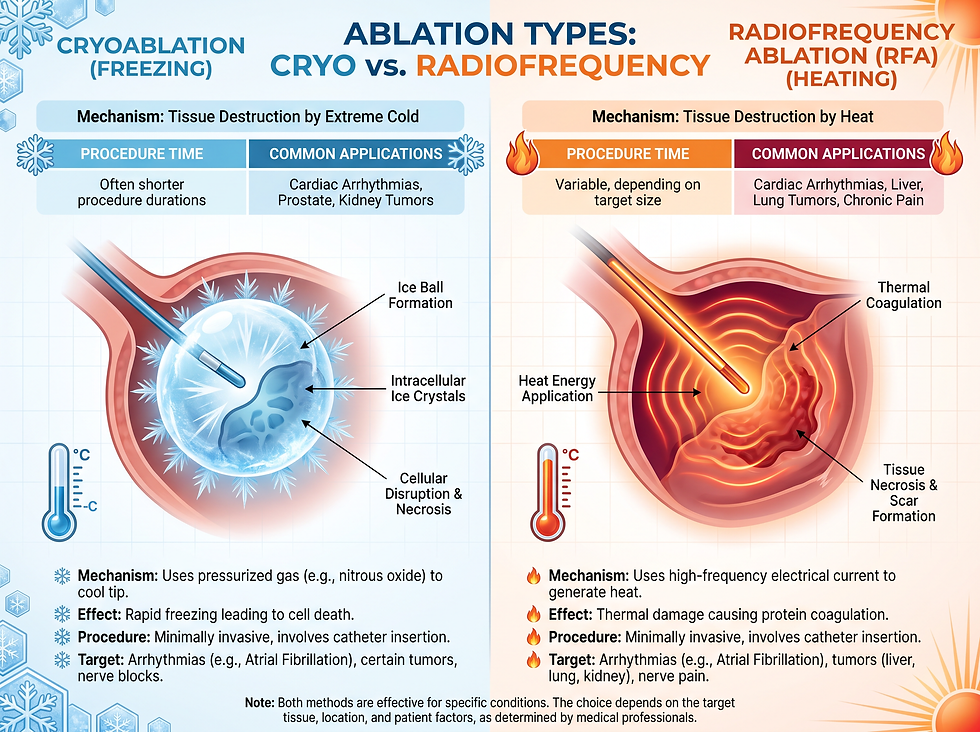
The basic mechanism of ablation involves intentionally causing cellular death using thermal energy. Whether it uses freezing temperatures to starve cells of oxygen or intense heat to disrupt cellular structures, the goal is the same: precisely eliminating problematic tissue. Because the procedure typically needs only small punctures or incisions rather than large surgical openings, it is associated with significantly less trauma to the body, minimal scarring, and a lower risk of complications compared with major surgery.

Primary Types of Ablation
While there are many specialized ablation techniques, most procedures fall into one of two categories based on the thermal energy used.
Type | Thermal energy | Mechanism of action |
Cryoablation | Extreme cold | Uses extremely cold gas to freeze and thaw tissue, starving cells of blood and oxygen |
Radiofrequency ablation (RFA) | Extreme heat | Uses electrical radio waves, microwaves, or lasers to generate intense heat that destroys targeted cells |
Common Medical Indications
Ablation therapy is a versatile tool used across multiple medical specialties to treat a wide range of conditions, from oncology to cardiology.
Cancer treatment. Providers use ablation to destroy many types of cancer, including prostate and kidney cancers, and to remove precancerous tissue in the skin or cervix before it can develop into malignancy.
Heart rhythm management. Cardiac ablation can restore a normal heartbeat by destroying the specific heart tissue causing an arrhythmia.
Chronic pain relief. Ablation can destroy the specific nerve cells that transmit pain signals, providing long-term relief for chronic conditions.
Neurological disorders. In epilepsy or other seizure disorders, providers may use ablation to eliminate the brain cells that trigger seizures.
Vascular health. Endovenous thermal ablation is a common treatment for varicose veins, sealing off affected blood vessels to redirect blood flow toward healthier veins.
Gynecological care. Endometrial ablation treats heavy menstrual bleeding by destroying a targeted portion of the uterine lining.
The Procedure: What to Expect
The specifics of an ablation procedure vary depending on the condition being treated and the location of the targeted tissue. Most treatments, though, follow a standardized pathway designed for patient safety and precision.
Preparation and Access
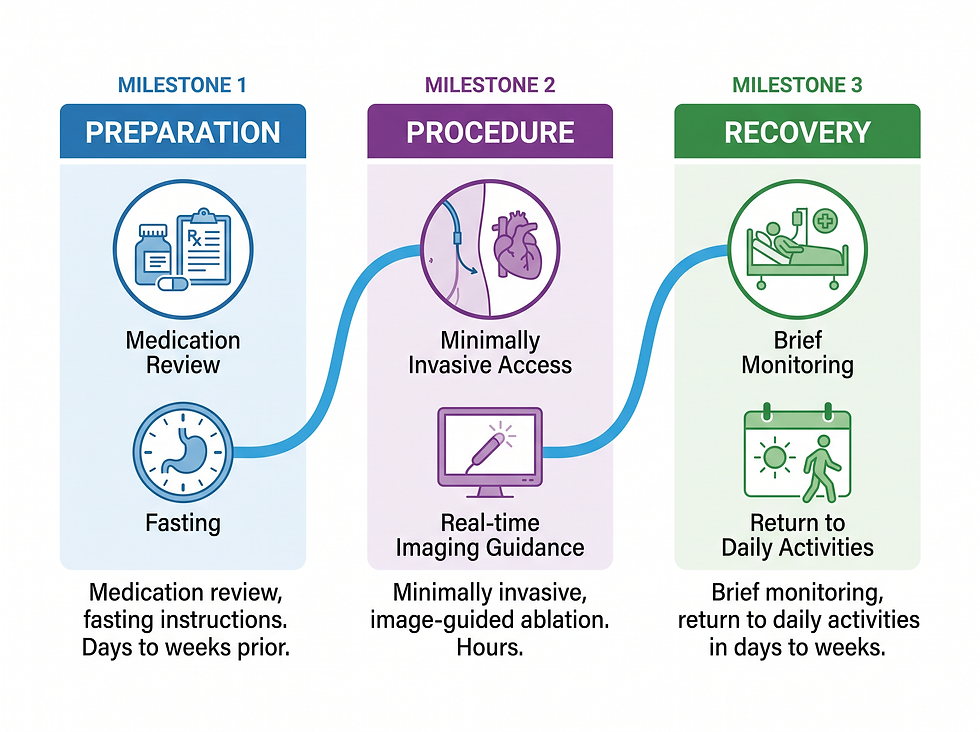
Before the procedure, patients may be asked to fast for several hours and to review their current medications with their healthcare provider. Treatment typically begins with anesthesia, which can range from local numbing to general anesthesia for more complex cases. Once the patient is prepared, the provider makes small punctures or incisions in the skin to insert the ablation device — a handheld wand equipped with thin wires, or probes, that deliver the thermal energy.
Precision Guidance
To make sure the ablation device reaches the exact cells that need to be destroyed, providers rely on real-time imaging technology, which is critical for protecting healthy surrounding structures and maximizing effectiveness. Common imaging methods used during the procedure include ultrasound, MRI, CT scans, fluoroscopy, or laparoscopy. Procedure length depends heavily on the complexity of the target area; ablations involving the heart or brain, for example, typically take longer than those targeting skin cells.
Benefits and Risks
As with any medical intervention, ablation therapy carries a specific profile of advantages and potential complications.
Feature | Description |
Minimally invasive | Requires only small incisions, leading to less pain and bleeding than open surgery |
Faster recovery | Most patients have a shorter hospital stay and resume normal activities within days or weeks |
Minimal scarring | Small access points result in far less visible scarring than major surgical scars |
Treatment compatibility | Cancer patients can often continue other treatments, such as chemotherapy, alongside ablation |
While ablation is generally considered safe, potential risks include bruising, infection, scarring, or damage to nearby blood vessels and nerves. In rare cases, more serious complications such as blood clots, hemorrhage, stroke, or heart attack can occur.
Recovery and Long-Term Outlook
Recovery after ablation therapy is typically brief, ranging from a few days to a few weeks. Depending on the complexity of the procedure, it may be done as an outpatient treatment, letting the patient go home the same day, or it may require an overnight hospital stay for monitoring.
During recovery, patients receive specific instructions on pain management, infection prevention, and activity limitations. Providers often recommend a temporary restriction on heavy lifting and give guidance on when it is safe to resume exercise. Patients should contact their provider right away if they notice signs of infection such as fever, excessive bleeding, severe pain, or persistent nausea and vomiting.
Conclusion
Ablation therapy has become a vital minimally invasive option for patients facing a variety of serious health conditions. By offering a precise, effective way to destroy diseased tissue with significantly less physical impact, it provides a path toward recovery that prioritizes both clinical outcomes and quality of life. As imaging and delivery technology continue to improve, ablation's role in modern treatment is likely to keep expanding.
Think ablation therapy might be right for you? Talk with your primary healthcare provider or a specialist. They can evaluate your condition, discuss which type of ablation may be appropriate, and walk you through the expected benefits and risks based on your health profile.
Frequently Asked Questions
What is the main purpose of ablation therapy?
The primary goal is to destroy diseased or abnormal tissue, such as cancer cells or tissue causing heart arrhythmias, using extreme heat or cold.
Is ablation therapy considered major surgery?
No. Ablation is a minimally invasive procedure that uses small punctures or incisions rather than the large openings required for open surgery.
How does cryoablation work?
Cryoablation uses extremely cold gas to freeze and then thaw targeted tissue, which starves the cells of the blood and oxygen they need to survive.
What is radiofrequency ablation?
Radiofrequency ablation (RFA) uses electrical radio waves to generate intense heat, which destroys targeted abnormal cells.
Can ablation therapy treat cancer?
Yes. It is used to treat various cancers, including kidney and prostate cancer, and to remove precancerous cells in the skin and cervix.
What is cardiac ablation?
Cardiac ablation is a specific type of ablation used to treat heart rhythm problems by destroying the heart tissue causing the irregular heartbeat.
Will I be awake during the procedure?
It depends on the type of ablation. Some procedures use local anesthesia to numb the area, while others require general anesthesia.
How long does recovery take?
Recovery usually takes between a few days and a few weeks, depending on the type of ablation performed and the area treated.
Can I drive myself home after the procedure?
Typically no. Most providers require someone else to drive you home because of the effects of anesthesia.
Is ablation therapy painful?
Patients receive anesthesia to prevent pain during the procedure. Post-procedure pain is generally minimal and manageable with medication.
What imaging is used to guide the ablation?
Providers may use ultrasound, MRI, CT scans, fluoroscopy, or laparoscopy to guide the ablation device to the correct location in real time.
Does ablation therapy leave large scars?
No. Because the procedure needs only small punctures or incisions, scarring is usually minimal and much smaller than traditional surgical scars.
What are the risks of ablation?
While safe, risks can include infection, bruising, bleeding, or damage to nearby nerves and blood vessels. Severe complications are rare.
Can ablation be used for chronic pain?
Yes. It can destroy specific nerve cells responsible for transmitting chronic pain signals to the brain.
When should I call my doctor after the procedure?
Contact your healthcare provider if you experience a fever, excessive bleeding, severe pain, or persistent nausea.
References
This article is based on medically reviewed clinical information, including the sources below.
This article is for educational purposes only and is not a substitute for professional medical advice. Always consult a qualified healthcare provider for diagnosis and treatment.
Comments