Ischemia: Understanding Restricted Blood Flow and Oxygen Deprivation

Updated: 2 days ago
Medically reviewed by Dr. Baraa Alnahhal, MD · Last reviewed: October 17, 2026
Quick Answer: Key Facts About Ischemia
Ischemia is reduced blood flow to an area of the body that leaves its tissues short of oxygen, affecting the heart, brain, limbs or digestive system. Symptoms include chest pain, shortness of breath, trouble speaking and numbness. It is mainly caused by atherosclerosis, blood clots or very low blood pressure. Sudden heart or brain symptoms need emergency care.
Feature | Details |
Core problem | Reduced blood flow to an area of the body, leaving its tissues short of oxygen. [1] |
Common locations | Heart (myocardial ischemia), brain (ischemic stroke and TIA), arms and legs (limb ischemia) and the digestive system (mesenteric ischemia). [1] |
Major symptoms | Chest pain, shortness of breath, trouble speaking, numbness or tingling, a pale or cold limb and severe belly pain. [1] |
Primary causes | Atherosclerosis (plaque buildup), blood clots and very low blood pressure. [1] |
Risk factors | Tobacco use, diabetes, high cholesterol, high blood pressure, obesity and lack of physical activity. [1] |
Urgency | Quicker treatment generally means a better outcome; sudden heart or brain symptoms need emergency care. [1] |
What the research says
For stroke, every hour of delay shrinks the benefit of treatment. Pooled data from 6 randomized trials (2,313 patients with a stroke caused by a large blocked artery) showed that the added benefit of giving clot-busting medicine before thrombectomy, compared with thrombectomy alone, fell with each hour from symptom onset (ratio of adjusted common odds ratios per 1-hour delay 0.84). The added benefit was no longer statistically significant after about 2 hours 20 minutes. (Kaesmacher et al., JAMA, 2024) [2]
A completely blocked heart artery can hide in a heart attack without classic ECG changes. A meta-analysis of seven studies (40,777 patients with non-ST-elevation myocardial infarction) found that 25.5% had a totally occluded culprit artery. These patients had higher short-term all-cause mortality (relative risk 1.67, 95% CI 1.31-2.13) and more major adverse cardiac events (relative risk 1.41, 95% CI 1.17-1.70) than patients whose artery was not totally blocked. (Khan et al., Eur Heart J, 2017) [3]
Reopening a blocked brain artery can still help hours after symptoms start, in carefully selected patients. A pooled analysis of 6 trials (505 patients with a stroke from a large blocked artery, treated 6 to 24 hours after they were last known to be well, and who had salvageable brain tissue) found that 45.9% of patients who had thrombectomy were independent in daily activities at 90 days, compared with 19.3% with medical therapy alone. Rates of death and of symptomatic brain bleeding did not differ significantly. (Jovin et al., Lancet, 2022) [4]
What Is Ischemia?
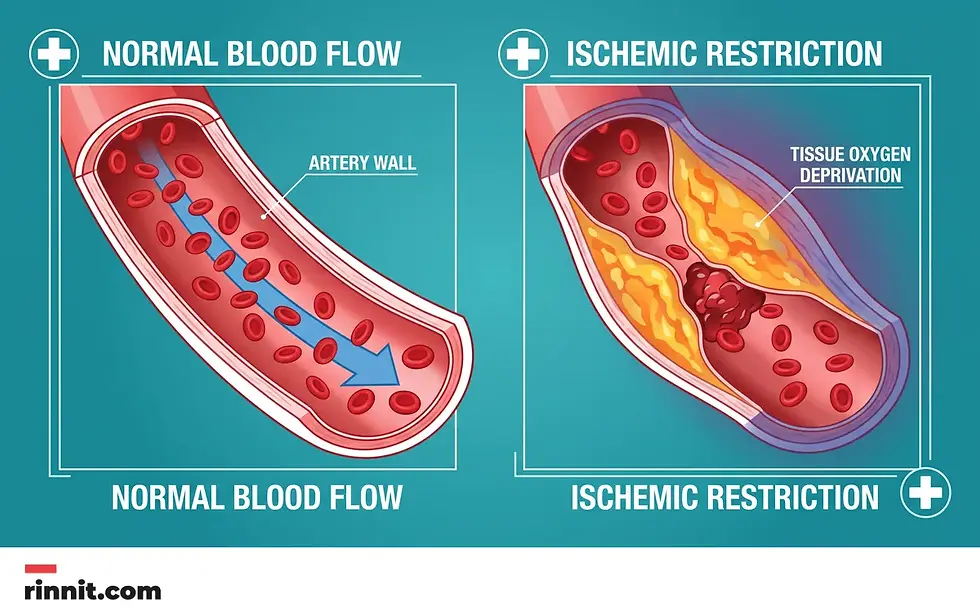
Ischemia means you have less blood flow than you should to an area of your body. Because blood carries oxygen to your cells and tissues, you get less oxygen when you have ischemia. This is the real issue, because your cells need oxygen to survive. Often a narrowed artery, or an artery with a blockage, causes ischemia. [1]
You can have a mild case that is not causing problems yet, but it can get worse over time. A severe case can be life-threatening if enough cells die. [1]
Ischemia is named for the part of the body it affects. Myocardial ischemia affects the heart muscle. Ischemic stroke happens when blood flow to the brain is interrupted, and a transient ischemic attack (TIA) is a temporary, "mini-stroke" version that serves as a warning sign. Mesenteric ischemia affects the digestive system, and peripheral or limb ischemia affects an arm or leg. [1]
Ischemia is very common. Heart disease is the top cause of death in the United States, and a stroke (most of which are ischemic) happens every 40 seconds in America. More than 200 million people in the world have peripheral artery disease (PAD), and 11% of them have chronic limb-threatening ischemia. Ischemia in the digestive system is rare and more often arises in critically ill people in the intensive care unit. [1]
What are the symptoms and signs of ischemia?
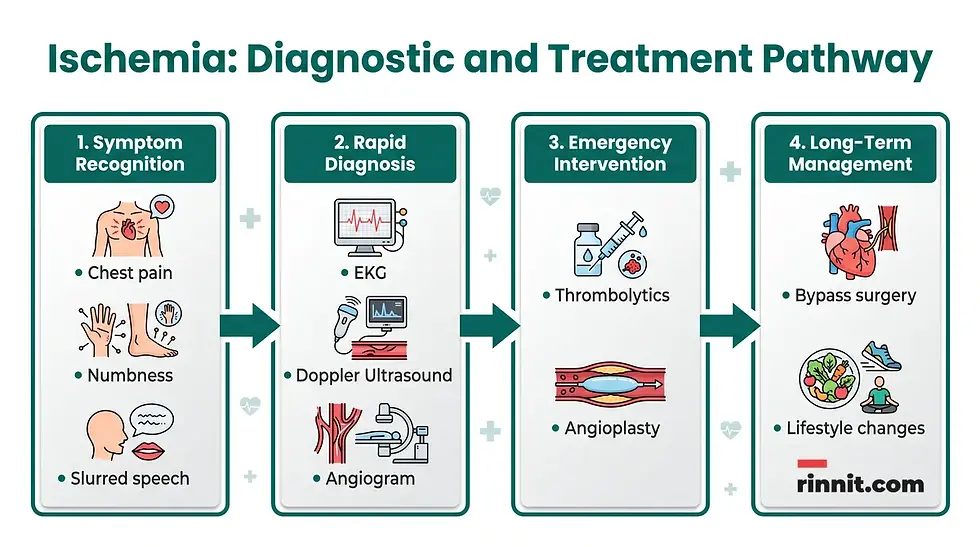
Ischemia symptoms vary depending on which area of your body needs more blood flow. When the heart is affected, symptoms can include angina (chest pain), shortness of breath and lightheadedness or dizziness. When the brain is involved, symptoms include difficulty speaking and loss of coordination. Because the heart and brain are vital organs, any symptom that suggests ischemia there needs immediate emergency medical attention. [1]
In an arm or leg, ischemia can cause pain, and the limb may look pale and feel cold, with tingling or numbness (paresthesia). In the digestive tract, signs include severe belly pain, severe bloating, diarrhea and an upset stomach. In every case, the pain or loss of function comes from tissues that are not getting enough oxygen-rich blood. [1]
What causes ischemia, and who is at risk?
Ischemia happens because something is keeping blood from reaching the tissues that an artery supplies. Causes include: [1]
Atherosclerosis: plaque builds up inside the artery walls and narrows them.
Blood clots: a clot can block an artery suddenly.
Vasculitis: inflammation of the blood vessels.
A "strangulated" abdominal hernia: a physical blockage that cuts off blood supply.
Very low blood pressure: "global ischemia" can happen if your entire body is exposed to low blood pressure or low oxygen levels for a long time.
Medical equipment: devices used for procedures or life support that a provider inserts into your arteries.
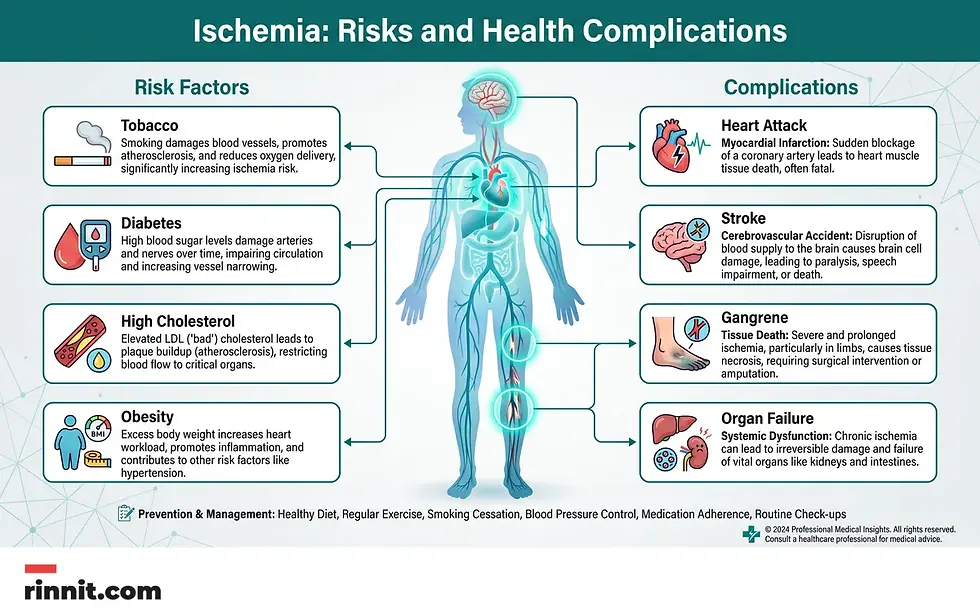
Several medical and lifestyle factors raise your risk: [1]
Chronic conditions: diabetes, high cholesterol, high or low blood pressure, chronic kidney disease (CKD), sleep apnea and blood clotting disorders.
Lifestyle factors: tobacco use, obesity and lack of physical activity.
Medical history: ischemia in another part of your body, or a previous heart attack or stroke.
Certain medicines: for example, birth control pills.
How is ischemia diagnosed and treated?
A healthcare provider will talk with you about your symptoms and the conditions you have had in the past, and do a physical exam that includes checking the area where you are having a problem. Tests to diagnose ischemia may include blood tests, the ankle-brachial index (ABI) test, Doppler ultrasound, an echocardiogram, an angiogram, MRI, CT, an exercise stress test, an electrocardiogram (EKG) and a PET scan. [1]
Treatment increases the amount of blood flow to the area that is not getting enough oxygen. It can include medicines, lifestyle changes and procedures: [1]
Medicines: blood pressure-lowering and cholesterol-lowering medicines, anticoagulants (blood thinners), antiplatelets, thrombolytics (clot-busting drugs) and antibiotics for infections.
Daily habits: physical activity for at least 30 minutes five times a week, staying at a healthy weight, avoiding tobacco products and eating more nutritious foods such as fruits and vegetables.
Procedures: open or minimally invasive surgery. Angioplasty and stenting use a small balloon to open a blocked artery and a mesh tube to keep it open. Other options include thrombectomy, atherectomy, endarterectomy and bypass surgery (coronary artery bypass graft or peripheral artery bypass), which creates a new route for blood around a blockage.
What is the prognosis for ischemia, and why does time matter?
Any type of ischemia is a threat to your health because your cells are not getting the oxygen they need. Every case is different, but quicker treatment generally leads to a better outcome. For example, prompt open surgery has a 93% success rate for saving an ischemic limb, but that rate drops to 78% when surgery is done eight hours after ischemia starts. [1]
For the brain and the heart, immediate treatment is crucial. Minutes can mean the difference between surviving and not surviving, and they can determine how much damage ischemia causes and how much it affects your quality of life. [1]
To lower your risk of ischemia, eat nutritious foods such as fruits, vegetables and whole grains, drink enough fluids to avoid dehydration, avoid tobacco products, get regular physical activity, and manage conditions that can cause ischemia, such as diabetes, high blood pressure and high cholesterol. [1]
Get immediate medical attention if you have pain in your belly that comes on quickly or is severe, symptoms of a heart attack or stroke, or bad pain in your leg or foot. [1]
Learn more. For more evidence-based health guides, visit Rinnit.com.
Frequently Asked Questions
Is ischemia the same thing as a heart attack?
Not exactly. Ischemia is the reduced blood flow. If it lasts long enough to cause heart muscle to die, it becomes a heart attack (myocardial infarction).
Can I have ischemia without knowing it?
Yes. A mild case may not cause symptoms yet, but it can get worse over time.
Why do my legs feel cold and numb when I walk?
This can be a sign of peripheral artery disease (PAD), in which the muscles of the leg are not getting enough blood. See your provider to find out the cause, and get immediate care for bad leg or foot pain.
Can stress cause ischemia?
Stress does not directly block an artery. Long-term stress can make it harder to keep blood pressure and other risk factors under control, so managing it is worthwhile.
What is the difference between a stroke and a TIA?
A stroke can cause lasting brain damage. A TIA (transient ischemic attack) is a temporary interruption of blood flow to the brain that does not usually cause lasting damage, but it is a warning sign and needs urgent medical attention.
Can a healthy diet reverse ischemia?
A healthy diet lowers your risk and helps slow the artery narrowing that leads to ischemia, but significant blockages often need medicines or a procedure to restore blood flow.
Is ischemia hereditary?
Some conditions that lead to ischemia, such as high cholesterol and heart disease, can run in families, and lifestyle choices also play a big role. Ask your provider whether your family members may be at higher risk.
How long can a limb survive without blood flow?
Time matters a great deal. Prompt open surgery has a 93% success rate for saving an ischemic limb, and that rate drops to 78% when the surgery happens eight hours after ischemia starts. Get immediate medical attention for bad pain in your leg or foot.
Does high blood pressure cause ischemia?
High blood pressure is a risk factor for ischemia, and very low blood pressure can cause it too. Keeping your blood pressure in a healthy range lowers your risk.
What are "clot-busting" drugs?
Thrombolytics are medicines that dissolve blood clots to restore blood flow, for example during a stroke or heart attack.
Can children get ischemia?
Ischemia is much less common in children, but it can happen, for example in children with certain heart conditions present from birth.
Why is tobacco so bad for blood flow?
Tobacco use is a major risk factor for ischemia. Smoking damages the lining of the blood vessels, which promotes plaque buildup, and it makes clots more likely.
What is a stent?
A stent is a tiny mesh tube placed in a narrowed artery to hold it open so blood can keep flowing.
Can ischemia cause permanent pain or damage?
If the tissue in an area dies, the damage can be permanent and may cause lasting pain or loss of function there. This is why quick treatment matters.
Is ischemia always a medical emergency?
Sudden symptoms such as chest pain or slurred speech are always an emergency. Long-standing, stable ischemia is still serious and needs ongoing medical care.
Conclusion
Ischemia is a serious threat, but it is also very treatable when it is caught early. Knowing the risk factors and warning signs, and getting help quickly when they appear, can protect your heart, brain and limbs. Healthy daily habits and good control of diabetes, high blood pressure and high cholesterol lower your risk. [1]
References
Cleveland Clinic. Ischemia. Cleveland Clinic. Last updated February 29, 2024. https://my.clevelandclinic.org/health/diseases/ischemia
Kaesmacher J, Cavalcante F, Kappelhof M, et al. Time to Treatment With Intravenous Thrombolysis Before Thrombectomy and Functional Outcomes in Acute Ischemic Stroke: A Meta-Analysis. JAMA. 2024;331(9):764-777. PMID 38324409. https://doi.org/10.1001/jama.2024.0589
Khan AR, Golwala H, Tripathi A, et al. Impact of total occlusion of culprit artery in acute non-ST elevation myocardial infarction: a systematic review and meta-analysis. Eur Heart J. 2017;38(41):3082-3089. PMID 29020244. https://doi.org/10.1093/eurheartj/ehx418
Jovin TG, Nogueira RG, Lansberg MG, et al. Thrombectomy for anterior circulation stroke beyond 6 h from time last known well (AURORA): a systematic review and individual patient data meta-analysis. Lancet. 2022;399(10321):249-258. PMID 34774198. https://doi.org/10.1016/S0140-6736(21)01341-6
Medical disclaimer
This article is for general educational purposes only and is not a substitute for professional medical advice. Always seek the advice of your physician or other qualified health provider with any questions about a medical condition or symptoms of restricted blood flow. If you think you or someone else is having a heart attack or stroke, get emergency care right away.



Comments