What Is Bicuspid Aortic Valve Disease? Symptoms, Causes, Diagnosis, and Treatment Explained

Updated: 3 days ago
Medically reviewed by Dr. Baraa Alnahhal, MD · Last reviewed: October 2026
Quick Answer: What is bicuspid aortic valve disease?
Bicuspid aortic valve disease is a congenital heart condition in which the aortic valve, between the heart and the aorta, has only two flaps instead of the typical three. With only two flaps, the valve may have trouble opening and closing properly. It can cause serious complications such as heart failure, but with treatment life expectancy is not affected. [1]
Key takeaways
It is a congenital condition, not something you acquire. Your aortic valve forms with two flaps instead of three early in pregnancy, and researchers do not yet know why. [1]
It is surprisingly common. About 1% to 2% of the general population has a bicuspid aortic valve, making it the most common congenital heart defect [2]; it is twice as common in men. [1]
Symptoms can take decades to appear. Many people live years without knowing their valve anatomy is different; fatigue, chest pain, dizziness, palpitations, and shortness of breath are the main adult warning signs. [1]
About 1 in 3 people develop complications, which can be serious. The two main risks are heart failure from a valve that makes the heart work harder, and aortic aneurysm rupture or dissection. [1]
Surgery fixes most cases, and the outlook is excellent. Around 4 in 5 people need valve repair or replacement, and about 98% of surgery patients survive without it affecting life expectancy. [1]
What the research says
With good follow-up care, survival is high even though cardiac events are common. In 581 consecutive patients with a bicuspid aortic valve (median age 29) followed in a heart valve clinic, 10-year survival was 94.5%, yet 158 patients developed an indication for surgery. Event-free survival was 97%, 94%, 87%, and 73% at 1, 2, 5, and 10 years. More severe stenosis, more severe regurgitation, an aortic diameter of 40 mm or more at baseline, and older age predicted events, while infective endocarditis, aortic dissection, and sudden death were uncommon. (Aschauer et al., Eur Heart J Cardiovasc Imaging, 2024) [7]
Adults with a bicuspid valve can have survival close to the general population. Among 350 patients with no surgical indication followed for a median of 80 months, 10-year survival was 89%, with relative survival of 98.7% versus an age- and sex-matched population. The 10-year cumulative incidence of aortic valve or aorta surgery was 35%, infective endocarditis occurred at 0.2% per patient-year, and no aortic dissection was seen. In 191 patients who had elective surgery, 10-year survival was also 89% (relative survival 99.4%). (Cheng et al., Mayo Clin Proc, 2021) [8]
Repairing the valve instead of replacing it can be safe and durable. In 728 patients (mean age 42) who had bicuspid aortic valve repair at Cleveland Clinic, hospital mortality was 0.41% and stroke 0.27%. Freedom from aortic valve reoperation was 78% at 10 years, and survival was 94% at 10 years. Repair avoids lifelong blood thinners and prosthetic-valve complications. (Svensson et al., Ann Thorac Surg, 2014) [9]
What Is Bicuspid Aortic Valve Disease?
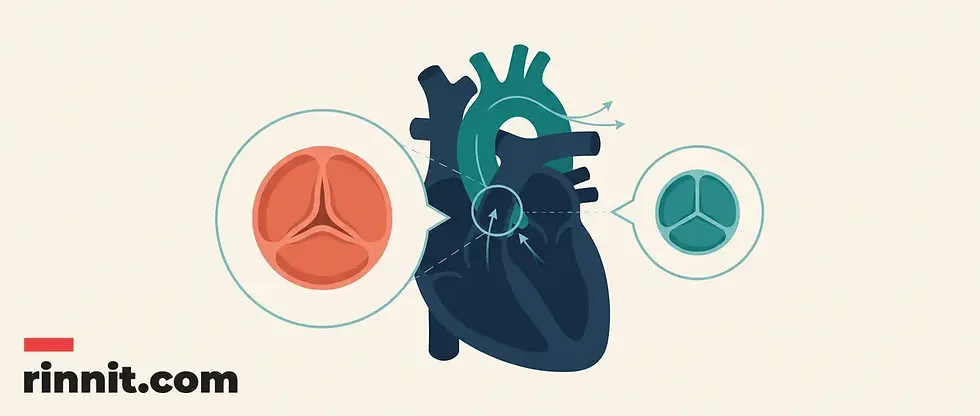
Bicuspid aortic valve disease is a congenital (present at birth) heart condition. It means your aortic valve, located between your heart and your aorta, has only two flaps or cusps instead of the typical three. With only two flaps, your aortic valve may have trouble closing and opening properly. [1]
To understand why this matters, it helps to know what a healthy aortic valve does. Your aortic valve cusps, also called leaflets, open and shut to regulate blood flow between your heart and your aorta. [1] These flaps make sure your oxygen-rich blood flows out of your heart and into your aorta, and they prevent blood from flowing backward into your heart. The flaps should open widely to let blood flow out of your heart and then close securely.
A bicuspid valve can work less efficiently in two distinct ways, and it is helpful to understand both, because they shape everything from symptoms to treatment.
Problem | What happens | Medical term |
The valve does not close tightly enough | Blood leaks backward from your aorta into your heart [1] | Aortic regurgitation (a leaky valve) |
The valve does not open wide enough | Less blood can flow from your heart to nourish the rest of your body [1] | Aortic stenosis (narrowing) |
You might have aortic regurgitation or stenosis for years and not even realize it. You may not feel any symptoms. Your aortic valve does its best to keep getting the job done; it is just not as efficient as a valve with three flaps. [1]
Over time, though, your bicuspid aortic valve makes your heart work harder, and this can lead to serious complications. [1] While it can be difficult to accept this reality, learning about your condition can help you understand it better.
How serious is a bicuspid aortic valve?
About 1 in 3 people with a bicuspid aortic valve develop complications. They can be very serious or even fatal. That is why people with a bicuspid aortic valve disease diagnosis need ongoing medical checkups and testing. [1]
About 1% to 2% of the general population has a bicuspid aortic valve. [2] It is twice as common in men as it is in women. People with Turner syndrome have an increased risk of heart problems, including a bicuspid aortic valve. [1]
You might not feel any symptoms until the disease has progressed a lot or you have a medical emergency. [1] But imaging tests can catch subtle changes before you even notice symptoms, and advances in treatment can help you live a long and healthy life.
Symptoms of Bicuspid Aortic Valve Disease
You may not have any bicuspid aortic valve symptoms. You could live many years without even knowing your anatomy is different. [1] But over time, you may develop symptoms of aortic regurgitation or stenosis.
If your child has a bicuspid aortic valve, you may spot symptoms soon after birth in severe cases. But it is more likely that you will not notice them until later. Children and infants may have pale or bluish skin, known as cyanosis, or trouble with feeding or gaining weight. [1]
Bicuspid aortic valve symptoms in adults include:
Many people do not realize they have a bicuspid aortic valve until medical tests diagnose it. [1] That is because symptoms are easy to miss. Your family or friends may notice a change before you do.
One helpful tip is to think about how much activity you can do in a typical day. Compare it with one year ago, or even six months ago. Do you get tired more easily? Do you need more time to rest? If so, that may signal your heart is working harder to keep up. [1] That is why it is so important to keep up with your medical appointments, and to talk with your healthcare provider about any changes you notice in your daily life.
Symptoms at a glance
Symptom | Notes |
Fatigue | The most common symptom in adults [1] |
Chest pain or discomfort | Discomfort related to the heart working harder |
Dizziness or fainting | Reduced blood flow can cause lightheadedness |
Heart palpitations | Awareness of irregular or forceful heartbeats |
Shortness of breath | Especially noticeable with activity [1] |
Pale or bluish skin (infants) | Cyanosis in severe cases diagnosed early |
Feeding or weight trouble (infants) | Babies may struggle to feed or gain weight [1] |

What Causes Bicuspid Aortic Valve Disease?
Researchers do not know what causes a bicuspid aortic valve to form. It is the most common congenital heart condition, and it develops early in pregnancy. [1]
Is bicuspid aortic valve disease hereditary?
It seems to be, but researchers do not yet fully understand the details. A bicuspid aortic valve can run in families. If a close biological family member, such as a parent, child, or sibling, has this heart issue, talk with your healthcare provider. They may want to run some tests to check your heart anatomy and function. [1] [4]
If you have a bicuspid aortic valve and are planning a pregnancy, talk with your provider. You cannot prevent this problem from happening, but you can monitor your pregnancy and try to diagnose any problems early. [1]
Complications
Without treatment, bicuspid aortic valve disease can lead to serious complications. [1] The two most important to know about are heart failure and problems with the aorta itself.
Complication | How it develops |
Heart failure | Aortic valve stenosis forces your heart to work harder to push blood through your valve. Your heart's main pumping chamber, the left ventricle, thickens and gets bigger and cannot pump blood as efficiently as it should. Over time, this leads to heart failure. Other risk factors like smoking or high cholesterol can speed up this process. [1] |
Aortic aneurysm rupture and dissection | About 1 in 3 people who have a bicuspid aortic valve also have a dilated (enlarged) aorta above their valve. As your aorta gets bigger, its walls lose their strength and stretch out of shape. Eventually, an aortic aneurysm, a bulging of the aorta, can form. If the aneurysm grows too big, it can rupture or dissect, which are life-threatening emergencies. [1] |
How Is Bicuspid Aortic Valve Disease Diagnosed?
A healthcare provider may diagnose a bicuspid aortic valve with a cardiac prenatal ultrasound during pregnancy. Other times, providers diagnose it when a child has other heart problems that cause symptoms; testing then reveals the bicuspid aortic valve. [1]
But other people go many years without knowing they have this condition. The first sign may be a heart murmur that your provider hears through a stethoscope. After that, your provider may run imaging tests to check your heart's structure and function. [1] [4]
Diagnostic tests
Test | What it involves |
Echocardiogram (echo) | Ultrasound of the heart that shows valve structure and blood flow |
CT scan | Computed tomography imaging of the heart and aorta |
Heart MRI | Magnetic resonance imaging for detailed views of heart structure |
Genetic testing | A referral to check for hereditary patterns in families |
How Is Bicuspid Aortic Valve Disease Treated?
Medications like beta-blockers or diuretics can help with symptoms. But they will not fix this condition. Bicuspid aortic valve disease treatment involves surgery for about 4 out of 5 people with this problem. Your surgeon will either repair or replace your aortic valve, and may also fix other issues, like an aneurysm, at the same time. [1]
Your provider will evaluate your situation, run some tests, and talk with you about your treatment options. Your treatment will depend on the condition of your aortic valve and aorta, as well as your overall heart health, age, and other medical conditions.
It is important to have surgery early enough to prevent permanent damage to your heart. [1] Even if you do not have symptoms, your provider may want to fix the problem now to avoid complications down the road. The best timing is different for everyone, and your medical care team will discuss your options with you.
New technology continues to improve outcomes and reduce complications. Many people can have minimally invasive techniques instead of traditional open-heart surgery. [1]
Traditional vs. minimally invasive surgery
Valve repair vs. valve replacement
Aortic valve repair fixes your valve without replacing it. It can be a good option for aortic regurgitation (a leaky valve), but it cannot treat aortic stenosis (narrowing). [1] [6] Surgeons can often perform an aortic valve repair through a minimally invasive surgery with the "J" incision. The surgeon reshapes your aortic valve cusps so they open and close more completely. [1]
Aortic valve replacement involves removing your unrepairable valve and giving you a new one. Surgeons can replace your valve with traditional open surgery or the minimally invasive transcatheter aortic valve replacement (TAVR) method. [1] [5]
Many people prefer a biological valve so they do not have to take blood thinners, but the choice depends on your age, other medical conditions, and personal preferences. Your provider will discuss your options and help you decide what is best for you.
Another option for valve replacement is the Ross procedure, also called the switch procedure. It involves using your pulmonary valve to replace your aortic valve. This procedure can be a good option if you are under 50 and want to avoid long-term use of blood thinners. [1]
Possible surgical complications
Generally, valve surgeries have a low risk of complications. But possible risks include infection, bleeding, blood clots, stroke, heart attack, temporary arrhythmia, and temporary reduced kidney function. [1]

Recovery
Recovery depends on which procedure you have. It can take two to three months to recover completely from an aortic valve replacement. [5] You may only need one to two months to recover from an aortic valve repair. [1]
Outlook and Prognosis
About 98% of people who have valve surgery survive without it affecting their life expectancy. If you have a bicuspid aortic valve, you can live just as long as someone without this condition. [1] But you need regular follow-ups and testing with your healthcare provider. Your provider will check your valve and make sure you get treatment when needed. Treatment is essential to avoiding complications.
Can Bicuspid Aortic Valve Disease Be Prevented?
There is no way to prevent a bicuspid aortic valve. It is congenital, something you are born with. But you can make lifestyle changes that reduce your risk of other heart problems like atherosclerosis and coronary artery disease. [1]
If you have a bicuspid aortic valve, talk with your provider about managing heart disease risk factors, including high blood pressure (hypertension), high cholesterol (hyperlipidemia), diabetes, and lifestyle factors like using tobacco products and alcohol. [1]
Living With Bicuspid Aortic Valve Disease
Self-care
With a bicuspid aortic valve, you can do most of the things you love. You may need to make some lifestyle changes to help keep your heart healthy and reduce stress on your heart. These include eating heart-healthy foods, greatly reducing how much sodium (salt) you eat, and avoiding strenuous physical activity. [1]
You will need regular appointments with your provider to check your heart function. If you have valve surgery, you will have follow-ups after two weeks, three months, and six months, and then an appointment every year. These appointments are essential for keeping you healthy and checking your valve to catch problems before they become severe. [1]
When to go to the ER
Call 911 immediately if you have symptoms of an aneurysm rupture or dissection:
Questions to ask your provider
Is surgery necessary?
Can you recommend heart-healthy lifestyle changes?
Are there signs of aortic leaking or narrowing?
What will recovery look like?
What symptoms or problems should I look out for at home?
What activities could be dangerous?
How can I lower my child's risk of heart problems down the road?
Do you have resources to help me explain this diagnosis to my child?
Conclusion
Bicuspid aortic valve disease is a congenital heart condition in which the aortic valve forms with two flaps instead of the usual three. As the most common congenital heart defect, it affects about 1% to 2% of the population and occurs twice as often in men. Because the two-flap valve opens and closes less efficiently than a three-flap valve, it can gradually produce aortic regurgitation or aortic stenosis, conditions that many people carry for years without noticing any symptoms.
The adult warning signs include fatigue, chest pain or discomfort, dizziness or fainting, heart palpitations, and shortness of breath with activity. In infants, severe cases may show pale or bluish skin and trouble feeding or gaining weight. Without treatment, the condition can lead to heart failure or aortic aneurysm rupture and dissection, which is why ongoing monitoring is essential for everyone with the diagnosis.
Treatment typically involves valve repair or replacement, needed by about 4 in 5 people with the condition, and modern approaches offer both traditional open-heart and minimally invasive options. The outlook is genuinely reassuring: about 98% of people who have valve surgery survive without any impact on life expectancy, and with regular follow-ups, a bicuspid aortic valve does not have to shorten your life.
If you or a family member has been diagnosed with a bicuspid aortic valve, keep up with scheduled testing and report any new symptoms right away. Early, well-timed treatment is what turns this condition from a risk into a manageable part of a long, healthy life.
Make complex cardiac topics easier to explain. If you share heart health information with patients, teams, or audiences, Rinnit's library of infographic templates can help you turn valvular conditions like bicuspid aortic valve disease into clear visuals, no design experience required.
Frequently Asked Questions
What is bicuspid aortic valve disease?
Bicuspid aortic valve disease is a congenital (present at birth) heart condition in which your aortic valve, the valve between your heart and your aorta, has only two flaps or cusps instead of the typical three. With only two flaps, the valve may have trouble closing and opening properly. [1]
How common is it?
About 1% to 2% of the general population has a bicuspid aortic valve, making it the most common congenital heart defect. [2] It is twice as common in men as in women, and people with Turner syndrome have an increased risk. [1]
Is bicuspid aortic valve disease hereditary?
Bicuspid aortic valve disease seems to be, though researchers do not fully understand the details. It can run in families, so if a close biological family member has this heart issue, talk with your healthcare provider about testing your own heart anatomy and function. [1] [4]
What causes it?
Researchers do not know exactly what causes a bicuspid aortic valve to form. It is the most common congenital heart condition and develops early in pregnancy. [1]
Can it be prevented?
No. It is congenital, so there is no way to prevent it. However, you can make lifestyle changes that reduce your risk of other heart problems like atherosclerosis and coronary artery disease. [1]
Will I have symptoms?
Many people have no symptoms and live many years without knowing their valve anatomy is different. [1] Symptoms usually develop over time from aortic regurgitation or stenosis.
What are the symptoms in adults?
Adult symptoms include fatigue (the most common), chest pain or discomfort, dizziness or fainting, heart palpitations, and shortness of breath, especially with activity. [1]
What are the symptoms in babies?
In severe cases, children and infants may show pale or bluish skin (cyanosis) or have trouble with feeding or gaining weight. [1]
What is the difference between aortic regurgitation and aortic stenosis?
Aortic regurgitation happens when the valve does not close tightly enough, so blood leaks backward from the aorta into the heart. Aortic stenosis happens when the valve does not open wide enough, so less blood flows from your heart to the rest of your body. [1]
How serious is a bicuspid aortic valve?
About 1 in 3 people with a bicuspid aortic valve develop complications, which can be very serious or even fatal. That is why ongoing medical checkups and testing are necessary after diagnosis. [1]
What complications can it cause?
The main complications are heart failure, because the leaky or narrowed valve forces the heart's left ventricle to thicken and pump less efficiently, and aortic aneurysm rupture or dissection, because about 1 in 3 people with the condition also have an enlarged aorta whose walls can weaken and bulge. [1]
How is it diagnosed?
Bicuspid aortic valve disease may be found with a cardiac prenatal ultrasound during pregnancy, when a child is tested for other heart problems, or years later when a provider hears a heart murmur with a stethoscope. Confirming tests include an echocardiogram, CT scan, and heart MRI, and your provider may also refer you for genetic testing. [1]
Can medication cure it?
Medications like beta-blockers or diuretics can help with symptoms, but they will not fix the condition. [1] Surgery is the definitive treatment.
How often is surgery needed?
About 4 out of 5 people with bicuspid aortic valve disease need surgery. The surgeon will either repair or replace the aortic valve and may fix other issues like an aneurysm at the same time. [1]
What is the difference between valve repair and replacement?
Repair fixes your valve without replacing it and can treat a leaky valve, but not narrowing; the surgeon reshapes the cusps so they open and close more completely. Replacement replaces the unrepairable valve with a new biological or mechanical valve, done through open surgery or the TAVR method. [1] [5]
Which valve type lasts longer?
A mechanical valve is synthetic, very durable, and can last the rest of your life, but it requires lifelong blood thinners. A biological valve made of pig or cow tissue is used about 80% of the time and avoids blood thinners, but you may need another replacement after about 10 years. [1]
What is the Ross procedure?
The Ross procedure (switch procedure) uses your own pulmonary valve to replace your aortic valve. It can be a good option if you are under 50 and want to avoid long-term blood thinners. [1]
How long is recovery from surgery?
Recovery from aortic valve replacement takes about two to three months. [5] Recovery from aortic valve repair may take only one to two months. [1]
Does it affect life expectancy?
About 98% of people who have valve surgery survive without it affecting their life expectancy. With treatment and regular follow-ups, you can live just as long as someone without the condition. [1]
What lifestyle changes help?
Eat heart-healthy foods, greatly reduce sodium, avoid strenuous physical activity, and manage risk factors like high blood pressure, high cholesterol, diabetes, tobacco, and alcohol. [1]
How often do I need follow-up appointments?
After valve surgery, expect follow-ups at two weeks, three months, and six months, then an appointment every year. [1] Your provider will let you know how often you need checkups without surgery, but regular monitoring is essential for everyone.
When should I go to the ER?
Call 911 immediately for signs of aneurysm rupture or dissection: sudden sharp and tearing chest or back pain, clammy sweaty skin, dizziness, fainting, fast heartbeat, nausea and vomiting, or shortness of breath. [1]
Related Reading
Aortic Root Replacement: Bentall vs. Valve-Sparing Surgery explains aortic root replacement surgery.
Aortic Valve Regurgitation: Leaky Valve Symptoms, Causes & Treatment
Aortic Stenosis: Narrowed Heart Valve Symptoms, Causes & Treatment
Aortic Aneurysm: Types, Causes, Dissection Risk & Complete Guide
Understanding the Ross Procedure for Heart Valve Restoration
PubMed: AATS Consensus Guidelines on Bicuspid Aortic Valve-Related Aortopathy
References
Cleveland Clinic. Bicuspid Aortic Valve. Cleveland Clinic Health Library. Last updated August 12, 2024. Accessed October 15, 2026. https://my.clevelandclinic.org/health/diseases/16780-bicuspid-aortic-valve-disease
Borger MA, Fedak PWM, Stephens EH, et al. The American Association for Thoracic Surgery consensus guidelines on bicuspid aortic valve-related aortopathy: full online-only version. J Thorac Cardiovasc Surg. 2018;156(2):e41-e74. PMID: 30011777. https://doi.org/10.1016/j.jtcvs.2018.02.115
Centers for Disease Control and Prevention. About heart valve disease. CDC Heart Disease. Last updated January 28, 2026. Accessed October 15, 2026. https://www.cdc.gov/heart-disease/about/heart-valve-disease.html
Beerman LB. Bicuspid aortic valve. Merck Manual Consumer Version. Last updated April 2023. Accessed October 15, 2026. https://www.merckmanuals.com/home/children-s-health-issues/birth-defects-of-the-heart/bicuspid-aortic-valve
National Health Service (U.K.). Heart valve replacement. NHS Tests and Treatments. Last updated July 22, 2025. Accessed October 15, 2026. https://www.nhs.uk/tests-and-treatments/heart-valve-replacement/
Reddy VS, Grubb KJ (reviewers). Aortic valve disease. CTSurgeryPatients.org, The Society of Thoracic Surgeons. Last reviewed June 2018. Accessed October 15, 2026. https://ctsurgerypatients.org/adult-heart-disease/aortic-valve-disease
Aschauer J, Zilberszac R, Gleiss A, et al. Long-term outcome of bicuspid aortic valve disease. Eur Heart J Cardiovasc Imaging. 2024;25(3):425-435. PMID: 37966276. https://doi.org/10.1093/ehjci/jead312
Cheng C, Bohbot Y, Michelena HI, et al. Clinical outcomes of adults with bicuspid aortic valve: a European perspective. Mayo Clin Proc. 2021;96(3):648-657. PMID: 33673916. https://doi.org/10.1016/j.mayocp.2020.04.047
Svensson LG, Al Kindi AH, Vivacqua A, et al. Long-term durability of bicuspid aortic valve repair. Ann Thorac Surg. 2014;97(5):1539-1547. PMID: 24680032. https://doi.org/10.1016/j.athoracsur.2013.11.036
Medical disclaimer
The information provided in this article is for educational purposes only and is not intended as medical advice. Always seek the advice of your physician or other qualified health provider with any questions you may have regarding a medical condition. If you experience sudden, sharp, tearing chest or back pain, fainting, or severe shortness of breath, call 911 immediately.



Comments