Aortic Valve Surgery: Repair and Replacement Procedures

Updated: 3 days ago
Medically reviewed by {i}Dr. Baraa Alnahhal, MD{/i} · Last reviewed: October 2026
Quick Answer
Aortic valve surgery is a procedure to fix or replace a damaged aortic valve, which regulates blood flow from the heart to the body. [1] It treats valve narrowing or leaking and can be done through open-heart or minimally invasive methods, usually with a five-to-seven-day hospital stay. [1] It improves heart efficiency and reduces the risk of fatal cardiac events.
What the research says
In low-risk patients, TAVR beat open surgery on a 1-year combined outcome. In the PARTNER 3 randomized trial of 1,000 patients with severe aortic stenosis and low surgical risk (mean age 73), death, stroke, or rehospitalization at 1 year occurred in 8.5% of patients treated with TAVR versus 15.1% treated with surgery (hazard ratio 0.54; 95% CI 0.37 to 0.79). TAVR also meant a shorter hospital stay and less new-onset atrial fibrillation at 30 days (PubMed: Mack et al., N Engl J Med, 2019 [2]).
A second low-risk trial found TAVR noninferior to surgery, with different trade-offs. Among 1,468 randomized patients, death or disabling stroke at 24 months was 5.3% with TAVR and 6.7% with surgery. At 30 days, TAVR had less bleeding (2.4% vs 7.5%) and atrial fibrillation (7.7% vs 35.4%), but more pacemaker implantation (17.4% vs 6.1%) and more moderate or severe aortic regurgitation (3.5% vs 0.5%) (PubMed: Popma et al., N Engl J Med, 2019 [3]).
What is aortic valve surgery?
Aortic valve surgery is a specialized cardiac procedure designed to restore the proper function of the aortic valve. This valve acts as a one-way door, managing the flow of oxygen-rich blood from the heart's left ventricle into the aorta, the body's primary artery. [1] When this valve becomes damaged or diseased, it can severely limit the heart's ability to pump blood, leading to fatigue, chest pain, and potentially fatal complications.
Conditions Treated
Surgeons primarily perform this operation to address two major forms of aortic valve disease:
Condition | Primary Issue | Effect on Heart |
Stenosis | Narrowed opening | Heart must pump harder to force blood through. |
Regurgitation | Leaky closure | Blood flows backward, causing the heart to overwork. |

What surgical approaches are available for aortic valve surgery?
Modern cardiac surgery offers several ways to address aortic valve issues. The choice between repair and replacement, as well as the surgical method used, depends on the patient's age, anatomy, and overall health.
Repair vs. Replacement
Aortic Valve Repair: Whenever possible, surgeons prefer to fix the patient's natural valve tissue. This approach maintains the natural structure and often avoids the need for long-term blood-thinning medication.
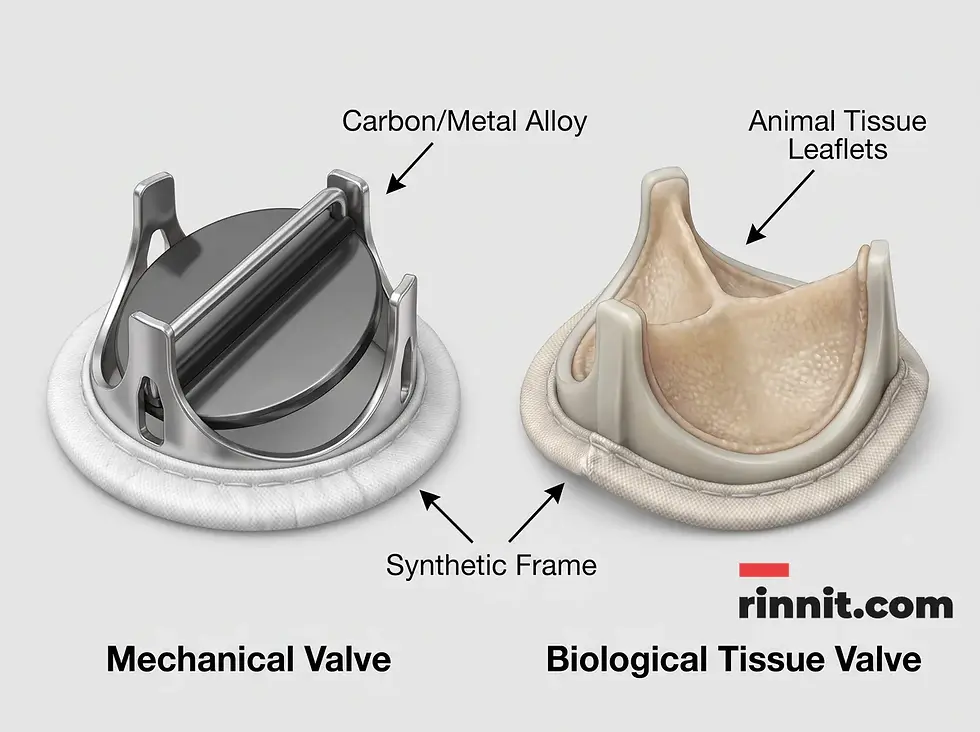
Aortic Valve Replacement (SAVR): If the valve is too damaged to repair, it is replaced with a new one. Replacement valves may be mechanical (made of human-made materials) or biological (made from animal or human tissue). [1]
TAVR/TAVI: A minimally invasive option, now approved for people at low, intermediate or high surgical risk, that uses a catheter to place a new valve through the blood vessels.
Surgical Methods
Surgeons utilize different techniques to access the heart:
Traditional Open-Heart Surgery: Involves a 6- to 8-inch incision down the center of the chest (sternotomy). [1]
Minimally Invasive Surgery: Uses smaller 2- to 4-inch incisions, often resulting in less blood loss and a faster initial recovery.
What happens during aortic valve surgery and recovery?
Aortic valve surgery is a major operation that typically lasts at least two hours. [1] During the procedure, the patient is placed under general anesthesia and connected to a heart-lung machine, which takes over the work of the heart and lungs while the surgeon performs the repair or replacement. [1]
Recovery Timeline
The recovery process is intensive and structured to ensure the heart heals correctly:
Hospital Stay: Patients typically spend five to seven days in the hospital, starting in the Intensive Care Unit (ICU) before moving to a regular recovery room. [1]
Initial Weeks: Activity is gradually increased, and patients are monitored for vital sign stability.
Long-Term Recovery: Full recovery can take several weeks or months. Many patients are referred to cardiac rehabilitation to regain strength and improve cardiovascular health.
Phase | Duration | Focus |
ICU Recovery | 1-2 Days | Close monitoring of heart and lung function. |
Hospital Ward | 3-5 Days | Gradual movement and pain management. |
Home Recovery | 4-8 Weeks | Resuming daily activities and cardiac rehab. |

What are the risks and benefits of aortic valve surgery?
Aortic valve surgery is serious but highly successful and lifesaving, although like any major surgery it carries risks such as bleeding, infection, arrhythmia, blood clots and stroke. Aortic valve disease is responsible for over 60% of all deaths related to heart valve conditions [1], making surgical intervention a critical necessity for many.
Potential Risks
As with any major surgery, there are potential complications to consider, including:
Conclusion
Aortic valve surgery remains the gold standard for treating advanced aortic valve disease. By restoring efficient blood flow, the procedure not only extends life expectancy but also significantly improves the patient's quality of life. Understanding the available options and following a structured recovery plan are essential steps toward a successful outcome.
Frequently Asked Questions
1. What is the difference between SAVR and TAVR?
SAVR is a traditional surgical replacement involving a chest incision, while TAVR is a minimally invasive procedure that uses a catheter to place the valve through the blood vessels.
2. How long does aortic valve surgery take?
The procedure typically takes at least two hours, though the exact duration depends on the complexity of the repair or replacement needed.
3. What are replacement valves made of?
Replacement valves can be mechanical (durable human-made materials) or biological (sourced from animal tissue or human donors).
4. How long is the hospital stay after surgery?
Most patients remain in the hospital for five to seven days, including a brief period in the Intensive Care Unit (ICU).
5. Is aortic valve surgery considered serious?
Yes, it is a major procedure because the aortic valve is vital for pumping oxygenated blood to the entire body, and recovery takes several weeks.
6. What is the success rate of the surgery?
Transcatheter procedures like TAVR have a success rate of approximately 92%, and traditional surgeries also show high long-term survival rates.
7. Can a leaky aortic valve be repaired?
Yes, surgeons often attempt to repair a leaky valve (regurgitation) to preserve as much of the patient's natural tissue as possible.
8. What is cardiac rehab?
Cardiac rehabilitation is a supervised program of exercise and education designed to help patients recover and strengthen their hearts after surgery.
9. Are there risks of blood clots after surgery?
Yes, blood clots are a potential risk, and some patients, especially those with mechanical valves, may need long-term blood-thinning medication.
10. When can I return to normal activities?
While light walking is encouraged early on, full return to normal activities and work usually takes four to eight weeks, depending on the surgical approach.
Related Reading
TAVR (Transcatheter Aortic Valve Replacement): Procedure, Risks and Recovery explains catheter-based aortic valve replacement and what recovery involves.
Aortic Stenosis: Narrowed Heart Valve Symptoms, Causes & Treatment describes aortic valve narrowing, its symptoms and when treatment is needed.
Aortic Valve Regurgitation: Leaky Valve Symptoms, Causes & Treatment explains a leaky aortic valve and how it is treated.
What Is Bicuspid Aortic Valve Disease? Symptoms, Causes, Diagnosis, and Treatment Explained covers the common inborn valve problem that often leads to surgery.
References
Cleveland Clinic. Aortic Valve Surgery. Cleveland Clinic. Nov. 27, 2024. https://my.clevelandclinic.org/health/treatments/16745-aortic-valve-surgery
Mack MJ, Leon MB, Thourani VH, et al. Transcatheter Aortic-Valve Replacement with a Balloon-Expandable Valve in Low-Risk Patients. N Engl J Med. 2019;380(18):1695-1705. PMID 30883058. https://doi.org/10.1056/NEJMoa1814052
Popma JJ, Deeb GM, Yakubov SJ, et al. Transcatheter Aortic-Valve Replacement with a Self-Expanding Valve in Low-Risk Patients. N Engl J Med. 2019;380(18):1706-1715. PMID 30883053. https://doi.org/10.1056/NEJMoa1816885
Medical Disclaimer
This article is for informational purposes only and does not constitute medical advice. Always seek the advice of your physician or other qualified health provider with any questions you may have regarding a medical condition. Never disregard professional medical advice or delay in seeking it because of something you have read here.



Comments