Aortic Stenosis: Narrowed Heart Valve Symptoms, Causes & Treatment

Updated: 3 days ago
Medically reviewed by Dr. Baraa Alnahhal, MD · Last reviewed: October 17, 2026
Quick Answer: What Is Aortic Stenosis?
Aortic stenosis is a heart valve disease in which the aortic valve is narrowed and does not open fully, reducing blood flow from the heart to the aorta and body. The heart must work harder, which can eventually weaken it. Treatment ranges from regular checkups to surgery to fix or replace the valve; untreated severe stenosis can be life-threatening.
What the research says
Early valve replacement beat watchful waiting in people with no symptoms. In the EARLY TAVR trial of 901 patients with asymptomatic severe aortic stenosis, the combined rate of death, stroke, or unplanned heart-related hospitalization was 26.8% with early transcatheter replacement versus 45.3% with clinical surveillance (hazard ratio 0.50, 95% CI 0.40–0.63). During a median 3.8 years of follow-up, 87.0% of the surveillance group went on to have valve replacement anyway. (Généreux et al., N Engl J Med, 2025) [3]
A European randomized trial pointed the same way for early surgery. In the AVATAR trial, 157 patients with asymptomatic severe aortic stenosis were assigned to early surgical valve replacement or conservative care; early surgery lowered the combined rate of death, heart attack, stroke, or heart-failure hospitalization (hazard ratio 0.46, 95% CI 0.23–0.90). (Banovic et al., Circulation, 2022) [4]
In low-risk patients, TAVR and surgery looked similar over the long term. A meta-analysis of 3 randomized trials (2,644 patients, about 6 years of follow-up) found transcatheter replacement non-inferior to surgery for all-cause death (risk ratio 0.99, 95% CI 0.84–1.17); new atrial fibrillation was more common after surgery and pacemaker implantation more common after TAVR. (Caminiti et al., Am J Cardiol, 2024) [5]
Aortic Stenosis at a Glance
Feature | Summary |
Definition | A heart valve disease in which the aortic valve narrows and doesn't open fully, reducing or blocking blood flow to the body [1] |
Severity range | Mild to severe; symptoms generally appear when the valve is very narrowed [1] |
Key symptoms | Chest pain/tightness with activity, fainting or dizziness with activity, shortness of breath, fatigue, rapid fluttering heartbeat [1] |
Three causes | Bicuspid (or unicuspid/quadricuspid) valve at birth, calcium buildup with aging (calcification), rheumatic fever [1] |
Risk factors | Older age, congenital heart defects, long-term kidney disease, diabetes/high cholesterol/high blood pressure, heart infections, chest radiation [1] |
Complications | Heart failure, stroke, blood clots, bleeding, arrhythmias, endocarditis [1] |
Staging | Stage A (at risk) → B (progressive) → C (severe, no symptoms) → D (severe with symptoms) [2] |
Treatments | Regular checkups, medicines, balloon valvuloplasty (mainly children), aortic valve replacement (mechanical/biological/TAVR/Ross), repair (rarely) [2] |
Lifestyle care | No tobacco, heart-healthy diet, healthy weight, 30 min daily exercise, stress management, blood pressure/sugar/cholesterol control, limited alcohol, 7–9 hours of sleep |
What Is Aortic Stenosis?
Aortic valve stenosis — a type of heart valve disease (also called valvular heart disease) — affects the valve between the heart's lower left chamber and the aorta, the body's main artery [1]. In this condition, the valve is narrowed and doesn't open fully, which reduces or blocks blood flow from the heart to the rest of the body [1].
To understand why that matters, it helps to know how the heart and its valves normally work. A typical heart has two upper chambers (the right and left atria) that receive incoming blood and two lower, more muscular chambers (the right and left ventricles) that pump blood out. The four heart valves — aortic, mitral, tricuspid, and pulmonary — act as gates at the chamber openings, keeping blood flowing in the right direction. Each valve has flaps, called cusps, that open and close once during each heartbeat [1]. If a valve doesn't fully open or close, blood flow is reduced or blocked [1].
Normally, the aortic valve opens about 3 to 5 square centimeters wide. Typically it has three cusps — a tricuspid aortic valve — but some people are born with only two, a condition called bicuspid aortic valve [1].
In stenosis, the narrowed valve sets off a chain reaction:
A simple way to picture it: imagine placing smaller and smaller nozzles on the end of a garden hose. The narrower the nozzle, the slower the flow of water — and the more pressure builds up inside the hose. That is exactly what happens inside the heart when the aortic valve narrows.

What are the five warning signs of aortic stenosis?
Aortic valve stenosis ranges from mild to severe, and symptoms generally happen when the valve is very narrowed [1]. Some people may have no symptoms for many years [1].
Symptoms of aortic valve stenosis may include:
Children with aortic valve stenosis may have other symptoms:
Not eating enough
Not gaining enough weight [1]
Aortic valve stenosis may also lead to heart failure. Its symptoms include extreme tiredness, shortness of breath, and swollen ankles and feet [1].
When to See a Doctor
If you have an irregular heartbeat or other symptoms of aortic valve stenosis, make an appointment with your healthcare professional [1].
What are the three main causes of aortic stenosis?
Aortic stenosis risk factors include older age, congenital defects such as a bicuspid aortic valve, long-term kidney disease, heart disease risk factors, heart infections and chest radiation therapy.
Cause | How It Narrows the Valve |
A heart condition present at birth (congenital heart defect) | Some children are born with an aortic valve that has only two cusps instead of the usual three — a bicuspid aortic valve. Rarely, an aortic valve may have one (unicuspid) or four (quadricuspid) cusps [1]. This can cause the valve to narrow earlier in life |
Calcium buildup on the valve (aortic valve calcification) | Calcium — a mineral found in blood — can collect on the valve as blood moves over it. The deposits may never cause problems, but age-related calcification usually doesn't cause symptoms until age 70 or 80 [1]. In people with valve changes present at birth, calcium deposits might narrow the valve at a younger age [1] |
Rheumatic fever | A complication of untreated strep throat that can damage the heart valves. It may cause scar tissue to form on the aortic valve, which can narrow the opening and create a rough surface where calcium deposits can collect [1] |
Six Risk Factors
Older age
Congenital heart defects present at birth, such as a bicuspid aortic valve [1]
Long-term kidney disease [1]
Heart disease risk factors, such as diabetes, high cholesterol, and high blood pressure [1]
Infections that can affect the heart, such as rheumatic fever and infective endocarditis [1]
Radiation therapy to the chest [1]
What are the complications of aortic stenosis?
Aortic valve stenosis can lead to heart failure, stroke, blood clots, bleeding, arrhythmias and heart infections such as endocarditis, and severe untreated stenosis can be life-threatening.
Heart failure
Stroke
Blood clots
Bleeding
Arrhythmias (irregular heartbeats)
Heart infections, such as endocarditis
This is why treatment matters: without treatment, severe aortic valve stenosis can lead to life-threatening complications [1].
How is aortic stenosis diagnosed?
Diagnosis starts with a physical exam: a healthcare professional examines you and asks questions about your symptoms and medical history, then listens to your heart with a stethoscope. If you have aortic valve stenosis, a sound called a heart murmur may be heard [2].
Seven Diagnostic Tests
Test | What It Shows |
Echocardiogram | Sound waves make pictures of the beating heart and show how blood flows through the heart and valves. It tells how severe the stenosis is and whether the heart muscle is weakened [2]. Done from outside the body (ultrasound device over the chest) or as a transesophageal echocardiogram (tube down the throat into the esophagus) when more detail is needed |
Electrocardiogram (ECG or EKG) | A quick test recording the heart's electrical activity; sensor patches go on the chest and sometimes the legs, wired to a computer. Can reveal signal patterns related to heart disease or swelling of the heart's chambers [2] |
Chest X-ray | Shows the condition of the heart and lungs; can show if the heart is bigger than usual and whether there is calcium buildup on the aortic valve [2] |
Exercise or stress tests | Walking on a treadmill or riding a stationary bike while heart activity is checked; shows how the heart reacts to activity and whether symptoms occur during exercise; medicine can mimic exercise for those who can't [2] |
Cardiac CT scan | Several X-rays create detailed images of the heart and valves; checks the size of the aorta, looks at the valve closely, shows how much calcium is on the valve, and shows how severe the stenosis is [2] |
Cardiac MRI | Magnetic fields and radio waves create detailed images; can show the aorta's size and may be used to learn the severity of stenosis [2] |
Cardiac catheterization | Not often used for diagnosis, but may measure severity or diagnose the condition if other tests can't; a thin, flexible tube is placed in a blood vessel (usually groin or arm) and guided to the heart. Also used before aortic valve surgery to make sure the heart arteries are not blocked [2] |
The Four Stages of Valve Disease
After testing confirms the diagnosis, your healthcare professional may tell you the stage of disease, which helps the team pick the most appropriate treatment. Staging depends on symptoms, disease severity, valve structure, and blood flow through the heart and lungs.
What are the treatment options for aortic stenosis?
Treatment depends on the symptoms and how severe the condition is. If you have no symptoms or just mild ones, you may only need regular health checkups [2]. Other treatment paths include heart-healthy lifestyle changes, medicines to treat symptoms or reduce complication risk, and surgery to fix or replace the valve.
An important point to understand: valve disease is generally a surgically treated condition — and you may eventually need surgery to repair or replace the narrowed valve even if you don't have symptoms [2]. Aortic valve surgery can also be done at the same time as other types of heart surgery [2]. Surgery is usually done through a cut in the chest, though less-invasive approaches may be available — ask your healthcare professional which option is best for you.
Medications
Some people may need medicines to treat symptoms or reduce the risk of complications — for example, to:
Lower blood pressure
Prevent irregular heartbeats
Remove excess fluid from the body to reduce the strain on the heart [2]
Balloon Valvuloplasty
This treatment helps open a narrowed valve. A doctor places a thin tube into a blood vessel in the arm or groin, guides it to the aortic valve, and inflates a balloon on the tip to widen the valve opening — then deflates and removes the tube and balloon.
Balloon valvuloplasty may be done in infants and children with aortic valve stenosis [2]. In adults, the valve tends to narrow again after the treatment, so it is usually done only if an adult is too sick for surgery or is waiting for a valve replacement [2].
Aortic Valve Replacement
Replacement is often needed to treat aortic valve stenosis. The surgeon removes the damaged valve and replaces it with one of two kinds:
Two notable options beyond standard replacement:
The Ross procedure — a more complicated surgery in which the aortic valve is replaced with your own lung valve (pulmonary valve), and the pulmonary valve is replaced with a biological lung tissue valve from a deceased donor [2].
TAVR (transcatheter aortic valve replacement) — an option to open-heart valve surgery. Small cuts and a thin, flexible catheter carry a replacement valve (made of cow or pig tissue) into the body through a blood vessel (leg or chest) and up to the aortic valve. A balloon on the tube's tip inflates to press the new valve into place — some valves self-expand — and the tube is removed. TAVR may be an option for people at intermediate or high risk of complications from surgical replacement, and catheters can also place a replacement valve inside a failing biological tissue valve [2].
Aortic Valve Repair
Surgeons may fix the valve by separating flaps that are stuck together — however, valve repair is rarely used to treat aortic valve stenosis [2]. Generally, stenosis requires valve replacement.
Pregnancy and Aortic Valve Disease
If you have aortic stenosis and are considering pregnancy, talk with your healthcare team beforehand about medicine safety and whether you need treatment first. People with heart valve disease usually require close checkups during pregnancy, and those with severe aortic stenosis may be told not to get pregnant due to the risk of complications [2].
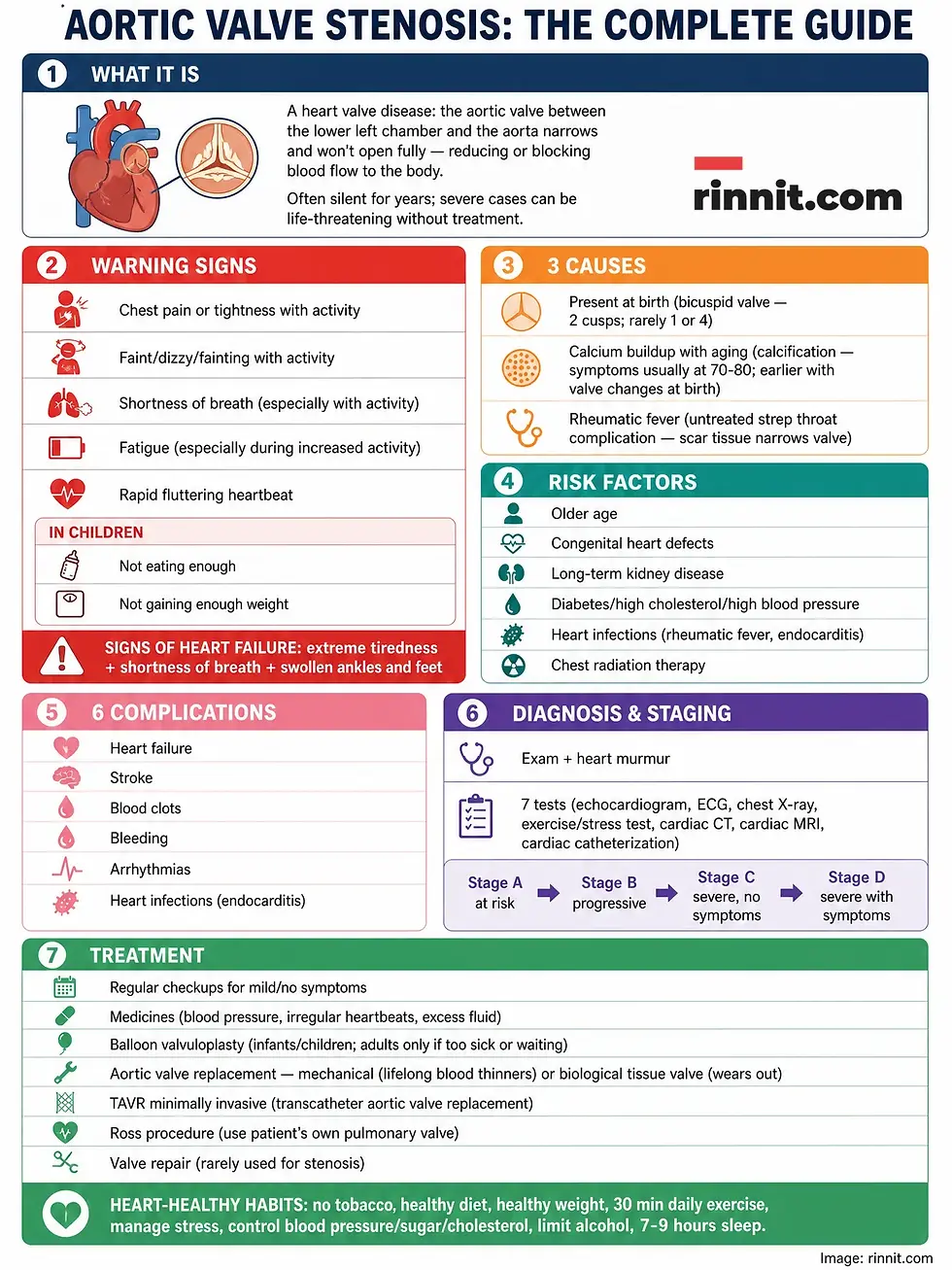
Which heart-healthy habits help with aortic stenosis?
Heart-healthy habits that may help prevent or slow aortic valve stenosis include not smoking, eating a heart-healthy diet, keeping a healthy weight, exercising regularly, managing stress and controlling blood pressure.
Do not smoke or use tobacco. Smoking is a major risk factor for heart disease. If you smoke and can't quit, ask your team about programs or treatments that can help.
Eat a heart-healthy diet. Enjoy a variety of fruits and vegetables, low-fat or fat-free dairy, poultry, fish, and whole grains. Limit salt and saturated fats.
Keep a healthy weight. If overweight or obese, losing even a few pounds can help reduce heart disease risk factors. Ask your professional what weight is best for you.
Get regular exercise. Exercise helps manage weight and control risk factors — aim for at least 30 minutes a day on most days of the week [2], and ask your team about the amount and type best for you.
Manage stress. Reduce emotional stress through more exercise, mindfulness, or support groups.
Control blood pressure, blood sugar, and cholesterol. Make lifestyle changes and take medicines as directed, with regular health checkups.
Limit alcohol. If you choose to drink, do so in moderation — up to one drink a day for women and two a day for men for healthy adults [2].
Get good sleep. Poor sleep may increase heart disease risk. Adults should aim for 7 to 9 hours daily [2].
One extra note if you already have stenosis: your team may recommend limiting strenuous activity to avoid overworking your heart [2].
What three practical steps help prevent aortic stenosis?
Aortic valve stenosis prevention includes getting a checkup for a sore throat, keeping your heart healthy by discussing risk factors and taking care of your teeth and gums.
Get a health checkup when you have a sore throat. Untreated strep throat can lead to rheumatic fever, which can damage heart valves [1]. Strep throat is usually easily treated with antibiotics. Rheumatic fever is more common in children and young adults [1].
Keep the heart healthy. Discuss your risk factors with your team — high blood pressure, obesity, and high cholesterol may be linked to aortic valve stenosis [1].
Take care of your teeth and gums. There may be a link between infected gums (gingivitis) and endocarditis — a heart infection that is a risk factor for aortic valve stenosis [1].
How should you prepare for an aortic stenosis appointment?
Consider being seen and treated at a medical center with a multidisciplinary heart valve team [2] — cardiologists and other professionals trained and experienced in heart valve disease.
Six Things You Can Do
Be aware of pre-appointment restrictions — for example, you may be told not to eat or drink before a cholesterol test.
Write down your symptoms, including any that seem unrelated to the heart.
Write down important personal information — family history of heart disease, major stresses, recent life changes.
Make a list of all medicines, vitamins, and supplements, including dosages.
Take someone with you, if possible — they can help you remember what you're told.
Write down questions to ask your healthcare professional.
Ten Questions to Ask
What is the likely cause of my symptoms or condition?
What are other possible causes?
What tests do I need?
What's the best treatment?
What are the options to the treatment you suggested?
I have other health conditions — how can I best manage them together?
How do I need to change my diet or activities?
Should I see a specialist?
If I need surgery, which surgeon do you recommend for heart valve surgery?
Is there any information about my condition that I can take home with me? What websites do you recommend?
Six Questions Your Doctor Will Ask
When did your symptoms start?
Do you always have symptoms, or do they come and go?
How bad are your symptoms?
What, if anything, makes your symptoms better?
What, if anything, makes your symptoms worse?
Does anyone in your family have heart disease?
Frequently Asked Questions
What is aortic stenosis?
Aortic stenosis (aortic valve stenosis) is a heart valve disease in which the aortic valve narrows and doesn't open fully, reducing or blocking blood flow from the heart to the aorta and the rest of the body. The heart must work harder to pump through the smaller opening, which raises pressure and can eventually weaken the heart.
What causes aortic valve stenosis?
Three main causes: a congenital heart defect (a bicuspid valve with two flaps instead of three, rarely one or four), calcium buildup on the valve with aging (usually causing symptoms at 70–80, earlier in people born with valve changes), and rheumatic fever — a complication of untreated strep throat that leaves scar tissue on the valve.
What are the symptoms of aortic valve stenosis?
The five warning signs are chest pain or tightness, fainting or dizziness, shortness of breath, fatigue, and a rapid fluttering heartbeat — typically triggered by activity. Children may not eat enough or gain enough weight. The condition can remain symptom-free for years, and signs of heart failure (extreme tiredness, shortness of breath, swollen ankles) may be the first clues.
Is aortic stenosis dangerous?
Without treatment, severe aortic valve stenosis can lead to life-threatening complications, including heart failure, stroke, blood clots, bleeding, arrhythmias, and heart infections. That is why diagnosis, staging, and timely treatment matter.
How is aortic stenosis diagnosed?
A stethoscope exam may reveal a heart murmur. Confirmation and severity come from tests such as the echocardiogram, ECG, chest X-ray, exercise/stress tests, cardiac CT, cardiac MRI, and cardiac catheterization. Disease is staged from Stage A (at risk) to Stage D (severe with symptoms).
Does aortic stenosis always require surgery?
Not always — mild or symptom-free cases may only need regular checkups, and medicines can ease symptoms. But valve disease is generally a surgically treated condition, and even people without symptoms may eventually need surgery. Valve replacement (mechanical or biological, via open-heart or minimally invasive TAVR) is the usual approach; repair is rarely used for stenosis.
What is TAVR, and who is it for?
TAVR (transcatheter aortic valve replacement) is a minimally invasive alternative to open-heart surgery: a tissue valve (cow or pig) travels through a catheter from the leg or chest to the aortic valve, where a balloon presses it into place. It may be an option for people at intermediate or high risk of complications from surgical replacement.
Conclusion
The main lessons from this guide are:
Aortic stenosis is a plumbing problem: the exit valve narrows — from age-related calcium, a two-flap valve at birth, or rheumatic fever — and the heart pays the price, working harder until the muscle thickens and eventually weakens.
The symptoms arrive late: chest pain, fainting, shortness of breath, and fatigue usually appear only when the valve is very narrowed, often after silent years. Watch for the heart-failure trio of extreme tiredness, breathlessness, and swollen ankles.
Treatment works, and replacement is the workhorse: from watchful checkups and medicines to valve replacement — mechanical or biological, open-heart or the minimally invasive TAVR. Getting there at the right time prevents stroke, heart failure, and worse.
We hope this complete guide has given you a clear understanding of aortic stenosis — how the valve narrows, why it weakens the heart, and the full range of treatments available.
Disclaimer: This article is for informational purposes only and is not a substitute for professional medical advice, diagnosis, or treatment. Always seek the advice of your physician or other qualified health provider with any questions you may have regarding a medical condition. If you are experiencing a medical emergency — including chest pain or fainting — call 911 or your local emergency number immediately.
Related Reading
Cardiac Catheterization (Heart Cath): Why It's Done, Procedure, Risks and Recovery explains the heart cath procedure used to diagnose and often treat this condition.
Transthoracic Echocardiogram (TTE): What It Shows, What to Expect and Results explains the heart ultrasound used to diagnose and monitor heart conditions.
References
Mayo Clinic. Aortic valve stenosis — Symptoms & causes. Accessed October 12, 2026. https://www.mayoclinic.org/diseases-conditions/aortic-stenosis/symptoms-causes/syc-20353139
Mayo Clinic. Aortic valve stenosis — Diagnosis & treatment. Accessed October 12, 2026. https://www.mayoclinic.org/diseases-conditions/aortic-stenosis/diagnosis-treatment/drc-20353145
Généreux P, Schwartz A, Oldemeyer JB, et al. Transcatheter aortic-valve replacement for asymptomatic severe aortic stenosis. N Engl J Med. 2025;392(3):217-227. PMID 39466903. https://doi.org/10.1056/NEJMoa2405880
Banovic M, Putnik S, Penicka M, et al. Aortic valve replacement versus conservative treatment in asymptomatic severe aortic stenosis: the AVATAR trial. Circulation. 2022;145(9):648-658. PMID 34779220. https://doi.org/10.1161/CIRCULATIONAHA.121.057639
Caminiti R, Ielasi A, Vetta G, et al. Long-term results following transcatheter versus surgical aortic valve replacement in low-risk patients with severe aortic stenosis: a systematic review and meta-analysis of randomized trials. Am J Cardiol. 2024;230:6-13. PMID 39173988. https://doi.org/10.1016/j.amjcard.2024.08.014



Comments