What Is Asherman's Syndrome? Symptoms, Causes, and Treatment

Updated: 2 days ago
Medically reviewed by Dr. Baraa Alnahhal, MD · Last reviewed: October 2026
Quick Answer: What is Asherman's syndrome?
Asherman's syndrome, also called intrauterine adhesions, is scar tissue that builds up inside the uterus or cervix, most often after a D&C or other uterine procedure. It can cause light or absent periods, pelvic pain and infertility, though some people have no symptoms. It is treated mainly by removing the scar tissue through operative hysteroscopy. [1]
Key Takeaways
Asherman's syndrome is scar tissue (adhesions) inside the uterus and/or cervix, most often after a D&C or other uterine procedure. [1]
More than 90% of cases happen after a pregnancy-related D&C; a recently pregnant uterus is especially sensitive to tissue damage. [1]
Symptoms include very light or absent periods, severe cramping or pelvic pain, difficulty getting pregnant, and recurrent miscarriages — though some people have no symptoms. [1]
Severity is staged by how much of the uterine cavity the adhesions affect: mild, moderate, or severe. [1]
The main treatment is operative hysteroscopy, often with estrogen and a uterine barrier afterward; most people regain periods after up to three procedures. [1]
What the research says
Treatment gives about half of women a pregnancy, but severity matters. A systematic review of 54 studies including 4,640 women found a pooled pregnancy rate of 50.7% (95% CI 49.1–52.3%) after hysteroscopic adhesiolysis; the pooled rates of early pregnancy loss and placenta accreta syndrome were 17.7% and 10.1%, and the pregnancy rate was significantly lower with severe than with mild adhesions (Guo et al., Best Pract Res Clin Obstet Gynaecol, 2019). [4]
Scarring after a pregnancy-related procedure is not rare. In the two prospective cohort studies identified, adhesions were found in 21.2% of women examined by hysteroscopy after a first-trimester surgical termination of pregnancy (48% of them moderate to severe) and in 16.2% of women examined by hysterosalpingography after a second-trimester termination; the authors note this is in line with the frequency seen after D&C for miscarriage (Hooker et al., Eur J Contracept Reprod Health Care, 2016). [5]
Add-on treatments after surgery are being tested to keep the cavity open. Across five randomized trials with 329 women, severe adhesions came back in 7.6% of those given intrauterine platelet-rich concentrates versus 23.4% of controls (p=0.001), and clinical pregnancy was 37.1% versus 20.7% (p=0.008) (Korany et al., Eur J Obstet Gynecol Reprod Biol, 2022). [6]
What Is Asherman's Syndrome?
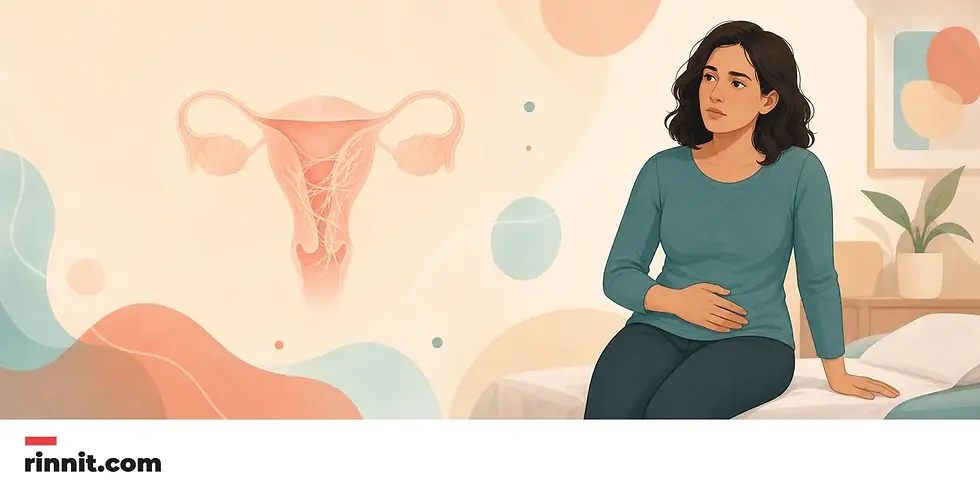
Asherman's syndrome happens when scar tissue (adhesions) builds up inside your uterus and/or cervix. It most often develops after procedures that remove tissue from your uterus. Your healthcare provider may call it "intrauterine adhesions" or "intrauterine synechiae." [1]
The extra scar tissue creates less space inside your uterus. Think of the walls of a room getting thicker and thicker, making the space in the middle of the room smaller. These changes can cause pain, irregular periods, and infertility. [1]
Maybe you have noticed that your periods changed after a dilation and curettage (D&C), or that you have more pelvic pain than usual. You know what is not normal for you. If you think you might have Asherman's syndrome, reach out to a healthcare provider.
How Rare Is Asherman's Syndrome?
It is difficult for researchers to say how rare Asherman's syndrome is. It can go undiagnosed if you are not trying to get pregnant, and researchers believe it is underdiagnosed, since routine exams and procedures typically do not spot it. [1]
What Are the Symptoms of Asherman's Syndrome?
Symptoms of Asherman's syndrome can include very light periods, no period at all, severe menstrual cramping or pelvic pain, difficulty getting pregnant, and difficulty staying pregnant. You may also experience no symptoms at all. [1]
Symptom | Medical Term | What It Looks Like |
Very light periods | Hypomenorrhea | Bleeding that is much lighter than your normal |
No period | Amenorrhea | Periods stop entirely |
Severe cramping or pelvic pain | Dysmenorrhea | Intense cramps and/or ongoing pelvic pain |
Difficulty getting pregnant | Uterine factor infertility | Trouble conceiving |
Difficulty staying pregnant | Recurrent miscarriage | Trouble carrying a pregnancy |
An important clue: you may feel pain at the time you would expect your period even without bleeding. This may mean menstruation is happening, but the blood cannot leave your uterus because scar tissue is blocking it. [1]

What Causes Asherman's Syndrome?
Asherman's syndrome happens when the basal layer of the endometrium (the uterine lining) is traumatized or removed in opposing parts within your uterus. Inflammation in those areas causes a scar to form. This most commonly happens after medical removal of tissue inside your uterus. [1]
Researchers tend to group the causes into two groups: pregnancy-related and not pregnancy-related.
Pregnancy-Related Causes
Researchers estimate that more than 90% of cases happen after a pregnancy-related D&C. You may have received a D&C for ending a pregnancy, for a missed or incomplete miscarriage, or for treatment of a retained placenta after delivery. Researchers have found that a recently pregnant uterus is especially sensitive to damage of the endometrium — the tissue that lines your uterus. In very rare cases, a cesarean section (C-section) may cause Asherman's syndrome. [1]
Non-Pregnancy-Related Causes
Less often, Asherman's syndrome results after a D&C for procedures not related to pregnancy, such as sampling for endometrial cancer or removing endometrial polyps. It can also develop after operative hysteroscopy for removing uterine fibroids or treating a septate uterus (metroplasty). Other causes include:
Cause | How It Leads to Scarring |
Severe pelvic infections | Genital tuberculosis or schistosomiasis inflames and scars the lining. |
Uterine artery embolization | The procedure can damage the endometrium. |
Radiation therapy | Treatment to the pelvic region can scar the uterine lining. |
What Are the Risk Factors for Asherman's Syndrome?
Other than having uterine procedures in general, factors that increase your risk include repeated D&Cs or uterine procedures; a D&C or uterine procedure two to four weeks after childbirth; issues with the placenta, such as placenta accreta; and removal of multiple fibroids from the inside of your uterus. [1]
How Is Asherman's Syndrome Diagnosed?
Your healthcare provider will consider your symptoms and medical history. If you have had surgeries or procedures that can cause Asherman's syndrome, they will likely recommend tests to help diagnose it.
Diagnostic hysteroscopy is the go-to test. Your provider inserts a thin, lighted camera through your vagina and cervix, allowing them to thoroughly examine your cervix and the inside of your uterus and to evaluate the severity of the scar tissue. A pelvic ultrasound or transvaginal ultrasound may also help — sometimes with saline infusion, where a salt-and-water solution is placed into your uterus. The fluid expands the uterus so the ultrasound can show the details of your uterine cavity's shape. [1]
What Are the Stages of Asherman's Syndrome?
Researchers have several classification systems for severity. One example, from the American Fertility Society, classifies the condition as follows:
Stage | Adhesions | Effect on the Uterine Cavity | Periods |
Mild disease | A few filmy adhesions | Less than one-third of the cavity | Regular or light periods |
Moderate disease | Filmy and dense adhesions | One-third to two-thirds of the cavity | Light periods |
Severe disease | Dense adhesions | More than two-thirds of the cavity | No periods |
Your healthcare provider may use different descriptions, so do not hesitate to ask questions if something is unclear.
How Is Asherman's Syndrome Treated?
You have a few options for treating Asherman's syndrome. The main goal is to remove the scar tissue and restore the inside of your uterus. Treatment can help relieve pain, restore normal menstrual cycles, and — if you have not started menopause — allow for the possibility of pregnancy. [1]
Make sure to discuss how the condition makes you feel and your goals for future fertility. If you do not have pain and are not trying to get pregnant, you may not need any treatment at all. [1]
Operative Hysteroscopy to Remove Scar Tissue
Operative hysteroscopy is the go-to treatment. During the procedure, your provider inserts a thin, lighted camera through your vagina and cervix to look inside your uterus. The tool also has very thin scissors or a laser that carefully and precisely removes the scar tissue. You may need more than one operative hysteroscopy to fully treat the condition. [1]
The biggest concern afterward is scar tissue forming again. To try to prevent this, your provider may have you take hormonal medications — estrogen may help your endometrium heal — and may place a barrier in your uterus, such as a small intrauterine catheter or balloon, to keep the uterine walls from sticking together in the days following surgery. If a barrier is placed, you will take antibiotics to prevent infection. A follow-up appointment one or two weeks after the procedure helps catch new scar tissue while it is still small, before it can get worse. [1]
Hysterectomy
If you have symptoms and do not want future pregnancies, your provider may recommend a hysterectomy. They will remove your uterus, but you will likely keep your ovaries. [1]
Clinical Trials
Researchers are currently studying whether stem cell therapy or platelet-rich plasma can help rebuild the endometrium in cases of Asherman's syndrome. You might be able to participate in a clinical trial on these techniques. [1]

What Is the Outlook with Asherman's Syndrome?
Your prognosis varies depending on the severity of the condition, whether treatment is successful and how many procedures you need, and your fertility goals. If treatment is successful, your symptoms should get better. Most people get their periods back after up to three hysteroscopic procedures, though improvement in fertility is harder for researchers to study. Over time, your provider will want to monitor your condition to check whether additional scar tissue has developed. [1]
Can You Still Get Pregnant?
It depends. The chances of getting and staying pregnant after treatment are lower for people with moderate to severe Asherman's syndrome. One study found:
Scar Tissue Severity | Pregnancy Rate After Treatment |
Mild | 60.7% |
Moderate | 53.4% |
Severe | 25% |
Infertility is tricky because the cause is not always easy to find — and there can be more than one cause. If your provider has diagnosed Asherman's syndrome as the main cause of your infertility, treating it can help improve your chances of carrying a pregnancy to birth.
What Are the Possible Complications?
Asherman's syndrome can result in recurrent pregnancy loss despite surgery and treatment. It can also cause pregnancy complications, including preterm labor, low birth weight, and placental complications such as retained placenta and placenta accreta. Your healthcare provider will carefully monitor your pregnancy if you have Asherman's syndrome. [1]
Can Asherman's Syndrome Be Prevented?
The scar tissue that develops in Asherman's syndrome can be a possible side effect of several medical procedures — and often, these procedures are necessary, so you cannot always prevent the condition. It is important to talk to your healthcare provider about all possible risks of a medical procedure beforehand. Your provider may schedule follow-up appointments after a procedure to check for scar tissue and to keep an eye on the possible development of Asherman's syndrome. [1]
What Questions Should I Ask My Doctor?
If you are discussing Asherman's syndrome with a healthcare provider, consider asking: What caused the scar tissue to form? What treatment do you recommend? How many procedures will I likely need? Will my period return to normal? Can I still get pregnant? If I get pregnant, will it be a high-risk pregnancy? [1]
Conclusion: Scar Tissue Is Treatable, and You Are Not Alone
A diagnosis of Asherman's syndrome may change what you thought your future would look like. For some, it means additional effort to manage painful periods. For others, it means rethinking pregnancy plans. Although everyone's situation is different, you do not have to manage this condition alone.
The core message from the evidence is hopeful: treatment is possible. Operative hysteroscopy removes the scar tissue, estrogen and uterine barriers help the lining heal and stay open, and most people regain their periods after up to three procedures. For those hoping to conceive, treating the scarring can meaningfully improve the chances of carrying a pregnancy to birth — especially in mild and moderate cases.
If your periods changed after a uterine procedure, talk with a healthcare provider about evaluation, including diagnostic hysteroscopy. For more clear, verified health information, explore the rest of Rinnit.com — start with our guides on abnormal periods and fertility.
Want to share this information visually? Rinnit.com's health infographic templates make it easy to turn articles like this one into shareable visuals for your website, newsletter, or social channels.
FAQ
What is Asherman's syndrome?
Asherman's syndrome is the formation of scar tissue (adhesions) inside the uterus and/or cervix. It is also called intrauterine adhesions or intrauterine synechiae. The scar tissue reduces the space inside the uterus and can cause pain, irregular periods, and infertility. [1]
What causes Asherman's syndrome?
Asherman's syndrome occurs when the basal layer of the endometrium (the uterine lining) is traumatized or removed in opposing parts of the uterus, causing inflammation that forms a scar. More than 90% of cases follow a pregnancy-related D&C, since a recently pregnant uterus is especially sensitive to tissue damage. Non-pregnancy causes include D&Cs for other reasons, hysteroscopic surgery, severe pelvic infections, uterine artery embolization, and pelvic radiation. [1]
What are the symptoms of Asherman's syndrome?
Symptoms include very light periods (hypomenorrhea), no period (amenorrhea), severe menstrual cramping or pelvic pain, difficulty getting pregnant, and recurrent miscarriages. Some people feel pain at the time they would expect a period even without bleeding — the blood cannot leave the uterus because scar tissue blocks it. Some people have no symptoms at all. [1]
What are the stages of Asherman's syndrome?
Using the American Fertility Society classification: mild disease involves filmy adhesions affecting less than one-third of the uterine cavity, with regular or light periods; moderate involves filmy and dense adhesions affecting one-third to two-thirds, with light periods; severe involves dense adhesions affecting more than two-thirds, with no periods. [1]
Can Asherman's syndrome be cured?
The scar tissue can be removed, most commonly with operative hysteroscopy — a thin camera with tiny scissors or a laser removes the adhesions precisely. Most people get their periods back after up to three procedures. Estrogen and a uterine barrier are often used afterward to prevent the scarring from returning. [1]
Can you get pregnant with Asherman's syndrome?
It depends on severity. After treatment, one study found pregnancy rates of 60.7% for mild, 53.4% for moderate, and 25% for severe cases. If Asherman's is the main cause of infertility, treating it can improve the chances of carrying a pregnancy to birth. Pregnancies need careful monitoring, as the condition can raise the risk of preterm labor, low birth weight, and placental complications. [1]
Does Asherman's syndrome go away on its own?
No. Without treatment, the scar tissue typically persists and can cause ongoing symptoms. The primary treatment is surgical removal through operative hysteroscopy. If you have no pain and are not trying to conceive, your provider may recommend no treatment, but this is a shared decision to make with your healthcare team.
How do you prevent Asherman's syndrome?
You cannot always prevent it, since it is often a side effect of necessary medical procedures. Discuss all possible risks of a procedure with your provider beforehand, and attend follow-up appointments to check for scar tissue after uterine procedures. [1]
What is an intrauterine barrier?
After scar tissue removal, a small intrauterine catheter or balloon may be placed inside the uterus to keep the walls from sticking together while the lining heals. Antibiotics are given to prevent infection, and a follow-up visit one to two weeks later lets the provider catch any new scar tissue while it is still small. [1]
Could Asherman's syndrome be why my periods stopped after a D&C?
Yes, that is a classic scenario — very light or absent periods following a D&C, especially one done after pregnancy or miscarriage, is exactly the pattern that should prompt evaluation for Asherman's syndrome. Talk with a healthcare provider about diagnostic hysteroscopy.
Sources
Cleveland Clinic. Asherman's Syndrome. Cleveland Clinic Health Library. Last updated February 26, 2025. https://my.clevelandclinic.org/health/diseases/16561-ashermans-syndrome
Cleveland Clinic. Dilation and Curettage (D&C). Cleveland Clinic Health Library. Last updated February 9, 2024. https://my.clevelandclinic.org/health/treatments/4110-dilation-and-curettage-d--c
Cleveland Clinic. Hysteroscopy. Cleveland Clinic Health Library. Last updated September 12, 2022. https://my.clevelandclinic.org/health/treatments/10142-hysteroscopy
Guo EJ, Chung JPW, Poon LCY, et al. Reproductive outcomes after surgical treatment of Asherman syndrome: a systematic review. Best Pract Res Clin Obstet Gynaecol. 2019;59:98-114. PMID 30713131. https://doi.org/10.1016/j.bpobgyn.2018.12.009
Hooker A, Fraenk D, Brölmann H, et al. Prevalence of intrauterine adhesions after termination of pregnancy: a systematic review. Eur J Contracept Reprod Health Care. 2016;21(4):329-335. PMID 27436757. https://doi.org/10.1080/13625187.2016.1199795
Korany S, Baradwan S, Badghish E, et al. Value of intrauterine platelet-rich concentrates in patients with intrauterine adhesions after hysteroscopy: a systematic review and meta-analysis of randomized controlled trials. Eur J Obstet Gynecol Reprod Biol. 2022;271:63-70. PMID 35149445. https://doi.org/10.1016/j.ejogrb.2022.01.030
Related Reading
Disclaimer: This article is for informational purposes only and is not medical advice. Always consult a qualified healthcare provider for diagnosis and treatment decisions.
Hysterosalpingogram (HSG): Timing, What to Expect and What It Finds explains how an HSG checks the fallopian tubes and uterus.
Sonohysterogram (Saline Infusion Sonography): Why It's Done, What to Expect, Pain and Results explains how saline and ultrasound show the inside of the uterus, what the test feels like and what it can find.



Comments