Dilation and Curettage (D&C): A Comprehensive Guide

Updated: 1 hour ago
Medically reviewed by Dr. Baraa Alnahhal, MD · Last reviewed: September 2026
TL;DR
Dilation and Curettage (D&C) is a routine, minor surgical procedure used to remove tissue from the uterus. It is frequently performed to diagnose irregular bleeding, treat complications after a miscarriage or childbirth, or detect uterine conditions such as polyps or cancer. While the procedure itself is brief, it plays a critical role in maintaining reproductive health and preventing complications like infection and heavy bleeding.
Quick Answer
A D&C involves two main steps: dilating the cervix to provide access to the uterus and using a surgical instrument called a curette to gently remove uterine tissue. This outpatient procedure typically takes less than 10 minutes and is performed under local, regional, or general anesthesia. Most patients return home the same day and can resume their normal activities within a few days, following simple aftercare guidelines to ensure proper healing.
The Role of D&C in Reproductive Health
Dilation and Curettage, commonly referred to as a D&C, is a foundational procedure in gynecological care. Its primary function is the safe removal of tissue from the uterine lining, which may be necessary for either diagnostic or therapeutic reasons. By clearing the uterus of abnormal tissue or retained products of conception, healthcare providers can address persistent symptoms and prevent serious health risks.
The procedure is often recommended when the uterus needs to be completely emptied, such as following a miscarriage or abortion, to minimize the risk of infection. It is also a vital tool for investigating the causes of abnormal uterine bleeding, allowing providers to identify fibroids, polyps, or early signs of uterine cancer through laboratory analysis of the removed tissue.

Understanding the Procedure
A D&C is a highly structured process that prioritizes patient comfort and safety. Before the surgery begins, the patient and provider discuss anesthesia options, which can range from local numbing of the cervix to general anesthesia where the patient is fully asleep. The choice depends on the patient's medical history and the specific reason for the procedure.
Once anesthesia is administered, the provider uses a series of specialized instruments to complete the task. The cervix is gradually widened using thin rods called dilators, providing enough space for the curette. This spoon-shaped device is then used to gently scrape or suction the uterine wall, collecting the necessary tissue for treatment or diagnostic testing.
Anesthesia Options for D&C
Local anesthesia: numbing medication applied only to the cervix; you are fully awake and aware.
Regional anesthesia: numbing from the waist down (for example, an epidural); you are conscious but feel no pain below the waist.
General anesthesia: medication that induces a deep sleep; you are fully unconscious throughout.
Preparation and the Day of Surgery
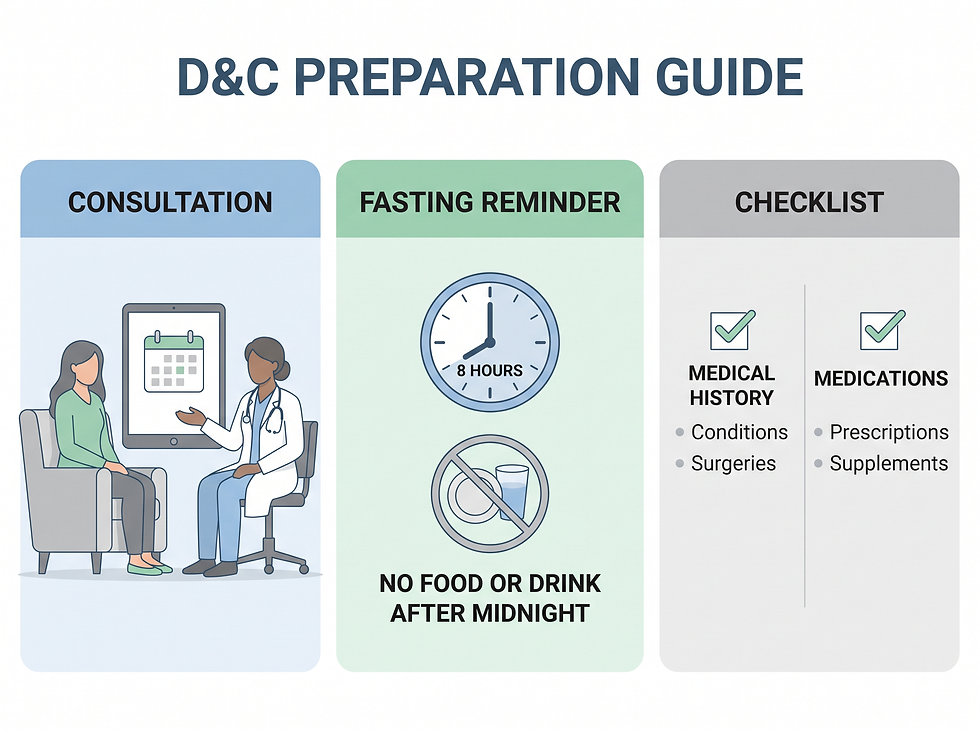
Preparing for a D&C involves a thorough review of the patient's medical history, including current medications and any known allergies. Patients are often required to fast starting the evening before the procedure to ensure safety during anesthesia. In some cases, providers may prescribe medication or use specialized sticks to begin softening and dilating the cervix in the hours leading up to the surgery.
On the day of the procedure, patients are positioned similarly to a standard gynecological exam. The entire surgical process is remarkably brief, typically lasting only five to ten minutes. However, patients should plan to spend several hours at the facility to account for preoperative preparations and a necessary observation period in the recovery room before being cleared to go home.
Recovery Milestones and Aftercare
The physical recovery from a D&C is generally rapid, with most individuals returning to their normal routines within five days. It is common to experience mild, period-like cramping and light spotting for a few days following the procedure. Over-the-counter pain relievers are usually sufficient to manage any discomfort. During this time, it is essential to use menstrual pads rather than tampons to reduce the risk of infection.
Following the procedure, patients must adhere to specific restrictions to ensure the cervix heals properly. Most providers advise waiting at least one week before resuming sexual intercourse or using tampons, as the cervix remains slightly open during the initial healing phase. A follow-up visit is typically scheduled within two weeks to review any biopsy results and confirm that the uterine lining is rebuilding as expected.

Post-Surgery Recovery Guidelines
Physical activity: resume your normal routine within 2 to 5 days.
Pain management: use acetaminophen as needed for 1 to 3 days.
Menstrual hygiene: use pads only and avoid tampons for at least 1 week.
Sexual activity: avoid intercourse until cleared (usually 1 week).
Follow-up visit: post-surgical check-up within 2 weeks.
Conclusion
Dilation and Curettage is a safe and effective procedure that provides critical insights and treatments for a wide range of uterine conditions. Whether used to ensure a healthy recovery after a pregnancy loss or to diagnose the cause of irregular bleeding, it remains a cornerstone of modern gynecological medicine. By understanding the steps involved and following professional aftercare guidance, patients can confidently manage their uterine health and look forward to a swift recovery.
Consult Your Provider
If you are experiencing symptoms such as abnormal bleeding or persistent pelvic pain, consult your gynecologist to determine if a D&C is an appropriate step for your care. Early diagnosis and treatment are key to maintaining long-term reproductive health.
Frequently Asked Questions
What is a D&C?
It is a minor surgery to dilate the cervix and remove tissue from the uterine lining.
Is a D&C a major surgery?
No, it is considered a minor, routine outpatient procedure that usually takes less than 10 minutes.
Why might I need this procedure?
It is used to treat heavy bleeding, remove tissue after a miscarriage, or diagnose conditions like uterine cancer.
Will I be put to sleep?
It depends on your preference and medical needs; options include local, regional, or general anesthesia.
Is the procedure painful?
You will not feel pain during the surgery due to anesthesia, though mild cramping is common afterward.
How long does recovery take?
Most people can return to their normal daily activities within two to five days.
Can I drive myself home?
No, you will need someone to drive you home due to the effects of the anesthesia.
When can I use tampons again?
You should wait at least one week and use only pads until your doctor confirms your cervix has closed.
When is it safe to have sex?
Most providers recommend waiting at least one week to prevent the risk of infection.
Will a D&C affect my future fertility?
In most cases, it does not affect fertility. However, a rare condition called Asherman’s syndrome can occur.
What is Asherman’s syndrome?
It is a rare complication where scar tissue forms in the uterus, which may require further treatment.
When will I get my period after a D&C?
Your next period may be early or late as your uterine lining builds back up.
How long do I have to wait to get pregnant again?
After a miscarriage, providers often suggest waiting two to three menstrual cycles before trying to conceive.
What are the common risks?
The main risks are minor bleeding, infection, and, rarely, a small tear in the uterine wall.
When should I call my doctor?
Call if you experience a high fever, severe abdominal pain, or heavy bleeding that soaks a pad in an hour.
References
Medical Disclaimer: The information provided is for educational purposes only and should not be used as a substitute for professional medical advice, diagnosis, or treatment. Always seek the advice of your physician or other qualified health provider with any questions you may have regarding a medical condition.
Comments