Vertebroplasty: Procedure, Recovery, and Benefits

Updated: 3 days ago
Medically reviewed by Dr. Baraa Alnahhal, MD · Last reviewed: October 2026
TL;DR: Vertebroplasty is a minimally invasive outpatient procedure for painful spinal compression fractures [1], most often caused by osteoporosis or spinal tumors. A needle guided by X-ray imaging delivers surgical cement into the fractured vertebra, which stabilizes the bone and helps prevent further collapse. Many people notice less pain within about 48 hours and go home the same day. [1] Cleveland Clinic reports that an estimated 87% of patients experience pain relief [1], although placebo-controlled trials have found smaller benefits [2] [3], so the procedure is best considered when severe pain persists despite rest, medication, and physical therapy.
Quick Answer: What is vertebroplasty?
Vertebroplasty is a procedure that stabilizes a spinal compression fracture and relieves its pain. Using X-ray guidance, a surgeon inserts a needle into the fractured vertebra and injects medical-grade cement that hardens to hold the bone in place. It is generally considered for severe fracture pain lasting at least two months that has not improved with conservative treatment. [1]
What the research says
Placebo-controlled trials show little added benefit. A Cochrane review of 21 trials, including five placebo-controlled trials (541 participants), found high- to moderate-quality evidence that vertebroplasty gave no clinically important benefit over a sham procedure for pain, disability, or quality of life at one month in acute or subacute osteoporotic fractures; mean pain (0–10 scale) was 0.7 points better (95% CI 0.3–1.2) (Buchbinder et al., Cochrane Database Syst Rev, 2018) [2].
Benefits over standard care are clearer, especially for recent fractures. A meta-analysis of 14 randomized trials found significant advantages over conservative treatment on all outcomes but only slight-to-no differences versus placebo; in fractures less than 6 weeks old, vertebroplasty gave better short-term pain relief than controls (p = .02) and better quality of life in the medium term (p = .03) and long term (p = .006) (Láinez Ramos-Bossini et al., Eur Radiol, 2021) [3].
It does not appear to raise the risk of new fractures next to the treated bone. A network meta-analysis of 23 randomized trials (2,838 patients) found a risk of adjacent-level fracture after vertebroplasty similar to the natural history of the fracture (RR 1.16, 95% CI 0.62–2.14; mean follow-up 21.2 months) (Essibayi et al., Eur Radiol, 2024) [4].
Understanding Vertebroplasty
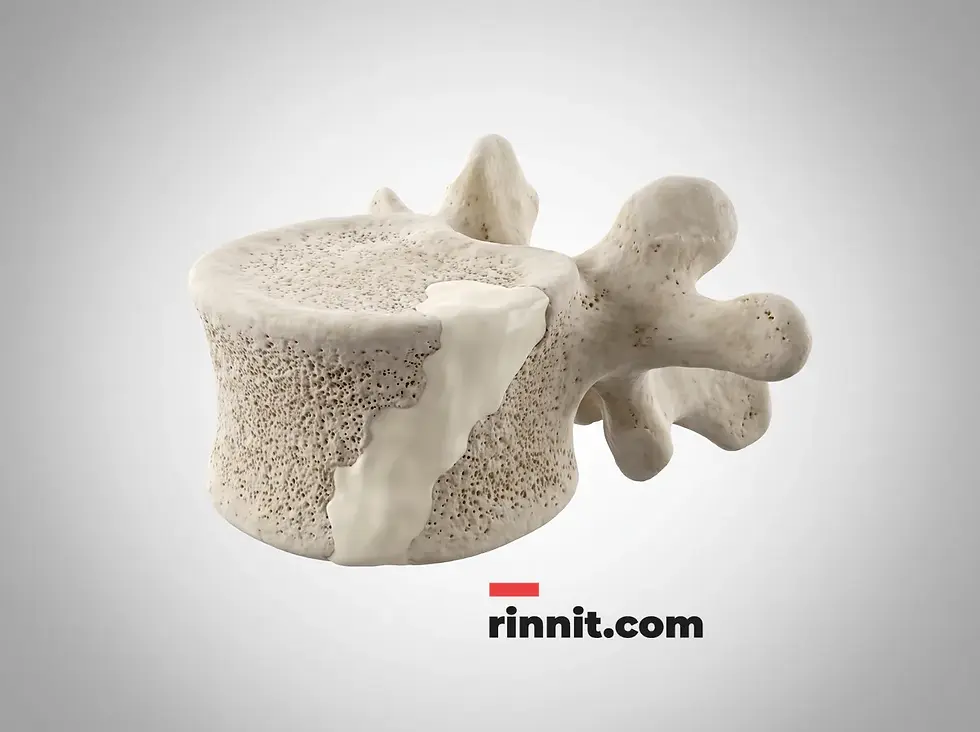
Vertebroplasty, also called percutaneous vertebroplasty [1], is a spinal procedure that restores strength to a fractured vertebra. These fractures, known as compression fractures, happen when the bones of the spine (vertebrae) break or collapse. When the broken pieces of bone rub together, they can cause severe pain. Vertebroplasty uses surgical cement to hold the bone in place, prevent it from collapsing further, and relieve that pain. [1]
The procedure treats the mechanical pain caused by the fracture itself. It does not reverse the underlying cause of weak bones. Unlike open surgery, it is done through a small puncture in the skin, and it is not considered major surgery. [1]
Who Is a Candidate?
You may be a candidate if you have severe pain from a compression fracture that has lasted at least two months and has not improved with other treatments such as rest, medication, and physical therapy. [1] Your surgeon will review your symptoms and test results, which may include a spine X-ray, an MRI or CT scan, a bone density (DEXA) scan, and blood tests. [1]
Common Causes of Compression Fractures
Vertebroplasty is most often used for fractures caused by conditions that weaken bone or damage the spine.
Condition | Description |
Osteoporosis | A condition that weakens bones, making them fragile and prone to breaking. |
Spinal injury | Direct trauma to the back that causes one or more vertebrae to collapse. |
Spinal tumors | Cancers, such as multiple myeloma, that invade and weaken the spinal bones. |

The Procedure Process
Vertebroplasty takes about one hour for each bone treated. [1] It is done in a hospital or outpatient clinic, with moderate sedation or general anesthesia so you are comfortable. You lie face down on a treatment table so the surgical team can reach your spine.
Using a real-time X-ray technique called fluoroscopy [1], the surgeon guides a hollow needle through the skin and into the exact spot of the fracture. The surgical cement is then injected through the needle into the vertebra, where it hardens and holds the bone together. Afterward, the needle is removed and a bandage covers the puncture site.
Vertebroplasty vs. Kyphoplasty
Both procedures treat compression fractures with the same type of surgical cement, but they differ in approach.
Vertebroplasty: the cement is injected directly into the fractured bone without any balloon.
Kyphoplasty: a small balloon is first inflated to open up space in the bone, and then the cement is injected into that space. Kyphoplasty is the more common of the two procedures. [1]
Recovery and Success Rates
One advantage of vertebroplasty is its short recovery. Most people go home the same day. [1] Some soreness at the injection site is expected and usually fades within about three days, and the deeper pain from the fracture may ease within 48 hours. [1] Some people notice relief as soon as the cement hardens.
Cleveland Clinic estimates that about 87% of people who have vertebroplasty report pain relief afterward. [1] Research results are more mixed: trials with a sham (placebo) procedure have found smaller benefits [2] [3], and benefits appear larger for recent fractures. [3] Talk with your surgeon about what to expect for your specific fracture.
Recovery Guidelines
Following your surgeon's instructions helps you heal and avoid new injuries.
Timeframe | Activity Level and Care |
First 24 hours | Rest for about 24 hours, then most people can return to their regular routine. |
First 3 days | Mild soreness at the puncture site is common and usually goes away within three days. Ice packs can help. |
First 6 weeks | Avoid strenuous exercise and heavy lifting to protect your spine. |

Risks and Considerations
Vertebroplasty is considered a safe, minimally invasive procedure, but it is not risk free. Complications are rare but may include bleeding, infection, blood clots, an allergic reaction, nerve damage, or movement (migration) of the surgical cement within the body. [1]
When to call your healthcare provider: Contact your provider right away if you have worsening pain, signs of infection (fever, swelling, or skin color changes), excess bleeding at the puncture site, or new numbness or tingling. [1]
Conclusion
Vertebroplasty is a useful option for people whose spinal compression fractures cause severe pain that has not improved with rest, medication, and physical therapy. It stabilizes the broken vertebra, helps prevent the fracture from collapsing further, and has a short recovery. Evidence from placebo-controlled trials suggests the benefit may be smaller than often reported, so the decision is worth discussing with a spine specialist who can weigh your fracture, your symptoms, and your overall health. If you have persistent back pain from a known or suspected spinal fracture, ask your doctor whether vertebroplasty could help.
Related reading: Osteoporosis · Spinal fractures · Spinal tumor · Kyphosis · Your spine
Frequently Asked Questions
What is the primary goal of vertebroplasty?
The main goal of vertebroplasty is to stabilize a spinal compression fracture and relieve the associated pain by injecting surgical cement into the broken vertebra.
How long does the vertebroplasty procedure take?
The procedure generally takes about one hour for each vertebra (bone) being treated.
Is vertebroplasty an inpatient or outpatient procedure?
Vertebroplasty is typically an outpatient procedure, which means most people go home the same day.
How soon will I feel pain relief after the procedure?
Many people notice less pain and better mobility within about 48 hours, and some feel relief immediately after the procedure.
What is the success rate for vertebroplasty?
Cleveland Clinic estimates that about 87% of people who have vertebroplasty report pain relief. Results in placebo-controlled trials have been more modest, so ask your doctor what to expect in your situation.
What is the difference between vertebroplasty and kyphoplasty?
Kyphoplasty uses a small balloon to create space before the cement is injected, while vertebroplasty injects the cement directly into the fracture without a balloon. Kyphoplasty is the more common of the two.
What are the main risks of the procedure?
Complications are rare but may include bleeding, infection, blood clots, an allergic reaction, nerve damage, and movement (migration) of the surgical cement.
How long should I avoid strenuous activity after the procedure?
Avoid strenuous activity for about six weeks, and avoid heavy lifting for at least a few weeks, or for as long as your surgeon advises.
Why do I need to stop smoking before the procedure?
Surgeons ask you to stop smoking before vertebroplasty because smoking can interfere with healing and raise the risk of complications.
How do I prepare for vertebroplasty?
Before the procedure you may have a spine X-ray, MRI or CT scan, a DEXA bone density scan, blood tests and a physical exam. [1] You may need to stop some medicines, such as blood thinners, but only with your provider's approval. Don't eat for a few hours beforehand (sips of water with medicines are allowed), stop smoking, wear loose clothing and no jewelry, and arrange for someone to drive you home. [1]
When should I call my doctor after vertebroplasty?
Call right away if you have worsening pain, signs of infection (fever, swelling, or skin color changes), excess bleeding at the puncture site, or new numbness or tingling.
Related Reading
Kyphoplasty: Procedure, Recovery, Results and Risks explains the balloon-and-cement procedure for spinal compression fractures, recovery and risks.
References
Cleveland Clinic. Vertebroplasty: What It Is, Purpose, Procedure & Side Effects. Cleveland Clinic. Last updated 11/30/2023. https://my.clevelandclinic.org/health/procedures/vertebroplasty
Buchbinder R, Johnston RV, Rischin KJ, et al. Percutaneous vertebroplasty for osteoporotic vertebral compression fracture. Cochrane Database Syst Rev. 2018;11(11):CD006349. PMID 30399208. https://doi.org/10.1002/14651858.CD006349.pub4
Láinez Ramos-Bossini AJ, López Zúñiga D, Ruiz Santiago F. Percutaneous vertebroplasty versus conservative treatment and placebo in osteoporotic vertebral fractures: meta-analysis and critical review of the literature. Eur Radiol. 2021;31(11):8542-8553. PMID 33963449. https://doi.org/10.1007/s00330-021-08018-1
Essibayi MA, Mortezaei A, Azzam AY, et al. Risk of adjacent level fracture after percutaneous vertebroplasty and kyphoplasty vs natural history for the management of osteoporotic vertebral compression fractures: a network meta-analysis of randomized controlled trials. Eur Radiol. 2024;34(11):7185-7196. PMID 38811388. https://doi.org/10.1007/s00330-024-10807-3
Medical disclaimer
This article is for educational purposes only and is not a substitute for professional medical advice, diagnosis, or treatment. Always seek the advice of your physician or other qualified health provider with any questions about a medical condition.



Comments