Understanding Your Spine: The Foundation of Movement and Support

Updated: 2 days ago
Medically reviewed by Dr. Baraa Alnahhal, MD · Last reviewed: October 2026
Quick Answer: What is the spine?
The spine, or backbone, is the central support structure of the musculoskeletal system, extending from the base of the skull to the tailbone. [3] It consists of 33 vertebrae that form a protective canal for the spinal cord while allowing flexibility and maintaining posture. [3] Intervertebral disks absorb shock, facet joints allow movement, and muscles and ligaments provide stability. [3]
What the research says
Core and stabilization exercises improve function in chronic low back pain. In a network meta-analysis of 75 randomized trials with 5,254 participants, core or stabilization exercises improved physical function more than conventional rehabilitation (standardized mean difference −1.04, 95% CI −1.80 to −0.28) and more than no intervention (−1.13, 95% CI −1.66 to −0.59), though the authors caution that more high-quality trials are needed (Li et al., Frontiers in Public Health, 2023) [1].
Trunk-focused exercise has a small edge over general exercise. In a meta-analysis of 40 randomized trials (2,391 participants) in chronic nonspecific low back pain, trunk-focused exercise programs beat general exercises by a small margin for pain (standardized mean difference 0.20, 95% CI 0.03–0.37) and disability (0.20, 95% CI 0.02–0.38) (Prat-Luri et al., Journal of Orthopaedic & Sports Physical Therapy, 2023) [2].
The Vital Role and Function of the Spine
The spine serves as the primary structural pillar of the human body, fulfilling several critical biological and mechanical roles. Its most prominent function is providing the structural framework that gives the body its shape and allows for an upright posture. By connecting different parts of the musculoskeletal system, the spine facilitates essential daily activities such as sitting, standing, and walking. [3]
Beyond its role in support, the spine acts as a protective shield for the spinal cord, the delicate column of nerves that transmits signals between the brain and the rest of the body. Furthermore, the segmented nature of the spine, combined with specialized joints, provides the flexibility necessary for complex movements, including twisting, bending, and tilting. [3]
Function | Primary Purpose | Key Benefit |
|---|---|---|
Structural Support | Maintains upright posture | Enables standing and walking |
Neural Protection | Shields the spinal cord | Prevents nerve injury |
Movement | Facilitates bending and twisting | Provides physical flexibility |
Shock Absorption | Distributes mechanical stress | Protects against impact injury |
Anatomy of the Spine: Segments and Curves
A healthy spine features three natural curves that form an S-shape, acting as a sophisticated shock-absorbing system to protect the structure from injury. [3] The spine is organized into five distinct segments, each containing a specific number of vertebrae designed for unique functional requirements.
The cervical spine (neck) consists of seven vertebrae [3] that support the head and allow for a wide range of motion. Below this, the thoracic spine (middle back) includes twelve vertebrae where the ribs attach [3], forming a stable structure for the chest. The lumbar spine (lower back) comprises five large vertebrae that bear the majority of the body's weight and the stress of lifting. [3] The base of the spine is formed by the sacrum and the coccyx (tailbone), which consist of fused vertebrae that provide stability and attachment points for pelvic muscles.
Segment | Number of Vertebrae | Natural Curve | Primary Function |
|---|---|---|---|
Cervical | 7 (C1-C7) [3] | Lordotic (Inward C) | Head support and movement |
Thoracic | 12 (T1-T12) [3] | Kyphotic (Backward C) | Rib attachment and stability |
Lumbar | 5 (L1-L5) [3] | Lordotic (Inward C) | Weight bearing and lifting |
Sacrum | 5 (Fused) [3] | Fixed | Pelvic girdle connection |
Coccyx | 4 (Fused) [3] | Fixed | Muscle attachment |
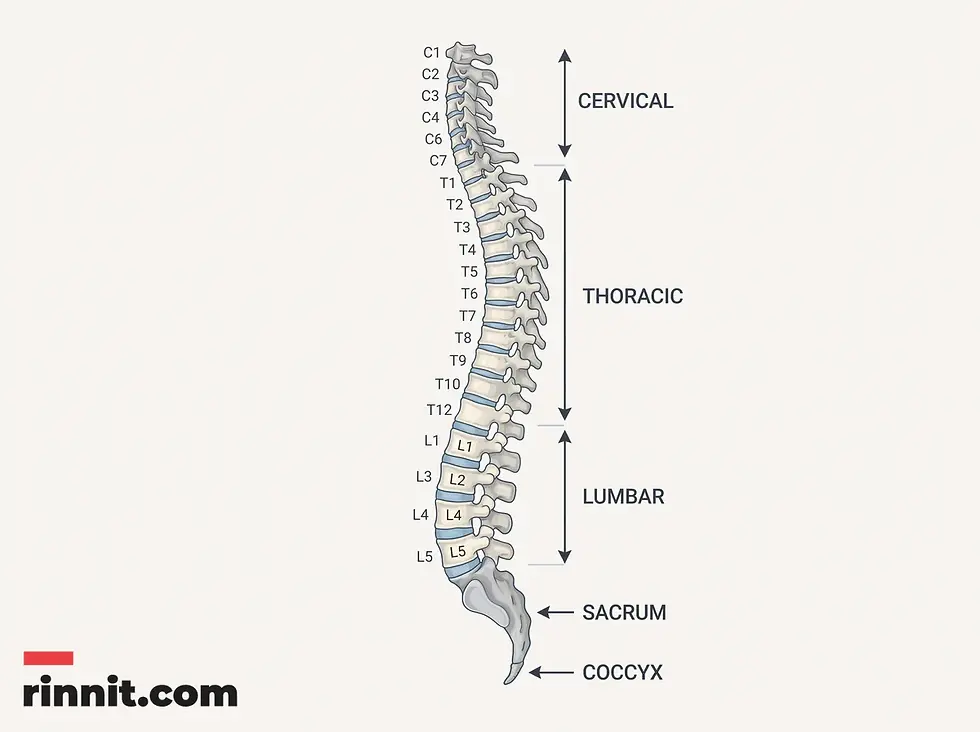
Figure 1: Overview of the human spine segments and their natural curvatures.
Essential Components: Bones, Disks, and Nerves
The functional integrity of the spine relies on the seamless interaction of several specialized components. Vertebrae are the individual bones that stack together to form the spinal canal, a protective tunnel for the spinal cord. [3] Between these bones lie intervertebral disks, which are flat, round cushions with a gel-like center that act as shock absorbers [3], preventing bone-on-bone contact and distributing pressure.
Mobility is facilitated by facet joints, which are lined with slippery cartilage to allow vertebrae to slide against each other smoothly. [3] The spinal cord and nerves travel through the canal, with 31 pairs of nerves branching out [3] to carry messages throughout the body. Finally, a complex network of soft tissues, including ligaments, muscles, and tendons, provides the necessary stability and power for movement.
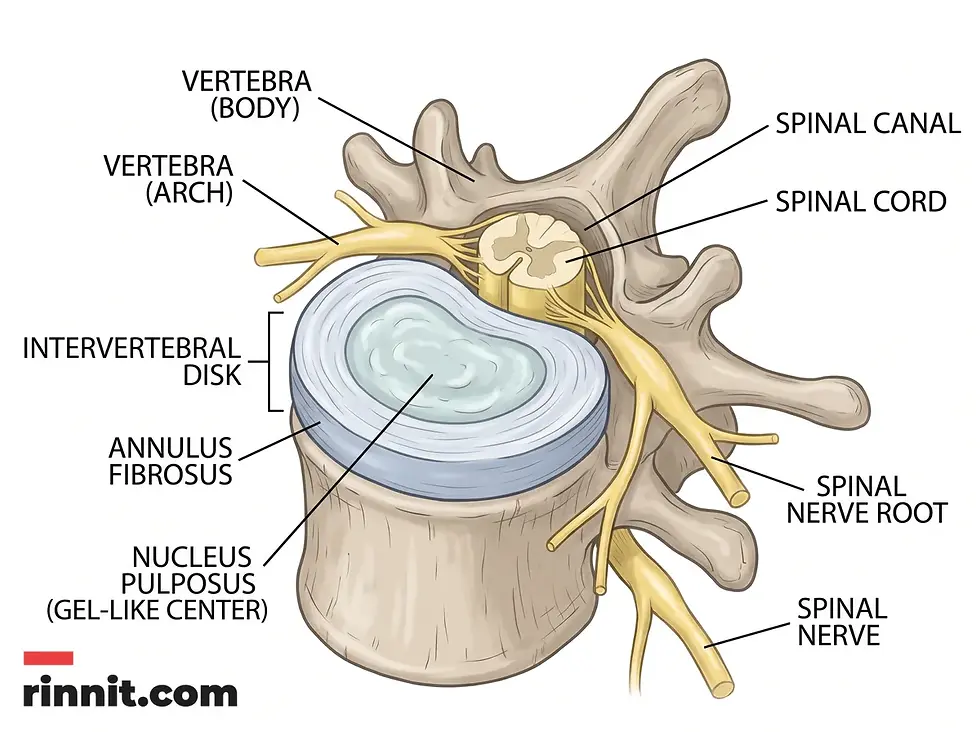
Figure 2: Detailed view of vertebrae, intervertebral disks, and the spinal canal.
Common Conditions and Impact on Health
Due to the constant mechanical stress and wear and tear it endures, the spine is susceptible to various conditions and injuries. Up to 80% of adults experience back or neck pain at some point in their lives, often resulting from muscle strains, sprains, or degenerative changes.
Common clinical conditions include arthritis, which affects the joints and vertebrae, and herniated disks, where the soft center of a disk escapes and presses on nearby nerves. Structural issues such as scoliosis (abnormal curvature) and osteoporosis (bone thinning) [3] can also significantly impact mobility and quality of life. In more severe cases, spinal cord injuries can lead to permanent changes in sensation or paralysis.

Figure 3: Common spinal conditions and their impact on physical function.
Pillars of Spine Health and Maintenance
Maintaining a healthy spine requires a proactive approach centered on strengthening supportive tissues and practicing ergonomic safety. Regular exercise, particularly activities that strengthen the core muscles—such as planks [3]—provides the necessary stability to protect the vertebrae and disks from excessive stress.
In addition to exercise, lifestyle habits play a crucial role in prevention. Maintaining a healthy weight reduces the load on the lumbar spine, while practicing good posture when sitting or standing prevents unnecessary strain. When lifting heavy objects, it is essential to bend the knees and keep the back straight [3] to avoid acute injuries.
Conclusion
The spine is the architectural cornerstone of the human body, providing the perfect balance of rigid support and flexible mobility. By understanding its complex anatomy and the vital roles it plays in movement and neural protection, individuals can better appreciate the importance of spinal maintenance. Through consistent exercise, proper ergonomics, and timely medical attention, the integrity of this central support system can be preserved for a lifetime of activity.
Next Steps
If you are experiencing persistent back pain, numbness in your limbs, or a loss of flexibility, consult a healthcare professional for a comprehensive spinal evaluation. Early diagnosis and targeted physical therapy can prevent minor issues from developing into chronic conditions. Prioritize your spinal health today by incorporating core-strengthening exercises into your weekly routine.
Frequently Asked Questions
1. How many bones are in the human spine?
The spine has 33 vertebrae, but in adults the sacral and tailbone vertebrae are fused, so it usually has 26 separate bones.
2. What are the main segments of the spine?
The spine is divided into the cervical (neck), thoracic (middle back), lumbar (lower back), sacrum, and coccyx.
3. What is the function of intervertebral disks?
Intervertebral disks act as shock absorbers, cushioning the vertebrae and allowing the spine to bend and move without bone-on-bone contact.
4. Why does the spine have natural curves?
The S-shaped curves work as shock absorbers to protect the spine from injury and help maintain balance.
5. What is the most common symptom of a spine condition?
Back or neck pain is the most frequent symptom, affecting up to 80% of people at some point.
6. What is a herniated disk?
A herniated disk occurs when the soft, gel-like center of a spinal disk pushes through a tear in the tougher outer ring, potentially irritating nearby nerves.
7. How does the spine protect the spinal cord?
The stacked vertebrae form a hollow tunnel called the spinal canal, which houses and shields the spinal cord.
8. What are facet joints?
Facet joints are joints between the vertebrae that allow them to slide against each other, providing both flexibility and stability.
9. Which part of the spine bears the most weight?
The lumbar spine (lower back) supports the upper body and bears most of the weight and stress during lifting.
10. Can I improve my spine health through exercise?
Yes, strengthening the core muscles (abdominal, side, and back) provides better support for the spine.
11. What is scoliosis?
Scoliosis is an abnormal lateral curvature of the spine that can occur during growth spurts before puberty.
12. How do I lift heavy objects safely?
Always bend your knees and keep your back straight, using your leg muscles rather than your back to lift.
13. What is the difference between a ligament and a tendon in the spine?
Ligaments connect vertebrae to each other, while tendons connect muscles to the spinal bones.
14. What tests are used to diagnose spine issues?
Common tests include X-rays, CT scans, MRIs, and bone density tests (DEXA).
15. When should I see a doctor for back pain?
You should seek medical attention if pain is severe, persistent, accompanied by fever, or if you experience numbness or weakness in your legs. Go to the emergency room right away if back pain comes with new loss of bladder or bowel control or numbness in the groin or inner thighs.
Trusted External Resources
American Academy of Orthopaedic Surgeons (OrthoInfo): Spine Basics — an orthopaedic overview of spine anatomy.
MedlinePlus (U.S. National Library of Medicine): Spine Injuries and Disorders — a guide to common spine conditions and where to learn more.
Related Reading
Herniated Disk: Symptoms, Causes & What Actually Helps explains how a spinal disk slips out of place and what relieves it.
Spinal Stenosis: Symptoms, Causes, Diagnosis, and Treatment — Complete Guide covers narrowing of the spinal canal and its treatment options.
Scoliosis Guide: Symptoms, Causes, Diagnosis, and Treatment explains sideways curves of the spine and how they are treated.
Understanding the Spinal Cord: Anatomy, Function, and Care describes the nerve pathway that runs inside the spinal column.
References
Li Y, Yan L, Hou L, et al. Exercise intervention for patients with chronic low back pain: a systematic review and network meta-analysis. Front Public Health. 2023;11:1155225. PMID 38035307. https://doi.org/10.3389/fpubh.2023.1155225
Prat-Luri A, de Los Rios-Calonge J, Moreno-Navarro P, et al. Effect of Trunk-Focused Exercises on Pain, Disability, Quality of Life, and Trunk Physical Fitness in Low Back Pain and How Potential Effect Modifiers Modulate Their Effects: A Systematic Review With Meta-analyses. J Orthop Sports Phys Ther. 2023;53(2):64-93. PMID 36645193. https://doi.org/10.2519/jospt.2023.11091
Cleveland Clinic. Spine Structure and Function. Cleveland Clinic Health Library. Last updated October 18, 2023. https://my.clevelandclinic.org/health/body/10040-spine-structure-and-function
Medical Disclaimer
The information provided in this article is for educational purposes only and is not intended as medical advice. Always seek the guidance of a qualified healthcare professional regarding any medical condition or treatment.



Comments