Understanding Vitamin B12 Deficiency: Causes, Symptoms, and Recovery

Updated: 3 days ago
Medically reviewed by Dr. Baraa Alnahhal, MD · Last reviewed: October 2026
Vitamin B12 deficiency occurs when the body lacks sufficient cobalamin for essential functions like red blood cell production and nerve health. Common causes include dietary gaps, absorption issues, and certain medical conditions. While symptoms range from fatigue to neurological changes, the condition is highly treatable through supplementation and dietary adjustments. Early detection is vital to prevent long-term complications affecting the nervous system.
Quick Answer
Vitamin B12 deficiency is a treatable condition in which the body lacks enough cobalamin, a nutrient mainly found in animal products and essential for DNA synthesis and red blood cells. [1] It often results from low intake or poor absorption due to age, surgery or digestive disorders. Symptoms include fatigue, numbness and memory problems. Supplements, injections or diet changes restore levels.
What the research says
Vegan diets are linked to lower B12 status. A meta-analysis of 17 studies found that adult vegans had lower serum B12 and higher total homocysteine (0.57 μmol/L, 95% CI 0.26-0.89) than omnivores, and that B12 supplement use among vegans improved all of the biomarkers measured (Niklewicz et al., Nutr Bull, 2024) [2].
Metformin raises the odds of B12 deficiency. A meta-analysis of 29 studies (8,089 patients) found higher odds of B12 deficiency with metformin (OR 2.45, 95% CI 1.74-3.44) and lower serum B12 levels (Niafar et al., Intern Emerg Med, 2015) [3].
Oral B12 may work as well as injections for many people. A Cochrane review of 3 randomized trials (153 participants) found low-quality evidence that oral and intramuscular B12 were similar at normalizing serum B12, with oral treatment costing less (Wang et al., Cochrane Database Syst Rev, 2018) [4].
What is Vitamin B12 Deficiency?
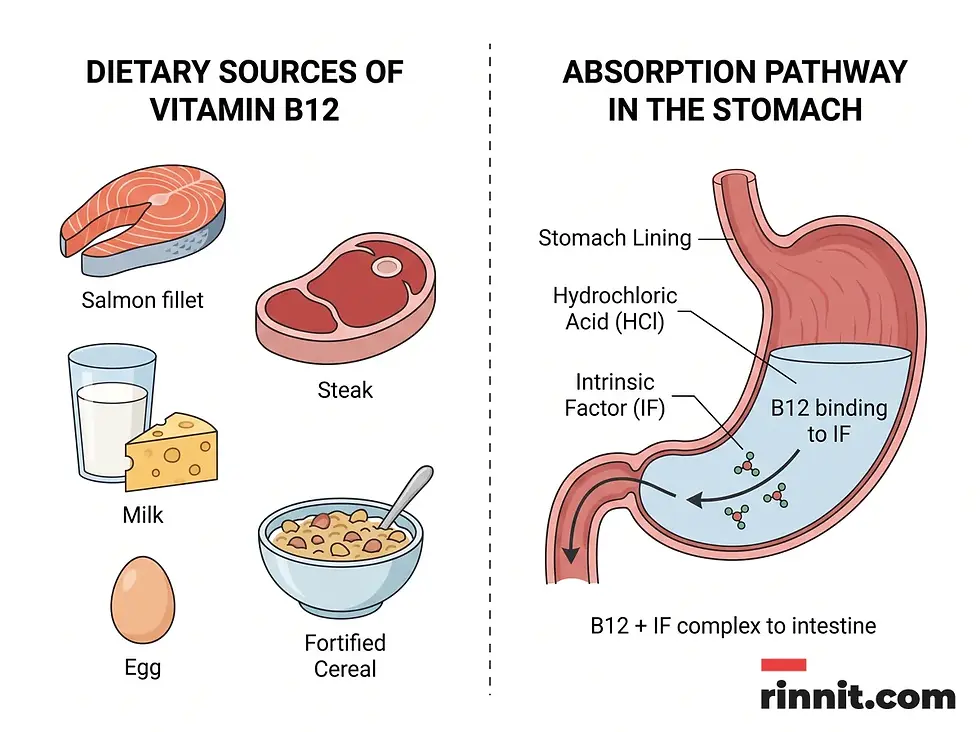
Vitamin B12 deficiency, also known as cobalamin deficiency, is a condition where the body does not have enough vitamin B12 to maintain vital processes. This nutrient is essential for creating DNA and healthy red blood cells. [1] Because the human body cannot produce B12 on its own, it must be obtained through diet or supplements. [1]
The absorption process is complex, requiring both stomach acid to release the vitamin from food and a protein called intrinsic factor to transport it into the bloodstream. [1] When this process fails, B12 levels drop, potentially leading to physical, neurological, and psychological challenges if left unaddressed. [1]
Recognizing the Symptoms
The signs of a B12 deficiency often develop gradually [1], making them easy to overlook in the early stages. Symptoms are typically categorized into physical, neurological, and psychological effects [1], reflecting the vitamin's broad role in systemic health.
Cognitive symptoms, such as confusion or memory loss, can also occur [1] as the deficiency progresses. Because these signs overlap with many other health conditions, professional diagnostic testing is necessary for an accurate assessment.

Causes and Risk Factors
A deficiency usually arises from one of two primary issues: not consuming enough B12 or an inability to absorb it properly. [1] Dietary gaps are most common in those following strict vegan or vegetarian diets without supplementation [1] [2], as B12 is naturally found almost exclusively in animal products.
Absorption issues are frequently linked to medical conditions or age-related changes. Gastritis, which reduces stomach acid, and pernicious anemia, which eliminates intrinsic factor, are significant drivers of deficiency. [1] Additionally, certain medications like metformin or proton pump inhibitors can interfere with how the body processes this vital nutrient. [1] [3]
Diagnosis and Treatment
Healthcare providers typically diagnose B12 deficiency through a series of blood tests. These may include a complete blood count (CBC) to check for anemia and specific tests for B12, methylmalonic acid (MMA), and homocysteine levels. [1] Identifying the underlying cause is essential for selecting the most effective treatment plan.
Treatment Method | Description |
Oral Supplements | High-dose tablets or capsules taken daily to restore levels. [4] |
B12 Injections | Intramuscular shots, often required for those with severe absorption issues. |
Dietary Changes | Increasing intake of fortified cereals, meat, fish, and dairy products. [1] |
Nasal Sprays | A human-made form of B12 administered through the nose. |

Long-Term Outlook
With prompt treatment, the prognosis for Vitamin B12 deficiency is generally excellent. Most physical symptoms improve quickly once B12 levels are restored. However, if the deficiency remains untreated for an extended period, it can lead to permanent neurological damage, such as peripheral neuropathy or spinal cord degeneration. [1]
Ongoing monitoring is often necessary, especially for individuals with chronic absorption disorders. Regular checkups and adherence to a prescribed supplement regimen can ensure that B12 levels remain within a healthy range, supporting long-term neurological and cardiovascular health.
Conclusion
Vitamin B12 is a cornerstone of human health, supporting everything from nerve function to DNA production. While a deficiency can cause significant disruption to daily life, it is a manageable and treatable condition. By recognizing the early warning signs and working closely with a healthcare professional, individuals can restore their energy and protect their long-term well-being.
When to Seek Medical Care
If you are experiencing persistent fatigue or unusual neurological symptoms, consult a healthcare provider for a comprehensive nutritional screening. Early intervention is the best way to prevent complications and maintain optimal health.
Frequently Asked Questions
How much Vitamin B12 do I need daily?
Most adults require approximately 2.4 micrograms (mcg) of Vitamin B12 per day. This requirement may increase for individuals who are pregnant or breastfeeding to support fetal development and infant health.
Can I get enough B12 on a vegan diet?
While naturally occurring B12 is found in animal products, vegans can meet their needs through fortified foods like cereals, nutritional yeast, and plant-based milks. However, many healthcare providers recommend a B12 supplement for those on a strict plant-based diet.
What is the difference between B12 deficiency and anemia?
Vitamin B12 deficiency refers to low levels of the vitamin in the body. B12 deficiency anemia is a specific complication where the lack of B12 prevents the body from making enough healthy red blood cells. You can have a deficiency without having anemia.
Are certain medications linked to B12 deficiency?
Yes, some common medications can interfere with B12 absorption. These include metformin (used for diabetes), proton pump inhibitors (PPIs) for acid reflux, and certain oral birth control pills.
Is Vitamin B12 deficiency common in older adults?
Risk increases significantly after age 75. This is often because the body's ability to produce the stomach acid and intrinsic factor needed for B12 absorption naturally declines with age.
Can B12 deficiency cause permanent damage?
If left untreated for a long time, severe deficiency can lead to lasting neurological issues, including nerve damage, memory loss, and difficulty walking. Early diagnosis and treatment are critical to avoid these complications.
What are the best food sources of Vitamin B12?
The most potent sources include fish, meat, poultry, eggs, and dairy products. Fortified breakfast cereals and certain nutritional yeasts are also effective ways to boost intake.
How long does it take to recover from a deficiency?
Many people begin to feel better within a few days of starting treatment, though neurological symptoms may take longer to resolve. Full recovery depends on the severity and duration of the initial deficiency.
Do I need B12 injections or pills?
The choice depends on the cause of the deficiency. Those with severe absorption issues, such as pernicious anemia, often require injections to bypass the digestive system, while others may respond well to high-dose oral supplements.
What are the neurological signs of low B12?
Common neurological signs include numbness or a "pins and needles" sensation in the hands and feet, vision problems, and increased confusion or difficulty remembering things.
Can alcohol use lead to B12 deficiency?
Chronic or excessive alcohol consumption can damage the digestive system's lining, making it much harder for the body to absorb Vitamin B12 and other essential nutrients.
Related Reading
Nitrous Oxide (Laughing Gas): Uses, Side Effects and Safety explains nitrous oxide (laughing gas).
Learn more in our guide to MCV Blood Test: Normal Range and What Low or High MCV Means.
Romberg Test: How It's Done, What It Checks and What Results Mean explains how this quick balance test checks your body's position sense.
Homocysteine Test: Normal Levels, Causes of High Homocysteine and What It Means for Your Heart explains the blood test linked to B vitamins and heart and stroke risk.
Methylmalonic Acid (MMA) Test: Normal Range, High MMA and Vitamin B12 explains the test that shows whether your body is truly short of vitamin B12.
References
Cleveland Clinic. Vitamin B12 Deficiency. Cleveland Clinic. Last updated September 30, 2025. https://my.clevelandclinic.org/health/diseases/22831-vitamin-b12-deficiency
Niklewicz A, Hannibal L, Warren M, et al. A systematic review and meta-analysis of functional vitamin B12 status among adult vegans. Nutr Bull. 2024;49(4):463-479. PMID 39373282. https://doi.org/10.1111/nbu.12712
Niafar M, Hai F, Porhomayon J, et al. The role of metformin on vitamin B12 deficiency: a meta-analysis review. Intern Emerg Med. 2015;10(1):93-102. PMID 25502588. https://doi.org/10.1007/s11739-014-1157-5
Wang H, Li L, Qin LL, et al. Oral vitamin B12 versus intramuscular vitamin B12 for vitamin B12 deficiency. Cochrane Database Syst Rev. 2018;3(3):CD004655. PMID 29543316. https://doi.org/10.1002/14651858.CD004655.pub3
Medical disclaimer
The information provided in this article is for educational purposes only and should not be used as a substitute for professional medical advice, diagnosis, or treatment. Always seek the advice of your physician or other qualified health provider with any questions you may have regarding a medical condition.



Comments