Understanding Smooth Muscle: The Involuntary Powerhouse

Updated: 3 days ago
Medically reviewed by Dr. Baraa Alnahhal, MD · Last reviewed: October 17, 2026
Quick Answer: What is smooth muscle?
Smooth muscle is one of the body's three main muscle types, working involuntarily and appearing non-striated under a microscope. It lines the walls of hollow organs and passages, including the stomach, intestines, bladder, blood vessels and airways. [1] It moves substances through the body and controls passage width, contracting slowly and holding tension for long periods.
When to see a doctor
Smooth muscle problems often show up as symptoms in other systems. See a healthcare professional if you have unexplained changes in blood pressure, ongoing digestive problems, or difficulty controlling urination. Get emergency care for severe difficulty breathing, chest pain, or sudden severe abdominal pain.

What the research says
Smooth muscle in blood vessels helps set blood pressure. A review explains that in hypertension, narrower blood vessels caused by increased vascular smooth muscle contraction and artery remodeling raise vascular resistance. Contraction is triggered by a rise in calcium inside the muscle cell (Touyz et al., Cardiovascular Research, 2018) [2].
Airway smooth muscle is central to severe asthma. In a randomized, sham-controlled trial of 288 adults with severe asthma that remained symptomatic despite high-dose treatment, a bronchoscopic procedure that reduces airway smooth muscle improved quality of life. A clinically meaningful improvement occurred in 79% of treated patients versus 64% of the sham group, with fewer severe exacerbations and emergency visits afterward, although 6% more treated patients were hospitalized during the treatment period (Castro et al., American Journal of Respiratory and Critical Care Medicine, 2010) [3].
Genetic changes can disrupt smooth muscle in the gut and bladder. In seven people with visceral myopathy conditions that cause poor movement of the intestines and bladder, researchers found harmful ACTG2 variants in four and an ACTA2 variant in one, showing how these disorders can arise from changes in smooth muscle genes (Moreno et al., American Journal of Medical Genetics Part A, 2016) [4].
What is smooth muscle and how is it structured?
Smooth muscle tissue is part of every major body system. [1] It gets its name from how it looks under a microscope: it lacks the stripes (striations) seen in skeletal and cardiac muscle. Smooth muscle cells are shorter than skeletal muscle fibers and have a distinctive spindle shape with a single nucleus.
Muscle type | Appearance | Control | Main location |
|---|---|---|---|
Smooth | Non-striated | Involuntary | Hollow organs and blood vessels |
Skeletal | Striated | Voluntary | Attached to bones |
Cardiac | Striated | Involuntary | Heart only |
Smooth muscle is controlled by the autonomic nervous system, along with hormones and local signals. That is why it can do vital work, such as widening your pupils or pushing food through your digestive tract, without any conscious effort. Disorders of the autonomic nervous system, such as pure autonomic failure, can therefore affect many smooth muscle functions at once.
What does smooth muscle do across body systems?
Smooth muscle does different jobs depending on where it is. Its main roles are to control the width of internal passages, to move substances along, and to act as a gatekeeper (sphincter) for certain organs. [1]
System | Role of smooth muscle |
|---|---|
Circulatory | Adjusts blood vessel width to help regulate blood pressure and blood flow |
Digestive | Moves food and waste along through wave-like contractions called peristalsis |
Respiratory | Controls the diameter of the airways and therefore airflow |
Integumentary (skin) | Pulls on hair follicles, which causes goosebumps |
Visual | Adjusts the lens for focus and controls pupil size |
Urinary | Squeezes the bladder to empty it and holds urine in through sphincter muscles |
Reproductive | Produces the strong contractions of the uterus during labor |
Learn more about how blood pressure is regulated in our guides to the baroreceptor reflex and normal blood pressure by age, and about the movement of food through your gut in our overview of GI motility.
What conditions and disorders affect smooth muscle?
Smooth muscle is resilient, but it can be affected by injuries, paralysis, and several diseases. Primary diseases of smooth muscle are uncommon, yet smooth muscle dysfunction also plays a part in common conditions such as asthma and high blood pressure. Because smooth muscle is built into so many systems, the symptoms of a problem are often widespread rather than limited to one spot.

Spasms: uncontrolled twitching or contraction, such as in the airways in asthma and reactive airway disease or in blood vessels (vasospasm). Medicines called antispasmodics relax smooth muscle in some situations.
Visceral myopathies: a group of rare, often genetic diseases that interfere with how smooth muscle works, mainly in the intestines and bladder, and can cause serious problems with moving food, waste, or urine.
Autoimmune responses: conditions in which the immune system attacks smooth muscle tissue. Anti-smooth muscle autoantibodies are often associated with autoimmune hepatitis. [1]
Muscular dystrophies: progressive muscle diseases that can also affect smooth muscle in some people. [1]
How can you keep your smooth muscle healthy?
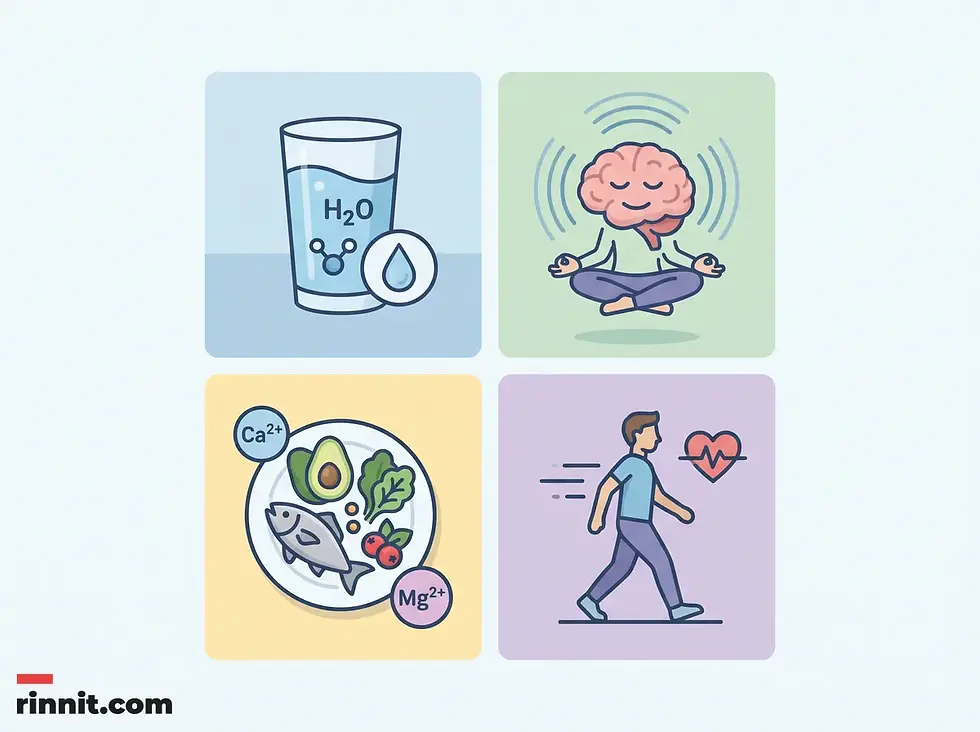
You cannot exercise smooth muscle directly, but healthy habits support the body systems that depend on it. These general pillars support overall health; they do not treat smooth muscle disease.
Hydration: Drinking enough fluid supports the digestive and urinary tracts.
Stress management: The autonomic nervous system, which controls smooth muscle, responds to stress, and stress can worsen symptoms such as digestive upset.
Nutritional balance: Calcium is essential for muscle contraction, and magnesium also plays a role in muscle function. A balanced diet usually provides enough of both.
Regular activity: Physical activity supports circulation and the systems where smooth muscle is found.
Conclusion
Smooth muscle is the quiet workhorse of the body. It keeps blood vessels, airways, the digestive tract, and the bladder working from birth onward, all without conscious effort. Understanding how it works helps explain conditions such as asthma, high blood pressure, and gut motility problems, and why symptoms can appear in several systems at once.
What are the next steps for smooth muscle health?
If you have persistent symptoms such as unexplained blood pressure changes, long-lasting digestive problems, or trouble controlling your bladder, talk to a healthcare professional. Early evaluation can prevent complications and help your internal systems keep working well.
Trusted resources: Cleveland Clinic: Smooth Muscle, TeachMePhysiology: Smooth Muscle
Frequently Asked Questions
What is the main difference between smooth and skeletal muscle?
Skeletal muscle is voluntary and striated, while smooth muscle is involuntary and non-striated.
Where is smooth muscle found in the body?
In the walls of hollow organs and passages such as the stomach, intestines, bladder, airways, and blood vessels, as well as in the skin, the eyes, and the uterus.
Is smooth muscle under our conscious control?
No. It works automatically and is controlled by the autonomic nervous system, along with hormones and local signals.
Why is it called "smooth" muscle?
Because it lacks the striped (striated) appearance seen in skeletal and cardiac muscle under a microscope.
What is the shape of a smooth muscle cell?
Smooth muscle cells are spindle-shaped, with narrow ends and a wider middle, and each cell has a single nucleus.
How does smooth muscle help with digestion?
Smooth muscle contracts in waves called peristalsis to push food and waste through the digestive tract.
Can smooth muscle cause goosebumps?
Yes. Tiny smooth muscles in the skin pull on hair follicles and make the hairs stand up.
What role does smooth muscle play in the eyes?
Smooth muscle controls the size of the pupil and adjusts the lens to help the eyes focus.
How does smooth muscle affect blood pressure?
By tightening or relaxing, smooth muscle changes the width of blood vessels, which affects blood flow and blood pressure.
What are smooth muscle sphincters?
Smooth muscle sphincters are ring-like muscles that stay contracted to keep openings closed and relax only when it is time to release substances such as urine.
Can smooth muscle be involved in asthma?
Yes. In asthma, the smooth muscle around the airways can tighten and spasm, narrowing the airways and making breathing difficult.
What is a vasospasm?
A vasospasm is an uncontrolled tightening of the smooth muscle in a blood vessel wall, which narrows the vessel.
Are smooth muscle disorders common?
Primary diseases of smooth muscle are uncommon, but smooth muscle dysfunction contributes to common conditions such as asthma and high blood pressure.
What is visceral myopathy?
Visceral myopathy is a group of rare, often genetic diseases that interfere with how smooth muscle works in organs such as the intestines and bladder.
How can I support my smooth muscle health?
General healthy habits help: stay hydrated, manage stress, eat a balanced diet that includes calcium and magnesium, and stay physically active.
Related Reading
Understanding Muscles: The Engines of Human Movement explains how smooth, skeletal and heart muscle differ.
Peristalsis: How Digestive Muscles Move Food and Fluids covers the smooth muscle waves that move food through the gut.
Achalasia: Symptoms, Causes, and Treatment describes a swallowing disorder caused by esophageal muscle that will not relax.
Bronchospasm: When Your Airway Muscles Tighten, and What to Do About It explains sudden tightening of the smooth muscle around the airways.
References
Cleveland Clinic. Smooth Muscle. Cleveland Clinic. January 30, 2025. https://my.clevelandclinic.org/health/body/smooth-muscle
Touyz RM, Alves-Lopes R, Rios FJ, et al. Vascular smooth muscle contraction in hypertension. Cardiovasc Res. 2018;114(4):529-539. PMID 29394331. https://doi.org/10.1093/cvr/cvy023
Castro M, Rubin AS, Laviolette M, et al. Effectiveness and safety of bronchial thermoplasty in the treatment of severe asthma: a multicenter, randomized, double-blind, sham-controlled clinical trial. Am J Respir Crit Care Med. 2010;181(2):116-124. PMID 19815809. https://doi.org/10.1164/rccm.200903-0354OC
Moreno CA, Metze K, Lomazi EA, et al. Visceral myopathy: clinical and molecular survey of a cohort of seven new patients and state of the art of overlapping phenotypes. Am J Med Genet A. 2016;170(11):2965-2974. PMID 27481187. https://doi.org/10.1002/ajmg.a.37857
Medical Disclaimer
This article is for informational purposes only and does not constitute medical advice. Always seek the guidance of a qualified healthcare professional regarding any medical condition or treatment.



Comments