Pure Autonomic Failure: Recognizing the Signs of Nervous System Dysfunction

Updated: 2 days ago
Medically reviewed by Dr. Baraa Alnahhal, MD · Last reviewed: September 2026
Pure autonomic failure (PAF) is a rare neurodegenerative condition that primarily disrupts the autonomic nervous system, leading to significant drops in blood pressure upon standing. Caused by the abnormal buildup of alpha-synuclein protein in nerve clusters, the condition progressively affects involuntary functions like digestion, bladder control, and temperature regulation. While there is currently no cure, a combination of lifestyle adjustments and medical therapies can effectively manage symptoms and improve quality of life.
Quick answer: Pure autonomic failure (PAF) is a rare neurodegenerative disorder characterized by the malfunction of the autonomic nervous system, most notably causing orthostatic hypotension (dizziness upon standing). It is driven by the accumulation of alpha-synuclein protein in autonomic nerves, leading to progressive issues with heart rate, digestion, and bladder function. Management focuses on symptom relief through high salt and water intake, compression garments, and specific medications, as the condition slowly advances over several decades.
Overview of Pure Autonomic Failure
Pure autonomic failure (PAF) represents a distinct clinical challenge within the spectrum of neurodegenerative diseases. Unlike conditions that primarily damage the brain or spinal cord, PAF specifically targets the autonomic ganglia—clusters of nerve cells responsible for regulating the body's involuntary processes. The hallmark of this condition is a profound inability to maintain stable blood pressure during postural changes, a state known as orthostatic hypotension. This failure occurs because the autonomic nervous system cannot signal the blood vessels to constrict appropriately when a person stands up, leading to a rapid drop in pressure and subsequent lightheadedness or fainting.
The underlying mechanism of PAF is the abnormal accumulation of alpha-synuclein, a protein also implicated in Parkinson's disease and Lewy body dementia. In the context of PAF, this protein buildup occurs within the autonomic nerves themselves, leading to a gradual loss of these vital cells. While the condition is progressive, it typically advances slowly over many years, allowing for long-term management of symptoms. Interestingly, while the primary damage is localized to the autonomic nerves, approximately half of those diagnosed also experience mild anemia, further complicating the clinical picture.
The Clinical Spectrum of Autonomic Dysfunction
Pure autonomic failure is defined by its impact on multiple organ systems, as the autonomic nervous system governs a wide array of “automatic” body functions. The following table outlines the primary characteristics and system impacts associated with the condition.
Affected System | Clinical Characteristic | Impact on Daily Function |
Cardiovascular | Orthostatic Hypotension | Dizziness, lightheadedness, or fainting when standing up. |
Integumentary | Anhidrosis or Hyperhidrosis | Inability to sweat properly or excessive sweating episodes. |
Visual | Pupil Dysfunction | Blurry vision due to inability of pupils to adjust to light. |
Urinary | Bladder Incontinence/Retention | Difficulty emptying the bladder or loss of bladder control. |
Gastrointestinal | Chronic Constipation | Significant difficulty with bowel movements or loss of control. |
Reproductive | Sexual Dysfunction | Erectile dysfunction in men or anorgasmia in women. |
Identifying and Confirming the Diagnosis
Diagnosing pure autonomic failure is often a process of exclusion, as clinicians must rule out other neurological conditions that present with similar symptoms, such as multiple system atrophy (MSA) or Parkinson's disease. A key differentiator for PAF is the absence of central nervous system damage; the brain and spinal cord remain unaffected by the primary disease process. The diagnostic pathway typically involves specialized testing to measure autonomic response and chemical markers in the body.
Diagnostic Tool | Procedure Description | Clinical Goal |
Tilt Table Test | Monitoring BP while transitioning from lying to standing. | Confirming the presence and severity of orthostatic hypotension. |
QSART Test | Stimulating sweat glands with a mild electrical current. | Assessing the integrity of nerves controlling sweat production. |
Norepinephrine Levels | Blood and urine testing for specific neurotransmitters. | Identifying low chemical levels that do not rise upon standing. |
Cardiac/Brain Imaging | Functional imaging and MRI scans. | Ruling out structural damage to the heart or central nervous system. |
Strategies for Symptom Management
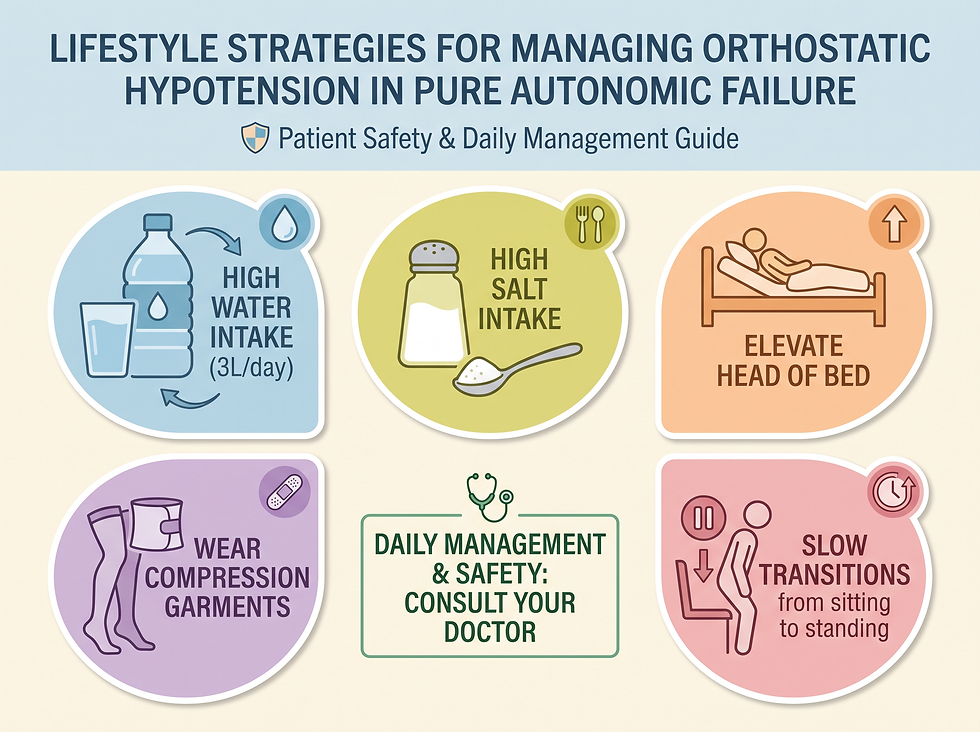
Because there is no known cure to reverse the neurodegeneration in PAF, the primary goal of treatment is the mitigation of symptoms and the prevention of complications like falls or severe dehydration. Management is highly individualized, often requiring a combination of non-medical lifestyle modifications and targeted pharmacological interventions. For many patients, increasing fluid intake to at least three liters per day and significantly raising salt consumption are the first steps in stabilizing blood pressure.
Physical adjustments also play a critical role in daily management. Elevating the head of the bed by four to six inches can help the body retain fluid overnight, while wearing waist-high compression garments provides mechanical support to prevent blood from pooling in the lower extremities. When these measures are insufficient, healthcare providers may prescribe medications to increase blood volume or tighten blood vessels. Additionally, managing secondary issues like bladder retention or chronic constipation often requires specific medications or the use of assistive devices like catheters to maintain comfort and hygiene.

Long-Term Outlook and Progression
The prognosis for individuals with pure autonomic failure varies significantly, though the condition is generally characterized by a slow decline in autonomic function over decades. While PAF itself does not typically shorten a person's lifespan, the secondary complications—such as injuries from fainting or severe infections related to bladder issues—can be serious. It is also important to note that a significant minority of patients may eventually transition to other synuclein-related conditions, such as Parkinson's disease or multiple system atrophy, requiring ongoing neurological monitoring.

Conclusion and Next Steps
Pure autonomic failure is a complex and rare condition that demands a proactive approach to management. By understanding the underlying neurodegenerative process and implementing a comprehensive care plan, individuals can navigate the challenges of autonomic dysfunction. Regular consultation with a neurology team is essential to adjust treatments as the condition progresses and to monitor for any signs of transition to related neurological disorders.
If you experience persistent dizziness when standing, blurred vision, or unexplained changes in bladder and bowel function, consult a healthcare professional for a comprehensive autonomic evaluation. Early recognition and the implementation of blood pressure stabilization strategies are vital to maintaining independence and preventing injury.
Frequently Asked Questions
Is pure autonomic failure the same as Parkinson's disease?
No, but they share a common protein buildup (alpha-synuclein). PAF affects only autonomic nerves, while Parkinson's affects the brain.
Can PAF be cured?
Currently, there is no cure for PAF; treatment focuses on managing symptoms and improving quality of life.
What is the most common symptom of PAF?
Orthostatic hypotension, which causes dizziness or fainting when standing up.
How much water should I drink if I have PAF?
Providers often recommend drinking at least three liters of water daily to help maintain blood pressure.
Why is salt important for PAF patients?
Increased salt intake helps the body retain more fluid, which can help stabilize blood pressure.
What are compression garments?
These are tight-fitting clothes, like stockings, that help prevent blood from pooling in your legs when you stand.
Does PAF affect the brain?
In its “pure” form, PAF does not damage the brain or spinal cord.
Can PAF lead to other conditions?
Yes, some people with PAF eventually develop Parkinson's disease, multiple system atrophy, or Lewy body dementia.
What is alpha-synuclein?
It is a protein that builds up abnormally in the nerves of people with PAF, causing them to malfunction.
How is PAF diagnosed?
It is diagnosed through tests like the tilt table test, sweat tests, and measuring norepinephrine levels.
What is anhidrosis?
It is the inability to sweat normally, which can be a symptom of autonomic failure.
Is PAF hereditary?
There is currently no evidence that pure autonomic failure is a hereditary condition.
Can medications help with PAF?
Yes, medications can help manage blood pressure, bladder issues, and bowel dysfunction.
How fast does PAF progress?
It typically progresses very slowly, often over several decades.
Are there surgical options for PAF?
Surgery is generally not used for PAF itself, though it may be used for specific complications like fecal incontinence.
Medical Disclaimer: The information provided in this article is for educational purposes only and should not be used as a substitute for professional medical advice, diagnosis, or treatment. Always seek the advice of your physician or other qualified health provider with any questions you may have regarding a medical condition.
Comments