Reactive Airway Disease (RAD) Explained: Symptoms, Triggers, and Treatment

Updated: 2 days ago
Medically reviewed by Dr. Baraa Alnahhal, MD · Last reviewed: September 2026
Reactive airway disease (RAD) is not an official diagnosis but a placeholder term for asthma-like symptoms when the exact cause is not yet known. The bronchial tubes swell and narrow, causing cough, wheezing, and shortness of breath, often after infections, allergens, or irritants. It is used most often for infants and young children who cannot yet do lung function tests. A formal diagnosis, such as asthma or COPD, is needed to guide long-term treatment.
Quick answer: Reactive airway disease (RAD) is a clinical term for breathing problems that mimic asthma but lack a confirmed underlying cause. It means the airways are “reacting” to a trigger by swelling and narrowing. It is a temporary label used until a specific condition such as asthma is confirmed. Frequent triggers include viral or bacterial infections, smoke, allergens, and exercise, and the main symptoms are wheezing, a chronic cough, chest tightness, and shortness of breath. RAD is most common in infants and young children. Emergency care often involves bronchodilators and steroids, while long-term care depends on the final diagnosis.
What Is Reactive Airway Disease?
Reactive airway disease is not an official medical diagnosis. It is a placeholder term that healthcare providers use to describe asthma-like symptoms when the exact cause has not yet been identified. The bronchial tubes become inflamed and narrow, so it is harder for air to move in and out of the lungs.
Anyone can be given the label, but it is used most often for infants and young children, who are usually too young to perform the lung function tests needed to confirm asthma. The goal of evaluation is to move past the placeholder term to a specific, treatable diagnosis.
Symptoms of RAD
RAD symptoms are caused by airway inflammation that restricts normal breathing. How severe they are, and how long they last, depends on the underlying trigger.
Symptom | Description |
Chronic cough | A persistent cough that often clears mucus (sputum) from the airways. |
Wheezing | A high-pitched whistling sound made while breathing. |
Shortness of breath | A feeling of breathlessness or difficulty getting enough air (dyspnea). |
Chest tightness | A sensation of pressure or constriction in the chest. |

Causes and Triggers
Because RAD is a general term for airway reactivity, its causes are varied and range from temporary infections to long-term sensitivities. Understanding what sets off an episode is a key part of preventing the next one.
Trigger Type | Examples |
Infections | Viral or bacterial respiratory infections are among the most common causes. |
Environmental irritants | Smoke, perfumes, chemical gases, and fumes. |
Allergens | Pollen, pet dander, or dust mites. |
Physical factors | Exercise, cold air, high humidity, or sudden weather changes. |
How RAD Is Diagnosed
The purpose of diagnosis is to find out what is behind the symptoms. Providers may use several tools.
Physical examination: Listening to the lungs with a stethoscope (auscultation) to detect wheezing or congestion.
Spirometry: A lung function test that measures the volume and speed of air breathed in and out.
Imaging: Chest X-rays or CT scans to look at the lungs and rule out other problems.
Allergy testing: Skin prick tests or blood tests to identify specific allergic triggers.

Management and Treatment
Treatment depends on whether a person is having an acute episode or working on long-term prevention. In an emergency setting, care often includes bronchodilators such as albuterol to relax the airways, oxygen therapy, or corticosteroids to reduce swelling.
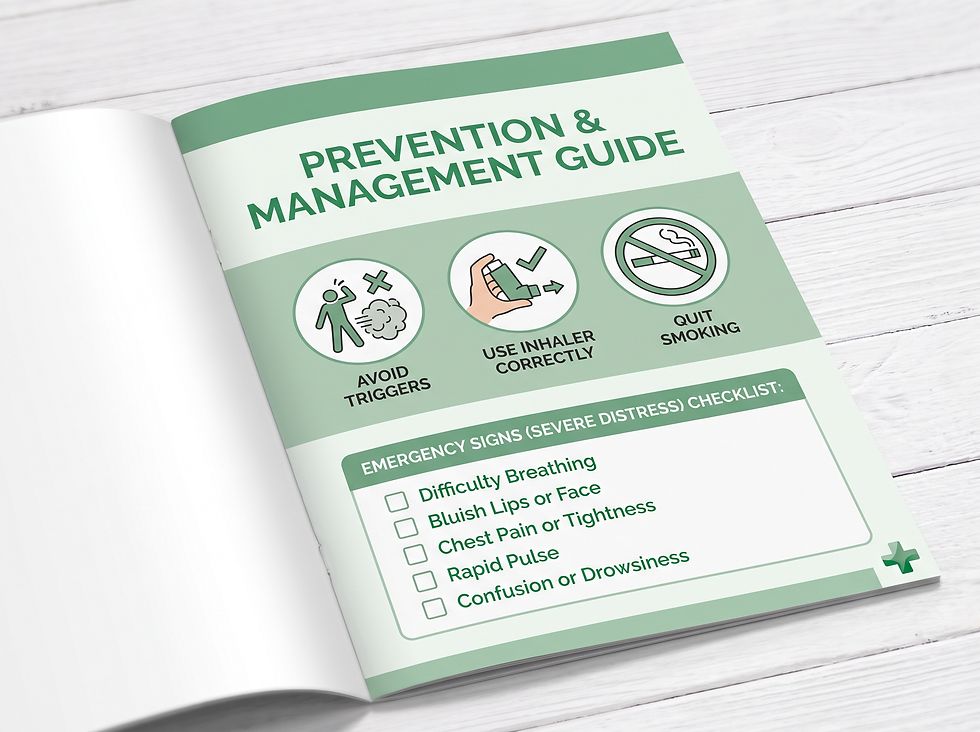
For long-term prevention, the focus is on avoiding known triggers, quitting smoking, and using preventive medications once a formal diagnosis has been made. If you use a rescue or controller inhaler, our guide to using inhalers correctly explains the technique step by step. If you smoke, a guide to quitting smoking with nicotine replacement therapy can help you get started.
When RAD Is an Emergency
Call 911 or your local emergency number immediately if you or your child has any of the following.
Severe difficulty breathing or gasping for air.
A blue or gray tint to the lips, face, or fingernails.
Confusion, sudden weakness, or fainting.
Rapid worsening of symptoms despite using a rescue inhaler.
Conclusion and Next Steps
Reactive airway disease is a starting point rather than an endpoint. For some people, especially children, symptoms fade after a viral illness. For others, RAD is an early sign of asthma or another chronic condition that needs a formal diagnosis and a long-term plan.
If your symptoms are chronic, severe, or do not improve with standard treatment, ask your healthcare provider about seeing a pulmonologist. Organizations such as the American Lung Association and the Asthma and Allergy Foundation of America (AAFA) offer resources for people living with reactive airway symptoms.
Frequently Asked Questions
Is reactive airway disease the same as asthma?
No. They share symptoms, but asthma is a specific chronic diagnosis, whereas RAD is a general term used when the cause of asthma-like symptoms is unknown.
Can RAD be cured?
It depends on the cause. If the symptoms are triggered by a temporary viral infection, they may go away. If they are an early sign of asthma, the condition is managed rather than cured.
Why is my child diagnosed with RAD instead of asthma?
Infants and young children are often too young to perform the lung function tests (such as spirometry) needed for a formal asthma diagnosis.
Does albuterol help with RAD?
Albuterol helps when the airway reactivity responds to bronchodilators, as in asthma or exercise-induced bronchospasm.
Is RAD contagious?
The condition itself is not contagious, but if it is triggered by a viral or bacterial infection, that underlying infection can spread to others.
What is the difference between RAD and RADS?
RAD is a general term for airway symptoms, while reactive airways dysfunction syndrome (RADS) is a specific condition caused by a single high-level exposure to a corrosive gas or chemical.
Can exercise trigger RAD?
Yes. Physical exertion is a common trigger for airway narrowing and wheezing in sensitive people.
How long do RAD symptoms last?
It depends on the cause. Symptoms triggered by a cold may last a few weeks, while those triggered by allergies may persist as long as the allergen is present.
Can adults have RAD?
Yes. The term is used more often in pediatric care, but adults with undiagnosed breathing problems may also be described as having RAD.
Is chest tightness always a sign of RAD?
Chest tightness is a common symptom, but it can also be a sign of heart problems or other serious conditions, so it needs medical evaluation.
Can smoking cause RAD?
Smoking and exposure to secondhand smoke are major irritants that can trigger or worsen airway reactivity.
When should I see a pulmonologist?
See a specialist if symptoms are chronic, severe, or do not improve with standard treatment.
Are steroids used for RAD?
Corticosteroids are often used to reduce inflammation and swelling in the bronchial tubes during an episode.
Can weather changes trigger an attack?
Yes. Sudden shifts to cold or very humid air can cause the airways to react and narrow.
When is RAD an emergency?
Seek emergency care if you have severe difficulty breathing, blue-tinted lips or fingernails, or no response to your rescue inhaler.
Medical Disclaimer: The information provided in this article is for educational purposes only and is not intended as medical advice. Always seek the advice of your physician or other qualified health provider with any questions you may have regarding a medical condition. Never disregard professional medical advice or delay in seeking it because of something you have read here. If you think you may have a medical emergency, call your doctor or 911 immediately.
Comments