Suprapubic Catheter: Placement, Care, Risks and Recovery

Updated: 6 days ago
Written and medically reviewed by Dr. Baraa Alnahhal, MD · Last reviewed: October 2026 · How we review
Quick Answer: What is a suprapubic catheter?
A suprapubic catheter is a thin, flexible tube that drains urine from the bladder through a small cut in the lower belly, just above the pubic bone, instead of through the urethra. Placement usually takes less than 20 minutes. A long-term catheter should be flushed at least once a day and changed at least every 4 weeks. [1] [2]
What the research says
Less pain than a urethral catheter for short-term hospital use. A review of 42 trials found that, in 4 trials with 535 people, those with a urethral catheter were more than five times as likely to report pain than those with a suprapubic catheter (risk ratio 5.62). Bacteria in the urine without symptoms were also more common with urethral catheters (19 trials, 1,894 people). The evidence on symptomatic urinary tract infection (UTI) was inconclusive. (Kidd et al., Cochrane Database Syst Rev, 2015) [3]
Less day-to-day bother after prostate surgery. Across 7 studies and 946 men recovering from robotic prostate removal, a suprapubic tube caused significantly less catheter bother, such as trouble with hygiene and sleep, at day 7. Bladder control afterward was the same in both groups. (Jian et al., BMC Urology, 2018) [4]
More comfortable, but not complication-free. In 8 studies with 966 men, pain scores at day 7 were lower with a suprapubic catheter, and bladder control at 6 to 12 weeks was similar. However, men with a urethral catheter had a lower chance of overall complications (odds ratio 0.44). (Bertolo et al., World Journal of Urology, 2018) [5]
Key takeaways
A suprapubic catheter drains urine straight from the bladder through a small opening in the lower belly.
It is often chosen for long-term use, during urethral surgery, or when the urethra is injured or blocked.
Many people find it more comfortable than a urethral catheter.
Daily cleaning, daily flushing and careful bag changes help prevent infection and blockage.
Fever over 38 °C (100.5 °F), little or no urine in the bag, blood in the urine or a catheter that falls out need prompt medical attention.
What is a suprapubic catheter?
A suprapubic catheter (SPC) is a thin, flexible rubber or plastic tube that drains urine (pee) from your bladder when you can't empty it on your own. [1]
Many people assume every catheter goes in through the urethra, the tube that carries urine out of the body. (See our overview of urinary catheter types.) A suprapubic catheter takes a different route. It enters the bladder through a small cut (incision) in the lower part of your abdomen. [1]
Suprapubic catheters are generally safe and have a low risk of complications. They are used less often than urethral catheters, but they are a common choice when a catheter is needed for a long time. [1]

Figure 1. A suprapubic catheter reaches the bladder through the lower belly. A urethral (Foley) catheter reaches it through the urethra.
Suprapubic vs. urethral (Foley) catheter
Feature | Suprapubic catheter | Urethral (Foley) catheter |
Route into the bladder | Small cut in the lower belly | Through the urethra |
Comfort | Many people find it more comfortable | Can be less comfortable for some people |
Sexual intercourse | Possible | Not possible |
Often chosen for | Long-term use, urethral surgery or injury | Shorter-term drainage |
Urine through the urethra | No, the bladder stays nearly empty | No, urine drains through the tube |
[1]
Why would someone need a suprapubic catheter?
You may need a suprapubic catheter if you can't pee on your own. It is also used when an injury to the urethra makes a urethral catheter difficult or impossible to use. [1]
Conditions that can lead to problems peeing include:
Type of cause | Examples |
Bladder and pelvic conditions | |
Prostate conditions | Enlarged prostate (benign prostatic hyperplasia), prostate cancer, surgery on the prostate or genitals |
Nerve and spinal conditions | Spinal cord injury, lower body paralysis (paraplegia), multiple sclerosis (MS), Parkinson's disease |
Temporary causes | An epidural, which can briefly take away bladder control |
Urethra and penis problems | Urethral stricture (narrowing), phimosis (foreskin that can't be pulled back), buried penis, scarring |
[1]
A healthcare provider may also suggest a suprapubic catheter if you will need one long-term or if you are having surgery on your urethra. [1]
How is a suprapubic catheter placed?
A suprapubic catheter is placed through a small cut in the lower belly in a quick procedure that usually takes less than 20 minutes. [1]
Imaging first. An X-ray or ultrasound of the bladder area may be done to make sure it is safe. Sometimes loops of the small bowel sit between the bladder and the belly wall.
Cleaning the skin. The skin of your lower belly is cleaned with an antiseptic, such as iodine or alcohol, to help prevent infection.
Numbing. A local anesthetic numbs the area so you won't feel much pain. Some people receive general anesthesia so they are asleep.
Placing the tube. A small cut is made and the catheter is passed into the bladder. Urine starts to drain into a collection bag.
Securing it. A small balloon at the tip is filled with sterile water to keep the catheter inside the bladder. About one stitch holds it at the skin, and a bandage covers the cut.
If you will use the catheter long-term, your provider will teach you, or a close friend or family member, how to change it safely. [1]
How do you care for a suprapubic catheter?
Caring for a suprapubic catheter starts with keeping the area clean, which is the single most important part of care. Always wash your hands thoroughly with soap and water before you touch or change the catheter. This helps stop the spread of germs that cause infection. [1] [2]
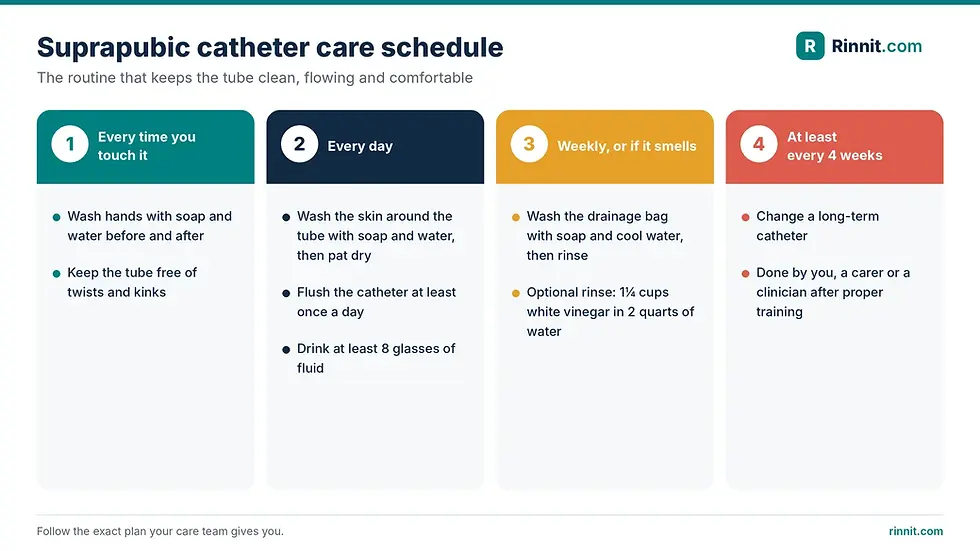
Figure 2. A simple care routine keeps the catheter clean, flowing and comfortable.
Daily care
Check the skin. Remove the bandage and look at where the catheter goes in. Call a healthcare provider if you see pain, swelling, discoloration or pus.
Wash the area. Gently clean around the catheter at least once a day with soap and water, then pat dry with a clean towel.
Flush the catheter. Rinse it with sterile water at least once a day. Flushing helps stop blood clots from blocking the tube and keeps it working properly.
Drink enough fluid. Aim for at least eight glasses of fluid every day. Water is best.
[1] [2]
How to change the catheter bag
Wash your hands with soap and water.
Remove the stopper or open the clamp that keeps the bag closed.
Empty the bag into a toilet.
Pinch the catheter tubing shut with your fingers and disconnect the bag.
Clean the end of the catheter (the drainage port) with soap and water or an antiseptic wipe.
Clean the tip of the new bag the same way and connect it to the catheter.
Make sure the tube isn't twisted or pinched shut.
Wash your hands again.
[1]
Cleaning the drainage bag
Wash the bag if you will use the catheter for longer than a week, or if it smells. Clean the inside with soap and cool water, then rinse well with clean water. [1]
You can also rinse the bag with 1¼ cups of white vinegar in 2 quarts of water. This helps reduce odor and prevent infection. [1]
Care schedule at a glance
How often | What to do |
Every time you handle it | Wash hands before and after; keep the tube free of twists |
At least once a day | Check and wash the skin; flush with sterile water; drink at least 8 glasses of fluid |
After a week of use, or if it smells | Wash and rinse the drainage bag |
At least every 4 weeks | Change a long-term catheter |
[1] [2]
How long does a suprapubic catheter stay in?
How long a suprapubic catheter stays in depends on why you need it. Some people only use one while healing from a treatment or condition, and it comes out once they recover. [1]
If you need a suprapubic catheter long-term, it should be changed at least every four weeks. [1]
What are the benefits of a suprapubic catheter?
A suprapubic catheter lets your bladder drain continuously. Leaving the bladder unemptied can cause: [1]
Severe pain
A swollen, overstretched bladder (distended bladder)
Urinary tract infection (UTI)
Permanent damage to the bladder or kidneys
Death, in severe cases
Some people also find a suprapubic catheter more comfortable and easier to use than a urethral catheter. Sexual intercourse is possible with a suprapubic catheter, which is not the case with a urethral catheter. [1]
What are the risks of a suprapubic catheter?
Suprapubic catheter risks include the catheter falling out, blockage, infection, bladder spasms, leakage, bleeding, bladder stones and, rarely, bowel injury. [1]
Complication | What it means |
Catheter falls out | The tube comes out of the opening |
Blockage | The tube stops draining |
Urinary tract infection (UTI) | Infection of the bladder or urinary tract |
Bladder spasm | Burning or cramping pain around the bladder |
Leakage | Urine leaks around the catheter |
Bleeding | Blood at the opening or in the urine |
Bladder stones | Hard deposits that form in the bladder |
Bowel injury | A rare injury during placement |
[1]
What is recovery like after suprapubic catheter placement?
Pain, swelling and bruising around the cut usually go away after a few weeks. These tips can make life with a suprapubic catheter easier: [1]
Drink plenty of fluids. At least eight glasses a day, mostly water.
Use pain relief wisely. Nonsteroidal anti-inflammatory drugs (NSAIDs) can help with pain. Don't take them on an empty stomach, drink plenty of fluids with them, and check with a healthcare provider first, because not everyone can take them.
Strengthen your pelvic floor. Kegel (pelvic floor) exercises can help relieve bladder spasms. Learn more about your pelvic floor muscles.
It is normal to feel self-conscious about carrying urine in a bag, or to worry about leaks. These feelings are common. Your care team can teach you how to use the catheter, answer your questions and help you feel more confident. [1]
When should you call a doctor about a suprapubic catheter?
Call a healthcare provider right away if you have signs of infection, blockage or bleeding, or if the catheter comes out. [1] [2]

Figure 3. Contact a healthcare provider right away if you notice any of these signs.
Contact a healthcare provider right away if:
You have a fever over 38 °C (100.5 °F)
Urine is leaking around the catheter
You have pain or a feeling of fullness in your belly
You see blood or blood clots in your urine (hematuria)
Little or no urine is flowing into the bag
The catheter comes out
You should also reach out any time you have problems or questions about your catheter. [1] [2]
Conclusion
A suprapubic catheter is a safe, practical way to drain the bladder when you can't pee on your own. It is often more comfortable than a urethral catheter, especially for long-term use. Simple habits make the biggest difference: clean hands, daily skin care, daily flushing, plenty of fluids and changing the catheter on schedule. Knowing the warning signs means you can get help early if something goes wrong.
Bring this guide to your next appointment. Use the care schedule and warning-sign list above to talk through your own plan with your care team. For more plain-language guides on bladder, prostate and urinary health, explore the Rinnit Health Library.
FAQ
What is the difference between a Foley catheter and a suprapubic catheter?
A Foley catheter goes through the urethra into the bladder. A suprapubic catheter goes into the bladder through a small cut in the lower belly.
Can you still pee normally with a suprapubic catheter?
No. Urine doesn't leave your body through the urethra because the catheter keeps your bladder nearly empty.
How long does it take to put in a suprapubic catheter?
Placement is quick and usually takes less than 20 minutes.
How often should a suprapubic catheter be changed?
If you use one long-term, it should be changed at least every four weeks.
How often should you flush a suprapubic catheter?
At least once a day, using sterile water. Flushing helps prevent blood clots from blocking the tube.
How long does it take to recover from suprapubic catheter placement?
Pain, swelling and bruising around the cut usually go away within a few weeks.
Is a suprapubic catheter more comfortable than a urethral catheter?
Many people find it more comfortable. In research on short-term hospital use, people with urethral catheters reported pain more often than those with suprapubic catheters.
Can you have sex with a suprapubic catheter?
Yes. Sexual intercourse is possible with a suprapubic catheter, unlike with a urethral catheter.
What are the warning signs of a problem with a suprapubic catheter?
Fever over 38 °C (100.5 °F), little or no urine in the bag, blood or clots in the urine, leaking around the tube, belly pain or fullness, or the catheter falling out.
How do I clean the skin around a suprapubic catheter?
Wash your hands first, then gently clean around the catheter at least once a day with soap and water and pat dry with a clean towel. Call a provider if you see pain, swelling, discoloration or pus.
Related reading on Rinnit.com
Related Reading
Urinary Catheter: Types, Placement, Care and Risks explains urinary catheter types, placement and care.
References
Cleveland Clinic. Suprapubic Catheter: Changing, Flushing & Recovery. Cleveland Clinic. Last updated May 26, 2023. https://my.clevelandclinic.org/health/treatments/25028-suprapubic-catheter
National Library of Medicine (US). Suprapubic catheter care. MedlinePlus Medical Encyclopedia. Last updated January 1, 2025. https://medlineplus.gov/ency/patientinstructions/000145.htm
Kidd EA, Stewart F, Kassis NC, et al. Urethral (indwelling or intermittent) or suprapubic routes for short-term catheterisation in hospitalised adults. Cochrane Database Syst Rev. 2015;2015(12):CD004203. PMID 26661940. https://doi.org/10.1002/14651858.CD004203.pub3
Jian Z, Feng S, Chen Y, et al. Suprapubic tube versus urethral catheter drainage after robot-assisted radical prostatectomy: a systematic review and meta-analysis. BMC Urol. 2018;18(1):1. PMID 29304797. https://doi.org/10.1186/s12894-017-0312-5
Bertolo R, Tracey A, Dasgupta P, et al. Supra-pubic versus urethral catheter after robot-assisted radical prostatectomy: systematic review of current evidence. World J Urol. 2018;36(9):1365-1372. PMID 29600334. https://doi.org/10.1007/s00345-018-2275-x
Medical disclaimer
This article is for general education only and is not a substitute for professional medical advice, diagnosis or treatment. Always talk with your doctor or a qualified healthcare provider about your own care.



Comments