Septostomy

Updated: 3 days ago
Medically reviewed by Dr. Baraa Alnahhal, MD · Last reviewed: October 2026
Septostomy is a procedure that widens or creates a hole in the wall between the heart's upper chambers (the atrial septum) so oxygen-rich and oxygen-poor blood can mix [1]. It is a short-term, life-saving fix for newborns with heart defects such as dextro-transposition of the great arteries or tricuspid atresia, keeping them stable until repair surgery [1]. It is not open-heart surgery.
Quick Answer
Septostomy, also called balloon atrial septostomy, is a life-saving procedure that widens or creates a hole in the wall between the heart's two upper chambers so oxygen-rich and oxygen-poor blood can mix [1]. It is mainly used in newborns with cyanotic heart defects. It is a temporary fix rather than a cure, and the baby needs repair surgery soon after [1].
What the research says
Septostomy is common in transposition of the great arteries, but not every baby needs one. In a retrospective analysis of administrative data on 17,392 U.S. neonates with transposition of the great arteries (1998 to 2014), 27.7% had a balloon atrial septostomy. In-hospital mortality was similar with and without it (6.3% vs 6.7%), stroke was recorded more often after septostomy (1.1% vs 0.6%; odds ratio 1.85, 95% CI 1.29 to 2.65), and the hospital stay was longer (16 vs 7 days); this type of study shows association, not cause (Hamzah et al., Pediatric Critical Care Medicine, 2020 [2]).
In adults with advanced pulmonary arterial hypertension, septostomy works as a bridge. A meta-analysis of 16 studies (204 patients, mean age 35.8 years) found that septostomy lowered right atrial pressure by 2.77 mmHg, raised cardiac index by 0.62 L/min/m² and lowered arterial oxygen saturation by 8.45%; procedure-related (48-hour) mortality was 4.8%, 30-day mortality 14.6% and long-term mortality 37.7%, which the authors say suggests a bridging role (Khan et al., Chest, 2019 [3]).
Why Is a Septostomy Needed?
Some babies are born with cyanotic heart defects, which keep oxygen-poor blood from traveling to the lungs to pick up oxygen. Tissues throughout the body then cannot get enough oxygen, and the skin turns blue (cyanosis) [1]. Severe cyanosis is very dangerous and needs urgent medical care. Babies may receive medicines such as prostaglandin E1 to help them get more oxygen, and a septostomy is another option for babies who need more oxygen right away so they can survive until surgery [1].
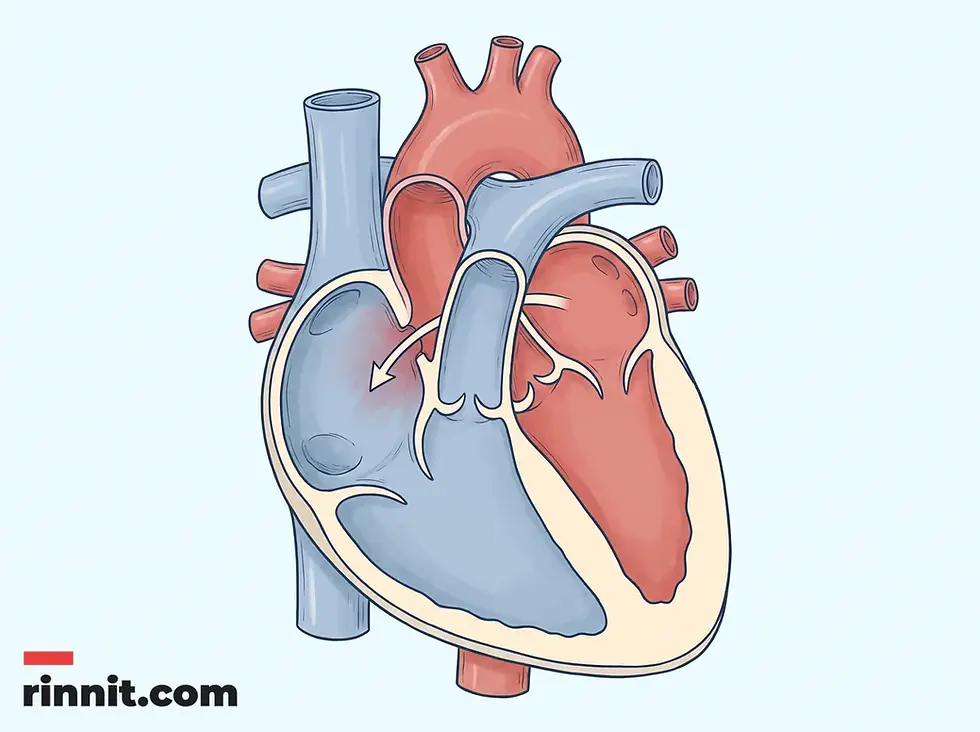
Before birth, a small hole in the septum called the foramen ovale lets blood flow from the right side of the heart to the left, because the lungs are not working yet. It usually closes after birth. In babies with some cyanotic defects, this hole is what lets some oxygen-rich blood mix with oxygen-poor blood and keeps them alive for a few days. Once it closes, that passageway disappears. A septostomy uses a balloon catheter to make the foramen ovale bigger, and if it has already closed, a special blade catheter can create a new hole [1].
A septostomy is commonly used for two cyanotic heart defects:
Dextro-transposition of the great arteries (d-TGA): The pulmonary artery and the aorta are "switched," so oxygen-poor blood is sent out to the body and oxygen-rich blood goes back to the lungs, which do not need more oxygen [1].
Tricuspid atresia: The tricuspid valve is not formed correctly, and a piece of solid tissue blocks blood flow from the right atrium to the right ventricle [1].
How Common Is a Septostomy?
About 28% of infants with transposition of the great arteries have a septostomy before their arterial switch operation [1] [2]. Transposition is uncommon, affecting about 1 in 3,413 babies in the U.S., and congenital heart defects as a group affect about 1 in 100 babies [1].
What are the types of septostomy?
Type | How it works | When it is used |
Balloon atrial septostomy (Rashkind procedure) | A catheter with a balloon is passed through the foramen ovale, inflated and pulled back into the right atrium to widen the opening | The most common approach, used to enlarge the foramen ovale |
Blade septostomy | A catheter with a blade at its tip is used to make a hole in the septum | Used when the foramen ovale has already closed to create a new hole, or rarely before the balloon is used |
How is a septostomy done?
A septostomy is done in a catheterization lab or NICU by guiding a balloon-tipped catheter from a vein into the heart to enlarge the foramen ovale [1]. It is a percutaneous procedure, meaning a catheter is inserted through the skin with a needle, and it is not open-heart surgery. The steps are:
A specially trained cardiologist (an interventionist) punctures the baby's skin with a needle to reach a large vein, usually in the groin. In some cases access is through the umbilical cord [1].
The needle is replaced with a catheter, a flexible tube with a balloon at the tip.
Using echocardiogram (ultrasound) imaging as a guide, the interventionist moves the catheter through the blood vessels to the heart, into the right atrium and through the foramen ovale into the left atrium [1].
The balloon is inflated and pulled back into the right atrium, which makes the foramen ovale bigger [1]. In rare cases a catheter with a blade at its tip is used first to make a hole in the septum.
In general, a septostomy is considered successful if any of these are met: the amount of oxygen in the baby's arteries goes up by 10%, the hole in the septum is at least 33% wider than before, or there is minimal difference in blood pressure between the right and left atria [1]. Because babies with congenital heart defects have unique anatomy and needs, your baby's provider can explain how the procedure will be prepared and how success will be measured.

What are the risks and benefits of a septostomy?
A balloon atrial septostomy can save a baby's life when a heart defect prevents enough oxygen from reaching the body. It is a proven way to help a baby get more oxygen and survive long enough to have surgery. The benefit varies from baby to baby, and providers weigh the risks of waiting for surgery and the baby's overall condition before deciding.
Babies with serious heart defects face risks with any procedure. Some research links septostomy to stroke in infants, but it is not clear whether the procedure causes the strokes, because the lack of oxygen from the heart defect may be the main factor [1]. Doing nothing carries serious risk too: without medicines or septostomy, babies with d-TGA have a 70% chance of surviving one week after birth, 50% at one month and 10% at one year [1].
What are recovery and the outlook like after a septostomy?
About 94% of babies who have a balloon atrial septostomy survive the procedure [1]. They then must have surgery to repair the heart defect. Babies with d-TGA usually have the arterial switch operation (ASO) soon after birth, which puts the pulmonary artery and aorta in the right places, and about 97% to 98% of babies survive that surgery [1].
Most babies with critical congenital heart defects are diagnosed before or shortly after birth, so they receive hospital care for some days or weeks after birth. After repair surgery they need ongoing care, including follow-up appointments, imaging tests and monitoring [1]. Each baby's outlook is different and depends on the defects and other health factors, so ask your baby's provider what to expect. Call the care team any time you have questions about medicines, procedures or next steps.
How is septostomy used in adults?
Septostomy is mainly a newborn procedure. A balloon atrial septostomy is also used in adults with advanced pulmonary arterial hypertension, where the research above suggests it acts as a bridge rather than a cure [3].
Conclusion
Septostomy is a short-term, life-saving procedure that gives babies with certain cyanotic heart defects more oxygen until they can have repair surgery. Most babies survive the procedure, and the surgery that follows gives the best chance for a lasting repair.
Next step: If your baby has been diagnosed with a critical heart defect, ask the care team what a septostomy involves, how success will be measured and what comes after it.
Frequently Asked Questions
What is the main purpose of a septostomy?
A septostomy widens or creates a hole in the atrial septum so oxygen-rich blood can mix with oxygen-poor blood. This helps babies with certain heart defects get more oxygen until they can have repair surgery.
Is septostomy a permanent cure for heart defects?
No. It is a temporary fix that fills the gap between birth and surgery. The baby needs surgery to repair the heart defect soon after.
How is a balloon atrial septostomy performed?
An interventionist uses a needle to reach a large vein, usually in the groin, and replaces it with a catheter that has a balloon at the tip. Guided by echocardiogram imaging, the catheter is moved into the heart and through the foramen ovale. The balloon is inflated and pulled back into the right atrium to make the opening bigger.
What conditions are treated with a septostomy?
A septostomy is commonly used for babies with cyanotic heart defects such as dextro-transposition of the great arteries (d-TGA) or tricuspid atresia. Your baby's care team decides whether it is needed based on the baby's overall condition.
Where is a septostomy performed?
A septostomy takes place in a hospital's catheterization lab or in the neonatal intensive care unit (NICU), performed by an interventionist, a cardiologist with special training in cardiac catheterization.
How do doctors know a septostomy worked?
In general it is considered successful if any of these are met: the amount of oxygen in the baby's arteries goes up by 10%, the hole in the septum is at least 33% wider than before, or there is minimal difference in blood pressure between the right and left atria.
What are the risks of a septostomy?
Babies with serious heart defects face risks with any procedure. Some research links septostomy to stroke in infants, but it is not clear whether the procedure causes it, because the lack of oxygen from the heart defect may be the main factor. Without treatment, babies with d-TGA could die.
What happens after a septostomy?
About 94% of babies who have a balloon atrial septostomy survive the procedure. They then need surgery to repair the heart defect, and the baby's care continues in the hospital for some days or weeks after birth.
Can septostomy be performed on adults?
Septostomy is mainly a newborn procedure, but balloon atrial septostomy is also used in adults with advanced pulmonary arterial hypertension, where research suggests it works as a bridge rather than a cure.
How common is balloon atrial septostomy?
About 28% of infants with transposition of the great arteries have one before their arterial switch operation. Transposition itself is uncommon, affecting about 1 in 3,413 babies in the U.S.
Related Reading
Transposition of the Great Arteries (TGA): Symptoms, Causes, and Treatment in the First Days of Life explains the heart defect that most often needs a septostomy.
Hypoplastic Left Heart Syndrome (HLHS): What It Is, Symptoms, Surgery Stages, and Lifelong Care covers a serious defect where septostomy may be part of care.
Congenital Heart Defects in Children: Symptoms, Causes, and Treatment explains common heart defects in children and their treatment.
Cardiac Catheterization (Heart Cath): Why It's Done, Procedure, Risks and Recovery describes the catheter procedure used to perform a septostomy.
References
Cleveland Clinic. Septostomy. Cleveland Clinic. Last updated May 19, 2022. https://my.clevelandclinic.org/health/treatments/23042-septostomy
Hamzah M, Othman HF, Peluso AM, et al. Prevalence and outcomes of balloon atrial septostomy in neonates with transposition of great arteries. Pediatric Critical Care Medicine. 2020;21(4):324-331. PMID 31688810. https://doi.org/10.1097/PCC.0000000000002191
Khan MS, Memon MM, Amin E, et al. Use of balloon atrial septostomy in patients with advanced pulmonary arterial hypertension: a systematic review and meta-analysis. Chest. 2019;156(1):53-63. PMID 30910639. https://doi.org/10.1016/j.chest.2019.03.003
Medical disclaimer
The information provided in this article is for educational purposes only and should not be used as a substitute for professional medical advice, diagnosis, or treatment. Always seek the advice of your physician or other qualified health provider with any questions you may have regarding a medical condition.



Comments