Oral Hygiene: How to Brush, Floss and Protect Your Teeth and Gums Every Day

Updated: 6 days ago
Written and medically reviewed by Dr. Baraa Alnahhal, MD · Last reviewed: October 2026 · How we review
Quick Answer: What is oral hygiene?
Oral hygiene is the daily practice of keeping your mouth clean and disease-free through brushing at least twice a day, flossing once daily and regular dental exams and cleanings. It prevents cavities, gum disease and bad breath, and gum disease is linked to heart disease and stroke. See a dentist for bleeding gums, loose teeth or tooth pain. [1]
What the research says
Powered toothbrushes remove more plaque than manual ones. A review of 56 trials (51 trials and 4,624 participants in the analysis) found powered brushes cut plaque by 11% in the short term and 21% over more than three months, and reduced gum inflammation by 6% and 11%. (Yaacob et al., Cochrane Database Syst Rev, 2014) [2]
Cleaning between teeth adds benefit to brushing. Across 35 randomized trials with 3,929 adults, flossing plus brushing may reduce gum inflammation at one, three and six months compared with brushing alone, and interdental brushes may work better than floss (low-certainty evidence). (Worthington et al., Cochrane Database Syst Rev, 2019) [3]
Fluoride toothpaste prevents tooth decay at every age. A review of 96 studies found 1,000–1,100 ppm fluoride toothpaste reduced new decay in adults compared with non-fluoride toothpaste (3 studies, 2,162 participants), with similar benefits shown in children and teens. (Walsh et al., Cochrane Database Syst Rev, 2019) [4]
Key takeaways
Oral hygiene is preventive care: it stops cavities, gum disease and bad breath before they start. [1]
Brush at least twice a day with a soft-bristled brush and fluoride toothpaste, angled at 45° toward the gums. [1]
Floss once a day — brushing alone cannot reach between teeth. [1]
Most people need a dental exam and cleaning about every six months; people with gum disease often need visits every three to four months. [1]
Bleeding gums, loose teeth, tooth pain or chronic bad breath are signs to book a dental visit. [1]

Why is oral hygiene important?
Oral hygiene is important because it prevents common mouth problems — such as cavities, gum disease and bad breath (halitosis) — before they begin. [1]
Your mouth is also connected to the rest of your body. When an infection is present in the mouth, the bloodstream can carry the bacteria to other areas, which can lead to health problems such as heart disease and stroke. [1]
That makes daily care of your teeth and gums part of long-term overall health, not just a nicer smile.
Which health conditions are linked to oral hygiene?
Oral hygiene is linked to several whole-body conditions, and the connection runs in both directions. Gingivitis and periodontitis can contribute to certain illnesses, while other illnesses can harm the teeth and gums. [1]
Gum disease can contribute to… | These conditions can harm teeth and gums… |
Cardiovascular disease | Diabetes |
Stroke | Osteoporosis |
Endocarditis (infection of the heart's inner lining) | HIV/AIDS |
Pneumonia | Alzheimer's disease |
Pregnancy complications, such as premature birth and low birth weight | — |
If you or someone you care for lives with any of these conditions, ask a dentist how to support overall health through oral hygiene. [1]
What are the signs of poor oral hygiene?
The most common signs of poor oral hygiene are bleeding gums, tooth decay and chronic bad breath. [1] Other warning signs include:
Loose teeth
Gum recession
Mouth sores that don't go away
Toothache
Swelling of the jaw
Gingivostomatitis — a mouth infection caused by certain bacteria or viruses
Any of these signs points to a problem that needs dental treatment. [1]
How do you practice good oral hygiene every day?
Good oral hygiene comes down to six habits you can repeat consistently: brushing, flossing, tongue cleaning, rinsing, regular dental visits and avoiding tobacco. [1]
Oral hygiene routine at a glance
Habit | How often | Key detail |
Brush teeth | At least twice a day | Soft bristles, fluoride toothpaste, 45° angle toward gums |
Floss | Once a day | About 18 inches (46 cm) of floss, C shape around each tooth |
Clean tongue | Every time you brush | Toothbrush or tongue scraper |
Rinse with mouthwash | Every day | Antibacterial, alcohol-free formula |
Dental exam and cleaning | About every 6 months | More often if you're prone to cavities or gum disease |
Avoid tobacco | Always | A leading cause of gum disease and oral cancer |
Source for table: [1]
How should you brush your teeth?
You should brush your teeth at least twice a day using fluoride toothpaste and a soft-bristled toothbrush. [1] Medium or hard bristles can damage your gums and tooth enamel. [1]
Place the toothbrush at a 45-degree angle toward your gums.
Brush to sweep plaque and bacteria away from the gum line.
Cover every surface, including the backs and sides of all teeth. [1]

How should you floss your teeth?
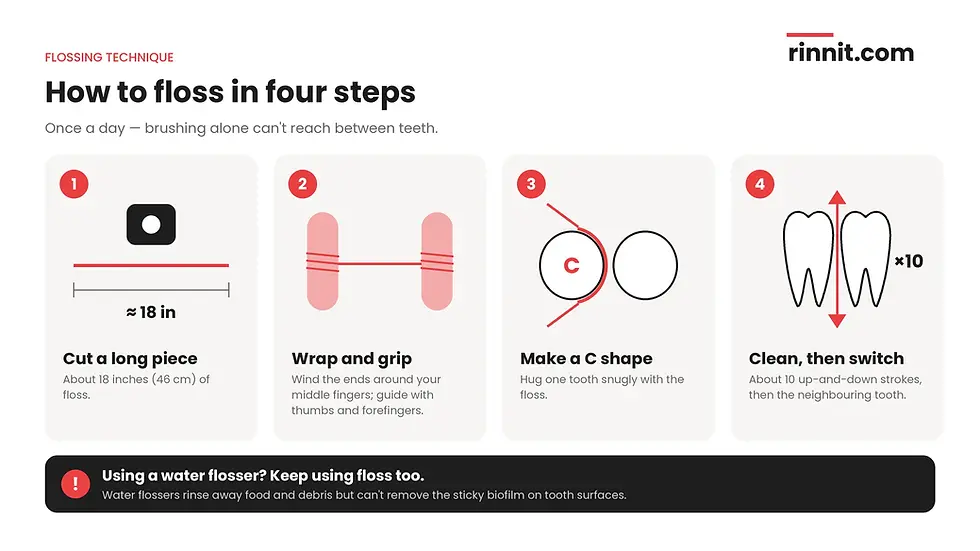
You should floss once a day because brushing alone cannot reach the spaces between your teeth. [1]
Take a piece of floss about 18 inches long.
Wrap each end around your middle fingers.
Use your thumbs and forefingers to guide the floss between two teeth.
Wrap the floss snugly around one tooth in a C shape and clean it with about 10 up-and-down strokes.
Wrap the floss around the neighbouring tooth and repeat, then continue across all your teeth. [1]
If you have trouble with hand dexterity, interproximal (between-the-teeth) brushes and dental picks are alternatives. [1]
A note on water flossers: water flossers are good at removing large food particles and debris, but they cannot remove the biofilm on tooth surfaces — keep using traditional floss as well. [1]
Should you clean your tongue?
Yes — you should clean your tongue every time you brush, because the tongue holds bacteria like a sponge. [1] You can use your toothbrush or a tongue scraper. [1]
Which mouthwash is best for oral hygiene?
An antibacterial, alcohol-free mouthwash used every day is the best choice for oral hygiene. [1] It keeps harmful bacteria in check, washes away food and debris, and reduces plaque buildup. The alcohol-free formula helps prevent dry mouth. [1]
Does smoking affect oral hygiene?
Smoking harms oral health: it is a leading cause of gum disease and oral cancer. [1] The safest choice is to avoid all tobacco products. If you smoke and want to quit, ask a healthcare provider about treatment options. [1]
Which oral hygiene products should you choose?
The most reliable oral hygiene products carry a seal of acceptance from a national dental association, which means scientists in fields such as microbiology, toxicology, pharmacology and chemistry have tested and approved them. [1]
Your needs may differ from someone else's, so your dentist may recommend specific products for your situation. [1]
What are the benefits of good oral hygiene?
Good oral hygiene stops problems before they start, which is always preferable to repairing teeth after decay or gum disease. [1] Benefits include:
Healthier teeth and gums
A brighter smile
Fresher breath
Less need for dental work such as fillings, crowns, bridges, implants or dentures (see our guide to dental restorations)
Healthier gums, which may matter for heart health, stroke and diabetes, though a direct benefit is not proven
Lower risk of oral cancer [1]
Preventive care is also more affordable than restorative or emergency dental care, so a steady routine saves time, worry and money over the long run. [1]
How often should you see a dentist for oral hygiene?
Most people should see a dentist for an exam and cleaning about every six months, at the interval their dentist recommends. [1] People prone to cavities or gum disease often need more frequent visits because oral bacteria build up faster in some individuals. [1]
Your situation | Typical cleaning interval |
Healthy teeth and gums | About every 6 months |
Prone to cavities | More often, as your dentist advises |
Gum disease | Commonly every 3–4 months |
Source for table: [1]
Learn how professional care works in our guide to gum disease treatment.
When should you see a dentist about oral hygiene problems?
You should book a dental appointment right away if it has been more than six months since your last cleaning. [1]
Schedule a dental consultation if you notice:
Tooth pain
Bleeding gums
Loose teeth
Chronic bad breath [1]
Treatment is needed to clear harmful bacteria, and treating mouth problems also supports your overall health. [1] Severe pain with facial or jaw swelling can signal a tooth abscess, which needs prompt care.
Conclusion
Oral hygiene is one of the simplest forms of preventive medicine: brush twice a day at a 45° angle, floss once a day, clean your tongue, rinse with an alcohol-free mouthwash, avoid tobacco, and keep regular dental visits. These habits protect your teeth and gums and support heart and whole-body health. The best routine is the one you can follow every day — ask your dentist to tailor it to your needs. [1]
Keep your smile protected. Save this guide, share it with your family, and explore our related guides on gingivitis, dental sealants and cavities to build a complete picture of your oral health. For more official guidance, see these national resources on daily oral hygiene and the basics of oral health.
FAQ
What is oral hygiene?
Oral hygiene is the practice of keeping your mouth clean and disease-free. Oral hygiene involves brushing and flossing your teeth and visiting a dentist regularly for X-rays, exams and cleanings. [1]
How many times a day should you brush your teeth?
You should brush your teeth at least twice a day with fluoride toothpaste and a soft-bristled toothbrush. Medium or hard bristles can damage gums and tooth enamel. [1]
Is a water flosser as good as dental floss?
A water flosser is not a full replacement for dental floss. Water flossers remove large food particles and debris but cannot remove the biofilm on tooth surfaces, so traditional floss should still be used. [1]
What are the signs of poor oral hygiene?
The most common signs of poor oral hygiene are bleeding gums, tooth decay, chronic bad breath, loose teeth and gum recession. Mouth sores that don't heal, toothache and jaw swelling are also warning signs. [1]
Can poor oral hygiene affect your heart?
Poor oral hygiene can affect the heart because bacteria from a mouth infection can travel through the bloodstream. Gum disease can contribute to cardiovascular disease, stroke and endocarditis. [1]
Should mouthwash contain alcohol?
Mouthwash for daily use should be an alcohol-free, antibacterial formula. Alcohol-free mouthwash reduces plaque and harmful bacteria without causing dry mouth. [1]
How often should you get a dental cleaning?
Most people need a dental cleaning about every six months. People with gum disease commonly need cleanings every three to four months. [1]
When should you see a dentist?
You should see a dentist if it has been more than six months since your last cleaning, or if you have tooth pain, bleeding gums, loose teeth or chronic bad breath. [1]
How long should you brush your teeth?
Brush for about two minutes each time, covering the outer, inner and chewing surfaces of every tooth.
How often should you replace your toothbrush?
Replace your toothbrush every three to four months, or sooner if the bristles look frayed. Worn bristles clean less well.
Related Reading
Dental Cleaning: Types, What to Expect and How Often explains what happens during a professional dental cleaning.
References
Cleveland Clinic. Oral Hygiene: Best Practices & Instructions for Good Routine. Cleveland Clinic. Last updated April 21, 2022. https://my.clevelandclinic.org/health/treatments/16914-oral-hygiene
Yaacob M, Worthington HV, Deacon SA, et al. Powered versus manual toothbrushing for oral health. Cochrane Database Syst Rev. 2014;2014(6):CD002281. PMID 24934383. https://doi.org/10.1002/14651858.CD002281.pub3
Worthington HV, MacDonald L, Poklepovic Pericic T, et al. Home use of interdental cleaning devices, in addition to toothbrushing, for preventing and controlling periodontal diseases and dental caries. Cochrane Database Syst Rev. 2019;4(4):CD012018. PMID 30968949. https://doi.org/10.1002/14651858.CD012018.pub2
Walsh T, Worthington HV, Glenny AM, et al. Fluoride toothpastes of different concentrations for preventing dental caries. Cochrane Database Syst Rev. 2019;3(3):CD007868. PMID 30829399. https://doi.org/10.1002/14651858.CD007868.pub3
Medical disclaimer
This article is for general educational purposes and does not replace professional medical or dental advice, diagnosis or treatment. Always consult a qualified dentist or healthcare provider about your oral health and before making changes to your care.



Comments