Understanding Metabolic Acidosis: Causes, Symptoms, and Treatment

Updated: 3 days ago
Medically reviewed by Dr. Baraa Alnahhal, MD · Last reviewed: October 2026
Editorial note: This article is provided for educational purposes only. It is not medical advice. Always consult a qualified healthcare professional for diagnosis and treatment of any condition.
Quick Answer
Metabolic acidosis is a condition in which the body produces too much acid or the kidneys fail to remove enough of it, disrupting the blood's pH. [1] Common triggers include kidney failure, severe diarrhea and uncontrolled diabetes. Symptoms such as rapid breathing, confusion and a fast heartbeat need timely care. Treatment addresses the underlying cause and restores chemical balance. [1]
What the research says
Bicarbonate helps some ICU patients, but not all. In 389 intensive care patients with severe acidaemia (pH 7.20 or lower), sodium bicarbonate did not significantly change the main outcome (death by day 28 or organ failure at day 7: 66% vs 71%), but in the subgroup with moderate-to-severe acute kidney injury, day-28 survival was 54% vs 37% (Jaber et al., Lancet, 2018 [2]).
In chronic kidney disease, bicarbonate corrects the acid-base number. Across 20 randomized and 2 non-randomized trials (2,932 patients), serum bicarbonate rose significantly (mean difference 2.59, 95% CI 0.95 to 4.22), while kidney filtration (eGFR) did not change significantly and no significant increase in death or prolonged hospitalization was found (Siddiqui et al., World J Nephrol, 2025 [3]).
The benefit comes with trade-offs. In 14 trials of 1,380 non-transplant patients with chronic kidney disease, oral sodium bicarbonate slowed kidney-function decline (SMD 0.49, 95% CI 0.14 to 0.85) though across all included trials it was linked to worsening hypertension (RR 1.44) and edema (RR 1.28) (Wu et al., Front Pharmacol, 2024 [4]).
What is Metabolic Acidosis?
Metabolic acidosis is a condition characterized by an accumulation of acid in the body's fluids. This occurs when the body either produces an excess of acid or the kidneys are unable to remove enough acid through urine. [1] A normal blood pH range is between 7.35 and 7.45; when levels drop below this threshold, the blood becomes overly acidic, disrupting vital metabolic processes.
The body relies on the kidneys and lungs to maintain this delicate balance. The kidneys filter out excess acids and bases, while the lungs manage carbon dioxide levels. [1] When these systems are overwhelmed, metabolic acidosis develops, affecting anyone but most commonly those with chronic kidney disease or kidney failure. [1]
Types of Acidosis
There are two primary classifications of this condition based on the "anion gap," which measures the difference between positive and negative charges in blood electrolytes: [1]
What are the symptoms and signs of metabolic acidosis?
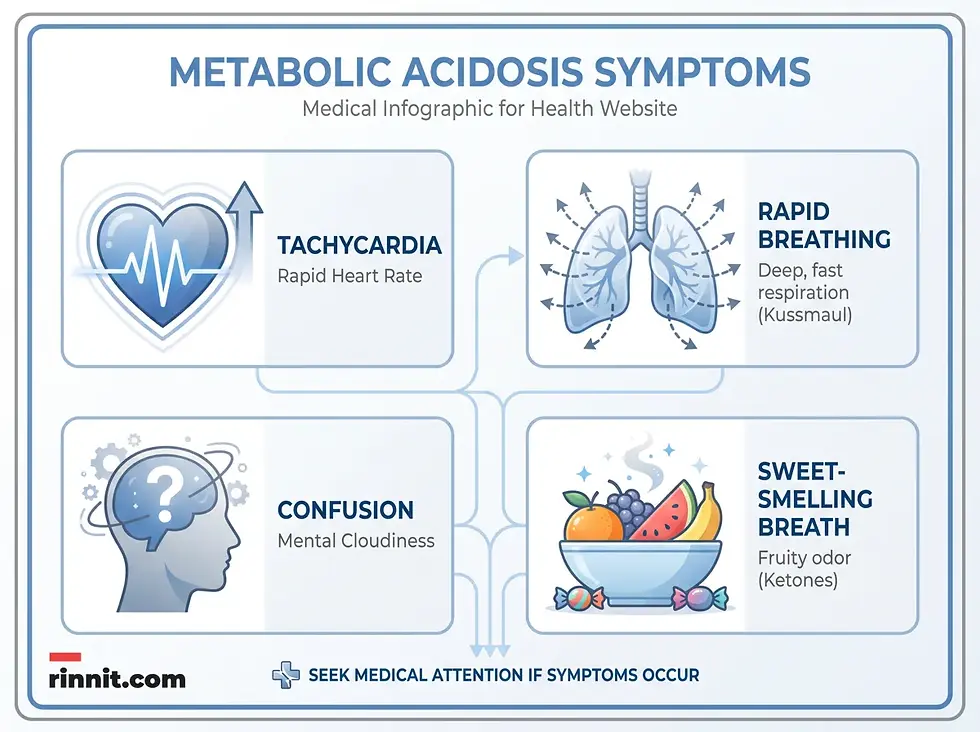
In some instances, metabolic acidosis may present without clear symptoms. However, many individuals experience a range of signs that can mimic other health conditions. [1] It is important to monitor for these indicators, especially if you have underlying risk factors.
Common Indicators
Respiratory Changes: Rapid breathing or long, deep breaths as the body attempts to expel excess carbon dioxide.
Neurological Signs: Dizziness, confusion, and extreme fatigue or weakness.
Gastrointestinal Issues: Nausea, vomiting, and a significant loss of appetite. [1]
Cardiovascular Signs: A fast heartbeat (tachycardia) is a common response to the internal chemical imbalance.
A distinct sign of specific types, such as diabetes-related ketoacidosis, is breath that carries a sweet or fruity odor.
What causes metabolic acidosis, and who is at risk?
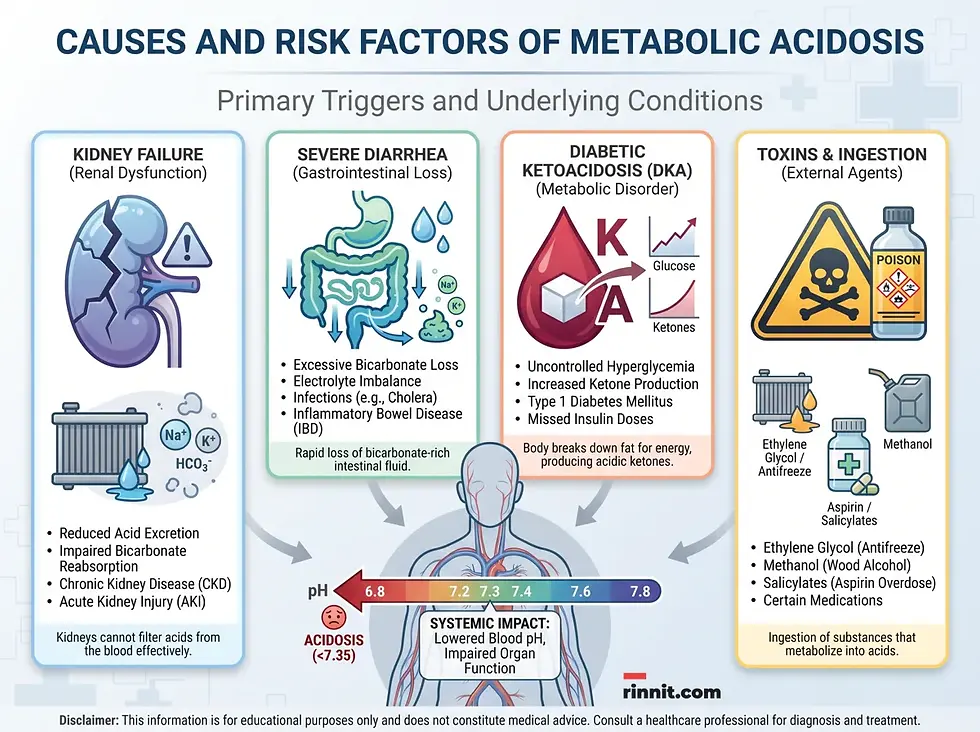
The most frequent triggers for metabolic acidosis are severe diarrhea and kidney failure. Diarrhea causes the body to lose significant amounts of bicarbonate, while kidney failure prevents the effective removal of metabolic acids. [1]
Leading Causes
Diabetes-related Ketoacidosis (DKA): Occurs when the body breaks down fats for energy, creating a buildup of ketone bodies. [1]
Lactic Acidosis: A buildup of lactic acid, most often from shock, severe infection (sepsis) or too little oxygen reaching the tissues, and also from liver failure, some medicines or extreme exertion. [1]
Renal Tubular Acidosis: A specific kidney malfunction where acid is not passed into the urine correctly. [1]
Toxin Exposure: Poisoning from substances like antifreeze (ethylene glycol), aspirin, or methanol. [1]
Who is at Risk?
Individuals with acute kidney injuries, high potassium levels (hyperkalemia), or chronic conditions like anemia and dehydration are at a higher risk. [1] Lifestyle factors, including smoking and excessive alcohol consumption, can also contribute to the development of this condition.
How is metabolic acidosis diagnosed?
Diagnosis begins with a thorough review of medical history and a physical examination. Healthcare providers, often including kidney specialists known as nephrologists, utilize specific tests to confirm the condition and identify its source. [1]
Essential Tests
Anion Gap Blood Test: Compares electrolytes to determine if a significant gap exists. [1]
Arterial Blood Gas (ABG): Measures pH balance along with oxygen and carbon dioxide levels. A pH below 7.35 confirms acidosis. [1]
Urine pH Test: Evaluates the levels of acids and bases being excreted by the kidneys. [1]

How is metabolic acidosis managed and treated?
Treatment for metabolic acidosis is highly dependent on the underlying cause. [1] The primary goal is to neutralize the excess acid and address the trigger to prevent recurrence.
Treatment Options
In mild cases, lifestyle adjustments such as improving hydration and dietary changes may be sufficient. This includes increasing intake of low-acid foods like fruits and vegetables while reducing grains and meats.
Conclusion
Metabolic acidosis is a complex but manageable condition when diagnosed early. By understanding the symptoms and underlying causes, individuals can work with healthcare providers to restore their body's chemical balance. Monitoring kidney health and managing chronic conditions like diabetes are vital steps in preventing the serious complications associated with acid buildup.
Take action today: If you are experiencing persistent fatigue, rapid breathing, or confusion, consult a healthcare professional immediately. Call 911 or go to the emergency room for very fast or deep breathing, confusion or drowsiness, or fruity-smelling breath with vomiting. Early diagnosis is key to preventing long-term kidney damage and other severe health outcomes.
Frequently Asked Questions
1. What is the most common cause of metabolic acidosis?
The most common causes are severe diarrhea, which leads to bicarbonate loss, and kidney failure, which prevents acid removal.
2. Is metabolic acidosis a medical emergency?
Yes, severe cases can be fatal if left untreated. It requires prompt diagnosis to address the underlying cause and restore pH balance.
3. What are the main symptoms of acid buildup?
Key symptoms include a fast heartbeat, rapid breathing, confusion, fatigue, nausea, and sometimes fruity-smelling breath.
4. How is the condition diagnosed?
Providers use blood tests like the anion gap and arterial blood gas (ABG) tests, along with urine pH samples.
5. Can diet help prevent metabolic acidosis?
Yes. Eating high-alkali foods like vegetables and fruits while limiting high-acid foods like meat and grains can help maintain balance.
6. What is the normal pH range for human blood?
A healthy blood pH range is between 7.35 and 7.45. Levels below 7.35 indicate acidosis.
7. What happens if metabolic acidosis is left untreated?
Untreated cases can lead to bone mass loss (osteoporosis), permanent kidney damage, and endocrine system issues.
8. Who is most at risk for this condition?
People with chronic kidney disease, diabetes, or those experiencing severe dehydration or toxin exposure are at highest risk.
9. Can intense exercise cause metabolic acidosis?
Yes, intense physical activity can lead to a temporary buildup of lactic acid, known as lactic acidosis.
10. What medications are used for treatment?
Common treatments include sodium bicarbonate or sodium citrate, along with insulin for diabetes-related cases.
Related Reading
Arterial Blood Gas (ABG) Test: Purpose, Procedure, Normal Values and Results explains the blood test that measures oxygen, carbon dioxide and pH in this condition.
Electrolytes and Electrolyte Panel: Test, Normal Ranges and Imbalances: An electrolyte panel measures bicarbonate and chloride, and an abnormal result can point to an acid-base problem such as metabolic acidosis.
CO2 Blood Test (Bicarbonate): Purpose, Procedure, Normal Levels and What Results Mean explains how a CO2 (bicarbonate) blood test can show low CO2 levels linked to metabolic acidosis.
Chloride Blood Test: Normal Range and What High or Low Levels Mean explains the electrolyte test behind high and low chloride results.
Anion Gap Blood Test: What It Measures and What High or Low Results Mean explains what this electrolyte calculation shows about your blood's acid balance.
References
Cleveland Clinic. Metabolic Acidosis: Causes, Symptoms & Treatment. Cleveland Clinic. Last updated May 21, 2026. https://my.clevelandclinic.org/health/diseases/24492-metabolic-acidosis
Jaber S, Paugam C, Futier E, et al. Sodium bicarbonate therapy for patients with severe metabolic acidaemia in the intensive care unit (BICAR-ICU): a multicentre, open-label, randomised controlled, phase 3 trial. Lancet. 2018;392(10141):31-40. PMID 29910040. https://doi.org/10.1016/S0140-6736(18)31080-8
Siddiqui AH, Batool F, Khan S, et al. Safety and efficacy of sodium bicarbonate for treating metabolic acidosis in chronic kidney disease: a systematic review and meta-analysis. World J Nephrol. 2025;14(1):101078. PMID 40134641. https://doi.org/10.5527/wjn.v14.i1.101078
Wu Y, Wang Y, Huang W, et al. Efficacy and safety of oral sodium bicarbonate in kidney-transplant recipients and non-transplant patients with chronic kidney disease: a systematic review and meta-analysis. Front Pharmacol. 2024;15:1411933. PMID 39253380. https://doi.org/10.3389/fphar.2024.1411933
Medical disclaimer
The information provided in this article is for educational purposes only and should not be used as a substitute for professional medical advice, diagnosis, or treatment. Always seek the advice of a qualified healthcare provider with any questions you may have regarding a medical condition.



Comments