Hypnic Headache: Understanding the "Alarm Clock" Headache

Updated: 3 days ago
Medically reviewed by Dr. Baraa Alnahhal, MD · Last reviewed: October 2026
Quick Answer: What Is a Hypnic Headache?
A hypnic headache is a rare condition where a person experiences recurring headaches that develop only while they are sleeping. [1] Unlike migraines or cluster headaches, which can occur at any time, hypnic headaches are nocturnal and frequently wake the sufferer two to three hours after falling asleep. [1] Because of their predictable timing, they are often called "alarm clock headaches." [1]

What the research says
Caffeine and lithium are the best-known treatments, but no randomized trials exist. A review of 250 adults and 5 children with hypnic headache found that 92% had onset after age 50. Based on observational studies, caffeine was the most effective acute treatment, and the preventive medicines in use were lithium, caffeine and indomethacin. Randomized controlled trials were lacking. In people treated with preventive medicines, 43% had no recurrence, even after stopping the medicine, while spontaneous remission without treatment occurred in 12 patients (4.8%) (Liang and Wang, Cephalalgia, 2014) [2].
Lithium works for some people but is hard to tolerate. A review of 119 published cases found that lithium was efficacious in 32 cases, but significant adverse effects and poor tolerability were not rare, especially in older patients. Caffeine and melatonin did not give robust evidence as single preventive agents, although combining them with lithium or indomethacin seemed to add benefit. There are no controlled trials (Lisotto et al., Journal of Headache and Pain, 2010) [3].
Other causes must be ruled out first. A 2023 narrative review reports that hypnic headache mainly occurs in older people, but younger adults and children can also be affected. Many different causes of secondary hypnic headache have been described and should be excluded before diagnosing the primary form, whose cause is unclear but seems to involve hypothalamic dysfunction (Lindner et al., Cephalalgia, 2023) [4].
Key Takeaways: Hypnic Headache at a Glance
Feature | Description |
Common Name | Alarm clock headache [1] |
Primary Symptom | Dull or throbbing pain that wakes you from sleep [1] |
Typical Timing | 2 to 3 hours after falling asleep; often at the same time nightly [1] |
Duration | 15 minutes to 4 hours (most last about 90 minutes) [1] |
Frequency | At least 10 times per month for at least three months [1] |
Demographic | Most common in adults over age 50 (average age 62); more common in females [1] |
Main Treatments | Bedtime caffeine (coffee), lithium, or melatonin; indomethacin or topiramate for others [1] |
Understanding the Mechanics of Hypnic Headaches
The exact cause of hypnic headaches remains unknown, but researchers believe the condition is linked to the brain's internal regulation systems. One leading theory suggests the hypothalamus, the region responsible for sleep-wake cycles, may play a central role. [1] Hypnic headaches have often been described during REM (rapid eye movement) sleep, although some more recent reports contradict that link (Obermann and Holle, Expert Review of Neurotherapeutics, 2010) [5]. Melatonin production, disruptions in the body's circadian rhythm, or the accidental activation of pain-processing pathways during sleep, are also suspected factors. [1]
Hypnic headaches are rare, affecting less than 1% of the population by current estimates. [1] They are distinct primary headaches, meaning they are not caused by another underlying medical condition. [1] However, because they happen only at night, healthcare providers must rule out secondary causes such as high blood pressure or sleep apnea, as well as a medication you take or have just stopped, before confirming the diagnosis. [1]
Recognizing the Signs and Symptoms
The hallmark of a hypnic headache is its predictable nocturnal onset. The pain usually affects both sides of the head (although it can affect one side) and is described as dull or throbbing. [1]
Symptom Category | Common Experiences |
Pain Quality | Dull, throbbing, or pulsating pressure, mild to severe [1] |
Location | Both sides of the head in most cases [1] |
Frequency | Multiple times per week; at least 10 times a month [1] |
Other Signs | Nausea or light or sound sensitivity in some people; runny nose, watery eyes or droopy eyelids are not typical [1] |
Sleep Impact | Sudden waking, difficulty returning to sleep, daytime fatigue |
Symptoms affecting the eyes and nose (cranial autonomic symptoms) are not typical of hypnic headache. In the review of 250 adults, about 7.7% had some such features [2], and they can point toward another headache type, so mention them to your provider.
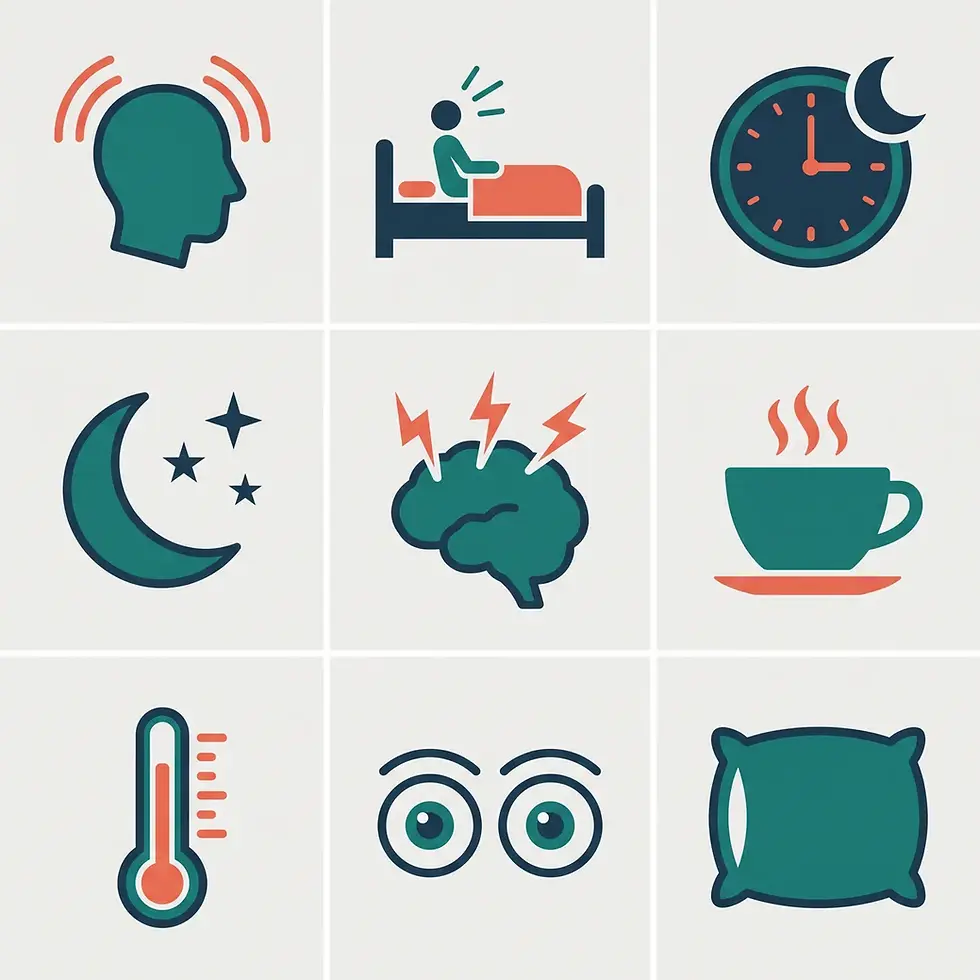
Diagnostic Criteria and Testing
To receive a formal diagnosis of hypnic headache, the condition must meet specific criteria. A healthcare provider will typically take a history, perform a neurological examination, and may ask you to keep a headache diary to track the timing and duration of episodes. [1]
Timing: The headache must occur only during sleep. [1]
Duration: Episodes must last between 15 minutes and 4 hours. [1]
Frequency: The condition must be present for at least three months, with at least 10 episodes per month. [1]
Exclusion: The pain cannot be better explained by another headache disorder or medical condition. [1]
In some cases, providers may order an overnight sleep study (polysomnogram), a brain MRI, or a CT scan to make sure the headaches are not a symptom of a more serious issue. [1] Learn more about other headache types in our guide to headaches.
Treatment and Management Options
Caffeine is the main form of treatment. [1] [5] Healthcare providers may recommend a cup of caffeinated coffee before bed, and evidence suggests one cup before bed will not keep many people awake. [1] It can be used both to prevent and to treat these headaches. [1] [5] Never start a treatment without talking to a provider first.
Treatment Type | Medication/Method | Notes |
First-Line | Bedtime caffeine (coffee) | Used to prevent and treat episodes; evidence is from observational studies, not trials [2] |
Medication | Lithium carbonate | |
Hormonal | Melatonin | May help regulate circadian rhythms; evidence as a single agent is limited [3] |
Other Drugs | Indomethacin or topiramate | Options for people who do not respond to, or cannot take, caffeine or lithium |
Caffeine pills or pain relievers that contain caffeine can also help, but regular use can cause medication overuse (rebound) headaches. [1] See our guide to caffeine sensitivity and read about the risks of lithium toxicity.
Living With and Preventing Hypnic Headaches
Hypnic headaches are often a chronic condition that can last for years. [1] According to Cleveland Clinic, one study reported that 40% of people experienced relief with treatment, and about 17% saw their headaches go away on their own over time. [1] A larger review found a lower spontaneous remission rate of 4.8% [2], so it is best not to count on the headaches disappearing without treatment.
Prevention strategies:
Preventive caffeine: A small cup of coffee or a caffeine tablet before sleep, if your provider agrees. [5]
Sleep monitoring: Keeping a detailed diary to identify triggers or shifts in timing.
Underlying health: Managing blood pressure and treating sleep apnea to reduce the risk of secondary headaches.
When to See a Healthcare Provider
See a healthcare provider if you regularly wake up in the middle of the night with a pounding headache. [1] They can determine whether you have hypnic headaches or another condition and recommend a treatment plan. Seek urgent care for a sudden, severe headache unlike any you have had before, or one with weakness, confusion, vision changes, or fever.
Conclusion
Hypnic headaches are a unique and often frustrating challenge, acting as an unwanted "alarm clock" that disrupts essential rest. However, with the right diagnostic approach and treatments such as bedtime caffeine, many people can find relief and regain their sleep quality. If you are regularly waking up with head pain, consulting a specialist is the first step toward effective management.
Frequently Asked Questions
Can children get hypnic headaches?
Yes. While they are most common in adults over 50, hypnic headaches can affect people of any age, including children. [1] [4]
Is a hypnic headache a type of migraine?
No, hypnic headaches are a distinct primary headache disorder. Unlike migraines, they occur only during sleep. [1] Read more about chronic migraine.
Why is it called an "alarm clock" headache?
It earned this nickname because it tends to wake people up at the same time every night, much like a programmed alarm. [1]
Will drinking coffee before bed keep me awake?
For many people with hypnic headaches, a single cup of coffee before bed does not prevent sleep, and it can help stop the headaches. [1] Check with your provider before trying it.
How long do these headaches usually last?
The average duration is about 90 minutes, though they can last anywhere from 15 minutes to 4 hours. [1]
Are hypnic headaches dangerous?
By themselves, they are not life-threatening, but nighttime headaches can be a sign of other issues, such as high blood pressure or sleep apnea, so a medical evaluation is important.
Does melatonin help?
Some patients find relief using melatonin, which may help stabilize the circadian rhythm thought to be involved. Evidence for it as a single treatment is limited. [3]
Can I have more than one hypnic headache per night?
Yes, some individuals experience multiple episodes in a single night. [1]
What side effects does lithium have?
Lithium can cause a range of side effects and requires caution. [1] Read about lithium toxicity.
Do hypnic headaches ever go away on their own?
Sometimes. Cleveland Clinic cites about 17% of people in studies [1], while a larger review found a lower rate of 4.8%. [2] For most people they are a long-term condition.
How common are hypnic headaches?
They are rare. Current data suggest they affect less than 1% of the population. [1]
Who is most likely to get a hypnic headache?
People older than 50, with an average age of 62. [1] They are 1.5 to 2 times more likely in females than in males. [1]
What tests are used to diagnose a hypnic headache?
Providers may order an overnight sleep study, a brain MRI, or a CT scan to rule out other conditions. [1]
What conditions can cause nighttime headaches?
High blood pressure, sleep apnea, and certain medicines (or stopping them) can all cause headaches at night, which is why they must be ruled out first. [1]
How is a hypnic headache different from a cluster headache?
Cluster headaches and migraines can also happen while you are awake, while a hypnic headache happens only during sleep. [1] See our guide to cluster headaches.
Can hypnic headaches be prevented?
The exact cause is unknown, so they cannot be completely prevented, but certain medicines taken before sleep can help prevent episodes. [1]
Can caffeine pills cause other headaches?
Regular use of caffeine pills or caffeine-containing pain relievers can cause medication overuse (rebound) headaches. [1]
When should I see a doctor?
See a provider if you regularly wake up with a pounding headache in the middle of the night. [1] Seek urgent care for a sudden, severe headache that is different from your usual pattern.
References
Cleveland Clinic. Hypnic Headache. Cleveland Clinic. Last updated July 10, 2024. Accessed October 18, 2026. https://my.clevelandclinic.org/health/diseases/hypnic-headache
Liang JF, Wang SJ. Hypnic headache: a review of clinical features, therapeutic options and outcomes. Cephalalgia. 2014;34(10):795-805. PMID 24942086. https://doi.org/10.1177/0333102414537914
Lisotto C, Rossi P, Tassorelli C, et al. Focus on therapy of hypnic headache. The Journal of Headache and Pain. 2010;11(4):349-354. PMID 20585827. https://doi.org/10.1007/s10194-010-0227-y
Lindner D, Scheffler A, Nsaka M, Holle-Lee D. Hypnic Headache - What do we know in 2022? Cephalalgia. 2023;43(3):3331024221148659. PMID 36786376. https://doi.org/10.1177/03331024221148659
Obermann M, Holle D. Hypnic headache. Expert Review of Neurotherapeutics. 2010;10(9):1391-1397. PMID 20839413. https://doi.org/10.1586/ern.10.112
Disclaimer
The information provided in this article is for educational purposes only and is not intended as medical advice. Always consult with a qualified healthcare professional for diagnosis and treatment of any health condition.



Comments