Understanding the Hypothalamus: The Brain's Homeostasis Center

Updated: 3 days ago
Medically reviewed by Dr. Baraa Alnahhal, MD · Last reviewed: October 2026
The hypothalamus is a small but powerful brain structure that maintains homeostasis by regulating essential functions like body temperature, hunger, and sleep [1]. By acting as the primary link between the nervous and endocrine systems, it coordinates hormone release through the pituitary gland to keep the body in a stable, balanced state [1].
Quick Answer
The hypothalamus is an almond-sized structure deep in the brain that serves as the body's command center for homeostasis [1]. It manages the autonomic nervous and endocrine systems, regulating body temperature, blood pressure, hunger, thirst and sleep cycles [1]. Through its close link with the pituitary gland, it controls the release of hormones governing growth, metabolism and reproduction [1].
What the research says
Hypothalamic-pituitary hormone deficiency is common after brain injury. A systematic review of 19 studies (1,137 patients) found a pooled prevalence of hypopituitarism of 27.5% in the chronic phase after traumatic brain injury and 47% after aneurysmal subarachnoid hemorrhage, with higher rates after severe than after mild or moderate traumatic brain injury (Schneider et al., JAMA, 2007) [2].
A later review reached a similar estimate. Systematic review evidence suggests that long-term pituitary hormone dysfunction affects roughly 27% to 31% of survivors of traumatic brain injury (Glynn & Agha, Pituitary, 2019) [3].
What does the hypothalamus do?
The primary role of the hypothalamus is to maintain homeostasis, which is the stable internal state required for survival [1]. It acts as a “smart control” system, constantly receiving data from nerve cells and adjusting bodily processes accordingly [1].
Key Areas of Regulation
The hypothalamus manages a wide array of automatic and hormonal functions:
Temperature Control: It acts as the body's internal thermostat.
Hunger and Thirst: It signals when the body needs nourishment or hydration and when it is full [1].
Sleep-Wake Cycles: It helps regulate daily rhythms and sleep patterns [1].
Mood and Sex Drive: It influences emotional states and reproductive motivation [1].
Blood Pressure: It works with the autonomic nervous system to manage heart rate and respiration [1].
What is the anatomy of the hypothalamus, and how does it interact with hormones?
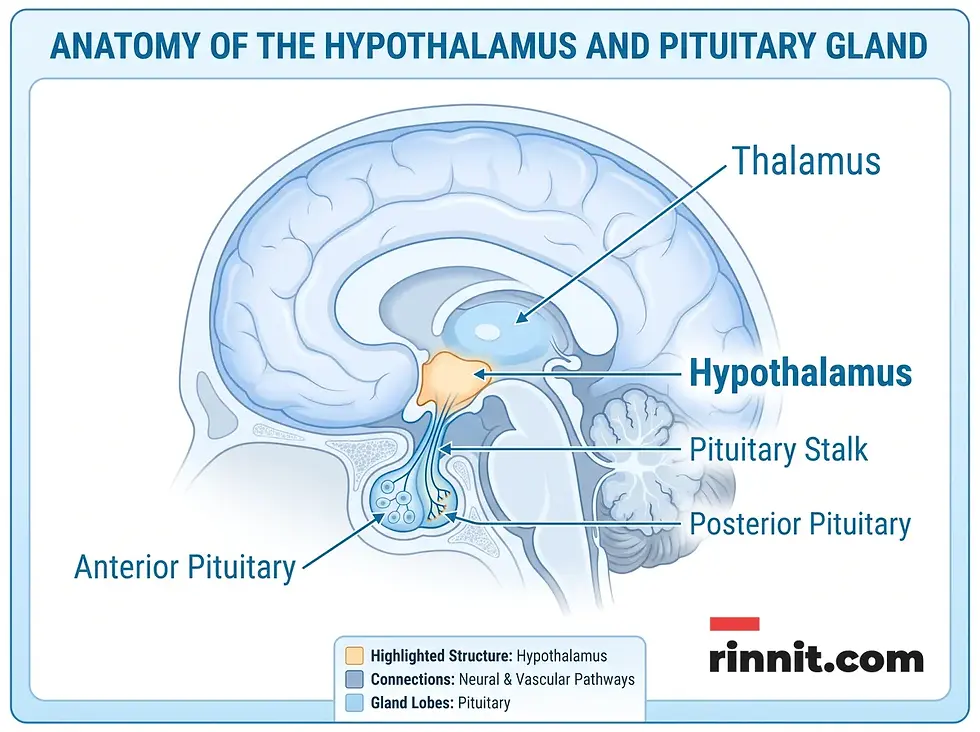
Located below the thalamus and directly above the pituitary gland, the hypothalamus sits at the base of the brain [1]. Its strategic position allows it to serve as the bridge between the brain's electrical signals and the bloodstream's chemical messengers.
Interaction with the Pituitary Gland
The hypothalamus communicates with the two lobes of the pituitary gland using different mechanisms to control hormone secretion [1].
Hypothalamus Hormone | Target: Anterior Pituitary Response | Primary Effect |
GHRH | Growth Hormone (GH) [1] | Stimulates growth in bones and muscles. |
GnRH | FSH and LH [1] | Regulates the menstrual cycle and sperm production. |
CRH | ACTH [1] | Triggers cortisol release and manages stress. |
TRH | TSH [1] | Stimulates the thyroid to regulate metabolism. |
Dopamine | Prolactin Inhibition [1] | Prevents unnecessary breast milk production. |
Additionally, the hypothalamus produces Oxytocin (for labor and bonding) and Vasopressin (for water balance and blood pressure), which are stored in and released from the posterior pituitary lobe [1].
What is hypothalamic dysfunction, and what conditions affect the hypothalamus?
When the hypothalamus is damaged, the body's ability to maintain internal balance is severely compromised. This state is known as hypothalamic dysfunction [1].
Common Causes of Damage
Physical Trauma: Head injuries and traumatic brain injuries (TBI) [1].
Neurological Issues: Brain tumors, aneurysms, or infections [1].
Medical Treatments: Brain surgery, radiation therapy, and chemotherapy [1].
Lifestyle and Genetic Factors: Extreme weight loss from eating disorders, birth defects, and inflammatory diseases like multiple sclerosis [1].
Impact on the Body
Because the hypothalamus controls so many systems, dysfunction can lead to a wide range of issues, including disrupted sleep patterns, temperature dysregulation, and hormonal imbalances that affect growth and metabolism [1].

How can you keep your hypothalamus healthy?
Keeping the hypothalamus healthy involves a balanced diet, good hydration, protecting the head from trauma, managing stress and keeping a consistent sleep schedule.
A balanced diet and adequate hydration are essential for the hypothalamus to accurately sense the body's needs. Protecting the head from trauma through the use of helmets and seatbelts is the most direct way to prevent physical damage. Additionally, managing stress and maintaining a consistent sleep schedule helps the hypothalamus regulate the body's internal rhythms more effectively.

Conclusion
The hypothalamus is the silent architect of the body's internal stability. By bridging the gap between the nervous and endocrine systems, it ensures that every vital sign remains within the necessary range for health. Understanding its complex role highlights the importance of protecting brain health and seeking medical attention for symptoms that suggest a loss of internal balance.
Next step: Are you experiencing persistent issues with sleep, appetite, or temperature regulation? Consult with a neurologist or endocrinologist to evaluate your hypothalamic and hormonal health.
Frequently Asked Questions
What is the main function of the hypothalamus?
The hypothalamus's main job is to maintain homeostasis, keeping the body's internal environment stable and balanced.
Where is the hypothalamus located?
The hypothalamus is located deep in the brain, sitting below the thalamus and above the pituitary gland.
How does the hypothalamus control the pituitary?
The hypothalamus sends releasing or inhibiting hormones to the anterior pituitary and produces hormones stored in the posterior pituitary.
What happens if the hypothalamus is damaged?
Damage can cause hypothalamic dysfunction, leading to issues with temperature, sleep, hunger, and hormone levels.
Does the hypothalamus regulate body temperature?
Yes, it acts as the body's internal thermostat to maintain a stable temperature.
Which hormones does the hypothalamus produce?
The hypothalamus makes hormones like GHRH, GnRH, CRH, TRH, dopamine, somatostatin, oxytocin, and vasopressin.
Can stress affect the hypothalamus?
Yes, the hypothalamus manages the body's stress response by triggering the release of cortisol through the pituitary and adrenal glands.
What is the size of the hypothalamus?
The hypothalamus is a small structure, roughly the size of an almond.
How does the hypothalamus influence sleep?
The hypothalamus regulates the body's daily rhythms and sleep-wake cycles to ensure proper rest.
What are common causes of hypothalamic dysfunction?
Common causes include head injuries, brain tumors, infections, and extreme weight loss.
Related Reading
Pituitary Gland: Anatomy, Hormones, Function and Related Conditions explains the gland the hypothalamus controls and its hormones.
Diabetes Insipidus: Symptoms, Types, Causes & Treatment — Complete Guide covers extreme thirst and urination from vasopressin problems.
Hypothalamic Amenorrhea: Causes, Symptoms, and Recovery explains missed periods caused by stress, low weight or heavy exercise.
Understanding Hypothalamic Hamartoma: Causes, Symptoms, and Treatment describes a rare benign growth that can cause seizures and early puberty.
References
Cleveland Clinic. Hypothalamus. Cleveland Clinic. Last updated March 16, 2022. https://my.clevelandclinic.org/health/body/22566-hypothalamus
Schneider HJ, Kreitschmann-Andermahr I, Ghigo E, et al. Hypothalamopituitary dysfunction following traumatic brain injury and aneurysmal subarachnoid hemorrhage: a systematic review. JAMA. 2007;298(12):1429-1438. PMID 17895459. https://doi.org/10.1001/jama.298.12.1429
Glynn N, Agha A. The frequency and the diagnosis of pituitary dysfunction after traumatic brain injury. Pituitary. 2019;22(3):249-260. PMID 30684166. https://doi.org/10.1007/s11102-019-00938-y
Medical disclaimer
The information provided in this article is for educational purposes only and should not be used as a substitute for professional medical advice, diagnosis, or treatment. Always seek the advice of your physician or other qualified health provider with any questions you may have regarding a medical condition.



Comments