Lithium Toxicity: Understanding the Risks, Symptoms, and Management

Updated: 3 days ago
Medically reviewed by Dr. Baraa Alnahhal, MD · Last reviewed: October 2026
Lithium toxicity is a serious, life-threatening condition caused by too much lithium in the body. It can happen suddenly after an overdose or build up gradually because of dehydration and kidney problems. Symptoms range from nausea and vomiting to severe neurological problems such as confusion and uncontrolled shaking. Immediate medical care is essential to prevent permanent damage or death, and prevention relies on regular blood monitoring, consistent hydration, and careful management of salt intake [1].
Quick Answer: What is lithium toxicity?
Lithium toxicity is a life-threatening condition in which lithium in the blood rises above safe levels, starting at about 1.5 mmol/L, and requires immediate hospital care. Mild cases cause digestive symptoms, while severe cases cause confusion, shaking and seizures. Causes include too much lithium and dehydration. Treatment may include IV fluids and hemodialysis, and regular blood tests help prevent it. [1] [2]
What the research says
Hemodialysis is recommended for severe lithium poisoning, but the evidence is weak. An expert workgroup reviewed 166 articles, mostly case reports, covering 418 patients, and rated the quality of evidence as very low for all recommendations. It concluded that lithium is dialyzable and recommended extracorporeal treatment in severe poisoning, specifically when kidney function is impaired and the lithium level is above 4.0 mEq/L, or when there is a decreased level of consciousness, seizures, or life-threatening dysrhythmias at any level, with hemodialysis as the preferred method (Decker et al., Clin J Am Soc Nephrol, 2015 [2]).
About one in four people on long-term lithium may develop impaired kidney function. In a systematic review and meta-analysis of 20 studies with 25,907 patients, the pooled prevalence of impaired kidney function was 25.5% (95% CI 19.8% to 32.2%), and it was linked to longer treatment duration. Across 8 studies that included comparison groups, the odds of impaired kidney function were 2.09 times higher in 14,187 lithium-treated patients than in 722,529 patients on other treatments (95% CI 1.24 to 3.51), although the studies varied widely (Schoretsanitis et al., Bipolar Disord, 2022 [3]).
Evidence on preventing lithium kidney damage is scarce, but monitoring is advised. A PRISMA-guided systematic review found little evidence on preventing or treating lithium-related nephrogenic diabetes insipidus and kidney insufficiency. The authors advise a once-daily dosing schedule, the lowest effective serum lithium level, preventing lithium intoxication, and monitoring so that early kidney problems are caught before they progress (Schoot et al., Eur Neuropsychopharmacol, 2020 [4]).
What Is Lithium Toxicity?
Lithium is a naturally occurring salt that is mainly prescribed to manage the symptoms of mania, especially in people with bipolar disorder [1]. While effective, lithium has a narrow therapeutic window, which means the difference between a safe dose and a toxic one is small. Toxicity happens when lithium builds up to dangerous concentrations in the blood, which can lead to potentially fatal intestinal and neurological complications [1].
Types of Toxicity
Type | Description |
Acute | Occurs after a single large ingestion of lithium or a sudden drop in body water. |
Acute-on-chronic | Happens when someone on daily lithium therapy takes an extra dose or has a sudden drop in body water. |
Chronic | Develops over time as lithium builds up because of kidney issues, dehydration, or other medications. |
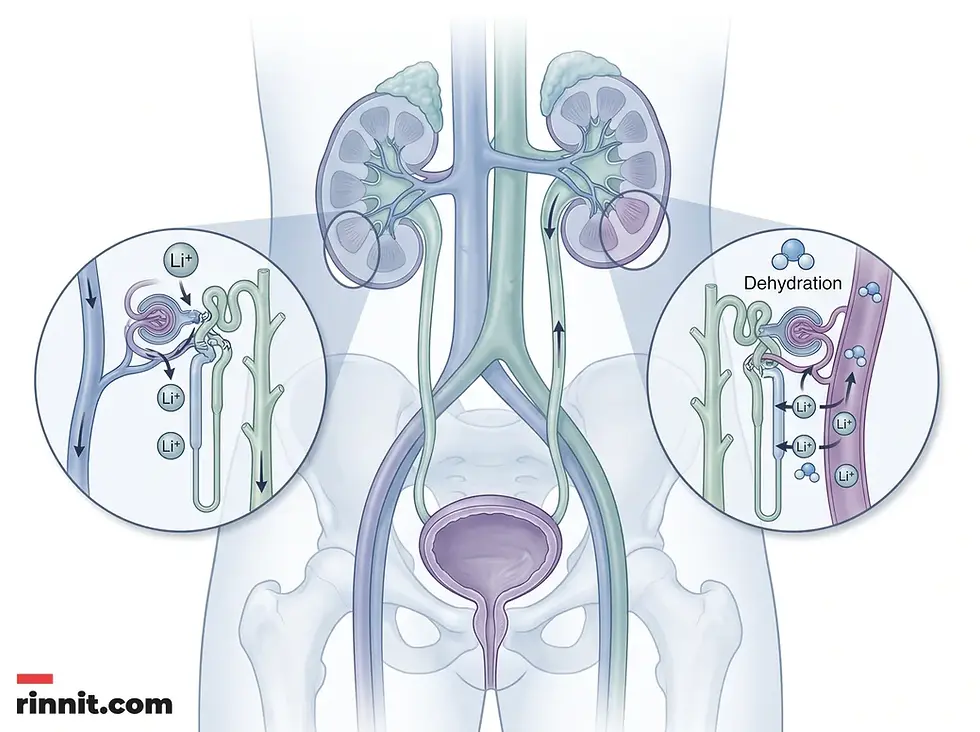
When the body is dehydrated, the kidneys reabsorb more lithium instead of excreting it.
What are the symptoms of lithium toxicity?
The symptoms of lithium toxicity vary with the type of toxicity and how severe it is. Early recognition of these signs is critical for seeking emergency care [1].
Acute and Neurological Symptoms
Early signs of acute toxicity usually appear within one hour of taking excess lithium and mainly affect the digestive system. They include nausea and vomiting, diarrhea, abdominal pain, and a bloated stomach [1]. With moderate to severe toxicity, neurological symptoms usually follow:
Mental status changes: ranging from mild confusion to delirium.
Motor issues: uncontrolled shaking (tremors), coordination and balance problems (ataxia), and muscle twitches.
Physical signs: slurred speech, overactive reflexes, and uncontrolled eye movements.
Emergency indicators: in severe cases, hyperthermia, seizures, and coma.
Get immediate medical help if you take lithium and have these symptoms [1].
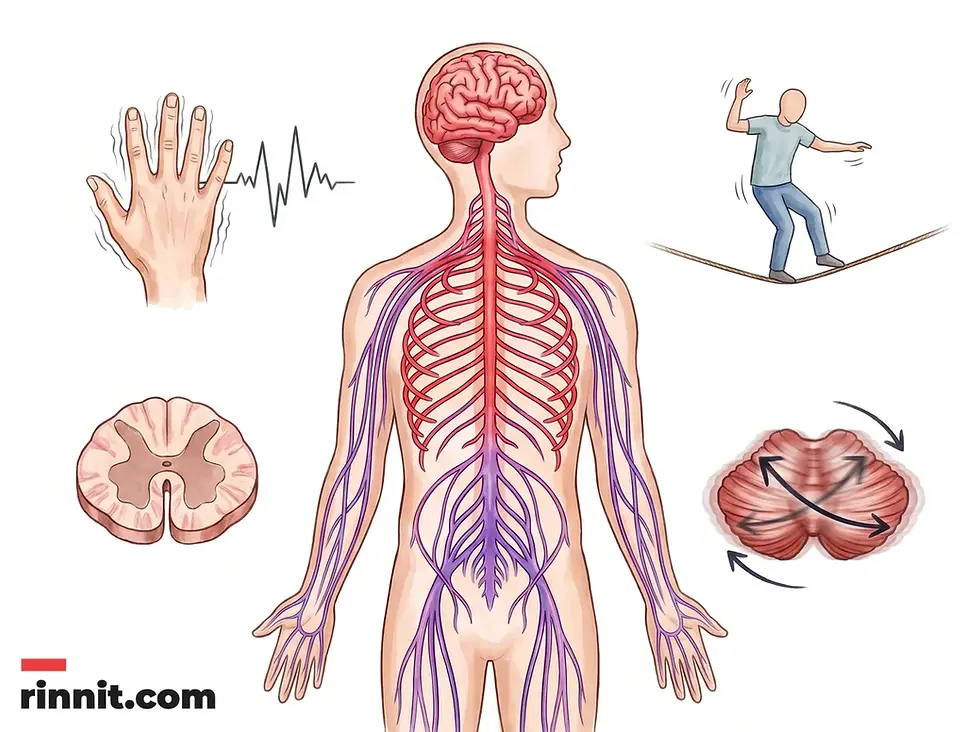
Moderate to severe lithium toxicity can affect the brain, nerves, and balance.
Chronic Toxicity and Organ Damage
Long-term lithium buildup often damages the kidneys and affects the endocrine system. One example is nephrogenic diabetes insipidus, in which the kidneys cannot properly balance body fluids, causing excessive thirst and large amounts of urine. Other signs of chronic toxicity include muscle cramps or weakness, swelling (edema) in the legs and feet, and endocrine problems such as hypothyroidism, hyperthyroidism, or hyperparathyroidism [1]. Talk to your healthcare provider as soon as possible if you develop any of these symptoms while taking lithium.
What causes lithium toxicity and who is at risk?
Lithium toxicity is generally caused by excessive intake, dehydration or fluid shifts, or problems with excretion. Because the kidneys clear lithium from the body, anything that affects kidney function or fluid balance can lead to a toxic buildup [1].
Common Triggers for Toxicity
Factor | Examples and causes |
Dehydration | Fever, excessive sweating, vomiting, diarrhea, or not drinking enough water. |
Dietary changes | A low-sodium diet, because the kidneys reabsorb lithium when salt levels are low. |
Medications | Diuretics and other medications that change how the body handles lithium. |
Health conditions | Kidney failure, congestive heart failure, and thyroid changes. |
Life events | Pregnancy, labor, and delivery can change how the body handles the medication. |
Risk factors for chronic toxicity include being over the age of 50, having thyroid disease or impaired kidney function, and having diabetes insipidus [1].
How is lithium toxicity diagnosed and treated?
Healthcare providers diagnose lithium toxicity from the history of how much lithium was taken and when, a physical exam, and laboratory tests. Blood tests measure the exact lithium concentration, and other tests check electrolytes, kidney function, and heart health with an EKG [1].
Toxicity Levels (mmol/L)
Mild: 1.5 to 2.5
Moderate: 2.5 to 3.5
Severe: higher than 3.5
Your provider will decide what level is appropriate for you [1].
Treatment for acute and acute-on-chronic toxicity usually takes place in an emergency room, and severe cases may need an intensive care unit. The main goals are to remove lithium from the body and to manage symptoms [1]. Intravenous (IV) fluids can restore hydration and support kidney function. For acute overdoses, whole-bowel irrigation can clear unabsorbed tablets from the digestive system. In severe cases, or when lithium levels are dangerously high or kidney function is failing, hemodialysis is used to filter lithium from the blood [1][2]. Chronic toxicity often damages the kidneys, so treatment depends on the specific kidney problem and may include dialysis [1].
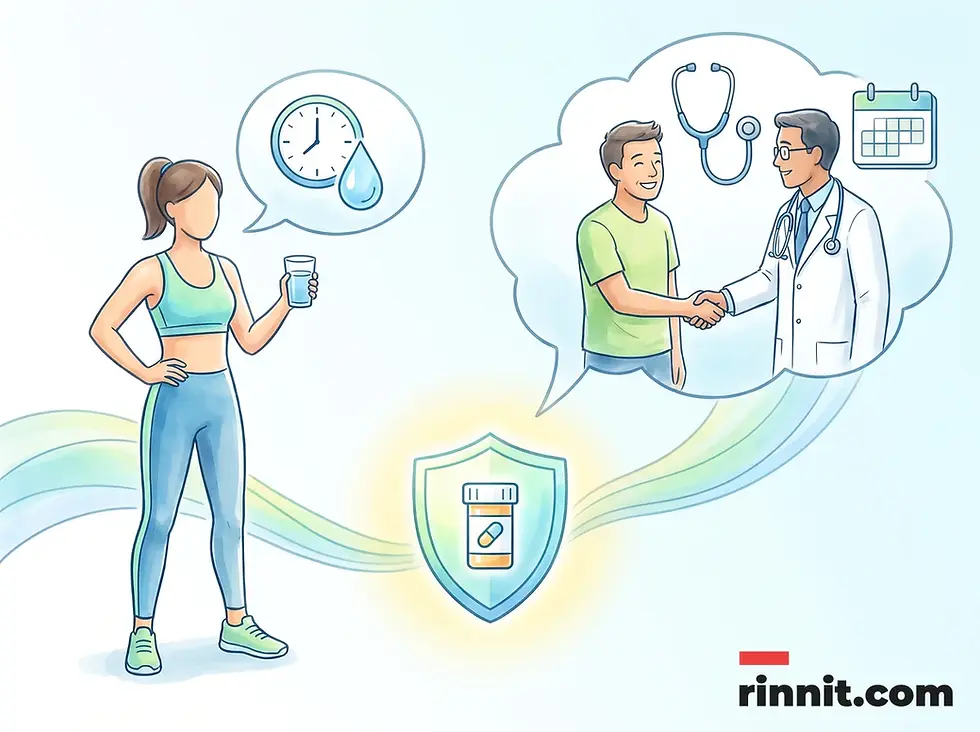
Staying hydrated and keeping regular checkups help keep lithium levels in the safe range.
How can lithium toxicity be prevented?
Preventing lithium toxicity takes a proactive approach to medication management and overall health, and steady communication with your healthcare provider is essential [1][4].
Essential Safety Tips
Regular monitoring: Attend all scheduled blood tests to make sure your lithium levels stay in the safe range. Typical guidance includes checking lithium levels 3 to 5 days after starting lithium or changing the dose and every 3 to 6 months on long-term therapy, with kidney and electrolyte tests every 3 to 6 months and calcium and thyroid (TSH) tests every 6 to 12 months [1].
Hydration: Drink fluids consistently, especially in hot weather or during illness. Contact your provider if you develop vomiting, diarrhea, or a fever [1].
Sodium consistency: Avoid sudden changes in your salt intake, because low sodium levels can make the kidneys retain lithium [1].
Medication review: Tell your doctor about all other medications you take, including diuretics and over-the-counter anti-inflammatories, which can interact with lithium [1].
Take it as prescribed: Take only the amount your provider prescribed, consider a labeled pill box or notes so you do not take a double dose, and store lithium where children and others cannot reach it [1].
If you are having thoughts of suicide or of intentionally overdosing on lithium, get help right away: contact your local emergency number or go to the nearest emergency room. In the United States, you can call the 988 Suicide and Crisis Lifeline, which is available 24 hours a day, 7 days a week [1].
What is the bottom line on lithium toxicity?
Lithium is a powerful tool for managing bipolar disorder, but its safety depends on careful monitoring and a clear understanding of the risks. By staying hydrated and recognizing the early signs of toxicity, you can protect your health and keep the medication effective. If you suspect an overdose or have new symptoms, seek emergency medical care immediately.
Frequently Asked Questions
What is the safe range for lithium in the blood?
The therapeutic range is narrow, and levels above 1.5 mmol/L are generally considered toxic. Your provider will tell you the target range that is right for you.
Can dehydration cause lithium toxicity?
Yes. Dehydration is one of the main reasons lithium builds up, because it causes the kidneys to reabsorb lithium instead of excreting it.
How quickly do symptoms appear after an overdose?
Gastrointestinal symptoms like nausea and vomiting usually develop within one hour of taking excess lithium.
Is lithium toxicity permanent?
Many people recover with prompt treatment, but severe toxicity can lead to permanent kidney damage or neurological problems if it is not treated quickly.
What should I do if I miss a dose of lithium?
Do not take a double dose to make up for a missed one, as this can lead to acute toxicity. Consult your healthcare provider for specific instructions.
Can other medications interact with lithium?
Yes, several drugs, including diuretics and certain pain relievers, can increase lithium levels and the risk of toxicity.
Why is salt intake important for lithium safety?
The kidneys process lithium and sodium similarly. If your sodium levels are low, your kidneys reabsorb more lithium, increasing the risk of buildup.
What is the most common symptom of mild toxicity?
Nausea, vomiting, and diarrhea are the most common early signs of lithium toxicity.
Can lithium toxicity be treated at home?
No, lithium toxicity is a medical emergency that requires professional care in a hospital setting.
Does age affect the risk of toxicity?
Yes, people over the age of 50 are at higher risk for chronic toxicity, partly because kidney function naturally changes with age.
References
Cleveland Clinic. Lithium Toxicity. Cleveland Clinic. August 21, 2023. https://my.clevelandclinic.org/health/diseases/25207-lithium-toxicity
Decker BS, Goldfarb DS, Dargan PI, et al. Extracorporeal treatment for lithium poisoning: systematic review and recommendations from the EXTRIP Workgroup. Clin J Am Soc Nephrol. 2015;10(5):875-887. PMID 25583292. https://doi.org/10.2215/CJN.10021014
Schoretsanitis G, de Filippis R, Brady BM, et al. Prevalence of impaired kidney function in patients with long-term lithium treatment: a systematic review and meta-analysis. Bipolar Disord. 2022;24(3):264-274. PMID 34783413. https://doi.org/10.1111/bdi.13154
Schoot TS, Molmans THJ, Grootens KP, et al. Systematic review and practical guideline for the prevention and management of the renal side effects of lithium therapy. Eur Neuropsychopharmacol. 2020;31:16-32. PMID 31837914. https://doi.org/10.1016/j.euroneuro.2019.11.006
Medical disclaimer
This article is for informational purposes only and is not a substitute for professional medical advice, diagnosis, or treatment. The clinical information in this guide reflects source material last reviewed in August 2023.



Comments