DPP-4 Inhibitors (Gliptins): How They Work, Examples, Side Effects, and Who Should Avoid Them

Updated: 6 days ago
Written and medically reviewed by Dr. Baraa Alnahhal, MD · Last reviewed: October 2026 · How we review
Quick Answer: What are DPP-4 inhibitors?
DPP-4 inhibitors are a class of oral medicines, also called gliptins, used to treat type 2 diabetes. They block the DPP-4 enzyme so incretin hormones last longer, helping the pancreas release insulin after meals and lowering blood sugar. Common examples are sitagliptin, linagliptin, saxagliptin and alogliptin, usually taken once a day. They are not for type 1 diabetes. [1]
What the research says
Saxagliptin raised heart-failure hospital stays in people at high heart risk. In a trial of 16,492 adults with type 2 diabetes followed for a median of 2.1 years, 3.5% on saxagliptin vs 2.8% on placebo were hospitalized for heart failure (hazard ratio 1.27), while heart attack and stroke rates were unchanged (7.3% vs 7.2%). (Scirica et al., N Engl J Med, 2013) [2]
Sitagliptin did not raise heart risk in people with heart disease. Among 14,671 adults with type 2 diabetes and heart disease followed for a median of 3.0 years, major heart events occurred in 11.4% on sitagliptin vs 11.6% on placebo, and heart-failure hospitalization did not differ (hazard ratio 1.00). (Green et al., N Engl J Med, 2015) [3]
Gliptins lower A1C modestly without weight gain. A clinical review reports that DPP-4 inhibitors lower A1C by about 0.5% to 1.0%, are weight neutral, and carry no built-in risk of low blood sugar on their own. (Gallwitz, Front Endocrinol, 2019) [4]
Key takeaways
DPP-4 inhibitors treat type 2 diabetes by helping your body release insulin after meals and by lowering glucagon. [1]
All drugs in this class end in "-gliptin" and are usually taken by mouth once a day. [1]
They work well alongside metformin, insulin and SGLT2 inhibitors, but are not usually combined with GLP-1 agonists. [1]
Common side effects include nausea, headache and joint pain; pancreatitis and heart failure (in people with heart disease) are possible serious risks. [1]
They are not for type 1 diabetes, and people with kidney or liver disease may need to avoid them or take a lower dose. [1]
How do DPP-4 inhibitors work?
DPP-4 inhibitors work by blocking the DPP-4 enzyme, which normally breaks down your body's incretin hormones. [1]
Incretins, mainly GLP-1 and GIP, are hormones that help your pancreas release insulin after you eat. On their own, they don't last long, because DPP-4 breaks them down quickly. [1]
When a gliptin blocks DPP-4, incretins break down more slowly and stay in your body longer. That lets you release insulin when your blood sugar is high. [1]
DPP-4 inhibitors also suppress glucagon. Glucagon is a hormone your pancreas makes that raises blood sugar, so less of it helps keep levels down. [1]

What are examples of DPP-4 inhibitors?
The FDA-approved DPP-4 inhibitors are sitagliptin, linagliptin, saxagliptin and alogliptin, and every one ends in "-gliptin." [1]
Generic name | Brand name(s) | Tablet strengths |
Sitagliptin | Januvia® | 25 mg, 50 mg, 100 mg |
Linagliptin | Tradjenta® | 5 mg (the only dose) |
Saxagliptin | Onglyza™ | 2.5 mg, 5 mg |
Alogliptin | Nesina®, Vipidia® | 25 mg standard dose; lower doses available |

What dosage strengths do DPP-4 inhibitors come in?
DPP-4 inhibitors come in several tablet strengths and are typically taken by mouth once per day. [1]
Sitagliptin: 25 mg, 50 mg and 100 mg tablets.
Linagliptin: a single 5 mg tablet, which is the only dose.
Saxagliptin: 2.5 mg or 5 mg tablets.
Alogliptin: 25 mg per day as the standard dose, with lower doses available. [1]
Always take your gliptin exactly as prescribed. If you have questions about your dose, ask your healthcare provider. [1]
What happens if you miss a dose of a DPP-4 inhibitor?
If you miss a dose of a DPP-4 inhibitor, you can take it later the same day once you remember. [1]
If you don't remember until the next day, skip the missed dose and take your next one as usual. Never take two doses to make up for one. [1]
Your blood sugar readings may run higher on the day you miss a dose. They should settle again the next day once you're back on your medicine. [1]
What are the benefits of DPP-4 inhibitors?
The main benefit of DPP-4 inhibitors is better blood sugar control in people with type 2 diabetes. [1]
They help keep blood sugar in a healthy range after meals. They are also easy to take, since most people use one tablet a day by mouth. [1]
If you're newer to type 2 diabetes, our complete diabetes guide explains how blood sugar, insulin and insulin resistance fit together.
Can DPP-4 inhibitors be taken with other diabetes medicines?
DPP-4 inhibitors can be taken with several other diabetes medicines, including metformin, insulin injections and SGLT2 inhibitors. [1]
Medicine | Used with DPP-4 inhibitors? |
Metformin | Yes, works well together |
Insulin injections | Yes, works well together |
SGLT2 inhibitors | Yes, works well together |
Not usually used together |
The chance of very low blood sugar is mainly linked to taking a gliptin with other diabetes medicines, so tell your provider about every diabetes medicine you use. [1]
What are the side effects of DPP-4 inhibitors?
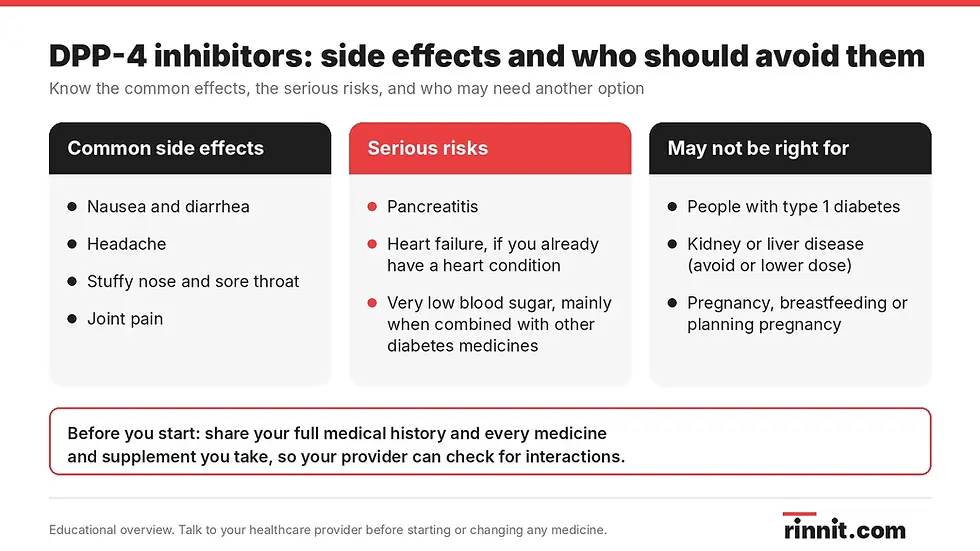
The most common side effects of DPP-4 inhibitors are nausea, diarrhea, headache, a stuffy nose, sore throat and joint pain. [1]
Type | Side effect | What to know |
Common | Nausea and diarrhea | One of the most common effects |
Common | Headache | One of the most common effects |
Common | Stuffy nose and sore throat | One of the most common effects |
Common | Joint pain | One of the most common effects |
Serious | Higher risk while taking a gliptin | |
Serious | Higher risk if you already have a heart condition | |
Serious | Very low blood sugar (hypoglycemia) | Small risk, mostly when combined with other diabetes medicines |
You may have a higher risk of pancreatitis, or of heart failure if you have an existing heart condition. [1]
There is a small risk of extremely low blood sugar. This usually happens only when a DPP-4 inhibitor is taken with other diabetes medicines. [1]
Who should not take DPP-4 inhibitors?
People with type 1 diabetes should not take DPP-4 inhibitors, because this medicine is only for type 2 diabetes. [1]
Kidney disease: you may need to avoid a gliptin or take a lower dose. Read more about chronic kidney disease.
Liver disease: you may need to avoid it or lower the dose.
Pregnancy and breastfeeding: if you're pregnant, breastfeeding or planning a pregnancy, a DPP-4 inhibitor may not be right for you. [1]
Always share your full medical history with your healthcare provider, including every medicine and supplement you take. They can check whether anything interacts with a DPP-4 inhibitor. [1]
How do you know if a DPP-4 inhibitor is not working?
The clearest sign a DPP-4 inhibitor is not working is blood sugar readings that stay high over time. [1]
If your readings stay high, or you feel your medicine isn't working, contact your healthcare provider. They can change your dose or treatment plan. [1]
When should you call your healthcare provider about a DPP-4 inhibitor?
You should call your healthcare provider if you notice side effects or if your blood sugar stays high while taking a DPP-4 inhibitor. [1]
Your provider can adjust your treatment to keep you safe. Also check with them before starting any new medicine or supplement, so they can look for interactions. [1]
For a regulator's view of this drug class, see the official FDA information on DPP-4 inhibitors. A patient-friendly overview is also available from this UK diabetes charity guide to gliptins, and clinicians can read the StatPearls review of DPP-IV inhibitors.
Conclusion
DPP-4 inhibitors are a simple, once-daily option for managing type 2 diabetes. By blocking the DPP-4 enzyme, they let your own incretin hormones work longer, so you release more insulin and less glucagon after meals. [1]
Common side effects include nausea, headache and joint pain, while pancreatitis, heart failure in people with heart disease, and low blood sugar with other diabetes medicines are the serious risks to know about. Share your full medical history and medicine list with your provider, and tell them if side effects appear or your readings stay high. [1]
Want to understand your diabetes care better? Start with our complete diabetes guide, then read about prediabetes and low blood sugar emergencies. Follow us on Instagram and YouTube for clear, verified health explainers every week.
FAQ
What are DPP-4 inhibitors used for?
DPP-4 inhibitors are used to treat type 2 diabetes. They help keep blood sugar in a healthy range after meals by improving how your body releases insulin. [1]
How do DPP-4 inhibitors lower blood sugar?
DPP-4 inhibitors block the DPP-4 enzyme so incretin hormones like GLP-1 and GIP last longer. This helps your pancreas release insulin when blood sugar is high and lowers glucagon, a hormone that raises blood sugar. [1]
What are the names of DPP-4 inhibitors?
The FDA-approved DPP-4 inhibitors are sitagliptin (Januvia), linagliptin (Tradjenta), saxagliptin (Onglyza) and alogliptin (Nesina, Vipidia). All of them end in "-gliptin." [1]
What are the most common side effects of gliptins?
The most common side effects are nausea, diarrhea, headache, a stuffy nose, sore throat and joint pain. Tell your provider if you notice any side effects. [1]
Can DPP-4 inhibitors cause low blood sugar?
DPP-4 inhibitors carry only a small risk of very low blood sugar. It usually happens when they are taken together with other diabetes medicines. [1]
Can I take a DPP-4 inhibitor with metformin?
Yes, DPP-4 inhibitors work well with metformin, insulin injections and SGLT2 inhibitors. They are not usually used with GLP-1 agonists. [1]
Who should not take DPP-4 inhibitors?
People with type 1 diabetes should not take DPP-4 inhibitors. People with kidney or liver disease may need to avoid them or lower the dose, and they may not be right during pregnancy or breastfeeding. [1]
What should I do if I miss a dose of a DPP-4 inhibitor?
Take the missed dose later the same day if you remember. If it's already the next day, skip it and take your usual dose, and never take two doses at once. [1]
Can DPP-4 inhibitors cause pancreatitis?
Rarely. Stop the medicine and get care right away if you have severe belly pain that won't go away, which may spread to your back, with or without vomiting.
Do DPP-4 inhibitors cause weight gain?
DPP-4 inhibitors usually do not cause weight gain or weight loss. This makes them an option for people who want to avoid weight gain from other diabetes medicines.
Related Reading
Biguanides (Metformin): Uses, How They Work, Side Effects and Risks explains how metformin lowers blood sugar and its side effects.
GLP-1 Agonists: A Comprehensive Guide to Diabetes and Obesity Management explains how GLP-1 medicines treat diabetes and support weight loss.
Understanding SGLT2 Inhibitors: A Patient Guide to Type 2 Diabetes Management explains how SGLT2 inhibitors lower blood sugar through the kidneys.
A1C Test: Normal Levels, Prediabetes and Diabetes Ranges and What Affects Results explains what the A1C test measures and how results are used.
References
Cleveland Clinic. DPP-4 Inhibitors (Gliptins): What They Are & Side Effects. Cleveland Clinic. Last updated October 13, 2025. https://my.clevelandclinic.org/health/treatments/dpp-4-inhibitors
Scirica BM, Bhatt DL, Braunwald E, et al. Saxagliptin and cardiovascular outcomes in patients with type 2 diabetes mellitus. N Engl J Med. 2013;369(14):1317-1326. PMID: 23992601. https://doi.org/10.1056/NEJMoa1307684
Green JB, Bethel MA, Armstrong PW, et al. Effect of Sitagliptin on Cardiovascular Outcomes in Type 2 Diabetes. N Engl J Med. 2015;373(3):232-242. PMID: 26052984. https://doi.org/10.1056/NEJMoa1501352 Erratum in: N Engl J Med. 2015;373(6):586. PMID: 26182233. https://doi.org/10.1056/NEJMx150029
Gallwitz B. Clinical Use of DPP-4 Inhibitors. Front Endocrinol (Lausanne). 2019;10:389. PMID: 31275246. https://doi.org/10.3389/fendo.2019.00389
Medical disclaimer
This article is for general education only and is not a substitute for professional medical advice, diagnosis or treatment. Do not start, stop or change any diabetes medicine without talking to your healthcare provider. If you have severe stomach pain, trouble breathing, or signs of very low blood sugar, seek emergency care right away.



Comments