Biologics: What They Are, Types, Uses and Side Effects

Updated: 2 days ago
Written and medically reviewed by Dr. Baraa Alnahhal, MD · Last reviewed: November 2026 · How we review
Quick Answer
Biologics are medicines made from living organisms, such as proteins, genes or cells. They can treat conditions traditional drugs often can't, including some cancers, autoimmune diseases, genetic disorders, asthma, arthritis and diabetes. Most are given by injection or IV infusion. Side effects are usually mild injection reactions, but biologics that calm the immune system can raise infection risk.
What the research says
Biologics raised serious infection risk in arthritis: across 106 trials in rheumatoid arthritis, standard-dose biologics raised the risk of serious infection compared with traditional DMARDs (odds ratio 1.31), adding 6 to 55 extra serious infections per 1,000 patients per year (Singh JA et al., Lancet, 2015) [2]
Biologics cut severe asthma attacks: in 8 trials of 6,461 people with eosinophilic asthma, biologics cut asthma attack rates compared with placebo by 68% with dupilumab, 63% with mepolizumab and 51% with benralizumab (Akenroye A et al., Journal of Allergy and Clinical Immunology, 2022) [3]
Key takeaways
Biologics are medicines made from living organisms.
They treat cancers, autoimmune diseases, asthma, diabetes and more.
Most are given by injection or IV infusion.
Mild injection reactions are the most common side effect.
Biologics that suppress the immune system can raise infection risk.
What are biologics?
Biologics are also called biologic medicines, biologic drugs or biopharmaceuticals. They're made by taking proteins or genetic material from living cells and reproducing them, sometimes by inserting altered DNA into cells grown in large batches. Learn about monoclonal antibodies. Sources: [1]
What biologics treat

Routine vaccinations save an estimated 3 million lives each year.
Some cancers, with immunotherapy, gene therapy or stem cell therapy.
Autoimmune diseases and chronic inflammation, sometimes instead of long-term steroids.
Rheumatoid arthritis and other types of arthritis.
Asthma.
Diabetes, with insulin.
Preventing infections with vaccines. Sources: [1]
Types of biologics
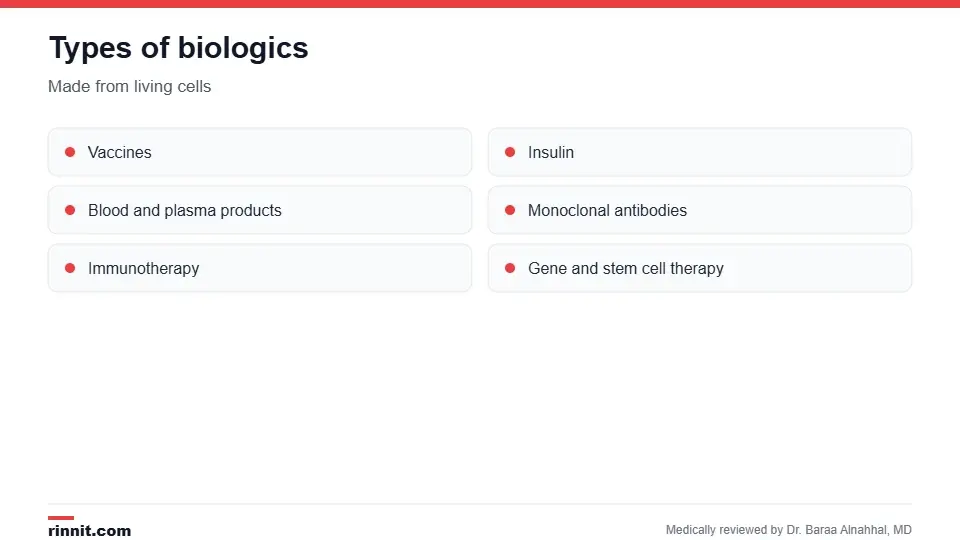
Each type works in a different way.
Type | Examples |
Blood products | Blood and plasma transfusions |
Tissues | Skin and bone grafts |
Vaccines | Routine childhood and adult vaccines |
Hormones | Insulin |
Monoclonal antibodies | Targeted antibody treatments |
Cell and gene therapies | Stem cell therapy, gene therapy, immunotherapy |
Immune-calming biologics | Biologic immunosuppressants and DMARDs |
Sources: [1]
How biologics are given
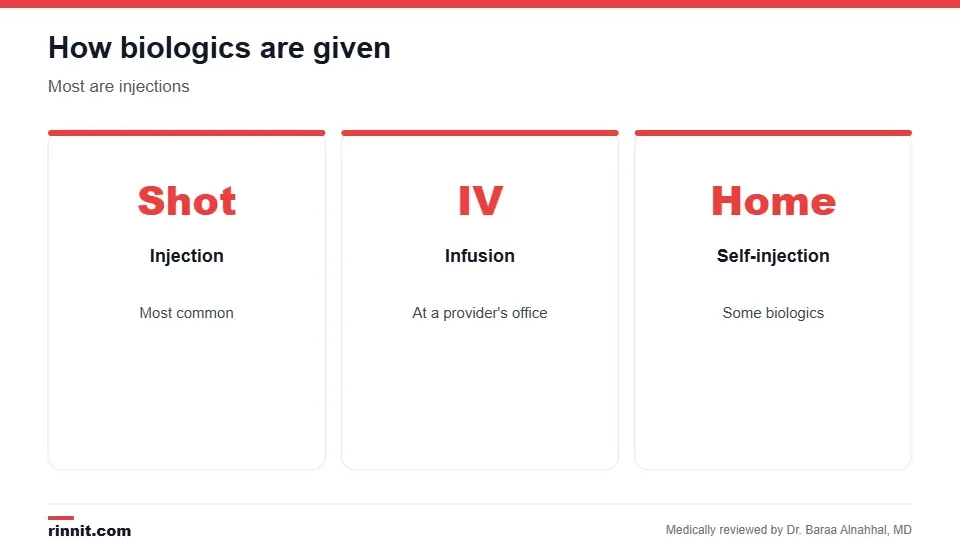
Your provider shows you how if you inject at home.
Most are given by injection.
Some are given by IV infusion at your provider's office.
Some you can inject yourself at home. Sources: [1]
Side effects and risks
Risk | Notes |
Injection reactions | Pain, swelling or rash; usually mild |
Fever or nausea | Some people |
Allergic reaction | Your immune system may react to the drug |
Antibodies against the drug | Can make it less effective |
Infections | More likely with immune-suppressing biologics |
Certain cancers | Slightly higher risk with some immunosuppressants |
Many people have no side effects. Before starting a biologic that calms the immune system, you're usually tested for tuberculosis and hepatitis B. Call your provider for a fever or other signs of infection. Sources: [1, 2]
Benefits
Vaccines have helped wipe out some diseases. Biologics help people with cancer live longer and can be life-changing for people with severe chronic conditions that haven't responded to other treatments. Biologics are often called the future of medicine. Sources: [1, 3]
Talk to your provider
Your provider may recommend a biologic right away or after other treatments. Ask about the benefits, risks and how it will be given. Sources: [1]
Conclusion
Biologics have transformed treatment for cancer, autoimmune disease, asthma and many other conditions. Understanding how they're given and watching for infections help you use them safely.
Keep learning: read about monoclonal antibodies and immunosuppressants.
Frequently asked questions
What are biologics?
Medicines made from living organisms, such as proteins, genes or cells.
What conditions do biologics treat?
Cancers, autoimmune diseases, arthritis, asthma, diabetes and more.
Are vaccines biologics?
Yes.
Is insulin a biologic?
Yes.
How are biologics given?
Mostly by injection or IV infusion.
Can I inject biologics at home?
Some biologics can be self-injected.
What are common side effects?
Mild injection reactions such as pain, swelling or rash.
Do biologics raise infection risk?
Immune-suppressing biologics can.
Why are biologics expensive?
They're harder and more complex to make.
Are biologics better than regular drugs?
They can treat conditions regular drugs often can't.
Related Reading
Biologic Therapy for Severe Asthma: Types, Side Effects and Results explains biologic therapy for severe asthma.
Biosimilars: What They Are, Safety and How They Compare to Biologics explains biosimilar medicines.
Bronchial Thermoplasty for Severe Asthma: How It Works and Results explains bronchial thermoplasty for severe asthma.
Monoclonal Antibodies: What They Are, How They Work, Uses and Side Effects a common type of biologic.
Immunotherapy for Cancer: How It Works and What to Expect biologic cancer treatment.
DMARDs (Disease-Modifying Antirheumatic Drugs): Types, Side Effects, and How Long They Take to Work arthritis medicines, including biologics.
Gene Therapy: A New Era of Precision Medicine treating disease with genes.
Vaccines: How They Work, Types, Safety and Side Effects biologics that prevent infection.
References
Cleveland Clinic. Biologics (Biologic Medication & Drugs): What It Is & Types. Cleveland Clinic. Last updated August 9, 2024. https://my.clevelandclinic.org/health/treatments/biologics-biologic-medicine
Singh JA, Cameron C, Noorbaloochi S, et al. Risk of serious infection in biological treatment of patients with rheumatoid arthritis: a systematic review and meta-analysis. Lancet. 2015;386(9990):258-265. PMID 25975452. https://doi.org/10.1016/S0140-6736(14)61704-9
Akenroye A, Lassiter G, Jackson JW, et al. Comparative efficacy of mepolizumab, benralizumab, and dupilumab in eosinophilic asthma: a Bayesian network meta-analysis. J Allergy Clin Immunol. 2022;150(5):1097-1105.e12. PMID 35772597. https://doi.org/10.1016/j.jaci.2022.05.024
Medical disclaimer
This article is for general education only and does not replace advice from a qualified healthcare professional. Talk to your doctor about your own diagnosis and treatment, and seek emergency care right away for severe or sudden symptoms.



Comments