Aplastic Anemia: Symptoms, Causes, Treatment & Complete Guide

Updated: 2 days ago
Medically reviewed by Dr. Baraa Alnahhal, MD · Last reviewed: October 2026
Quick Answer
Aplastic anemia is a rare, serious condition in which the bone marrow stops making enough new blood cells, causing tiredness, infections and uncontrolled bleeding risk [1]. It is most often caused by the immune system attacking marrow stem cells [1]. Severe cases are life-threatening and need immediate hospital care, but transfusions, immunosuppressants and stem cell transplants can restore blood production [2].
What the research says
Adding eltrombopag to standard immunosuppressive therapy improved response in a randomized trial. In a phase 3 trial of previously untreated people with severe aplastic anemia (101 patients on horse antithymocyte globulin plus cyclosporine, 96 with eltrombopag added), a complete response at 3 months occurred in 10% versus 22% (odds ratio 3.2; 95% CI 1.3–7.8), and the overall response rate at 6 months was 41% versus 68%, with a similar incidence of severe adverse events. (Peffault de Latour et al., N Engl J Med, 2022) [3]
Transplant from an alternative donor may outperform immunosuppression when no matched sibling is available. A systematic review and meta-analysis of five studies found a pooled 5-year overall-survival odds ratio of 0.44 (95% CI 0.23–0.85) favoring upfront alternative-donor transplant over immunosuppressive therapy in severe aplastic anemia; the authors noted limitations, including the retrospective designs and a predominantly pediatric population. (Alotaibi et al., Transplant Cell Ther, 2022) [4]
Head-to-head evidence for first-line sibling-donor transplant versus immunosuppression is limited. A Cochrane review of three non-randomized prospective studies (302 participants) found no statistically significant difference in overall mortality (pooled hazard ratio 0.95; 95% CI 0.43–2.12), but rated the evidence low quality and made no firm recommendation. (Peinemann et al., Cochrane Database Syst Rev, 2013) [5]
Aplastic Anemia at a Glance
Aspect | Summary |
What it is | Bone marrow failure: not enough new blood cells of any type [1] |
Severity | Rare and serious; can be mild or severe, sudden or gradual [1] |
Most common cause | Immune system attacking bone marrow stem cells [1] |
Main symptoms | Fatigue, infections, bruising/bleeding, shortness of breath |
Confirmed by | Bone marrow biopsy (required) [2] |
Treatments | Transfusions, immunosuppressants, growth factors, stem cell transplant [2] |
Can it be prevented? | Most cases cannot be prevented [1] |
Is it life-threatening? | Yes — severe cases require immediate hospitalization [2] |
What Is Aplastic Anemia?
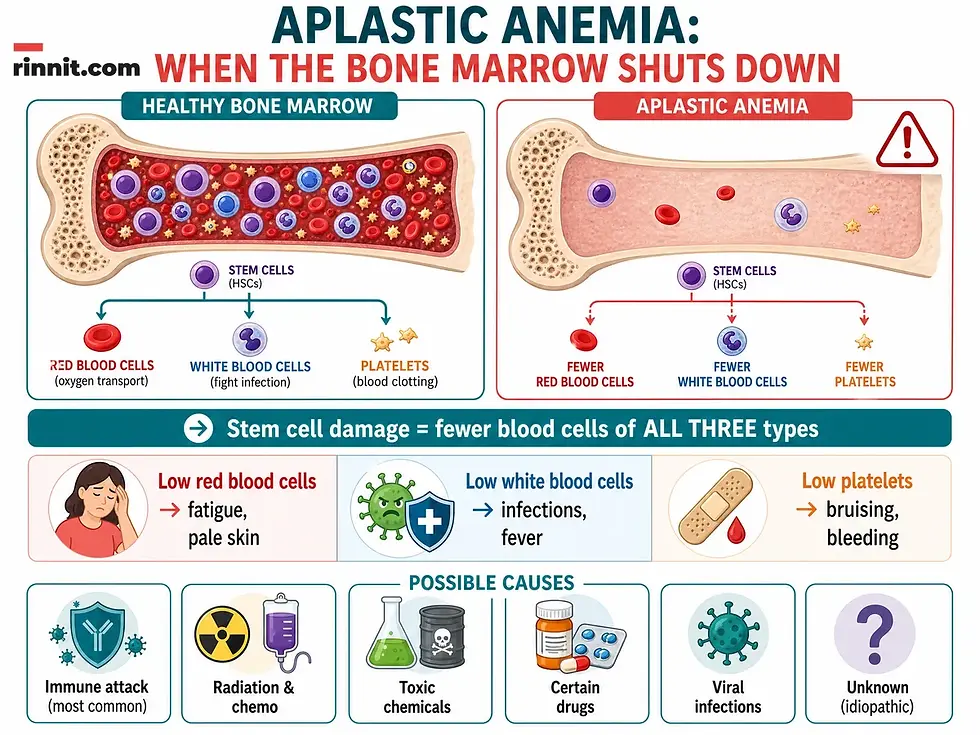
Aplastic anemia is a condition that happens when your bone marrow stops making enough new blood cells [1]. Bone marrow is the red, spongy material inside your bones, and its stem cells are responsible for producing all three types of blood cells: red blood cells that carry oxygen, white blood cells that fight infection, and platelets that help blood clot.
When those stem cells are damaged, the marrow produces fewer new blood cells across the board. The result is fatigue, a body that struggles to fight off infections, and bleeding that is hard to control [1].
Aplastic anemia is rare and serious. It can develop at any age, appear suddenly or come on slowly and worsen over time, and range from mild to severe [1]. It can be short-lived or become chronic, and it can be serious and even fatal [1].
This distinguishes aplastic anemia from more common anemias, which usually involve only low red blood cell counts. Here, all three blood cell lines are affected.
What are the symptoms of aplastic anemia?
Aplastic anemia can have no symptoms at all [1], which is why it is sometimes discovered only through routine blood work. When symptoms do appear, they reflect the three shortages happening in your blood.
Cell type affected | Resulting symptoms |
Low red blood cells | Fatigue, shortness of breath, pale skin |
Low white blood cells | Frequent or prolonged infections, fever |
Low platelets | Unexplained or easy bruising, nosebleeds and bleeding gums, prolonged bleeding from cuts |
The full list of possible symptoms includes:
When to get help. Because severe aplastic anemia — with extremely low blood cell counts — is life-threatening and requires immediate hospitalization, sudden or severe bleeding, persistent fever, or overwhelming fatigue should never be "waited out." Seek emergency care rather than a routine appointment.
Causes: Why Does the Bone Marrow Shut Down?
In aplastic anemia, the stem cells in the bone marrow are damaged, so the marrow makes fewer new blood cells [1]. The most common cause is your immune system attacking the stem cells in your bone marrow [1]. But several other factors can injure the marrow and disrupt blood cell production.
Cause | How it affects the marrow |
Immune attack (most common) | The body's own immune system destroys marrow stem cells |
Radiation and chemotherapy | Cancer-fighting treatments kill cancer cells but also damage healthy stem cells; aplastic anemia can be a temporary side effect [1] |
Toxic chemicals | Pesticides, insecticides, and benzene (an ingredient in gasoline) have been linked to the condition; avoiding repeated exposure may help it improve [1] |
Certain drugs | Some medicines, such as those used to treat rheumatoid arthritis and some antibiotics [1] |
Autoimmune disorders | Conditions where the immune system attacks healthy cells may involve marrow stem cells [1] |
Viral infections | Hepatitis, Epstein-Barr, cytomegalovirus, parvovirus B19, and HIV have all been linked to aplastic anemia [1] |
Pregnancy | The immune system might attack the bone marrow during pregnancy [1] |
Unknown factors | In many cases doctors cannot identify the cause — this is called idiopathic aplastic anemia [1] |
Connection to Other Rare Disorders
Two rare conditions are closely connected to aplastic anemia. Paroxysmal nocturnal hemoglobinuria (PNH) causes red blood cells to break down too soon; it can lead to aplastic anemia, or aplastic anemia can evolve into PNH [1]. Fanconi's anemia is a rare inherited disease that leads to aplastic anemia — children born with it tend to be smaller than average and may have birth defects such as underdeveloped limbs, and the disease is diagnosed with blood tests [1].
What are the risk factors for aplastic anemia?
Aplastic anemia is rare, but certain factors increase the risk of developing it.
Risk factor | Detail |
High-dose radiation or chemotherapy | Cancer treatment that damages marrow stem cells [1] |
Exposure to toxic chemicals | Pesticides, herbicides, solvents, benzene |
Certain prescription drugs | Chloramphenicol (used for bacterial infections) and gold compounds (used for rheumatoid arthritis) [1] |
Certain blood diseases, autoimmune disorders, and serious infections | Conditions that injure the marrow or misdirect immune attacks |
Pregnancy | Rarely, immune attack on the bone marrow during pregnancy [1] |
Can Aplastic Anemia Be Prevented?
There is no known prevention for most cases of aplastic anemia. Avoiding exposure to insecticides, herbicides, organic solvents, paint removers, and other toxic chemicals might lower your risk [1], but most cases — especially the idiopathic and immune-driven forms — develop without any avoidable trigger.
How Is Aplastic Anemia Diagnosed?
Diagnosis rests on two key tests, and one of them is required to confirm the condition.
Test | What it shows |
Blood tests | Normally, red blood cell, white blood cell, and platelet levels stay within certain ranges. In aplastic anemia, all three levels are low [2] |
Bone marrow biopsy | A needle removes a small sample of marrow from a large bone, such as the hipbone. The sample is examined under a microscope to rule out other blood diseases. In aplastic anemia, the marrow contains fewer blood cells than normal. Confirming the diagnosis requires this biopsy [2] |
The biopsy is often combined with a bone marrow aspiration — a thin needle that removes liquid marrow from a spot in the back of the hipbone — and the two procedures are frequently done at the same time [2].
Once a diagnosis is confirmed, additional tests are usually performed to determine the underlying cause [2]. Your primary care professional may refer you to a hematologist — a doctor who specializes in blood disorders — or treatment may begin in the emergency room if the condition came on suddenly [2].
What are the treatment options for aplastic anemia?
Treatment depends on your symptoms, age, and overall health. Options range from simple observation to blood transfusions, medicines, and bone marrow transplantation.
Blood Transfusions
Although not a cure, blood transfusions supply the blood cells your marrow is not producing. They can control bleeding and relieve symptoms [2].
While there is generally no limit to the number of transfusions you can receive, multiple transfusions carry complications. Transfused red blood cells contain iron that can accumulate in the body and damage vital organs unless the iron overload is treated with medicine [2]. Over time, the body can also develop antibodies against transfused blood cells, making future transfusions less effective — a complication that immunosuppressant medicine makes less likely [2].
Stem Cell Transplant
A stem cell transplant — also called a bone marrow transplant — rebuilds the bone marrow with stem cells from a donor, and might be the only successful treatment option for severe aplastic anemia [2]. It is generally the treatment of choice for younger people who have a matching donor, most often a sibling [2].
The process works in steps:
The procedure requires a lengthy hospital stay, and afterward you receive drugs to prevent rejection of the donated stem cells. Risks are real: the body may reject the transplant, leading to life-threatening complications, and not everyone is a candidate or can find a suitable donor [2].
Immunosuppressants
For people who cannot undergo a transplant, or whose aplastic anemia is caused by an autoimmune disorder, treatment can involve immunosuppressants — drugs that alter or suppress the immune system [2].
Drugs such as cyclosporine (Neoral, Sandimmune) and antithymocyte globulin suppress the immune cells that are damaging the bone marrow, allowing the marrow to recover and generate new blood cells [2]. These two drugs are often used together, and corticosteroids such as methylprednisolone (Medrol) are frequently added. The trade-off: these drugs further weaken an already fragile immune system, and the anemia can return after the drugs are stopped [2].
Bone Marrow Stimulants
A hematologist may prescribe growth factors, also called colony-stimulating factors, to stimulate the bone marrow into making new blood cells. Each drug targets a different cell type.
Medicine | Target |
Sargramostim (Leukine) | Stimulates blood cell production |
Filgrastim (Neupogen) | Stimulates white blood cell production |
Pegfilgrastim (Neulasta) | Stimulates white blood cell production |
Epoetin alfa (Epogen/Procrit) | Stimulates red blood cell production |
Eltrombopag (Promacta) | Stimulates platelet production |
Growth factors are often used alongside immune-suppressing drugs [2].
Antibiotics and Antivirals
Because aplastic anemia weakens the immune system, infections can escalate quickly — and an untreated infection could prove life-threatening. See your healthcare professional at the first sign of infection, such as a fever. For severe aplastic anemia, doctors may prescribe antibiotics or antiviral medicines preventively [2].
Special Situations
Situation | How it is handled |
Caused by radiation or chemotherapy | Usually improves once the cancer treatments stop [2] |
Caused by other drugs | Usually improves once the offending medicine is stopped [2] |
Pregnancy-related | Treated with blood transfusions; often improves once the pregnancy ends — if not, treatment continues [2] |
What self-care steps help people living with aplastic anemia?
Self-care with aplastic anemia rests on three protective habits while blood counts recover: resting when needed, avoiding contact sports and protecting yourself from germs.
Rest when you need to. Anemia can cause fatigue and shortness of breath with even mild exertion. Take a break and rest whenever needed.
Avoid contact sports. Low platelet counts create a bleeding risk, so avoid activities that can cause a cut or a fall.
Protect yourself from germs. Wash your hands often, avoid sick people, and seek treatment at the first sign of a fever or other indication of infection.
How can people with aplastic anemia cope and find support?
Coping with aplastic anemia is easier with knowledge and support, such as researching the disease, asking questions, voicing concerns and leaning on family and friends. Consider these approaches:
Research your disease. The more you know, the better prepared you are to make treatment decisions.
Ask questions. Bring your full question list to the care team, and record or write down the answers.
Be vocal. Share your concerns openly with your hematologist and other healthcare professionals.
Seek support. Ask family and friends for emotional support — and consider asking them to become blood or bone marrow donors. The Aplastic Anemia and MDS International Foundation offers a peer support network and can be reached at 800-747-2820 [2].
Take care of yourself. Proper nutrition and sleep help maximize blood production [2].
How should you prepare for an aplastic anemia appointment?
Preparing for an aplastic anemia appointment starts with a primary care visit, which may lead to a hematologist referral, or with emergency treatment if the condition struck suddenly. Before the visit, prepare a list of:
Your symptoms and when they began
Key personal information, including recent life changes such as a new job — especially one that exposes you to chemicals
Medications, vitamins, and supplements you take, including doses
Questions to ask your healthcare team
Take a family member or friend along to help remember what you are told.
Questions to ask your hematologist:
What is the most likely cause of my symptoms?
Are there other possible causes for my symptoms?
What is my prognosis?
What treatments are available, and which do you recommend?
Are there alternatives to the primary approach you are suggesting?
I have another health condition — how can we best manage them together?
Do you have brochures or other printed material I can take? What websites do you recommend?
What your doctor will likely ask you:
Have you had recent infections?
Have you bled unexpectedly?
Are you more tired than usual?
Does anything seem to improve your symptoms?
Does anything appear to worsen your symptoms?

Frequently Asked Questions (FAQ)
What is aplastic anemia?
Aplastic anemia is a rare, serious condition in which the bone marrow stops making enough new blood cells of all three types — red blood cells, white blood cells, and platelets. It can develop suddenly or gradually, at any age, and can be mild or severe.
What causes aplastic anemia?
The most common cause is the immune system attacking the stem cells in the bone marrow. Radiation and chemotherapy, toxic chemicals like benzene, certain drugs, viral infections (including hepatitis, Epstein-Barr, cytomegalovirus, parvovirus B19, and HIV), and pregnancy can also injure the marrow — and in many cases the cause is never identified (idiopathic aplastic anemia).
What are the first symptoms of aplastic anemia?
Fatigue, shortness of breath, and pale skin are common early signs, along with easy bruising, nosebleeds, bleeding gums, and prolonged bleeding from cuts. Frequent infections and fever signal low white blood cells, and some people have no symptoms at all.
Can aplastic anemia be cured?
A stem cell (bone marrow) transplant may be the only successful treatment for severe aplastic anemia, particularly in younger people with a matching donor such as a sibling. Immunosuppressants and growth factor medicines can also help the marrow recover, though the condition can return after treatment stops.
Is aplastic anemia life-threatening?
Yes. Severe aplastic anemia, with extremely low blood cell counts, is life-threatening and requires immediate hospitalization [2]. Infections can also prove fatal quickly because the immune system is weakened, so fevers should never be ignored.
How is aplastic anemia diagnosed?
Blood tests show that red blood cell, white blood cell, and platelet levels are all below normal. A bone marrow biopsy — removing a small sample of marrow from the hipbone — is required to confirm the diagnosis, showing fewer blood cells in the marrow than normal while ruling out other blood diseases.
Can you prevent aplastic anemia?
There is no known prevention for most cases. Limiting exposure to toxic chemicals such as insecticides, herbicides, organic solvents, paint removers, and benzene might lower your risk, but the most common form — immune attack on marrow stem cells — cannot be prevented.
Conclusion
Aplastic anemia is a rare but serious reminder of how vital the bone marrow is to every function in your body — and of how far modern hematology has come in fighting back.
All three blood cell lines matter. Aplastic anemia affects red cells, white cells, and platelets at once — fatigue, infections, and bleeding are the three faces of the same problem.
The cause is often the immune system itself — which is exactly why immunosuppressants and stem cell transplants work.
Speed saves lives. Severe cases need immediate hospital care, and fevers should always trigger a same-day call to your doctor.
This guide covered the warning signs to watch for, the full range of causes and risk factors, the two key diagnostic tests, and every major treatment option — from transfusions to transplant. If you or someone you love faces this diagnosis, the knowledge here can help you ask the right questions and take the right steps.
Disclaimer: This article is for informational purposes only and is not a substitute for professional medical advice, diagnosis, or treatment. Always consult a qualified healthcare provider with questions about a medical condition.
Related Reading
Bone Marrow Donation: Who Can Donate and How It Works explains how bone marrow donation works.
Learn more in our guide to Complete Blood Count (CBC): What It Measures, Normal Ranges and Abnormal Results.
Learn more in our guide to Bone Marrow Biopsy: Why It's Done, What to Expect, Pain and Recovery.
Learn more in our guide to Reticulocyte Count: Normal Range, Low and High Results Explained.
Hematocrit Test: Normal Range and What High or Low Levels Mean explains the blood test that measures the percentage of red blood cells.
References
Mayo Clinic. Aplastic anemia — Symptoms & causes. Accessed October 12, 2026. https://www.mayoclinic.org/diseases-conditions/aplastic-anemia/symptoms-causes/syc-20355015
Mayo Clinic. Aplastic anemia — Diagnosis & treatment. Accessed October 12, 2026. https://www.mayoclinic.org/diseases-conditions/aplastic-anemia/diagnosis-treatment/drc-20355020
Peffault de Latour R, Kulasekararaj A, Iacobelli S, et al. Eltrombopag added to immunosuppression in severe aplastic anemia. N Engl J Med. 2022;386(1):11-23. PMID 34986284. https://doi.org/10.1056/NEJMoa2109965
Alotaibi H, Aljurf M, de Latour R, et al. Upfront alternative donor transplant versus immunosuppressive therapy in patients with severe aplastic anemia who lack a fully HLA-matched related donor: systematic review and meta-analysis of retrospective studies, on behalf of the Severe Aplastic Anemia Working Party of the European Group for Blood and Marrow Transplantation. Transplant Cell Ther. 2022;28(2):105.e1-105.e7. PMID 34649020. https://doi.org/10.1016/j.jtct.2021.10.006
Peinemann F, Bartel C, Grouven U. First-line allogeneic hematopoietic stem cell transplantation of HLA-matched sibling donors compared with first-line ciclosporin and/or antithymocyte or antilymphocyte globulin for acquired severe aplastic anemia. Cochrane Database Syst Rev. 2013;2013(7):CD006407. PMID 23881658. https://doi.org/10.1002/14651858.CD006407.pub2



Comments