Amputation Surgery: Understanding Procedures, Causes, and Long-Term Recovery

Updated: 15 minutes ago
Medically reviewed by Dr. Baraa Alnahhal, MD · Last reviewed: September 2026
TL;DR
Amputation is the surgical removal of a body part, typically a limb, necessitated by severe injury or life-threatening disease. The procedure serves as a critical preventive measure to stop the spread of infection, cancer, or tissue death. While a profound life event, modern surgical techniques and comprehensive rehabilitation allow patients to recover function and move forward with their lives.
Quick Answer
Amputation involves the surgical removal of all or part of an appendage, such as an arm, leg, hand, or foot, when it can no longer be saved or endangers the rest of the body. Common causes include complications from diabetes, peripheral artery disease (PAD), severe trauma, or life-threatening infections. The surgery focuses on removing damaged tissue while preserving as much healthy tissue as possible to facilitate healing and future prosthetic use. Recovery is a multi-stage journey involving wound care, physical therapy, and psychological support.
Overview of Amputation
Amputation is a surgical intervention designed to remove a body appendage that is too diseased or injured to be salvaged. While most commonly associated with limbs (arms, legs, hands, and feet), it can also involve fingers, toes, or even parts of the face and breasts in specific medical contexts. The primary objective is to ensure the safety and health of the remaining body by eliminating a part that has become a hazard.
Surgeons perform these procedures as a preventive measure. When a body part loses sensation due to nerve damage or loses nourishment from blood vessels, the resulting tissue death or infection can rapidly spread. By removing the compromised part, healthcare teams can stop the progression of life-threatening conditions like gangrene or cancer, ultimately preserving the patient's overall health.
Common Causes for Surgical Amputation
Devastating injuries and chronic diseases are the primary drivers of surgical amputation. In many cases, the affected limb has lost its functional capacity, meaning nerves no longer transmit sensation or allow for voluntary movement. Furthermore, a lack of blood flow can lead to necrosis, where tissues begin to die, posing a significant risk to the rest of the system.
Vascular Disease: Complications from Peripheral Artery Disease (PAD) leading to critical blood flow loss.
Diabetes: Nerve damage (neuropathy) causing unnoticed injuries and non-healing ulcers.
Tissue Death: Gangrene resulting from severe blood flow restriction that can spread to healthy tissue.
Trauma: Severe crushing, burning, or severing injuries that are beyond surgical repair.
Infection: Life-threatening infections in the bones (osteomyelitis), joints, or surrounding soft tissues.
Cancer: Malignant tumors that cannot be safely removed without amputating the affected part.
The Surgical Procedure
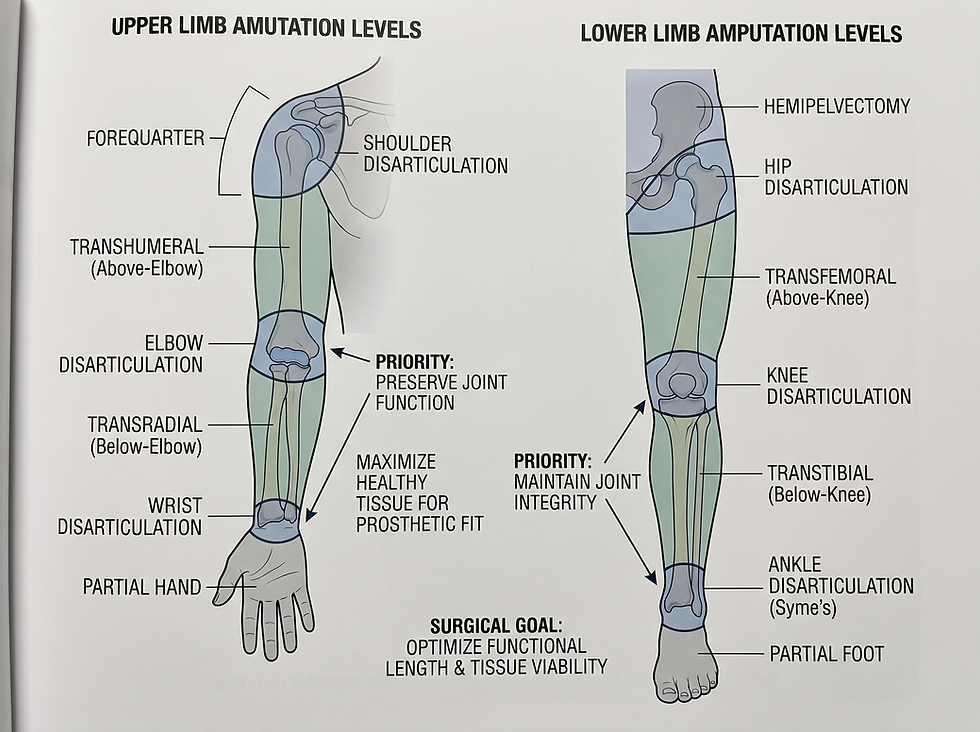
If the amputation is not an emergency, the process begins with a comprehensive assessment of the disease or injury. Surgeons may first explore limb salvage techniques to avoid amputation if possible. If surgery is necessary, a multi-disciplinary team, including therapists and prosthetists, works with the patient to plan for both the operation and the lifelong recovery journey.
During the procedure, the surgeon removes all diseased or damaged tissues while prioritizing the preservation of healthy tissue. Advanced microsurgery may be used to repair specific nerves or blood vessels. The bone ends are smoothed, and muscles are often stitched to the bone to provide reinforcement for the remaining limb, often referred to as a stump.
Specialized Surgical Options
Modern medicine offers several specialized techniques to improve long-term functional outcomes, particularly for those who plan to use prosthetic limbs:
Targeted Muscle Reinnervation (TMR): Severed nerves are redirected to new target muscles, allowing for more intuitive control of myoelectric prosthetic arms or hands.
Osseointegration: A metal anchor is implanted directly into the bone, allowing a prosthesis to attach without the need for a traditional socket, reducing skin complications.
Rotationplasty: In rare cases, the lower leg is rotated and reattached to the upper leg to replace a knee joint, enabling the use of a below-the-knee prosthesis.
The Recovery and Rehabilitation Process
Hospital recovery typically lasts from a few days to several weeks, focusing on wound healing and initial pain management. Early physical therapy begins almost immediately to prevent joint stiffness. Once the initial healing is complete, a comprehensive rehabilitation program starts, which is essential for adapting to a changed body.
Physical Therapy: Strengthening new muscle groups and maintaining flexibility to prevent stiffness.
Occupational Therapy: Learning new ways to perform routine daily tasks at home and in the workplace.
Psychotherapy: Addressing the profound psychological impact and emotional adjustment to limb loss.
Prosthetic Training: Fitting, adjusting, and learning to operate a functional prosthetic device.

Risks and Long-Term Outlook
Surgical amputation is almost always a life-saving or life-preserving procedure. While the initial event is significant, the long-term goal is to restore as much independence and quality of life as possible. Complications can include infection, delayed wound healing, or phantom limb pain, but these are managed through diligent post-operative care and ongoing medical support.

Conclusion
Amputation is a critical medical intervention used to protect the body from the spread of severe disease or injury. Although it represents a major life transition, the combination of advanced surgical techniques, personalized prosthetics, and dedicated rehabilitation teams provides a clear pathway to recovery. With the right support, individuals can successfully adapt and maintain a high quality of life.
If you or a loved one are facing the possibility of an amputation, consult with a multi-disciplinary healthcare team to discuss all available options, including limb salvage and modern prosthetic technologies. Early preparation and a clear understanding of the recovery process are vital steps toward a successful outcome.
Frequently Asked Questions
1. What is the most common reason for amputation? The most common causes are complications from vascular diseases like peripheral artery disease (PAD) and diabetes, which lead to tissue death or non-healing infections.
2. How long does the surgery take? The duration varies depending on the complexity and location, but it typically ranges from one to several hours.
3. Is amputation always the first choice? No, surgeons often attempt limb salvage surgery first to save the affected part whenever medically possible.
4. What is a "stump"? A stump, or residual limb, is the part of the limb that remains after an amputation.
5. How long is the hospital stay? Most patients stay in the hospital for a few days to two weeks for monitoring and initial healing.
6. When can I get a prosthetic limb? Fitting usually begins once the surgical wound has completely healed and the swelling has subsided, typically several weeks after surgery.
7. What is phantom limb pain? It is a sensation of pain or discomfort that feels like it is coming from the body part that was removed.
8. Can I drive after an amputation? Many people return to driving using modified vehicles or specialized prosthetic devices.
9. Is physical therapy mandatory? Yes, it is a critical part of recovery to prevent tissue stiffness and learn how to use the body effectively.
10. What is targeted muscle reinnervation? It is a technique where nerves are redirected to new muscles to help control advanced prosthetic limbs.
11. Does amputation affect mental health? It is a profound life event that can cause significant emotional stress, making psychological support a key part of rehabilitation.
12. What is gangrene? Gangrene is tissue death caused by a lack of blood flow or a serious bacterial infection, which often requires amputation to prevent spreading.
13. Can children have rotationplasty? Yes, it is most commonly performed in children with bone cancer near the knee to preserve mobility.
14. What are the risks of the surgery? Risks include infection, blood clots, slow wound healing, and reactions to anesthesia.
15. Will I be able to work again? Most individuals return to work, though some may require workplace accommodations or occupational therapy to adapt.
References
Medical disclaimer: The information provided is for educational purposes only and should not replace professional medical advice, diagnosis, or treatment. Always seek the advice of a qualified healthcare provider with any questions regarding a medical condition.
Comments