Peripheral Artery Disease (PAD): Symptoms, Causes, Diagnosis & Treatment Options

Medically reviewed by Dr. Baraa Alnahhal, MD · Last reviewed: October 2026
Peripheral artery disease (PAD) happens when arteries that carry blood to the legs or arms become narrowed, usually from fatty plaque buildup (atherosclerosis) [[1]](https://www.mayoclinic.org/diseases-conditions/peripheral-artery-disease/symptoms-causes/syc-20350557). The most common symptom is leg pain when walking, called claudication. PAD is a warning sign of widespread artery disease, so treatment focuses on lifestyle changes, medications, and sometimes procedures to relieve pain and reduce the risk of heart attack and stroke.
Quick Answer: What Is Peripheral Artery Disease (PAD)?
Peripheral artery disease (PAD) is a common condition in which narrowed arteries reduce blood flow to the arms or legs, usually the legs. It is most often caused by atherosclerosis, a buildup of fats, cholesterol, and other substances called plaque on the artery walls. Plaque narrows or blocks the artery and can reduce blood flow to the muscles. The classic symptom is leg pain or cramping during walking that eases with rest, known as claudication. Treatment usually combines lifestyle changes (quitting smoking, exercise, healthy eating), medications such as statins and antiplatelet drugs, and, when needed, procedures like angioplasty or bypass surgery [[2]](https://www.mayoclinic.org/diseases-conditions/peripheral-artery-disease/diagnosis-treatment/drc-20350563).
What Is Peripheral Artery Disease?
Peripheral artery disease (PAD) is a condition in which narrowed arteries reduce blood flow to the arms or legs. It is sometimes called peripheral arterial disease.
In PAD, the legs or arms, usually the legs, do not get enough blood flow to keep up with the body's demand. This can cause leg pain when walking and other symptoms.
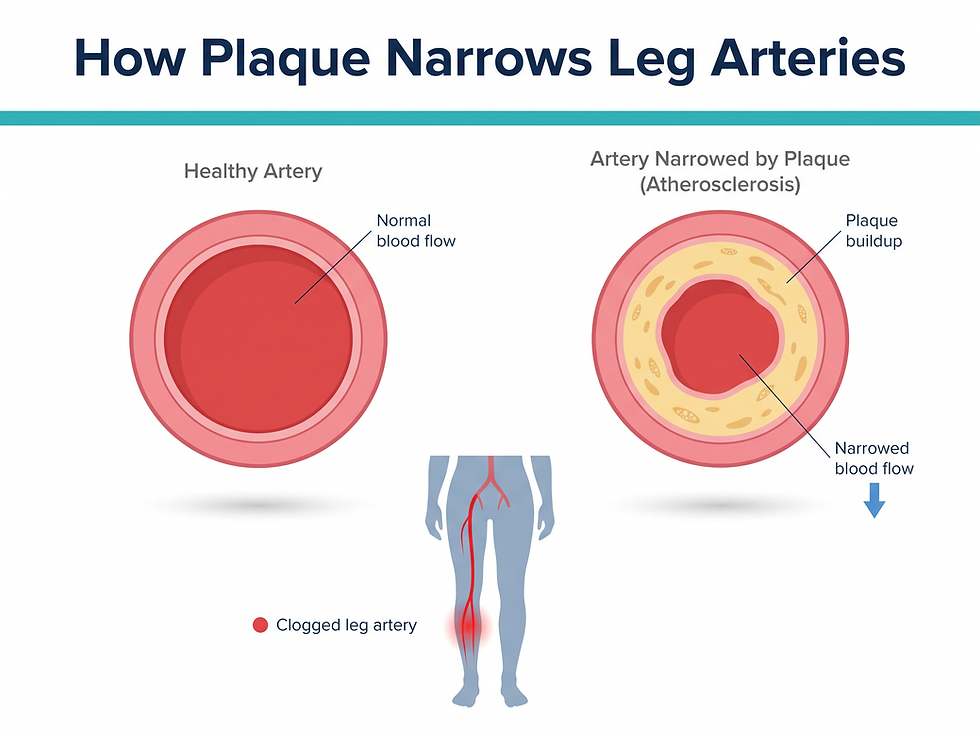
PAD is usually a sign of a buildup of fatty deposits in the arteries, a condition called atherosclerosis. When there is too much cholesterol in the blood, it and other substances can form deposits called plaque. Plaque can narrow or block an artery. If a plaque ruptures, a blood clot can form. Together, plaque and clots reduce blood flow through the artery [[1]](https://www.mayoclinic.org/diseases-conditions/peripheral-artery-disease/symptoms-causes/syc-20350557).
Key fact | What it means |
|---|---|
Definition | Narrowed arteries that reduce blood flow to the arms or legs |
Other name | Peripheral arterial disease |
Most affected area | The legs (arms can also be affected) |
Main underlying cause | Atherosclerosis (plaque buildup in artery walls) |
Classic symptom | Claudication: leg pain when walking |
PAD Symptoms: Recognizing Claudication and Other Warning Signs
Peripheral artery disease may not cause symptoms, or symptoms may be mild. When they do appear, the most common sign is leg pain when walking.
Muscle pain or cramping in the arms or legs, often in the calf, typically begins with exercise and ends with rest. People may notice painful cramping in one or both hips, thighs, or calves after walking, climbing stairs, or doing other activities. Some people feel pain when using their arms, for example aching and cramping when knitting or writing.
Symptom type | What you may notice |
|---|---|
Walking pain | Leg pain or cramping while walking, often in the calf |
Activity-triggered pain | Muscle pain that starts with exercise and ends with rest |
Hip or thigh cramping | Painful cramping in one or both hips, thighs, or calves after walking or stairs |
Arm pain | Aching or cramping when using the arms (knitting, writing) |
Temperature changes | Coldness in the lower leg or foot, especially on one side |
Sensation changes | Leg numbness or weakness |
Pulse changes | No pulse or a weak pulse in the legs or feet |
Skin changes | Shiny skin, skin color changes, slow-growing toenails, or hair loss on the legs |
Wounds | Sores on the toes, feet, or legs that will not heal |
Other | Erectile dysfunction |
The muscle pain in PAD can range from mild to extreme. It may wake you from sleep, make it hard to walk or exercise, or, in severe cases, occur during rest or when lying down.
When to See a Doctor
Make an appointment for a health checkup if you have leg or arm pain or other symptoms of peripheral artery disease.
Situation | What to do |
|---|---|
Leg or arm pain while walking or exercising | Schedule a health checkup |
Painful cramping in hips, thighs, or calves after activity | Schedule a health checkup |
Coldness, numbness, or weakness in one leg | Schedule a health checkup |
Sores on feet or legs that will not heal | Schedule a health checkup promptly |
Causes of Peripheral Artery Disease
Peripheral artery disease is often caused by a buildup of fats, cholesterol, and other substances in and on the artery walls, a condition called atherosclerosis. This buildup is called plaque, and it can cause arteries to narrow and block blood flow. In PAD, plaque collects in the arteries of the arms or legs.
If there is too much cholesterol in the blood, cholesterol and other substances form plaque deposits. Plaque narrows or blocks an artery, and if it ruptures, a blood clot can form.
Less common causes of PAD include:
Swelling and irritation of blood vessels
Injury to the arms or legs
Changes in the muscles or ligaments
Radiation exposure
Cause | How it leads to PAD |
|---|---|
Atherosclerosis (most common) | Fats, cholesterol, and other substances build up as plaque, narrowing and blocking leg or arm arteries |
Plaque rupture | A ruptured plaque can trigger a blood clot, further reducing blood flow |
Blood vessel inflammation | Swelling and irritation of blood vessels narrows them |
Arm or leg injury | Physical injury can affect blood flow in the limb |
Muscle or ligament changes | Structural changes near arteries can contribute |
Radiation exposure | Radiation can damage arteries over time |
PAD Risk Factors
Several factors raise your chances of developing peripheral artery disease. Age matters: risk increases especially after 65, or after 50 if you have other risk factors for atherosclerosis.
Risk factor | Why it matters |
|---|---|
Family history | Family history of PAD, heart disease, or stroke raises risk |
Diabetes | Diabetes increases the likelihood of PAD |
High blood pressure | Stresses and stiffens the arteries |
High cholesterol | Fuels plaque buildup in artery walls |
Age over 65 | Risk rises sharply with age (or over 50 with atherosclerosis risk factors) |
Obesity | Adds strain to circulation and arteries |
Smoking | Damages arteries and promotes plaque buildup |
Complications of PAD
When PAD is caused by atherosclerosis, it can lead to serious complications beyond leg pain.
Critical limb ischemia occurs when an injury or infection causes tissue to die. Symptoms include open sores on the limbs that do not heal. Treatment may include amputation of the affected limb.
Because plaque buildup affects blood vessels throughout the body, PAD also signals a higher risk of stroke and heart attack, since the same process can affect the blood vessels of the heart and brain.
Complication | What happens |
|---|---|
Critical limb ischemia | Injury or infection causes tissue to die; open sores do not heal; may require amputation |
Stroke | Plaque buildup can affect blood vessels in the brain |
Heart attack | Plaque buildup can affect blood vessels in the heart |
Preventing Peripheral Artery Disease
The best way to prevent leg pain due to peripheral artery disease is a healthy lifestyle. This means not smoking, eating foods that are low in sugar, trans fats, and saturated fats, and getting regular exercise, checking with your care team about what type and how much is best for you. Keeping a healthy weight, managing blood pressure, cholesterol, and diabetes, getting good sleep, and controlling stress all support healthy arteries.
Prevention habit | What it involves |
|---|---|
Avoid tobacco | Don't smoke or use tobacco products |
Heart-healthy diet | Foods low in sugar, trans fats, and saturated fats |
Regular exercise | Check with your care team about type and amount |
Healthy weight | Maintain a weight in the healthy range |
Manage chronic conditions | Control blood pressure, cholesterol, and diabetes |
Sleep | Get good sleep each night |
Stress control | Find ways to manage and reduce stress |
How PAD Is Diagnosed
If you have leg pain or other symptoms, your care team will start with a physical exam and questions about your symptoms and medical history. The pulse in the affected area may be weak or missing. Several tests can confirm the diagnosis and show how much blood flow is reduced [[2]](https://www.mayoclinic.org/diseases-conditions/peripheral-artery-disease/diagnosis-treatment/drc-20350563).
Test | What it shows |
|---|---|
Physical exam | Weak or missing pulse in the affected area; symptom history |
Blood tests | Check risk factors such as high cholesterol and high blood sugar |
Ankle-brachial index (ABI) | Compares blood pressure in the ankle with blood pressure in the arm; may be done after walking on a treadmill |
Ultrasound (legs or feet) | Sound waves create pictures of blood movement; Doppler ultrasound spots blocked or narrowed arteries |
Angiography | Imaging combined with dye (given through a blood vessel) to look for blockages |
The ankle-brachial index (ABI) is the most common test. It compares blood pressure in the ankle with blood pressure in the arm, and readings may be taken before and after exercising on a treadmill.

Treatment Options for Peripheral Artery Disease
The goals of PAD treatment are to manage symptoms, especially leg pain, so that exercise is comfortable, and to improve artery health to reduce the risk of heart attack, stroke, and other complications. Treatment may include lifestyle changes, medicine, and surgery [[2]](https://www.mayoclinic.org/diseases-conditions/peripheral-artery-disease/diagnosis-treatment/drc-20350563).
Lifestyle Changes
The foundation of PAD treatment is lifestyle change: don't smoke or use tobacco, get regular exercise, and eat a healthy diet.
Medications
If you have symptoms or complications of PAD, you may need medicines. These may include statins, blood pressure medicines, diabetes medicine, blood clot prevention drugs, or leg pain medicine.
Medication | What it does |
|---|---|
Statins | Lower "bad" cholesterol, reduce plaque buildup, lower heart attack and stroke risk |
Blood pressure medicines | Prevent arteries from becoming stiff and hard, which slows blood flow |
Diabetes medicine | Manages blood sugar, since diabetes makes PAD more likely |
Antiplatelet medicines | Aspirin or clopidogrel (Plavix) helps prevent blood clotting |
Cilostazol | Treats leg pain by increasing blood flow to the area |
Surgeries and Other Procedures
Sometimes a surgery or procedure is needed to treat PAD or its symptoms.
Procedure | How it works |
|---|---|
Thrombolytic therapy | Medicine is given directly into the affected artery to dissolve a blood clot |
Angioplasty and stent placement | A tiny balloon on a catheter inflates to widen the artery; a stent (wire mesh tube) may keep the artery open |
Bypass surgery | A healthy blood vessel from another body part, or a synthetic graft, creates a new path for blood flow around the blocked artery, connected below the blockage |

Lifestyle and Home Remedies
There are things you can do to help manage PAD and stop symptoms from getting worse.
Don't smoke or use tobacco. Smoking damages the arteries, increases the risk of PAD, and makes the condition worse if you already have it. If you need help quitting, ask your care team about methods that can help.
Get regular exercise. Exercise is an important part of PAD treatment because it improves blood flow to the arms and legs. Care teams usually recommend supervised exercise therapy, a program of exercise and education, which can increase the distance you can walk pain-free.
Eat nutritious foods. Choose plenty of fruits, vegetables, and whole grains. Reduce sugar, salt, and saturated fats.
Check medicine labels. Products containing pseudoephedrine (found in some cold medicines) are used to treat stuffy noses, but this ingredient tightens blood vessels and may increase PAD symptoms.
Check your leg position. Try sleeping with the head of the bed raised a few inches. Keeping the legs below the level of the heart usually reduces pain. Some people find that hanging their legs over the edge of the bed or walking temporarily reduces leg pain.
Home strategy | Practical tip |
|---|---|
Quit tobacco | Ask your care team for quitting methods |
Supervised exercise therapy | Exercise-and-education program to increase pain-free walking distance |
Nutritious diet | Fruits, vegetables, whole grains; less sugar, salt, saturated fat |
Medicine label check | Avoid pseudoephedrine, which tightens blood vessels |
Leg positioning | Raise head of bed; keep legs below heart level to reduce pain |
Foot Care
It is important to take good care of your feet. PAD can make it harder for cuts and sores on the lower legs and feet to heal, especially if you also have diabetes.
Foot care step | Why it helps |
|---|---|
Wash feet daily and dry completely | Prevents infections |
Moisturize feet (not between toes) | Prevents cracks that can lead to infection; moisture between toes can help fungus grow |
Wear thick, dry socks and well-fitting shoes | Protects feet from pressure and rubbing |
Treat fungal infections quickly | Stops athlete's foot from spreading or worsening |
Trim toenails carefully | Avoids accidental cuts |
Check feet daily | Catches cuts, sores, or injuries early |
See a podiatrist | Professional care for bunions, corns, or calluses |
Bottom Line
Peripheral artery disease is a common but often overlooked condition. Narrowed leg arteries cause walking pain, signal widespread artery disease, and raise the risk of heart attack and stroke. The good news is that treatment works: quitting smoking, regular exercise, a heart-healthy diet, the right medications, and, when needed, artery-opening procedures can relieve pain and protect your long-term health.
Take action today: Talk to your care team if you have leg or arm pain when walking. An ankle-brachial index test takes minutes and can reveal whether narrowed arteries are the cause.
Frequently Asked Questions
What is peripheral artery disease (PAD)?
PAD is a common condition in which narrowed arteries reduce blood flow to the arms or legs, usually the legs. It is most often caused by atherosclerosis, a buildup of fatty plaque on artery walls.
What is claudication?
Claudication is pain in the legs or arms that occurs while walking or using the arms, caused by too little blood flow. It is usually a symptom of PAD and typically starts with activity and ends with rest.
Does peripheral artery disease always cause symptoms?
No. PAD may not cause symptoms at all, or symptoms may be mild. When symptoms appear, they most often include leg pain when walking, cramping in the calf or hips, coldness in one leg, and a weak pulse in the feet.
What causes peripheral artery disease?
PAD is most often caused by atherosclerosis, a buildup of fats, cholesterol, and other substances called plaque on artery walls. Less common causes include blood vessel inflammation, limb injury, muscle or ligament changes, and radiation exposure.
What are the main risk factors for PAD?
Key risk factors include smoking, diabetes, high blood pressure, high cholesterol, obesity, increasing age (especially after 65, or after 50 with atherosclerosis risk factors), and a family history of PAD, heart disease, or stroke.
Can PAD lead to serious complications?
Yes. PAD can cause critical limb ischemia, in which injury or infection causes tissue to die, sometimes requiring amputation. Because the same plaque process affects arteries throughout the body, PAD also raises the risk of heart attack and stroke.
How is PAD diagnosed?
Diagnosis starts with a physical exam (the pulse in the affected area may be weak or missing). Tests include blood tests for cholesterol and blood sugar, the ankle-brachial index (ABI), ultrasound of the legs or feet, and angiography with imaging dye.
What is an ankle-brachial index (ABI) test?
The ABI is the most common PAD test. It compares blood pressure in the ankle with blood pressure in the arm, and readings may be taken before and after walking on a treadmill.
How is peripheral artery disease treated?
Treatment focuses on managing leg pain and improving artery health. It includes lifestyle changes (quitting smoking, exercise, healthy eating), medications such as statins, blood pressure drugs, antiplatelet medicines, and cilostazol, and procedures such as thrombolytic therapy, angioplasty with stenting, or bypass surgery.
Does exercise really help with PAD?
Yes. Regular exercise improves blood flow to the arms and legs and can improve PAD symptoms. Supervised exercise therapy, a structured program of exercise and education, is usually recommended and can increase the distance you can walk pain-free.
How should I care for my feet if I have PAD?
Wash and dry your feet daily, moisturize (avoiding between the toes), wear thick dry socks and well-fitting shoes, treat fungal infections quickly, trim toenails carefully, and check your feet daily for cuts or sores. A podiatrist can treat bunions, corns, and calluses.
Related Resources
Related reading on Rinnit:
External resources for deeper reading:
References
Mayo Clinic, Peripheral artery disease: Symptoms & causes
Mayo Clinic, Peripheral artery disease: Diagnosis & treatment
This article is for informational purposes only and is not a substitute for professional medical advice, diagnosis, or treatment. Always seek the advice of your physician or other qualified health provider with any questions you may have about a medical condition.


Comments