Wolf-Hirschhorn Syndrome: Understanding This Rare Genetic Deletion

Updated: 3 days ago
Medically reviewed by Dr. Baraa Alnahhal, MD · Last reviewed: October 2026
Wolf-Hirschhorn syndrome (WHS), or 4p- syndrome, is a rare genetic condition caused by missing material on chromosome 4. It leads to distinct facial features, growth delays, and systemic complications affecting the heart, brain, and kidneys. While most cases occur randomly, a multidisciplinary approach focusing on symptom management, seizure control, and early developmental therapy is essential for supporting long-term health.
Quick Answer
Wolf-Hirschhorn syndrome is a genetic disorder occurring in about 1 in 50,000 births [1] [3], mainly caused by a deletion on the short arm of chromosome 4. It causes distinct facial features, intellectual disabilities and significant growth delays [1]. Lifelong specialized care addresses seizures, heart defects and skeletal issues, and many people survive into adulthood with consistent support [1].
What the research says
Many adults with WHS need substantial support, yet many are in good health. In a case series of 35 adults aged 19–55 (26 women, 9 men), 66% (23 of 35) needed close to total care, 31% (11 of 35) were partly self-independent, and 1 (3%) was fully independent; the authors concluded that quality of life and function in adulthood appear less critical than previously anticipated (Battaglia et al., Am J Med Genet A, 2021) [2].
Seizures are very common and start early. A systematic review reported seizures in over 90% of patients, with onset within the first 3 years of life and a peak at around 6–12 months; about half of patients had status epilepticus (prolonged seizures) in the first years of life (Paprocka et al., Seizure, 2022) [3].
Seizure control tends to improve with age. In 11 children treated at one center, median epilepsy onset was 9 months and 10 had recurrent status epilepticus; episodes peaked around age 1 and decreased after age 3, and levetiracetam was the most effective anti-seizure medicine (Horiguchi et al., Neuropediatrics, 2023) [4].
What is Wolf-Hirschhorn syndrome?
Wolf-Hirschhorn syndrome is a complex genetic condition that arises when a specific segment of genetic material is missing from the tip of chromosome 4 [1]. Often referred to in clinical settings as 4p- syndrome, this condition impacts the development of multiple organ systems simultaneously. While the syndrome can affect anyone, clinical data indicates a higher prevalence in girls than in boys [1].
The vast majority of cases are considered "de novo," meaning the genetic change occurs randomly during the formation of reproductive cells or very early in embryonic development [1]. In these instances, there is typically no family history of the condition. However, a small percentage of cases result from a parent carrying a balanced translocation, where chromosome pieces have switched places without losing material. When this is passed down in an unbalanced form, it can lead to the deletions characteristic of the syndrome [1].
Genetic Characteristic | Details for Wolf-Hirschhorn Syndrome |
Primary Cause | Deletion at the 4p16.3 region of chromosome 4 |
Alternative Name | 4p- Syndrome |
Inheritance Pattern | Mostly de novo (random); rarely inherited via balanced translocation |
Prevalence | Approximately 1 in 50,000 live births |
Primary Risks | Intellectual disability, growth delays, and systemic organ issues |
What are the signs and symptoms of Wolf-Hirschhorn syndrome?
The symptoms of Wolf-Hirschhorn syndrome are highly variable, with the severity often linked to the size of the chromosomal deletion. Larger deletions generally correlate with more profound physical and cognitive challenges [1]. The condition is most recognizable through its impact on facial structure and early physical development.
Distinctive Facial Features
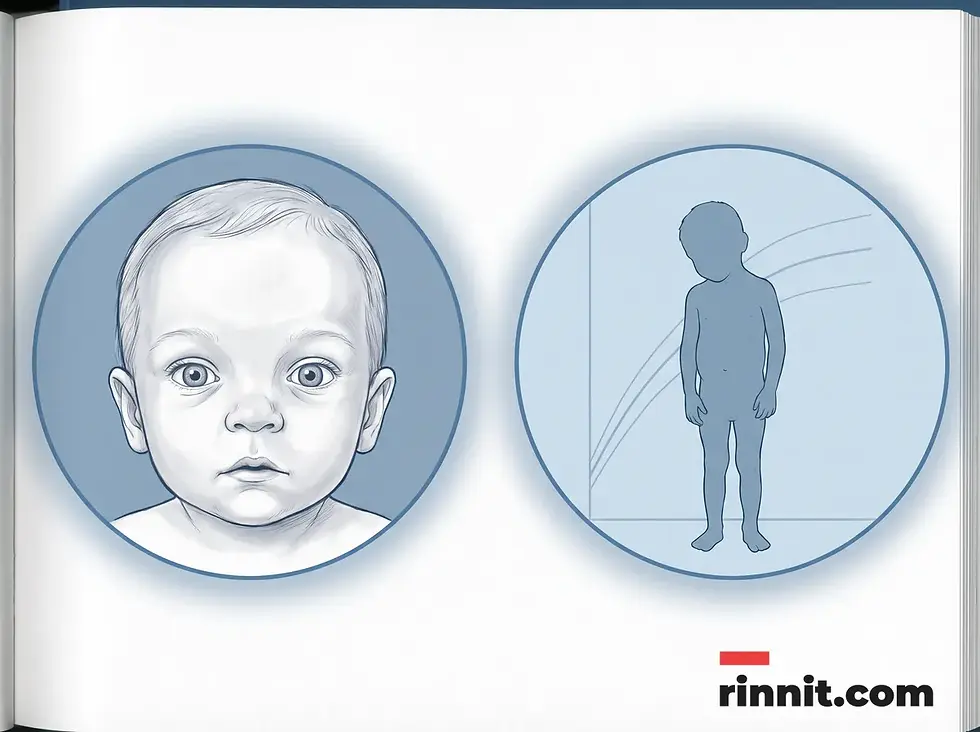
Children with this syndrome often present with a specific constellation of facial characteristics. These include wide-set and bulging eyes, a high forehead, and a flat nasal bridge [1]. Other common markers include a small head (microcephaly), low-set or malformed ears, and a small chin [1]. Some infants may also be born with a cleft lip or palate [1], and missing teeth are frequently reported as the child matures.
Growth and Physical Development
Growth delays typically begin before birth, with infants showing slow development in the womb [1]. After birth, these children often struggle with feeding and weight gain [1]. Weak muscle tone, known as hypotonia, is a hallmark of the condition and can lead to significant delays in reaching milestones such as sitting, standing, and walking [1]. These combined factors frequently result in short stature throughout the individual's life.
Neurological and Cognitive Impact
Intellectual disabilities associated with the syndrome range from mild to severe [1]. While many children demonstrate strong social skills, they often face significant hurdles in language development and communication [1]. Seizures are another major concern, appearing early in childhood and sometimes proving resistant to standard treatments [1]. Interestingly, these seizures may decrease in frequency or stop entirely as the child reaches adolescence.
What complications does Wolf-Hirschhorn syndrome cause, and how are they managed?
Beyond the visible symptoms, Wolf-Hirschhorn syndrome affects several internal body systems. These complications require proactive monitoring and specialized medical intervention to maintain the child's quality of life and long-term health.
Multi-System Involvement
The syndrome can impact the heart, skeletal structure, and internal organs. Many children are born with heart growth complications, such as atrial septal defects [1]. Skeletal issues like scoliosis (curvature of the spine) or kyphosis are also common [1]. Furthermore, the condition can lead to immune system deficiencies, increasing the risk of frequent infections, as well as kidney function problems and vision issues [1].
System Affected | Common Complications in WHS |
Cardiovascular | Atrial septal defects (ASD) and other heart abnormalities |
Skeletal | Scoliosis, kyphosis, and underdeveloped muscle tone |
Genitourinary | Kidney function issues and reproductive organ complications |
Immune System | Increased susceptibility to infections due to deficiency |
Sensory | Vision problems and dental abnormalities (missing teeth) |
Diagnostic and Therapeutic Pathways
Diagnosis is typically suspected based on physical features and developmental delays. Clinical confirmation is achieved through a chromosome microarray, a genetic test that analyzes blood, saliva, or cheek cells to identify the specific deletion at the 4p16.3 site [1]. Once confirmed, treatment is entirely symptomatic and requires a multidisciplinary team [1].

Management strategies often include:
Surgical Intervention: Necessary for repairing heart defects [1] or other structural abnormalities.
Therapeutic Support: Ongoing physical and occupational therapy to address hypotonia [1] and improve mobility.
Educational Planning: Special education programs [1] tailored to the child's specific cognitive and communicative needs.
Seizure Control: Targeted medication management [1] overseen by a pediatric neurologist.
What is the long-term outlook for Wolf-Hirschhorn syndrome, and can it be prevented?
Wolf-Hirschhorn syndrome has no cure [1], but its prognosis has improved with modern care, and many children survive into adulthood with consistent treatment. The life expectancy depends heavily on the severity of heart and brain complications [1]. With consistent treatment and monitoring, many children survive into adulthood and lead fulfilling lives within their communities.
Preventive Measures and Counseling
Because most cases occur randomly, there are no established methods for preventing the condition [1]. In the rare cases where a parent carries a balanced translocation, genetic counseling is vital. Counselors can help families understand the risks of recurrence in future pregnancies and provide guidance on genetic testing options. Regular checkups, including blood tests for kidney function [1] and evaluations by specialists, are essential components of lifelong care.
Conclusion
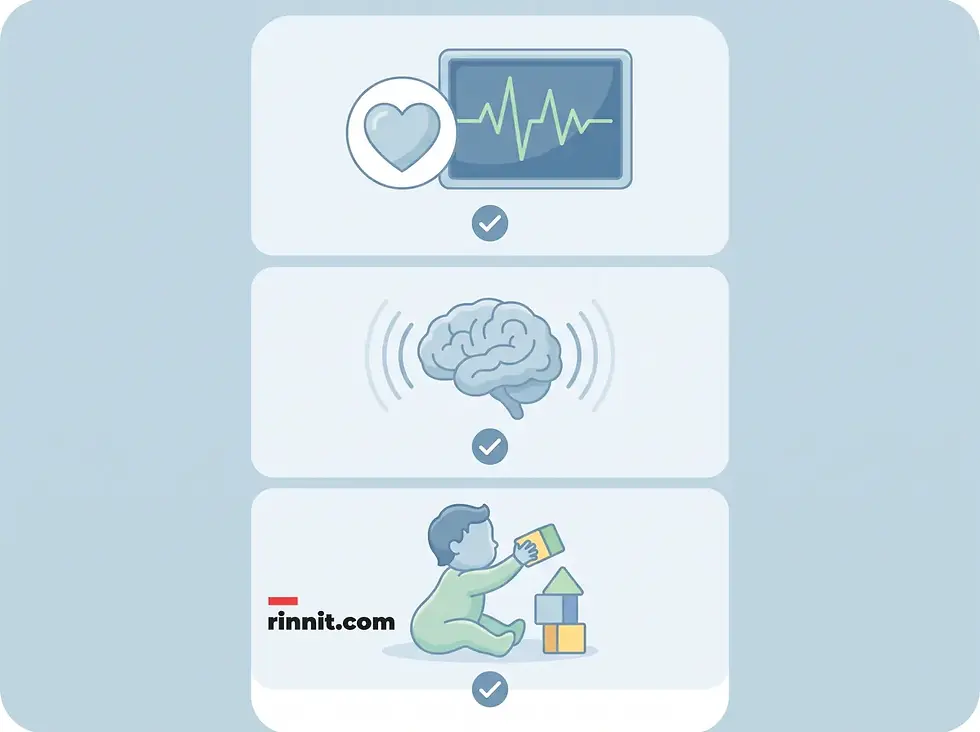
Wolf-Hirschhorn syndrome presents a lifelong journey for affected children and their families. While the genetic deletion causes significant developmental and systemic challenges, early diagnosis through genetic testing allows for a proactive, multidisciplinary care plan. By addressing symptoms like seizures and heart defects early, and providing robust therapeutic support, healthcare providers can significantly enhance the quality of life for these individuals.
If you notice significant developmental delays, distinct facial features, or seizures in your child, consult a pediatric specialist for a genetic evaluation. Early intervention is the most effective way to manage the systemic impacts of this condition.
Frequently Asked Questions
What is the primary cause of Wolf-Hirschhorn syndrome?
The condition is caused by a missing piece of genetic material at the tip of chromosome 4, specifically the 4p16.3 region.
Is Wolf-Hirschhorn syndrome inherited from parents?
In most cases (de novo), it is not inherited and occurs as a random mutation. However, a small percentage can be inherited if a parent carries a balanced translocation.
What are the most common facial features of this syndrome?
Common features include wide-set, bulging eyes, a high forehead, a flat nasal bridge, a small head, and a small chin.
Can children with WHS survive into adulthood?
Yes, many children survive into adulthood, although their life expectancy can be influenced by the severity of heart and brain complications.
How is the condition officially diagnosed?
Diagnosis is confirmed using a chromosome microarray, which is a genetic test that identifies chromosomal deletions from blood or saliva samples.
Are seizures common in children with Wolf-Hirschhorn syndrome?
Yes, seizures are a frequent symptom in childhood. They may be resistant to treatment initially but often decrease or disappear as the child gets older. Call 911 if a seizure lasts longer than 5 minutes or one seizure follows another without recovery in between, because prolonged seizures are common in WHS and can be life-threatening.
What kind of specialists treat this condition?
A multidisciplinary team is usually required, including neurologists, cardiologists, dentists, optometrists, and physical therapists.
Does WHS affect intellectual development?
Yes, it typically causes intellectual disabilities ranging from mild to severe, often with specific challenges in language and communication.
What is another name for Wolf-Hirschhorn syndrome?
Wolf-Hirschhorn syndrome is also commonly known as 4p- syndrome, referring to the deletion on the short arm of chromosome 4.
Can heart defects be treated in children with WHS?
Yes, many heart abnormalities, such as atrial septal defects, can be addressed through surgical repair.
Is there a cure for Wolf-Hirschhorn syndrome?
There is currently no cure for the genetic deletion itself; treatment focuses on managing the specific symptoms and supporting development.
Related Reading
Cri-du-Chat Syndrome: Symptoms, Causes, and Treatment Guide covers a related syndrome caused by a missing piece of chromosome 5.
FISH Test: How Fluorescence In Situ Hybridization Finds Gene Changes explains the genetic test that can spot small chromosome deletions.
Epilepsy: Seizures, Symptoms, Causes, and Treatment explains seizures and epilepsy treatment, a major concern in this syndrome.
Developmental Delay in Children: Signs, Types, Causes, and What Early Intervention Can Do describes developmental delay and the therapies that support children.
References
Cleveland Clinic. Wolf-Hirschhorn Syndrome. Cleveland Clinic. Last updated September 30, 2022. https://my.clevelandclinic.org/health/diseases/24230-wolf-hirschhorn-syndrome
Battaglia A, Lortz A, Carey JC. Natural history study of adults with Wolf-Hirschhorn syndrome 1: Case series of personally observed 35 individuals. Am J Med Genet A. 2021;185(6):1794-1802. PMID 33760347. https://doi.org/10.1002/ajmg.a.62176
Paprocka J, Kaminiów K, Yetkin O, et al. Clinical and epilepsy characteristics in Wolf-Hirschhorn syndrome (4p-): A review. Seizure. 2022;116:14-23. PMID 36526544. https://doi.org/10.1016/j.seizure.2022.12.001
Horiguchi A, Koichihara R, Kikuchi K, et al. Efficacy of antiseizure medications in Wolf-Hirschhorn syndrome. Neuropediatrics. 2023;54(5):339-343. PMID 37075791. https://doi.org/10.1055/a-2077-1988
Medical disclaimer
The information provided in this article is for educational purposes only and should not be used as a substitute for professional medical advice, diagnosis, or treatment. Always seek the advice of your physician or other qualified health provider with any questions you may have regarding a medical condition.



Comments