What Is Omentum Cancer? Causes, Symptoms, and Treatment

Updated: 2 days ago
Medically reviewed by Dr. Baraa Alnahhal, MD · Last reviewed: October 2026
Quick Answer: What Is Omentum Cancer?
Omentum cancer refers to tumors found in the omentum, a layer of fatty tissue in the abdomen. Primary cases are rare, with most instances resulting from other cancers spreading to the omentum. Symptoms often include abdominal swelling, pain, and early satiety. Diagnosis relies on imaging like CT scans and MRIs, and the primary treatment is surgery. [1]
What the research says
Primary omentum tumors are rare, and the evidence on how to treat them is thin. A 1991 review found only 42 reported cases of primary solid omental tumors. Abdominal discomfort (56%) and a palpable mass (35%) were the most common features, and weight loss, ascites, and peritoneal implants usually pointed to malignancy. Because long-term follow-up was rare, firm conclusions on treatment were not possible, though surgical excision alone appeared to be the treatment of choice at that time (Schwartz et al., Surgery, 1991). [2]
For ovarian cancer that has spread in the abdomen, adding heated chemotherapy (HIPEC) to surgery improved survival in one randomized trial. In 245 women with stage III epithelial ovarian cancer, median recurrence-free survival was 14.2 months with HIPEC versus 10.7 months with surgery alone (HR 0.66, 95% CI 0.50–0.87), and median overall survival was 45.7 versus 33.9 months (HR 0.67, 95% CI 0.48–0.94). Serious (grade 3 or 4) side effects were similar: 27% versus 25% (van Driel et al., N Engl J Med, 2018). [3]
Key Takeaways: Omentum Cancer at a Glance
Feature | Details |
Definition | Cancer in the fatty tissue (omentum) covering abdominal organs. |
Prevalence | Primary tumors are extremely rare; secondary spread is more common. |
Common Signs | Abdominal mass, swelling, pain, nausea, and unexplained weight loss. |
Diagnosis | Imaging (CT, MRI, Ultrasound) and cancer staging (I–IV). |
Main Risks | Aggressive growth and high likelihood of recurrence. |
Primary Care | Surgery (omentectomy), chemotherapy, radiation, and HIPEC. |
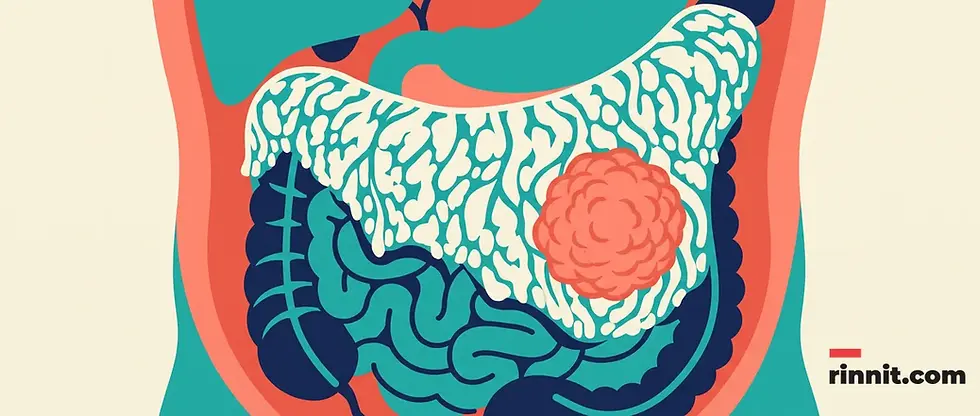
What is the omentum, and what is omentum cancer?
The omentum is a specialized layer of fatty tissue that starts at the stomach and extends over the intestines, reaching every organ in the abdomen. While its full function is still being studied, it is known to act as a protective “bandage,” draping over areas of infection or inflammation to promote healing. When cancer cells form directly in this tissue, it is called primary omentum cancer. [1]
However, it is far more common for the omentum to be affected by secondary omentum cancer. This occurs when cancers from nearby organs—most frequently the ovaries or the stomach—metastasize to the omentum. Because the omentum contains energy-rich cells, it can unfortunately provide an environment where cancer cells multiply rapidly. [1]
What are the symptoms and signs of omentum cancer?
Omentum cancer may cause no symptoms early on, but as it grows it can cause an abdominal mass, bloating, pain, digestive changes, weight loss and fatigue. As the tumor grows, individuals may begin to experience physical changes in the abdominal area:
Abdominal Mass: A solid mass that may be tender or painless to the touch. [1]
Swelling and Pain: Distention (bloating) of the abdomen accompanied by persistent pain. [1]
Digestive Changes: Constipation, nausea, vomiting, or “early satiety” (feeling full after eating only a small amount). [1]
Systemic Signs: Unexplained weight loss and general fatigue.
What causes omentum cancer, and who is at risk?
The exact cause of primary omentum cancer is unknown, but certain factors can influence the risk of developing abdominal tumors. [1]
Risk Category | Details |
Age | Most commonly diagnosed in adults over the age of 50. |
Gender | Certain types of omentum tumors are slightly more prevalent in men. |
Metastasis | A history of ovarian or stomach cancer significantly increases the risk of omentum involvement. |
Lifestyle | Factors like smoking, a low-fiber diet, alcohol use, and a sedentary lifestyle. |
Genetics | Family history of cancer or specific inherited gene mutations. |
How is omentum cancer diagnosed and staged?
Omentum cancer is diagnosed with imaging tests such as CT, MRI and ultrasound, and staged from I to IV based on how far it has spread.
Imaging Tests: CT scans (often with contrast dye), MRIs, and ultrasounds are used to visualize the tumor and surrounding organs. [1]
Staging (I–IV): Stage I means the cancer is limited to where it started, while stages II and III mean it has spread further into nearby tissues or lymph nodes. Stage IV means the cancer has spread to distant parts of the body.

How is omentum cancer treated and managed?
Because omentum tumors are often aggressive, a combination of treatments is typically required to remove the cancer and prevent it from returning.
Omentectomy: The surgical removal of the omentum. The goal is to remove as much of the tumor as possible while preserving healthy surrounding tissue.
Chemotherapy and Radiation: Medications or high-energy beams used to destroy fast-growing cancer cells or shrink tumors. [1]
HIPEC: Hyperthermic intraperitoneal chemotherapy involves circulating heated chemotherapy drugs directly within the abdomen for a short period during surgery.
Debulking Surgery: Often used when ovarian cancer has spread; the aim is to remove all visible tumors larger than 1 centimeter. [1]

What is the outlook for omentum cancer, and can it be prevented?
The prognosis for omentum cancer depends heavily on the stage at diagnosis and the size of the tumor. Because these tumors can be aggressive, they have a higher chance of returning after treatment. Early detection through regular check-ups is the most effective way to improve outcomes. [1]
While no cancer is entirely preventable, you can reduce your risk by maintaining a healthy lifestyle. This includes achieving a healthy weight, eating a diet rich in whole grains and vegetables, exercising regularly, and avoiding tobacco and excessive alcohol. [1]
Conclusion
Omentum cancer is a complex and rare condition, often appearing as a complication of other abdominal cancers. Understanding the role of the omentum and recognizing the early signs of abdominal distress are crucial steps in seeking timely medical care. With modern surgical techniques and targeted therapies, healthcare providers can effectively manage even aggressive cases.
Frequently Asked Questions
What is omentum cancer?
It is cancer that occurs in the omentum, a layer of fatty tissue in the abdomen.
Is it common?
No, primary omentum cancer is extremely rare, with very few reported cases.
What is the omentum?
It is fatty tissue that drapes over the intestines and other abdominal organs.
What does the omentum do?
It acts as a protective layer and helps heal inflammation or infection in the abdomen.
What is the difference between primary and secondary omentum cancer?
Primary starts in the omentum; secondary spreads there from another organ.
Which cancers usually spread to the omentum?
Ovarian and stomach cancers are the most common sources.
What are the main symptoms?
Abdominal pain, swelling, a solid mass, and feeling full quickly.
Can it cause weight loss?
Yes, unexplained weight loss is a common symptom of many abdominal cancers.
Who is most at risk?
Adults over age 50 and those with a history of ovarian or stomach cancer.
Is it more common in men or women?
Some types are slightly more common in men, but secondary spread from ovarian cancer affects women.
How is it diagnosed?
Through imaging tests like CT scans, MRIs, and ultrasounds.
What is an omentectomy?
It is the surgical removal of part or all of the omentum.
Why is surgery the main treatment?
Surgery is needed to remove the physical tumor and affected fatty tissue.
What is HIPEC?
It is heated chemotherapy circulated in the abdomen during surgery.
Does chemotherapy work for omentum cancer?
Yes, it is often used to kill remaining cancer cells after surgery.
Is radiation used?
Sometimes energy beams are targeted to shrink or destroy cancer cells.
What is debulking surgery?
A procedure to remove as much of a tumor as possible, usually in cases of spread.
What are the types of omentum tumors?
They include liposarcoma, leiomyosarcoma, and stromal tumors.
What is a solitary fibrous tumor?
A rare type of tumor that can sometimes form in the omentum.
Can omentum cancer be cured?
It depends on the stage and size; early detection offers the best chance.
Why is it called “aggressive”?
Omentum tumors tend to grow quickly and have a high chance of returning.
What does Stage IV mean?
It means the cancer has spread to distant parts of the body.
What is “early satiety”?
Feeling full after eating only a small amount of food.
Can it cause constipation?
Yes, a tumor in the abdomen can press on the intestines.
Is the abdominal mass painful?
It can be either tender or painless to the touch.
Can genetics play a role?
Yes, inherited gene mutations can increase the risk of various cancers.
How does age affect risk?
Risk generally increases as you get older, especially after age 50.
Does smoking increase risk?
Yes, tobacco use is a risk factor for many types of cancer.
Can a healthy diet help?
A high-fiber diet and nutritious foods can help reduce overall cancer risk.
Is exercise important?
Regular physical activity supports a healthy immune system and weight.
What is abdominal distention?
A visible swelling or bloating of the stomach area.
Can environmental factors cause it?
Exposure to certain chemicals or secondhand smoke may increase risk.
What should I ask my doctor?
Ask about treatment options, risks of recurrence, and necessary diagnostic tests.
What is a radiologist?
A doctor who specializes in using imaging and radiation for diagnosis and treatment.
Is the omentum only in the stomach?
It starts at the stomach but extends to every organ in the abdomen.
Can children get omentum cancer?
It is extremely rare in children; most cases are in older adults.
How long does surgery take?
The duration varies based on the extent of the tumor and if other organs are involved.
What is the recovery like?
Recovery depends on the type of surgery and any additional treatments like chemo.
Can it come back after surgery?
Yes, omentum tumors have a tendency to recur, so monitoring is vital.
What is “visible cancer”?
Tumors that a surgeon can see and remove during a procedure.
Is the omentum necessary?
While it has functions, you can live a healthy life after an omentectomy.
Does alcohol affect risk?
Limiting alcohol intake is recommended to reduce the risk of chronic diseases.
What is a sedentary lifestyle?
A lifestyle with little to no regular physical activity.
Can family history matter?
Yes, having a family member with cancer can sometimes indicate a higher risk.
What is contrast dye?
A substance used during imaging to make certain areas show up more clearly.
Is it the same as peritoneal cancer?
They are related, as the omentum is part of the peritoneum (lining of the abdomen).
What is the most important factor for outlook?
The stage of the cancer at the time of diagnosis.
Can it cause nausea?
Yes, abdominal tumors often cause nausea or vomiting.
Should I get regular screenings?
Discuss your risk factors with a doctor to determine a screening schedule.
Where can I find more resources?
Visit Rinnit.com for health guides and tracking tools.
Related Reading
Peritoneal Carcinomatosis: Symptoms, Causes & Treatment — Cancer Spreading to the Abdominal Lining explains how cancers spread across the lining of the abdomen.
Omentectomy: Why It's Done, Types, Risks and Recovery describes surgery to remove the omentum and what recovery involves.
Ovarian Cancer: Symptoms, Causes, and Treatment — A Clear Guide to Understanding and Managing the Disease covers a cancer that commonly spreads to the omentum.
Understanding Primary Peritoneal Cancer: Symptoms, Risks, and Care explains a rare cancer that starts in the abdominal lining.
References
Cleveland Clinic. Omentum Cancer. Cleveland Clinic. Last updated April 28, 2022. https://my.clevelandclinic.org/health/diseases/22939-omentum-cancer
Schwartz RW, Reames M, McGrath PC, et al. Primary solid neoplasms of the greater omentum. Surgery. 1991;109(4):543-549. PMID 2008659. https://pubmed.ncbi.nlm.nih.gov/2008659/
van Driel WJ, Koole SN, Sikorska K, et al. Hyperthermic intraperitoneal chemotherapy in ovarian cancer. N Engl J Med. 2018;378(3):230-240. PMID 29342393. https://doi.org/10.1056/NEJMoa1708618
Disclaimer
This article is for informational purposes only and does not constitute medical advice. Always consult with a qualified healthcare professional regarding any cancer concerns or medical conditions.



Comments