Ovarian Cancer: Symptoms, Causes, and Treatment — A Clear Guide to Understanding and Managing the Disease

Updated: 2 days ago
Medically reviewed by Dr. Baraa Alnahhal, MD · Last reviewed: September 2026
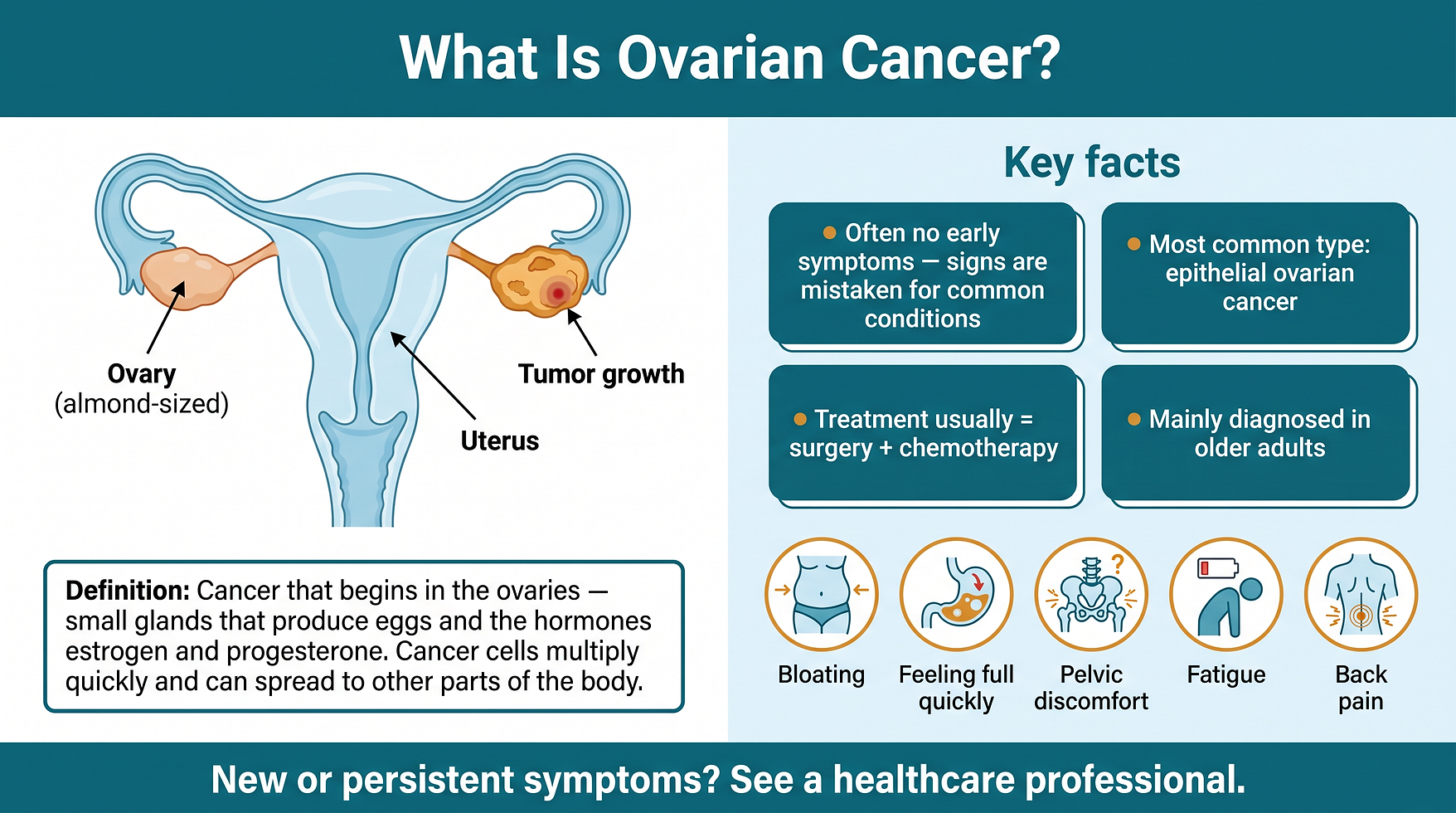
Ovarian cancer is a cancer that begins in the ovaries, the two almond-sized glands that produce eggs and the hormones estrogen and progesterone. Early on it often causes no symptoms, and when signs do appear — bloating, feeling full quickly, pelvic discomfort, fatigue, back pain, bowel changes, frequent urination, weight loss — they are usually mistaken for common conditions. Risk factors include older age, BRCA1/BRCA2 and Lynch syndrome gene changes, family history, obesity, postmenopausal hormone therapy, endometriosis, and early periods or late menopause. Diagnosis combines a pelvic exam, imaging, blood tests (including the CA 125 tumor marker), and sometimes surgery; staging runs from I to IV. Treatment usually involves surgery plus chemotherapy, with targeted therapy, hormone therapy, immunotherapy, and palliative care added in certain situations.
TL;DR
Ovarian cancer is a type of cancer that begins in the ovaries — the two glands, each about the size of an almond, that produce eggs and the hormones estrogen and progesterone. Cancer cells multiply quickly and can invade healthy tissue or spread to other parts of the body.
The tricky part: when ovarian cancer first develops, it might not cause any noticeable symptoms. When symptoms do appear, they're usually blamed on other, more common conditions. That's why knowing the warning signs matters.
The eight main symptoms include abdominal bloating or swelling, feeling full quickly when eating, weight loss, pelvic discomfort, fatigue, back pain, changes in bowel habits (such as constipation), and a frequent need to urinate. If these are new, persistent, and unusual for you — get them checked.
Risk goes up with older age, inherited gene changes (such as BRCA1 and BRCA2), family history, being overweight or obese, postmenopausal hormone replacement therapy, endometriosis, early menstruation or late menopause, and never having been pregnant.
Treatment usually involves a combination of surgery and chemotherapy. The exact plan depends on the cancer's type, stage (I through IV), and your personal goals — including whether preserving fertility matters to you.
Quick Answer: What You Need to Know About Ovarian Cancer
Ovarian cancer begins in the ovaries — almond-sized glands that produce eggs plus the hormones estrogen and progesterone; cancer cells grow quickly and can spread.
Early on, it often causes no symptoms; when signs appear, they're usually mistaken for common conditions — which is why persistent symptoms matter.
Eight warning signs: bloating or swelling, feeling full quickly, weight loss, pelvic discomfort, fatigue, back pain, bowel habit changes, frequent urination.
Main risk factors: older age, BRCA1/BRCA2 and Lynch syndrome gene changes, family history, obesity, postmenopausal hormone therapy, endometriosis, early periods or late menopause, never pregnant.
Most common type: epithelial ovarian cancer; stromal tumors and germ cell tumors are rare.
Diagnosis combines a pelvic exam, imaging (ultrasound, CT), blood tests including the CA 125 tumor marker, and sometimes surgery; staged I to IV.
Treatment usually = surgery + chemotherapy, with targeted therapy, hormone therapy, immunotherapy, and palliative care available for certain situations.
New or persistent symptoms warrant a doctor's appointment — early evaluation matters.
What Is Ovarian Cancer?
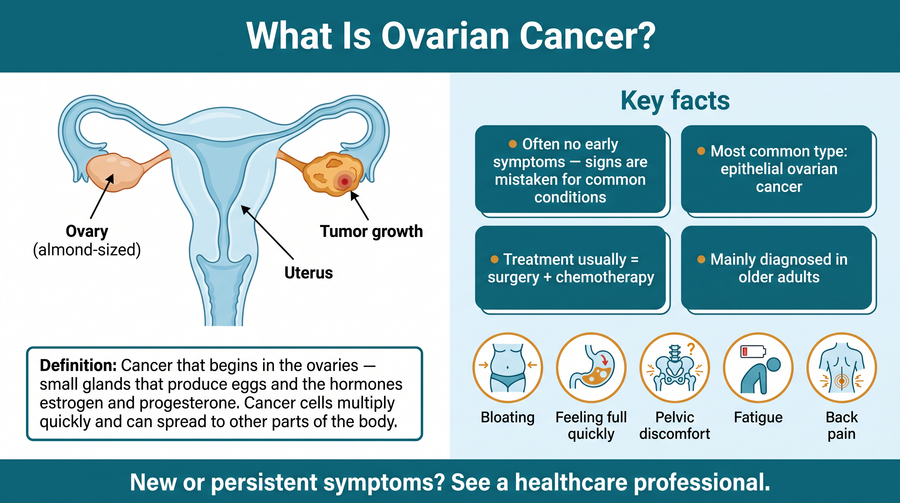
Ovarian cancer is a type of cancer that begins in the ovaries. The female reproductive system contains two ovaries, one on each side of the uterus. Each ovary is about the size of an almond and does two jobs: it produces eggs (called ova) and it produces the hormones estrogen and progesterone.
At its core, ovarian cancer is a growth of cells that forms in the ovaries. These cells multiply quickly and can invade and destroy healthy body tissue.
Fact | What It Means |
What it is | A cancer that begins in the ovaries — the two small glands that produce eggs and the hormones estrogen and progesterone |
Where it starts | In or near the ovaries, one on each side of the uterus |
How it behaves | Cells multiply quickly, can invade healthy tissue, and can spread (metastasize) to other body parts |
Symptom challenge | It often causes no noticeable symptoms at first; when signs appear, they're usually blamed on common conditions |
Most common type | Epithelial ovarian cancer |
Standard treatment | Usually a combination of surgery and chemotherapy |
Who it affects | Most often diagnosed in older adults |
The symptom challenge deserves emphasis. Two facts shape what parents and patients should know: symptoms often appear late, and they mimic everyday conditions — digestive problems, stress fatigue, aging changes. That is exactly why this guide focuses on the pattern to watch for.
What Are the Symptoms?
Signs and symptoms of ovarian cancer may include:
Symptom | How It Shows Up |
Abdominal bloating or swelling | The belly looks or feels swollen or puffy |
Feeling full quickly | You get full soon after starting a meal |
Weight loss | Losing weight without trying |
Pelvic discomfort | Aching or pressure in the lower belly area |
Fatigue | Unusual tiredness that doesn't lift with rest |
Back pain | Pain in the lower back |
Bowel habit changes | Such as constipation |
Frequent urination | A frequent need to pee |
Symptoms arrive individually or in combination, and any one of them is common in far less serious conditions. What makes the pattern worth flagging is not any single symptom, but symptoms that are new, persistent, and unusual for you.
When to See a Doctor
Make an appointment with your doctor if you have any signs or symptoms that worry you. This is not alarmism — most of these symptoms have ordinary explanations. But persistent changes are exactly the signal that deserves a professional look.
Signal | Why It Matters |
Any symptom that worries you | Warrants an appointment, full stop |
Symptoms that are new for you | Not part of your normal baseline |
Symptoms that persist or worsen | Don't improve with time or simple remedies |
Symptoms that come in combination | Bloating + pelvic discomfort + feeling full quickly together carry more weight than any one alone |
What Are the Causes?
It's not clear what causes ovarian cancer, though things that increase the risk of the disease have been identified.
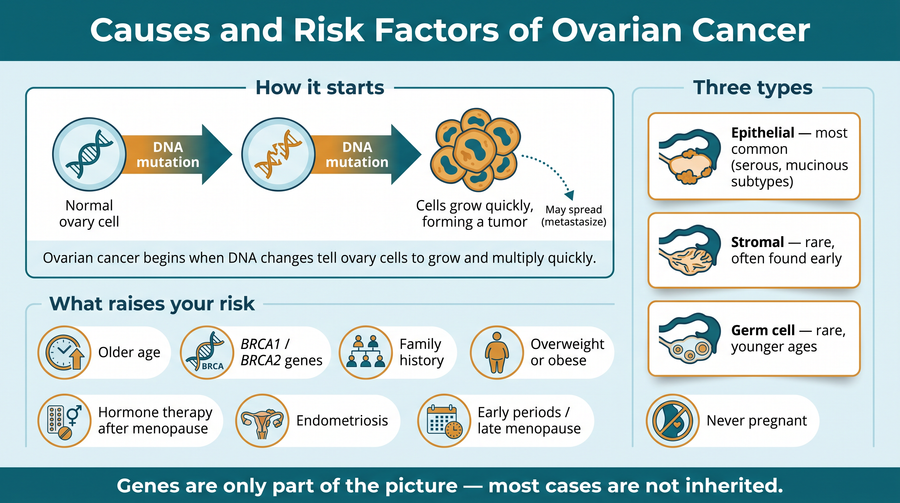
Here's what is known about how it begins. Ovarian cancer starts when cells in or near the ovaries develop changes (mutations) in their DNA. A cell's DNA contains the instructions that tell the cell what to do. When those instructions change, they tell the cells to grow and multiply quickly, creating a mass — a tumor — of cancer cells.
The cancer cells then behave in ways healthy cells don't:
They continue living when healthy cells would die. They can invade nearby tissues and break off from an initial tumor to spread (metastasize) to other parts of the body.
The Three Types of Ovarian Cancer
The type of cell where the cancer begins determines the type of ovarian cancer — and helps your doctor determine which treatments are best for you.
Type | How Common | Key Features |
Epithelial ovarian cancer | Most common | Includes several subtypes, including serous carcinoma and mucinous carcinoma |
Stromal tumors | Rare | Usually diagnosed at an earlier stage than other ovarian cancers |
Germ cell tumors | Rare | Tend to occur at a younger age |
What Are the Risk Factors?
Factors that can increase your risk of ovarian cancer include:
Risk Factor | How It Raises Risk |
Older age | Risk increases as you age; the disease is most often diagnosed in older adults |
Inherited gene changes | A small percentage of ovarian cancers are caused by gene changes inherited from parents — most notably BRCA1 and BRCA2, which also raise breast cancer risk. Other known gene changes are associated with Lynch syndrome and the genes BRIP1, RAD51C, and RAD51D |
Family history of ovarian cancer | Blood relatives diagnosed with ovarian cancer raise your risk |
Being overweight or obese | Raises the risk of ovarian cancer |
Postmenopausal hormone replacement therapy | Taking hormones to control menopause signs and symptoms may increase risk |
Endometriosis | A painful disorder where tissue similar to the uterine lining grows outside the uterus |
Age when menstruation started and ended | Beginning menstruation early, starting menopause late, or both may increase risk |
Never having been pregnant | Never being pregnant may raise risk |
One important framing note: inherited gene changes cause only a small percentage of ovarian cancers. Most cases are not inherited. If you carry a gene change like BRCA1 or BRCA2, your blood relatives — siblings and children — may carry the same change, which is worth sharing with them.
Can Ovarian Cancer Be Prevented?
There's no sure way to prevent ovarian cancer. But there may be ways to reduce your risk:
Approach | What the Evidence Says |
Birth control pills | Taking oral contraceptives reduces ovarian cancer risk — but these medications carry their own risks, so discuss whether the benefits outweigh them for your situation |
Discuss risk factors with your doctor | A family history of breast and ovarian cancers deserves a conversation; your doctor can determine what it means for your risk |
Genetic counseling and testing | A genetic counselor can help you decide whether genetic testing is right for you |
Preventive surgery | If you're found to have a gene change that increases risk, you may consider surgery to remove your ovaries to prevent cancer |
What Are the Possible Complications?
Ovarian cancer's main threat comes from how it behaves: cancer cells can invade nearby tissues and metastasize — breaking off from an initial tumor to spread to distant parts of the body. By stage 4, the cancer has spread to distant areas of the body.
Treatment itself also carries weight — surgery removes tissue and can end fertility; chemotherapy kills fast-growing cells, which affects healthy fast-growing cells too; and a cancer diagnosis brings emotional strain. Each section below addresses how these are managed.
Complication | Context |
Metastasis | Cancer cells can spread from the ovaries to distant body areas, especially in stage IV disease |
Fertility loss | Surgery to remove both ovaries or the uterus ends natural fertility; options exist but must be planned ahead |
Treatment side effects | Surgery recovery, chemotherapy effects, hormone changes after ovary removal |
Emotional burden | A cancer diagnosis can feel overwhelming; support systems matter |
How Is Ovarian Cancer Diagnosed?
Tests and procedures used to diagnose ovarian cancer include:
Test or Procedure | What It Involves | What It Shows |
Pelvic exam | Gloved fingers into the vagina while pressing a hand on the abdomen to feel (palpate) the pelvic organs; also a visual exam of the external genitalia, vagina, and cervix | Lets the doctor feel the uterus, ovaries, and other organs |
Imaging tests | Ultrasound or CT scans of the abdomen and pelvis | Helps determine the size, shape, and structure of the ovaries |
Blood tests | Organ function tests, plus tumor marker tests such as CA 125 | Detects a protein often found on the surface of ovarian cancer cells; provides clues about diagnosis and prognosis — but cannot confirm cancer on its own |
Surgery | Removing an ovary and testing it for signs of cancer | Sometimes the only way to be certain of the diagnosis |
Genetic testing | Testing a blood sample for gene changes that increase ovarian cancer risk | Helps your doctor shape the treatment plan — and information worth sharing with blood relatives |
One honest note about the CA 125 test: it can detect a protein often found on the surface of ovarian cancer cells, but these tests can't tell your doctor whether you have cancer. They provide clues about diagnosis and prognosis.
Understanding the Stages
Once ovarian cancer is confirmed, your doctor assigns the cancer a stage — the numbered extent of how far it has spread.
Stage | Meaning |
Stage I | Cancer is confined to the ovaries |
Stages I–IV (I to IV) | Numbered 1 to 4; higher numbers mean more spread |
Stage IV | Cancer has spread to distant areas of the body |
How Is Ovarian Cancer Treated?
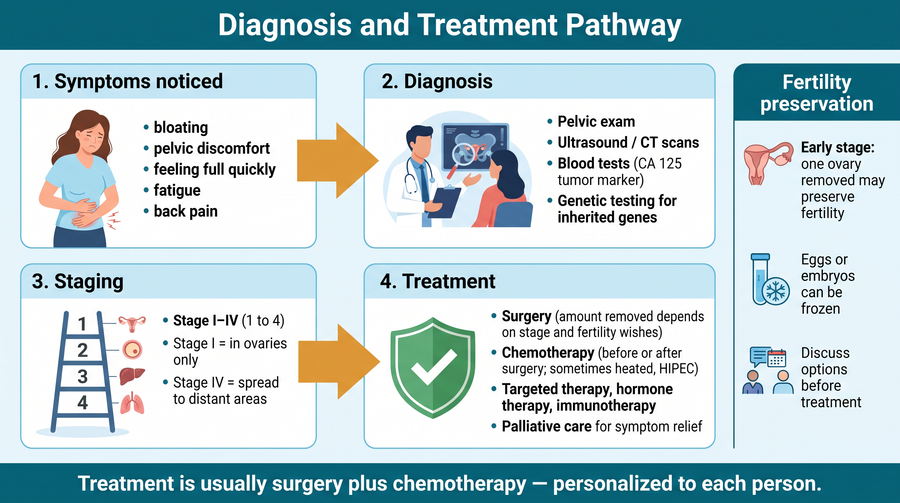
Treatment of ovarian cancer usually involves a combination of surgery and chemotherapy. Other treatments may be used in certain situations.
Surgery
Surgery Type | When It's Used | What's Removed | Fertility Impact |
Remove one ovary | Early-stage cancer that hasn't spread beyond one ovary | The affected ovary and its fallopian tube | May preserve the ability to have children |
Remove both ovaries | Cancer in both ovaries, no signs of additional cancer | Both ovaries and both fallopian tubes; uterus left intact | May still become pregnant using frozen embryos/eggs or donor eggs |
Remove both ovaries and the uterus | More extensive cancer, or no wish to preserve fertility | Ovaries, fallopian tubes, uterus, nearby lymph nodes, and the omentum (a fold of fatty abdominal tissue) | Ends natural fertility |
Advanced-cancer surgery | Advanced cancer | As much cancer as possible | Chemotherapy may be given before or after surgery |
Chemotherapy
Chemotherapy is a drug treatment that uses chemicals to kill fast-growing cells in the body, including cancer cells. The drugs can be injected into a vein or taken by mouth.
Chemotherapy is often used after surgery to kill any cancer cells that might remain. It can also be used before surgery.
In certain situations, chemotherapy drugs may be heated and infused into the abdomen during surgery — called hyperthermic intraperitoneal chemotherapy (HIPEC). The drugs stay in place for a set time before being drained, and the operation is then completed.
Targeted Therapy
Targeted drug treatments focus on specific weaknesses present within cancer cells. By attacking these weaknesses, the drugs cause cancer cells to die. If you're considering targeted therapy, your doctor may test your cancer cells to determine which targeted therapy is most likely to affect your cancer.
Hormone Therapy
Hormone therapy uses drugs to block the effects of estrogen on ovarian cancer cells — because some ovarian cancer cells use estrogen to help them grow. It might be an option for some slow-growing ovarian cancers, and also if the cancer comes back after initial treatments.
Immunotherapy
Immunotherapy uses the immune system to fight cancer. Cancer cells produce proteins that help them hide from immune cells; immunotherapy interferes with that hiding process. It might be an option in certain situations.
Supportive (Palliative) Care
Palliative care is specialized medical care focused on providing relief from pain and other symptoms of a serious illness. A team of doctors, nurses, and specially trained professionals works to improve quality of life for people with cancer and their families.
Two points worth knowing: palliative care complements ongoing treatments — it can be used while undergoing surgery or chemotherapy — and when it's used along with all other appropriate treatments, people with cancer may feel better and live longer.
Treatment | How It Works | Typical Use in Ovarian Cancer |
Surgery | Removes the cancer and affected tissue | Core treatment — extent depends on stage and fertility wishes |
Chemotherapy | Drugs kill fast-growing cells; IV or oral; sometimes heated (HIPEC) during surgery | Used before or after surgery; standard partner to surgery |
Targeted therapy | Attacks specific weaknesses in cancer cells | For cancers matched to a specific drug after cell testing |
Hormone therapy | Blocks estrogen's effects on cancer cells | Some slow-growing cancers; cancer that returns |
Immunotherapy | Helps the immune system fight hidden cancer cells | Certain situations |
Palliative care | Relieves pain and symptoms; complements all other treatment | Any stage, alongside curative treatment |
What's New in Ovarian Cancer Research?
Clinical trials are exploring new treatments, interventions, and tests as a means to prevent, detect, treat, or manage this condition. Researchers are investigating new immunotherapy targets and ways to catch ovarian cancer risk earlier. If standard treatments aren't enough, clinical trials may offer additional options — ask your care team.
Coping and Support
A diagnosis of ovarian cancer can be overwhelming. In time, you'll find ways to cope with your feelings. In the meantime:
Coping Strategy | Why It Helps |
Find someone to talk with | A friend, family member, or formal support group — groups for families of people with cancer also exist |
Let people help | Cancer treatments can be exhausting; let people know what would be most useful to you |
Set reasonable goals | Goals help you feel in control and give a sense of purpose — choose goals you can reach |
Take time for yourself | Eating well, relaxing, and getting enough rest help combat the stress and fatigue of cancer |
Preparing for Your Appointment
Start by making an appointment with your family doctor or gynecologist if you have any signs or symptoms that worry you.
If your doctor suspects ovarian cancer, you may be referred to a gynecological oncologist — an OB-GYN who has additional training in the diagnosis and treatment of ovarian cancer and other gynecological cancers.
Before you go:
Step | Detail |
Note pre-appointment restrictions | Such as not eating solid food the day before your appointment |
Write down your symptoms | Including any that seem unrelated to why you scheduled the appointment |
Write down key medical information | Including other conditions |
Write down key personal information | Including major changes or stressors in your life |
List all medications, vitamins, supplements | Bring the complete list |
Bring someone along | A relative or friend can help remember what the doctor says |
Write down your questions | Before you go, not in the moment |
Questions worth asking: What's the most likely cause of my symptoms? What kinds of tests do I need? What treatments are available, and what side effects can I expect? What is the prognosis? If I still want to have children, what options are available? I have other health conditions — how can I best manage them together?
Questions your doctor may ask: When did symptoms begin, and how severe are they? Are they continuous or occasional? What improves or worsens them? Do any relatives have ovarian or breast cancer? Are there other cancers in your family history?
Key Takeaways
Ovarian cancer is a cancer that begins in the ovaries — the two almond-sized glands that produce eggs and the hormones estrogen and progesterone. Its symptoms are subtle and easily mistaken for common conditions, which is why persistent, new symptoms deserve evaluation.
Risk rises with age, certain inherited gene changes (especially BRCA1/BRCA2), family history, obesity, postmenopausal hormone therapy, endometriosis, and reproductive-history factors — but most cases are not inherited.
Treatment usually combines surgery and chemotherapy, personalized to the cancer's stage and your own goals — including fertility preservation when that matters to you. Palliative care complements every other treatment and can improve both comfort and length of life.
If you have symptoms that worry you, make an appointment. Early conversation with a healthcare professional is the single most useful step you can take.
Frequently Asked Questions (FAQ)
What are the early warning signs of ovarian cancer?
Early warning signs include abdominal bloating or swelling, feeling full quickly when eating, pelvic discomfort, fatigue, back pain, changes in bowel habits, a frequent need to urinate, and unexplained weight loss. Because these mimic common conditions, the key is persistence: symptoms that are new, unusual for you, and don't go away should be checked by a doctor.
Can ovarian cancer be detected early?
Early detection is challenging because ovarian cancer often causes no noticeable symptoms at first. There is no reliable routine screening test — the CA 125 blood test cannot confirm cancer on its own. Knowing the symptom pattern and acting on persistent changes is the most practical early-detection step.
What does the CA 125 test show?
The CA 125 test detects a protein often found on the surface of ovarian cancer cells. It cannot tell your doctor whether you have cancer, but it provides clues about diagnosis and prognosis, and it's used alongside pelvic exams and imaging.
Who is at highest risk for ovarian cancer?
Risk is highest with older age, inherited gene changes (BRCA1, BRCA2, Lynch syndrome genes, BRIP1, RAD51C, RAD51D), family history of ovarian cancer, being overweight or obese, postmenopausal hormone replacement therapy, endometriosis, early menstruation or late menopause, and never having been pregnant.
Is ovarian cancer inherited?
Only a small percentage of ovarian cancers are caused by inherited gene changes. Most cases are not inherited. If you carry a risk gene change like BRCA1 or BRCA2, blood relatives may carry it too — sharing that information with siblings and children matters.
What are the types of ovarian cancer?
There are three main types: epithelial ovarian cancer (the most common, with subtypes like serous and mucinous carcinoma), stromal tumors (rare, usually diagnosed at an earlier stage), and germ cell tumors (rare, tend to occur at younger ages).
What are the stages of ovarian cancer?
Ovarian cancer is staged from 1 to 4 (Roman numerals I–IV). The lowest stage means the cancer is confined to the ovaries. By stage 4, the cancer has spread to distant areas of the body.
What treatment works for ovarian cancer?
Treatment usually involves a combination of surgery and chemotherapy. Depending on the situation, targeted therapy, hormone therapy, immunotherapy, and palliative care may also be used. For early-stage disease, surgery to remove one ovary may preserve fertility.
Can I still have children after an ovarian cancer diagnosis?
Sometimes. For early-stage cancer, removing one ovary and its fallopian tube may preserve the ability to have children. Even after removing both ovaries with the uterus intact, pregnancy may be possible using frozen embryos or eggs, or donor eggs. Discuss fertility options with your doctor before treatment begins.
What is palliative care, and when is it used?
Palliative care is specialized medical care focused on relief from pain and other symptoms of a serious illness. It complements — not replaces — treatments like surgery and chemotherapy, and can be used at any stage. People receiving it alongside all other appropriate treatments may feel better and live longer.
Sources
Ovarian cancer — Symptoms and causes (May 2, 2025)
Ovarian cancer — Diagnosis and treatment (May 2, 2025)
Health information, not medical advice. This article is for general education and is not a substitute for professional diagnosis or treatment. Always consult a qualified healthcare provider about your own health, and seek emergency care for urgent symptoms.
Comments