What Is Conduct Disorder? Symptoms, Causes, Diagnosis & Treatment Explained

Updated: 3 days ago
Medically reviewed by Dr. Baraa Alnahhal, MD · Last reviewed: October 2026
Quick Answer: What is conduct disorder?
Conduct disorder is a pattern of persistent aggression, rule-breaking, lying, stealing and property destruction in a child or teen that goes well beyond normal rebellion and impairs functioning at home or school. Treatment focuses on talk therapy for the child and family [1] [3], and early intervention matters [1] [4], because about one-third of cases continue into adulthood as antisocial personality disorder [3].
Key takeaways
Conduct disorder is a mental health condition with a consistent pattern of aggressive, rule-breaking behavior in children and teens [2].
It affects 3% to 9% of children and adolescents in the United States [3].
It is more common in boys (presenting at ages 10 to 12) than girls (ages 14 to 16) [4].
Onset can be early (before age 10) [2] [4] or during adolescence (ages 10 to 19).
Related conditions include ODD (which can lead to CD), depression, ADHD and learning disorders [4].
The four core behaviors are aggression, property destruction, deceiving, lying or stealing, and serious rule violations [3] [4].
Causes are a complex mix of genetic or biological factors and parental, familial and environmental factors [3] [4].
Diagnosis requires 3 or more core behaviors in the past 12 months (at least 1 in the past 6) that impair functioning, per DSM criteria [3] [4].
Treatment is psychotherapy: parent management training, CBT, anger management [1] [2] [4] and community-based programs.
Medication is not used directly for CD, but may treat co-occurring conditions [1] [3] [4].
Behaviors usually stop in early adulthood, but about one-third of cases continue, often as ASPD [3].
Any behavior that harms or endangers others or the child needs immediate care.
What the research says
Parent training helps children with early-onset conduct problems in the short term. A Cochrane review of 13 trials with 1,078 participants tested group parenting programs for children aged 3 to 12. Child conduct problems fell (standardized mean difference -0.53 by parent report, 95% CI -0.72 to -0.34; -0.44 when independently assessed), and parental mental health and parenting skills improved. Bringing the average child with clinical-level conduct problems into the non-clinical range cost about $2,500 per family, and the authors said long-term outcomes need more research (Furlong et al., Cochrane Database Syst Rev, 2012) [5].
Cognitive behavioral therapy is the most widely used approach for anger and aggression, but results differ. A review of existing meta-analyses found that cognitive behavioral treatments are the most commonly delivered interventions for both. Anger treatments showed at least moderate effectiveness in both non-clinical and psychiatric groups, while results for aggression treatments were less consistent. It was a review of reviews, not a conduct disorder trial (Lee and DiGiuseppe, Curr Opin Psychol, 2018) [6].
Disruptive behavior disorders are common worldwide. In a meta-analysis of 41 studies from 27 countries, the pooled prevalence of any disruptive disorder (the group that includes conduct disorder and oppositional defiant disorder) among children and adolescents was 5.7% (95% CI 4.0 to 8.1), compared with 13.4% for any mental disorder. Estimates varied a lot between studies (Polanczyk et al., J Child Psychol Psychiatry, 2015) [7].
What Is Conduct Disorder?

Conduct disorder (CD) is a mental health condition that affects children and teens, characterized by a consistent pattern of aggressive behaviors and actions that harm the well-being of others. Children with conduct disorder also often violate rules and societal norms [2] [4].
Conduct disorder lies on a spectrum of disruptive behavioral disorders, which also includes oppositional defiant disorder (ODD). In some cases, ODD leads to CD [4].
Conduct disorder often occurs alongside other psychiatric conditions, including depression, attention-deficit/hyperactivity disorder (ADHD) [1] and learning disorders [4].
Conduct disorder vs. personality disorders
A personality disorder is a mental health condition involving long-lasting, disruptive patterns of thinking, behavior, mood and relating to others. Most personality disorders begin in the teen years when personality further develops and matures — as a result, almost all people diagnosed with personality disorders are above the age of 18.
One exception is antisocial personality disorder (ASPD) — approximately 80% of people with this disorder will have started to show symptoms by age 11.
There's not much difference between conduct disorder and ASPD, but CD is typically diagnosed in children. If an adult meets the criteria for both conditions, a mental health professional would give them a diagnosis of ASPD instead of CD.
Who does conduct disorder affect?
Conduct disorder affects children and adolescents. It can have early onset before age 10 [2] [4], but commonly develops in adolescence — between ages 10 and 19.
Signs and Symptoms of Conduct Disorder
Characteristic behaviors of conduct disorder develop gradually over time [4]. Children with conduct disorder tend to be impulsive and difficult to manage, and they don't seem concerned about the feelings of other people [3].

The four core behaviors of conduct disorder include:
Core behavior category | Specific signs |
Aggression toward people and animals | Bullying; physical violence (potentially with a weapon); verbal fights; threatening; forcing sexual activity; blaming others for their own behavior; hurting animals |
Destruction of property | |
Deceiving, lying and stealing | Lying to get a favor or avoid responsibilities; stealing from people or stores; breaking into houses or businesses |
Serious violations of rules | Breaking rules without clear reason; truancy (not going to school); running away from home; frequently breaking rules set by parents |
Other common signs of conduct disorder include heavy alcohol drinking and/or heavy substance use, frequent and risky sexual behavior, becoming easily frustrated, making no effort to hide aggressive behaviors, not showing remorse for their actions, and difficulty making and maintaining friendships.
It's important to note that occasional rebellious behavior is common during childhood and adolescence. The signs and symptoms that lead to a diagnosis of conduct disorder demonstrate a disruptive and repetitive pattern — not isolated incidents [4].
Signs of conduct disorder in adults
Adults who have conduct disorder may have difficulty keeping a job or maintaining relationships, and they may be prone to illegal or dangerous behavior. Symptoms of conduct disorder in an adult may be diagnosed as antisocial personality disorder.
What Causes Conduct Disorder?
Researchers aren't sure exactly what causes conduct disorder, but they believe it's a complex combination of genetic/biological and environmental factors [3] [4].
Genetic/biological factors include inherited characteristics — studies show that traits such as antisocial behavior, impulsivity, temperament, aggression and insensitivity to punishment can be passed down. High testosterone levels are associated with aggression, and traumatic brain injury, seizures and neurological damage can contribute to aggression.
Parental, familial and environmental factors play a significant role as well. Parents of adolescents with CD often have engaged in substance use and antisocial behaviors and are frequently diagnosed with ADHD, mood disorders, schizophrenia or antisocial personality disorder [3]. A home environment that lacks structure and adequate supervision, with frequent conflicts between parents, can lead to maladaptive behavior that contributes to CD. Children exposed to frequent domestic violence are more likely to develop it. Living in low social and economic environments with overcrowding and unemployment creates economic and social stress with a lack of adequate parenting — CD affects more children living in low economic environments than not [1] [3] [4]. The availability of drugs and increased crime in a neighborhood also increases risk [4].
Factor type | Examples |
Genetic/biological | Inherited antisocial behavior, impulsivity, temperament, aggression, insensitivity to punishment; high testosterone; traumatic brain injury; seizures; neurological damage |
Parental | Parents with substance use, antisocial behaviors, ADHD, mood disorders, schizophrenia or ASPD [3] |
Home environment | Lack of structure and supervision; frequent parental conflict; exposure to domestic violence |
Socioeconomic | Low social and economic environments; overcrowding; unemployment; lack of adequate parenting |
Neighborhood | Availability of drugs; increased crime [4] |
It's important to note that conduct disorder can occur in children from high-functioning, healthy families [3] — no single factor causes it, and no family structure guarantees or prevents it.
How Is Conduct Disorder Diagnosed?
A mental health professional diagnoses conduct disorder using criteria provided in the American Psychiatric Association's Diagnostic and Statistical Manual of Mental Disorders [3].
They diagnose conduct disorder in children or adolescents who've demonstrated three or more of the core behaviors in the previous 12 months, with at least one in the previous six months [3] [4]. These behaviors must be significant enough to impair functioning in relationships, at home, at school and/or at work [4].
Your child will likely need to see a child and adolescent psychologist or psychiatrist if they're showing signs of conduct disorder. These mental health professionals use specially designed interview and assessment tools to evaluate a child for a mental health condition [2].
Psychologists and psychiatrists often rely on reports from the child's parents, siblings, friends and teachers to get a full understanding of the child's behavior.
Diagnostic element | Requirement |
Criteria source | American Psychiatric Association's DSM |
Behavior count | |
Recency | |
Impact | Behaviors must impair functioning in relationships, home, school and/or work |
Who evaluates | Child and adolescent psychologist or psychiatrist |
Information sources | Interviews, assessment tools, reports from parents, siblings, friends and teachers |
Conduct Disorder Treatment Options
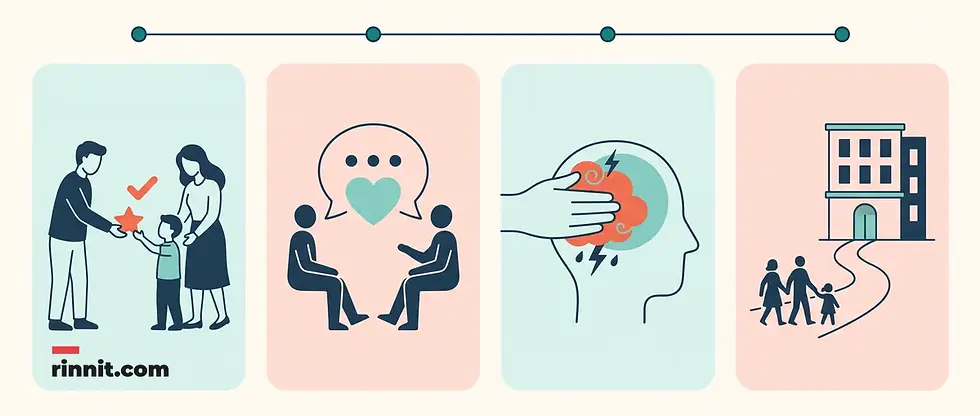
The go-to treatment for conduct disorder is multiple forms of psychotherapy (talk therapy) for your child and family [3], as well as community-based treatment. Healthcare providers typically don't use medication to directly treat conduct disorder, but since other mental health conditions often occur alongside it, your child may benefit from medication to manage those co-occurring conditions [1] [3] [4].
Treatment approach | Goal and how it works |
Parent management training | Trains parents to set consistent discipline with proper rewarding of positive behaviors |
Psychotherapy | Helps the child identify and change troubling emotions, thoughts and behaviors; targets family life and school, improving family dynamics, academic functioning and behavior across environments; provides support, education and guidance to the child and family |
Anger management training | Reduces both emotional feelings and physiological arousal that anger causes; teaches the child to control reactions since the triggers can't always be avoided |
Individual psychotherapy (e.g., cognitive behavioral therapy) | Develops problem-solving skills, strengthens relationships by resolving conflicts, and teaches skills to decline negative influences |
Community-based treatment | Therapeutic schools and residential treatment centers providing structured programs to reduce disruptive behaviors |
Outlook, Prevention and Living With Conduct Disorder
What is the prognosis?
The prognosis for conduct disorder depends on how early the condition developed and whether it was treated.
Usually, the disruptive behaviors of conduct stop during early adulthood — but in about one-third of cases, they continue, and many of these cases meet the criteria for antisocial personality disorder [3]. Early onset before age 10 is associated with a poorer prognosis [2] [3] and is strongly associated with a significant decline in school performance [4].
Some children and adolescents with conduct disorder develop other mental health conditions, including mood or anxiety disorders, somatic symptom disorder, alcohol use disorder and/or substance use disorder, and early adult-onset psychotic disorders. Depression and bipolar disorder may also develop in the teen years and early adulthood, and suicidal ideation can be a complication of these conditions [1] [3]. It's important to get your child immediate medical care if they're talking about or threatening suicide.
Can conduct disorder be prevented?
At this time, there's no known way to prevent conduct disorder, as it's likely caused by a complex combination of factors. But many of the related problems might be lessened with treatment, and seeking help as soon as symptoms appear can decrease the disruption to your child's life, family and friendships.
How can you take care of your child with conduct disorder?
If your child has conduct disorder, aside from getting them professional care, you can help them and yourself in the following ways:
Learn more about conduct disorder, including recent research on effective treatment approaches.
Talk to a mental health professional, preferably one trained in diagnosing and treating conduct disorder.
Explore the treatment options available — treatment must be individualized to meet your child's needs and should be family-centered [2] [4].
Find a family support group or organization in your community.
When should you see a healthcare provider?
If your child has been diagnosed with conduct disorder and their behavior becomes more severe or further disrupts family or school life, talk to their mental health provider.
If your child displays behavior that harms or endangers others — such as other people or animals — or themselves, it's important to get them immediate medical care.
Conclusion
Conduct disorder is a mental health condition marked by a persistent pattern of aggression, rule-breaking, deception and property destruction in children and teenagers — far beyond the occasional defiance that is a normal part of growing up. It affects roughly 3% to 9% of young people in the United States [3], appears more often and earlier in boys than in girls, and frequently travels alongside depression, ADHD and learning disorders.
There is no single cause. Researchers see conduct disorder as the product of inherited traits — impulsivity, aggression, insensitivity to punishment — interacting with home environments that lack structure or safety, parental mental health and substance use history, and the pressures of low-resource neighborhoods. Importantly, it can also arise in children from healthy, high-functioning families [3].
Diagnosis follows clear DSM criteria: at least three of the four core behavior patterns within the past year, with at least one in the past six months [3] [4], significant enough to disrupt home, school, work or relationships. Treatment works best when it starts early and involves the whole family [1] [4] — parent management training, psychotherapy including cognitive behavioral therapy, anger management training and, when needed, structured community-based programs. Medication does not treat conduct disorder itself but can help co-occurring conditions [1] [3] [4].
The outlook is genuinely hopeful for many: disruptive behaviors usually stop by early adulthood [3]. But about one-third of cases persist, often maturing into antisocial personality disorder [3] — which is exactly why watching for warning signs, acting early, and seeking professional help the moment a pattern emerges makes all the difference. If your child ever talks about or threatens suicide, seek immediate medical care.
If visual tools like behavior charts and family-friendly explainers would help you support a child's treatment journey, explore Rinnit's infographic templates — designed to turn complex mental health information into clear, shareable visuals.
Frequently Asked Questions
What is conduct disorder?
Conduct disorder is a mental health condition that affects children and teens, characterized by a consistent pattern of aggressive behaviors that harm the well-being of others, along with violations of rules and societal norms.
Is conduct disorder common?
It affects anywhere between 3% and 9% of children and adolescents in the United States.
What age does conduct disorder start?
It can have early onset before age 10, but commonly develops in adolescence, between ages 10 and 19.
Is conduct disorder more common in boys or girls?
It is more common in male children than female children. The average age of presentation is 10 to 12 years in males and 14 to 16 years in females.
What are the four core behaviors of conduct disorder?
Aggression toward people and animals or violating others' basic rights, destruction of property, deceiving/lying/stealing, and serious violations of rules.
Is conduct disorder the same as oppositional defiant disorder?
No — ODD lies on the same spectrum of disruptive behavioral disorders, and in some cases ODD leads to CD, but they are distinct conditions.
What conditions often occur with conduct disorder?
Depression, attention-deficit/hyperactivity disorder (ADHD) and learning disorders.
Is conduct disorder a personality disorder?
No. Personality disorders typically begin in the teen years and are almost all diagnosed above age 18. CD is the childhood version that is closely related to antisocial personality disorder (ASPD).
What is the difference between conduct disorder and ASPD?
There's not much difference — CD is typically diagnosed in children, while an adult who meets criteria for both receives a diagnosis of ASPD instead.
At what age do people with ASPD start showing symptoms?
Approximately 80% of people with antisocial personality disorder started to show symptoms by age 11.
What are signs of aggression in conduct disorder?
Bullying, physical violence (potentially with a weapon), verbal fights, threatening, forcing sexual activity, blaming others for their own behavior and hurting animals.
Can conduct disorder involve firesetting?
Yes — intentionally setting fires is one of the signs of property destruction in conduct disorder.
Is lying a symptom of conduct disorder?
Yes — lying to get a favor or avoid responsibilities is a sign, along with stealing from people or stores and breaking into houses or businesses.
Is skipping school a sign of conduct disorder?
Yes — truancy, running away from home and frequently breaking parents' rules count as serious rule violations.
Do all kids with conduct disorder steal?
No — stealing is one possible sign among many, and a diagnosis requires a pattern across the core behavior categories.
What other common signs exist beyond the core behaviors?
Heavy alcohol or substance use, frequent and risky sex, becoming easily frustrated, making no effort to hide aggressive behaviors, not showing remorse, and difficulty making and maintaining friendships.
Is rebellion normal in children and teens?
Yes — occasional rebellious behavior is common during childhood and adolescence. Conduct disorder requires a disruptive and repetitive pattern.
Can adults have conduct disorder?
Adults with similar behaviors may have difficulty keeping a job or maintaining relationships and may be prone to illegal or dangerous behavior; in adults, these symptoms are usually diagnosed as antisocial personality disorder.
What causes conduct disorder?
Researchers believe it's a complex combination of genetic/biological and environmental factors — no single cause has been identified.
Can conduct disorder be inherited?
Certain characteristics such as antisocial behavior, impulsivity, temperament, aggression and insensitivity to punishment can be inherited.
Does testosterone play a role in conduct disorder?
High testosterone levels are associated with aggression.
Can a brain injury cause conduct disorder symptoms?
Traumatic brain injury, seizures and neurological damage can contribute to aggression.
Do parents' mental health affect a child's risk of conduct disorder?
Parents of adolescents with CD often have engaged in substance use and antisocial behaviors and are frequently diagnosed with ADHD, mood disorders, schizophrenia or ASPD.
Can home environment cause conduct disorder?
A home that lacks structure and adequate supervision, with frequent conflicts between parents, can lead to maladaptive behavior that contributes to CD.
Does domestic violence increase risk?
Yes — children exposed to frequent domestic violence are more likely to develop conduct disorder.
Are children in low-income neighborhoods at higher risk?
Yes — low social and economic environments with overcrowding and unemployment create stress and a lack of adequate parenting, and CD affects more children living in low economic environments.
Can conduct disorder happen in healthy, high-functioning families?
Yes — it can occur in children from high-functioning, healthy families.
How is conduct disorder diagnosed?
A mental health professional uses DSM criteria, looking for three or more core behaviors in the previous 12 months (with at least one in the previous six months) that impair functioning.
Who diagnoses conduct disorder?
A child and adolescent psychologist or psychiatrist, using specially designed interview and assessment tools.
What information do professionals use for diagnosis?
Reports from the child's parents, siblings, friends and teachers, along with clinical interviews and assessment tools.
Does conduct disorder have to affect school performance?
The behaviors must be significant enough to impair functioning in relationships, at home, at school and/or at work.
What is the main treatment for conduct disorder?
Multiple forms of psychotherapy (talk therapy) for the child and family, plus community-based treatment.
What is parent management training?
Therapy that trains parents to set consistent discipline with proper rewarding of positive behaviors.
What does psychotherapy for conduct disorder focus on?
Improving family dynamics, academic functioning and the child's behavior across environments, while helping them change troubling emotions, thoughts and behaviors.
What is anger management training?
Training that reduces the emotional feelings and physiological arousal anger causes, teaching the child to control their reactions.
What is cognitive behavioral therapy (CBT) for conduct disorder?
Individual therapy that develops problem-solving skills, strengthens relationships by resolving conflicts, and teaches skills to decline negative influences.
What is community-based treatment?
Therapeutic schools and residential treatment centers that provide structured programs to reduce disruptive behaviors.
Is medication used to treat conduct disorder?
Providers typically don't use medication to directly treat CD, but a child may benefit from medication to manage co-occurring mental health conditions.
What is the prognosis for conduct disorder?
It depends on how early the condition developed and whether it was treated.
Does conduct disorder go away in adulthood?
Usually the disruptive behaviors stop during early adulthood, but in about one-third of cases they continue, and many of those cases meet the criteria for antisocial personality disorder.
Is early onset worse?
Yes — onset before age 10 is associated with a poorer prognosis and a significant decline in school performance.
What other conditions can develop later?
Mood or anxiety disorders, somatic symptom disorder, alcohol use disorder and/or substance use disorder, early adult-onset psychotic disorders, and depression or bipolar disorder in the teen years and early adulthood.
Can conduct disorder lead to suicidal thoughts?
Suicidal ideation can be a complication of the co-occurring conditions — seek immediate medical care if a child talks about or threatens suicide.
Can conduct disorder be prevented?
There's no known way to prevent it, but treatment can lessen many related problems, and seeking help as soon as symptoms appear reduces disruption to the child's life, family and friendships.
How can parents help a child with conduct disorder?
Learn about the condition and research, talk to a professional trained in treating it, explore individualized family-centered treatment options, and find a family support group in the community.
When should I contact my child's mental health provider?
If your child's behavior becomes more severe or further disrupts family or school life, or if they display behavior that harms or endangers others or themselves — the latter needs immediate medical care.
Is it normal for kids to be disobedient sometimes?
Yes — occasional defiant behavior is normal. Frequent and disruptive aggressive behavior may indicate conduct disorder.
What is the first step toward treatment?
Talking with a healthcare provider or a mental health provider — and don't be afraid to ask questions.
Is treatment individualized?
Yes — treatment must be individualized to meet the needs of your child and should be family-centered.
Related Reading
Oppositional Defiant Disorder (ODD): Signs, Causes, and What Helps
Antisocial Personality Disorder (ASPD): Signs, Symptoms, and Treatment
ADHD: Complete Guide to Symptoms, Causes, Diagnosis & Treatment
Learning Disabilities: Identifying Signs, Types, and Support Strategies
What Are Mood Disorders? A Plain-Language Guide to Depression, Bipolar Disorder, and Getting Help
Anger Management: Techniques for Emotional and Physical Health
References
National Library of Medicine. Conduct disorder. MedlinePlus Medical Encyclopedia. Review date February 3, 2025. https://medlineplus.gov/ency/article/000919.htm
Mental Health America. Conduct disorder. Mental Health America. Accessed October 30, 2026. https://mhanational.org/conditions/conduct-disorder/
Elia J. Conduct Disorder. Merck Manual Professional Version. Full review October 2025; last updated February 2026. https://www.merckmanuals.com/professional/pediatrics/psychiatric-disorders-in-children-and-adolescents/conduct-disorder
Sagar R, Patra BN, Patil V. Clinical practice guidelines for the management of conduct disorder. Indian J Psychiatry. 2019;61(Suppl 2):270-276. PMID: 30745702. https://doi.org/10.4103/psychiatry.IndianJPsychiatry_539_18
Furlong M, McGilloway S, Bywater T, et al. Behavioural and cognitive-behavioural group-based parenting programmes for early-onset conduct problems in children aged 3 to 12 years. Cochrane Database Syst Rev. 2012;(2):CD008225. PMID: 22336837. https://doi.org/10.1002/14651858.CD008225.pub2
Lee AH, DiGiuseppe R. Anger and aggression treatments: a review of meta-analyses. Curr Opin Psychol. 2018;19:65-74. PMID: 29279226. https://doi.org/10.1016/j.copsyc.2017.04.004
Polanczyk GV, Salum GA, Sugaya LS, et al. Annual research review: a meta-analysis of the worldwide prevalence of mental disorders in children and adolescents. J Child Psychol Psychiatry. 2015;56(3):345-365. PMID: 25649325. https://doi.org/10.1111/jcpp.12381
Medical disclaimer
This article is for informational purposes only and is not a substitute for professional medical advice, diagnosis, or treatment. Always consult a qualified healthcare provider with questions about a medical condition or before starting or changing any treatment plan. If your child talks about or threatens suicide, seek immediate medical care.



Comments